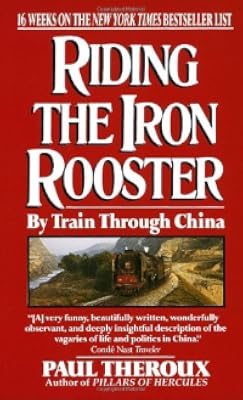
Riding the Iron Rooster: By Train Through China
by Paul Theroux
On This Page
Description
The acclaimed travel writer chronicles a year of train travel across China in a revealing travelogue that "gives the reader much to relish and think about" (Publishers Weekly).The author of the train travel classics The Great Railway Bazaar and The Old Patagonian Express, takes to the rails once again in this account of his epic journey through China. The always irascible, infectiously curious author "is in top form as he describes the barren deserts of Mongolia and Xinjiang, the ice show more forests of Manchuria and the dry hills of Tibet. He captures their otherworldly, haunting appearances perfectly. He is also right on target when he talks about the ugliness of China's poorly planned, hastily built cities" (Mark Salzman, The New York Times).
Theroux hops aboard a train as part of a tour group in London and sets out for China's border. He then spends a year traversing the country, where he pieces together a fascinating snapshot of a unique moment in history. From sweeping and desolate natural landscapes to the dense metropolises of Shanghai, Beijing, and Canton, Theroux offers an unforgettable portrait of a magnificent land and an extraordinary people. show less
Tags
Recommendations
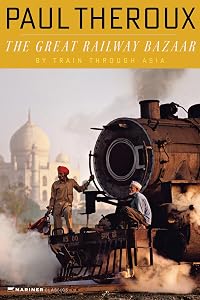
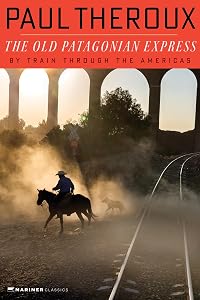

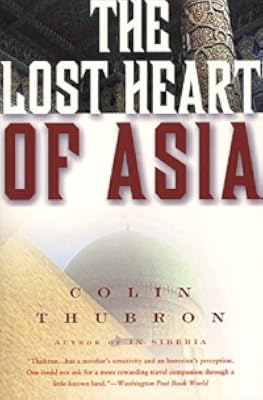

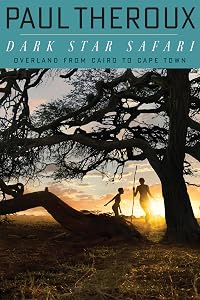
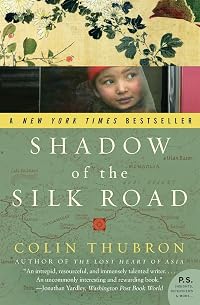
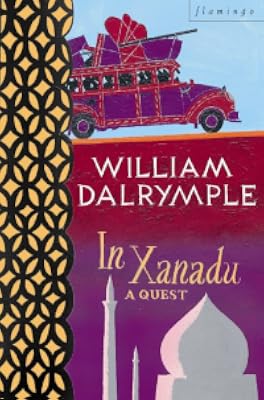
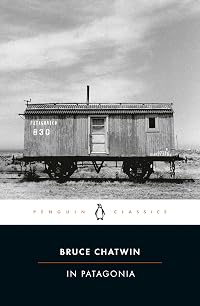



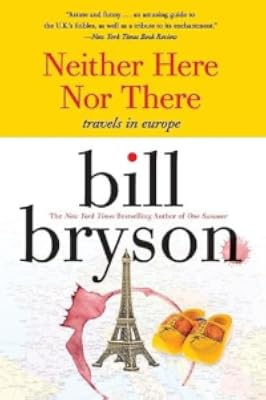
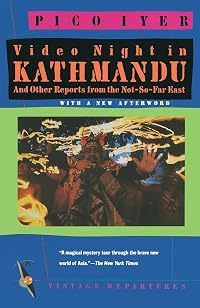

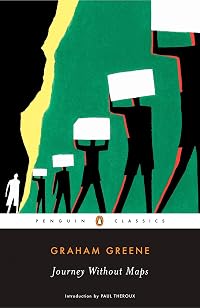
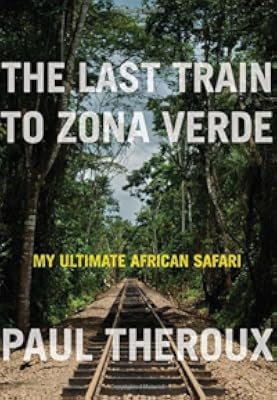



Member Recommendations


Member Reviews
Noted travel writer Theroux traveled through China by train in the 1980s, after Mao's Cultural Revolution. Having been there during the Cultural Revolution, he was able to make comparisons. Much had changed. Yet he was still monitored, accompanied, followed, by government officials.
Travel was not particularly easy or comfortable on most of the trips. Accommodations were often sketchy. The Chinese disregard for the lives of other animals was prominently displayed - but he notes that the peasants most responsible for using animals any way they could were themselves in not much different circumstances. China's people embraced capitalism but did not call it that.
One of the more interesting parts of the book came near the end, when show more Theroux visited Tibet. Long under the thumb of the Chinese, the Tibetans were experienced in resistance, continuing to work and live as they always had regardless of pressure. The area is remote, cut off, difficult to visit, yet stunningly beautiful. Theroux endured a heart-stopping trek by car because there were no trains.
Insightful, thoughtful, intelligently written, even many years later this book is worth reading. show less
Travel was not particularly easy or comfortable on most of the trips. Accommodations were often sketchy. The Chinese disregard for the lives of other animals was prominently displayed - but he notes that the peasants most responsible for using animals any way they could were themselves in not much different circumstances. China's people embraced capitalism but did not call it that.
One of the more interesting parts of the book came near the end, when show more Theroux visited Tibet. Long under the thumb of the Chinese, the Tibetans were experienced in resistance, continuing to work and live as they always had regardless of pressure. The area is remote, cut off, difficult to visit, yet stunningly beautiful. Theroux endured a heart-stopping trek by car because there were no trains.
Insightful, thoughtful, intelligently written, even many years later this book is worth reading. show less
Theroux spent a massive amount of time in the 1980s travelling around the People's Republic, and the result is this enormously readable, entertaining, and informative book. I was worried that, after a few hundred pages, my appetite for his travelogue would begin to dim, but in fact the opposite happened. He is so insightfully critical that every page seemed to hold something new, and the fact that he was in-country when the Tiananmen Square protests were staged says much about the resoluteness of his character.
Paul Theroux' account of his train journeys across and around China during the the late 1980s is both entertaining and enlightening. His fascination with and desire for travel by train lies in the forced prolonged intimacy with his fellow travelers. He is a consummate leech. While furiously guarding his privacy (in a Rumpelstilzian "Nobody knows that I am Paul Theroux"), he eyes, listens and pokes into other people's lives. This decidedly American Puritan game of voyeurism and revulsion is most marked in his reporting about the sex life of his fellow passengers. His "suffering" is almost always self-inflicted: He could easily have upgraded to semi- or private quarters at little cost. In reality, he wants to creep in on other people's show more relationships and lives. Perhaps the larger anonymity and higher sophistication of big city inhabitants is one of the reasons why Theroux prefers the backwood country.
The two chapters about his miserable trip to waterless Tibet and freezing Harbin (in Northern China) are the highlights of this book, a testament to human endurance to live in harsh environment and also a reporter's grim determination to suffer for his story. The Roman soldiers guarding the Limes against Barbarian incursions had it easy compared to the poor Chinese protecting their Northern and Western borders against invaders. Reading Theroux, the numerous pleas of Chinese officials to return to the capital and civilization throughout history becomes easier to understand. No wonder too that, extracting industries apart, these regions hardly participate in the Chinese miracle. Theroux' account about Southern China is lacking both in depth and in sympathy. His main obsession is interviewing, even pestering, anybody about Mao and the Cultural Revolution. In can only hope that Theroux never travels to Israel to interrogate Holocaust survivors about their suffering. The Chinese stoicism and preservation of face certainly favors an obnoxious interviewer such as Theroux.
Personally, I travel and endure a journey to reach and visit a destination. Theroux is of the opposite school. Having reached a destination, he is quickly bored and seeks to leave for the next leg of his journey. He hardly describes the sights and history of his destinations at all. His focus are the quirks, manners and lives of his fellow travelers. The longer he is staying the better he begins to understand them, thus a reader's progress is matched by an increase of enjoyment. Recommended. show less
The two chapters about his miserable trip to waterless Tibet and freezing Harbin (in Northern China) are the highlights of this book, a testament to human endurance to live in harsh environment and also a reporter's grim determination to suffer for his story. The Roman soldiers guarding the Limes against Barbarian incursions had it easy compared to the poor Chinese protecting their Northern and Western borders against invaders. Reading Theroux, the numerous pleas of Chinese officials to return to the capital and civilization throughout history becomes easier to understand. No wonder too that, extracting industries apart, these regions hardly participate in the Chinese miracle. Theroux' account about Southern China is lacking both in depth and in sympathy. His main obsession is interviewing, even pestering, anybody about Mao and the Cultural Revolution. In can only hope that Theroux never travels to Israel to interrogate Holocaust survivors about their suffering. The Chinese stoicism and preservation of face certainly favors an obnoxious interviewer such as Theroux.
Personally, I travel and endure a journey to reach and visit a destination. Theroux is of the opposite school. Having reached a destination, he is quickly bored and seeks to leave for the next leg of his journey. He hardly describes the sights and history of his destinations at all. His focus are the quirks, manners and lives of his fellow travelers. The longer he is staying the better he begins to understand them, thus a reader's progress is matched by an increase of enjoyment. Recommended. show less
For the younger generation he is the father of Louis. For the oldies he is the best travel author in the world. Actually he is both. He is a typical loner who loves to travel his own way and doesn’t like advice or rules from others. That makes him sometimes cynical, but always honest and open. If something resembles a tourist trap, he will avoid it or just say it isn’t worth it.
Several of his books have found their way on my bookshelves, also some of his fiction. Not bad either, but I certainly prefer his travel books. This story starts on a group journey from London through Paris, Berlin and Moscow towards Mongolia, the author already could have written a whole book about his trip and his fellow passengers before he actually enters show more China on page 66.
Theroux takes time to get to know a destination. He is not there to write an article, to see some highlights; he is there to understand a place, to get a feel for the country. This to me is the essence of travelling. Theroux will never be a tourist; he is the ultimate traveller. He even seems to read a bit of the language. Language is an important part of communication, to me an inevitable part. This is also the main reason that I have not travelled a lot in Asia. I love to be able to talk to locals in their own lingo. I can’t do that in bad English.
Therefore I’m quite pleased that Theroux does travel there, giving me the opportunity as an armchair traveller to follow his expedition through a country that is not high on my to-do list. China is a world on its own; it is quite difficult to say anything that goes for the entire country. The differences between city and country, between north and south, between east and west are huge.
Often did I return to page 10/11 to have a quick glance on the map, to see where Theroux was at the time. I like him travelling by train, as it does give the book more depth, it tells me a lot more about the Chinese compared to taking flights within the country.
Even though it took me ages to read the nearly 500 pages of this book, the book doesn’t get boring. It does get confusing at times though, but that is mainly because of my lack of knowledge before reading this book. There are cities in China bigger than most big cities I know, yet even though a few million people live there, I had never heard of the place and, dare admitting it, have since forgotten the name again.
Theroux is cynical at times, especially as he encounters the lack of liberty he likes. He gets chaperoned and is incredibly annoyed by that. I can imagine as well. Not sure how these days travelling in China goes, though in the eighties when he wrote this volume, the world had a completely different look, the political climate was a bit different from what we know these days.
Yet, even given the troubles he encounters wherever he goes, he makes the most of it and manages to get to know big parts of the country. His eye for detail, a great memory, everything he notes must be jotted down soon afterwards, makes this book a great read. I have thoroughly enjoyed reading it and hopefully will read many more travel book by Paul Theroux.
Quote: “Wanneer een land brulde dat het tot de laatste druppel bloed zou vechten, betekende dat meestal dat het op het punt stond zich over te geven; en in China kon je over het algemeen niets als waar beschouwen totdat het onkend was. Alles wat officieel ontkend werd, was waarschijnlijk waar.”
Quote: “When a country screams that it would fight until the last drop of blood, most of the time this means that it was at the point of surrender; in China nothing could be considered the truth until it had been denied. Everything that was officially denied was probably true.” (p. 136) show less
Several of his books have found their way on my bookshelves, also some of his fiction. Not bad either, but I certainly prefer his travel books. This story starts on a group journey from London through Paris, Berlin and Moscow towards Mongolia, the author already could have written a whole book about his trip and his fellow passengers before he actually enters show more China on page 66.
Theroux takes time to get to know a destination. He is not there to write an article, to see some highlights; he is there to understand a place, to get a feel for the country. This to me is the essence of travelling. Theroux will never be a tourist; he is the ultimate traveller. He even seems to read a bit of the language. Language is an important part of communication, to me an inevitable part. This is also the main reason that I have not travelled a lot in Asia. I love to be able to talk to locals in their own lingo. I can’t do that in bad English.
Therefore I’m quite pleased that Theroux does travel there, giving me the opportunity as an armchair traveller to follow his expedition through a country that is not high on my to-do list. China is a world on its own; it is quite difficult to say anything that goes for the entire country. The differences between city and country, between north and south, between east and west are huge.
Often did I return to page 10/11 to have a quick glance on the map, to see where Theroux was at the time. I like him travelling by train, as it does give the book more depth, it tells me a lot more about the Chinese compared to taking flights within the country.
Even though it took me ages to read the nearly 500 pages of this book, the book doesn’t get boring. It does get confusing at times though, but that is mainly because of my lack of knowledge before reading this book. There are cities in China bigger than most big cities I know, yet even though a few million people live there, I had never heard of the place and, dare admitting it, have since forgotten the name again.
Theroux is cynical at times, especially as he encounters the lack of liberty he likes. He gets chaperoned and is incredibly annoyed by that. I can imagine as well. Not sure how these days travelling in China goes, though in the eighties when he wrote this volume, the world had a completely different look, the political climate was a bit different from what we know these days.
Yet, even given the troubles he encounters wherever he goes, he makes the most of it and manages to get to know big parts of the country. His eye for detail, a great memory, everything he notes must be jotted down soon afterwards, makes this book a great read. I have thoroughly enjoyed reading it and hopefully will read many more travel book by Paul Theroux.
Quote: “Wanneer een land brulde dat het tot de laatste druppel bloed zou vechten, betekende dat meestal dat het op het punt stond zich over te geven; en in China kon je over het algemeen niets als waar beschouwen totdat het onkend was. Alles wat officieel ontkend werd, was waarschijnlijk waar.”
Quote: “When a country screams that it would fight until the last drop of blood, most of the time this means that it was at the point of surrender; in China nothing could be considered the truth until it had been denied. Everything that was officially denied was probably true.” (p. 136) show less
Reading Mr. Theroux' travelogue of Chnia made me realize I should know more of Chinese history than I do (which is practically nothing). School history textbooks in India focus mostly on local, state and national history. In higher grades you deal with European history, India's colonial past and some American history - for example, we learned of the Boston Tea Party and the Declaration of Independence. Of communism, our textbooks focused mostly on the USSR. However, besides the common knowledge that China had a communist government and India fought a war with the Chinese in 1962, our history textbooks were woefully inadequate in their coverage of contemporary Chinese history.
Mr. Theroux' twelve month journey through China takes place in show more 1986 and 1987, as the country is still dealing with the effects of Mao's Cultural Revolution. The author's journey, like many of his other great travel stories, begins in London as he heads to Mongolia by train. From Mongolia he takes a myriad of trains to explore the most far flung reaches of that immense country. From the freezing city of Harbin to the mostly inhospitable and deserted Tibetan Plateau. The book is funny, caustic and filled with the kind of absolute generalizations that Mr. Theroux excels at. He talks to fellow travellers, government orderlies, train conductors and hustlers in tourist towns. You get not just his perspective, but also of the people he meets and finds interesting. Unlike most of the author's other travels, he is forced to travel here with a Chinese "guide" who is there to ensure the author is not up to any kind of mischief. Mr. Theroux extracts his revenge by subjecting his handler to interminable train rides through the remotest parts of the Middle Kingdom. Because of the timing, the book also adds color to understanding the Tiananmen Square protests of 1989. I learned a few things about the Cultural Revolution I was never aware of - my knowledge of that event is restricted to a few books and the Zhang Yimou movie, To Live. Some of the author's cultural observations are worth repeating - he ascribes a hidden meaning to they way the Chinese laugh, because they don't laugh with mirth but to convey something they'd rather not express verbally. The Chinese landscape is almost completely devoid of birds, trees and wild life - because the Chinese have cultivated and subjected all of the land to human use and eaten everything that can be masticated. And finally, the Chinese were enthusiastically adopting capitalism and the free market in the 1980s - it is not something that just happened.
The last section on driving to Lhasa from Golmud is the funniest - it is filled to the gills with ridiculous comedy. I've often asked myself while reading a Theroux book, why does he do this? In this instance he is in a near fatal car crash and then spends the night in a prison like hotel with stairs covered in human excrement and run by a crazed looking Tibetan man. Maybe that's why. Highly recommended. show less
Mr. Theroux' twelve month journey through China takes place in show more 1986 and 1987, as the country is still dealing with the effects of Mao's Cultural Revolution. The author's journey, like many of his other great travel stories, begins in London as he heads to Mongolia by train. From Mongolia he takes a myriad of trains to explore the most far flung reaches of that immense country. From the freezing city of Harbin to the mostly inhospitable and deserted Tibetan Plateau. The book is funny, caustic and filled with the kind of absolute generalizations that Mr. Theroux excels at. He talks to fellow travellers, government orderlies, train conductors and hustlers in tourist towns. You get not just his perspective, but also of the people he meets and finds interesting. Unlike most of the author's other travels, he is forced to travel here with a Chinese "guide" who is there to ensure the author is not up to any kind of mischief. Mr. Theroux extracts his revenge by subjecting his handler to interminable train rides through the remotest parts of the Middle Kingdom. Because of the timing, the book also adds color to understanding the Tiananmen Square protests of 1989. I learned a few things about the Cultural Revolution I was never aware of - my knowledge of that event is restricted to a few books and the Zhang Yimou movie, To Live. Some of the author's cultural observations are worth repeating - he ascribes a hidden meaning to they way the Chinese laugh, because they don't laugh with mirth but to convey something they'd rather not express verbally. The Chinese landscape is almost completely devoid of birds, trees and wild life - because the Chinese have cultivated and subjected all of the land to human use and eaten everything that can be masticated. And finally, the Chinese were enthusiastically adopting capitalism and the free market in the 1980s - it is not something that just happened.
The last section on driving to Lhasa from Golmud is the funniest - it is filled to the gills with ridiculous comedy. I've often asked myself while reading a Theroux book, why does he do this? In this instance he is in a near fatal car crash and then spends the night in a prison like hotel with stairs covered in human excrement and run by a crazed looking Tibetan man. Maybe that's why. Highly recommended. show less
This book about Paul Theroux's travels by train through China was written 20 years ago. Although this trip was before the Tiananmen Square massacre, Theroux did see and hear about some student and worker protests. China was definitely going through a process of change at this time. Deng Xiaoping had brought in many reforms and Theroux witnessed that almost everywhere he went. And he went into many corners of that vast land that North Americans rarely see. Two things from this book stand out for me: a) just how excessive the Cultural Revolution was during Mao's time and b) twenty years is just a blink of an eye in Chinese history.
Theroux ended his trip in Tibet. This is one of the last paragraphs in the book:
You have to see Tibet to show more understand China. And anyone apologetic or sentimental about Chinese reform has to reckon with Tibet as a reminder of how harsh, how tenacious and materialistic, how insensitive the Chinese can be. They actually believe this is progress.
Twenty years later China is still insensitive about Tibet as the world has seen by the reaction to Tibetan protests about the Olympics. I didn't watch any of the Beijing Olympics, primarily because we were on holiday for that time and had no access to TV. But I don't think even if I had been home that I would have watched because I objected to the Olympics going to China with no call for reforms.
I think this is only the second book of Theroux's that I have read. At least, I only recall reading The Mosquito Coast many years ago. I think I prefer Theroux as a nonfiction writer and I intend to read some of his other travel writing. show less
Theroux ended his trip in Tibet. This is one of the last paragraphs in the book:
You have to see Tibet to show more understand China. And anyone apologetic or sentimental about Chinese reform has to reckon with Tibet as a reminder of how harsh, how tenacious and materialistic, how insensitive the Chinese can be. They actually believe this is progress.
Twenty years later China is still insensitive about Tibet as the world has seen by the reaction to Tibetan protests about the Olympics. I didn't watch any of the Beijing Olympics, primarily because we were on holiday for that time and had no access to TV. But I don't think even if I had been home that I would have watched because I objected to the Olympics going to China with no call for reforms.
I think this is only the second book of Theroux's that I have read. At least, I only recall reading The Mosquito Coast many years ago. I think I prefer Theroux as a nonfiction writer and I intend to read some of his other travel writing. show less
Among the first inventions of the Chinese were such things as toilet paper (they were enamored with paper and in fact invented a paper armor consisting of pleats which were impervious to arrows), the spinning wheel, seismograph, steam engine (as early as 600 A.D.) and parachute hang gliders in 550-559 B.C. which they tested by throwing prisoners off towers. This same country, according to Paul Theroux in Riding the Iron Rooster, is driving many animals to extinction. The Chinese like to eat strange foods and are superstitious about the medicinal value of exotic animals who achieve status not from individual beauty or from intrinsic qualities, but because they taste good.
Theroux, who has a passion for trains, wandering, and gossip, show more found many changes in China since his first visit of several years earlier. People were much freer and willing to talk. Theroux's writing is fascinating because he's so nosy. He's not afraid to ask anything. And he notices everything. It's his way of "getting the measure of a place." If he sees someone reading he makes note of the title, memorizes the contents of refrigerators, labels in clothes, compares prices, copies graffiti and slogans, and collects hotel rules. My favorite: "Guests may not perform urination in sink basin."
At one point he was forced to fly to catch a particular train and his description is particularly revolting; people standing in the aisles while landing, puking, the plane popping wheelies on the runway, the aircraft itself having wrinkled skin. The cultural revolution was uniformly hated by everyone he spoke with and the change in the people could be measured by the change in their slogans. Formerly when students were asked what they wanted to do with themselves they would reply, "to serve people." A book filled with interesting tidbits.
I should note, as an avid reader of Airways magazine that airlines in China have improved tremendously, have terrific equipment today, and service standards far exceeding United's. Theroux's book is quite dated in that respect. show less
Theroux, who has a passion for trains, wandering, and gossip, show more found many changes in China since his first visit of several years earlier. People were much freer and willing to talk. Theroux's writing is fascinating because he's so nosy. He's not afraid to ask anything. And he notices everything. It's his way of "getting the measure of a place." If he sees someone reading he makes note of the title, memorizes the contents of refrigerators, labels in clothes, compares prices, copies graffiti and slogans, and collects hotel rules. My favorite: "Guests may not perform urination in sink basin."
At one point he was forced to fly to catch a particular train and his description is particularly revolting; people standing in the aisles while landing, puking, the plane popping wheelies on the runway, the aircraft itself having wrinkled skin. The cultural revolution was uniformly hated by everyone he spoke with and the change in the people could be measured by the change in their slogans. Formerly when students were asked what they wanted to do with themselves they would reply, "to serve people." A book filled with interesting tidbits.
I should note, as an avid reader of Airways magazine that airlines in China have improved tremendously, have terrific equipment today, and service standards far exceeding United's. Theroux's book is quite dated in that respect. show less
Members
- Recently Added By
Published Reviews
''Riding the Iron Rooster'' is Mr. Theroux's account of a journey that would drive most people insane. Traveling in China (which is different from living in China) for even a week can be exhausting; how he managed to do it for a year is beyond my comprehension. As one has come to expect of him, Mr. Theroux never wastes a word when re-creating his adventures. He is in top form as he describes show more the barren deserts of Mongolia and Xinjiang, the ice forests of Manchuria and the dry hills of Tibet. He captures their otherworldly, haunting appearances perfectly. He is also right on target when he talks about the ugliness of China's poorly planned, hastily built cities. But his book is mainly about Chinese people, and it appears that Mr. Theroux didn't like them much show less
added by John_Vaughan
Lists

Best of Travel Narratives (Trains)
22 works; 5 members

Best Travel Writing - Non-Fiction
110 works; 6 members

Non-Fiction Worth Reading
1,015 works; 255 members

Read These Too
458 works; 9 members

Asia
178 works; 7 members

The China Project Book List
100 works; 2 members
Animals in the Title
498 works; 11 members
Author Information

112+ Works 32,279 Members
Paul Edward Theroux was born on April 10, 1941 in Medford, Massachusetts and is an acclaimed travel writer. After attending the University of Massachusetts Amherst he joined the Peace Corps and taught in Malawi from 1963 to 1965. He also taught in Uganda at Makerere University and in Singapore at the University of Singapore. Although Theroux has show more also written travel books in general and about various modes of transport, his name is synonymous with the literature of train travel. Theroux's 1975 best-seller, The Great Railway Bazaar, takes the reader through Asia, while his second book about train travel, The Old Patagonian Express (1979), describes his trip from Boston to the tip of South America. His third contribution to the railway travel genre, Riding the Iron Rooster: By Train Through China, won the Thomas Cook Prize for best literary travel book in 1989. His literary output also includes novels, books for children, short stories, articles, and poetry. His novels include Picture Palace (1978), which won the Whitbread Award and The Mosquito Coast (1981), which won the James Tait Black Memorial Prize. Theroux is a fellow of both the British Royal Society of Literature and the Royal Geographic Society. His title Lower River made The New York Times Best Seller List for 2012. Currently his 2015 book, Deep South , is a bestseller. (Bowker Author Biography) Paul Theroux is the distinguished author of numerous award-winning books, including "The Mosquito Coast," "Kowloon Tong," & "Half Moon Street." (Publisher Provided) show less
Some Editions
Awards and Honors
Awards
Distinctions
Notable Lists
Series
Belongs to Publisher Series
Grote ABC (714)
Common Knowledge
- Canonical title*
- China, per trein
- Original title
- Riding the Iron Rooster
- Original publication date
- 1989
- Important places
- China
- Epigraph
- 'A peasant must stand a long time on a hillside with his mouth open before a roast duck flies in'
- Chinese proverb
'The movements which work revolutions in the world are born out of the dreams and visions in a peasant's heart on a hillside'.
- James Joyce, Ulysses - Dedication
- To Anne
- First words
- The bigness of China makes you wonder.
- Quotations*
- p 70 De chinezen zijn de laatsten ter wereld die nog kwispedoors maken, en kamerpotten, en trapnaaimachines, en beddepannen, en kroontjespennen (van staal, om in inkt te dopen), en houten hamen voor ossen, en ijzeren ploegen ... (show all)en omafietsen, en stoommachines, en de Packard van 1948 die zij de Rode Vlag noemen. Zij maken nog grootvadersklokken - van het mechanische soort met een kettingoverbrengen, die tik-tak zegt en bong!....de Chinezen hebben de eerste mechanische klok uitgevonden, tegen het eind van de Tang-dynastie. Als veel Chinese uitvindingen is dit in de vergetelheid geraakt, ze wisten niet meer dat ze dat konden en de klok werd vanuit Europa opnieuw ingevoerd. De Chinezen zijn de eersten geweest die gietijzer gemaakt hebben, en hebben korte tijd later de ijzeren ploeg uitgevonden. De Chinese metallurgen hebben de kruisboog uitgevonden in de vierde eeuw voor christus en gebruikten die nog steeds in 1895. Ze hebben als eersten gemerkt dat alle sneeuwvlokken zeskantig zijn. Ze hebben de parasol uitgevonden, de seismograaf, de lichtgevende verf, het spinnewiel, de passer, porselein, de toverlantaarn en de stinkbom.... Ze hebben de kettingpomp uitgevonden in de eerste eeuw na Christus en gebruiken die nog steeds. Ze hebben de eerste vlieger geconstrueerd tweeduizend jaar voordat eer een werd opgelaten in Europa. Ze hebben de losse drukletters uitgevonden en het eerste gedrukte boek gemaakt ...in 868. Ze hebben de eerste hangbrug gebouwd, en de eerst brug met een gesegmenteerde boog (de eerste, in 610 gebouwd, is nog steeds in gebruik). Ze hebben speelkaarten, rees voor hengels en whisky uitgevonden....De Chinezen waren de eerste zeelui ter wereld die een roer gebruikten, de mensen in het Westen stuurden met een roeispaan, totdat ze omstreeks 1100 het roer van de Chinezen overnamen. Het papiergeld, vuurwerk en de lak.....behangselpapier, toiletpapier... ZE hebben de eerste kruiwagens ontworpen, de beste zijn nooit in het Westen nagemaakt.. p 71
- Last words
- (Click to show. Warning: May contain spoilers.)When I left Tibet some days later I lifted up my eyes to the mountains and clasped my hands and invented a clumsy prayer that went: Please let me come back.
- Original language
- English
*Some information comes from Common Knowledge in other languages. Click "Edit" for more information.
Classifications
Statistics
- Members
- 1,983
- Popularity
- 10,635
- Reviews
- 37
- Rating
- (3.88)
- Languages
- 10 — Dutch, English, Finnish, French, German, Italian, Japanese, Polish, Portuguese, Spanish
- Media
- Paper, Audiobook, Ebook
- ISBNs
- 35
- UPCs
- 1
- ASINs
- 16