
River Out of Eden: A Darwinian View of Life
by Richard Dawkins
On This Page
Description
How did the replication bomb we call "life" begin and where in the world, or rather, in the universe, is it heading? Writing with characteristic wit and an ability to clarify complex phenomena (the New York Times described his style as "the sort of science writing that makes the reader feel like a genius"), Richard Dawkins confronts this ancient mystery.Tags
Recommendations
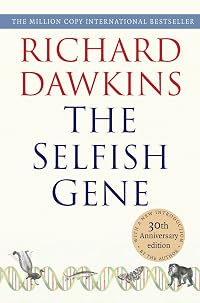
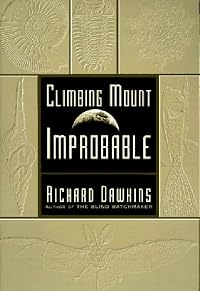
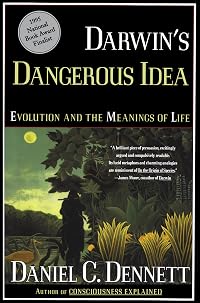
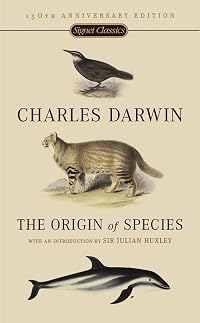
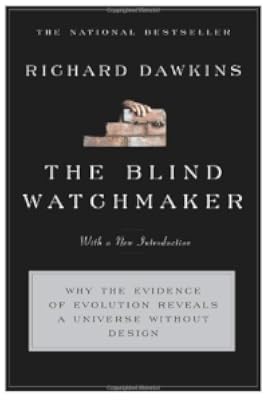
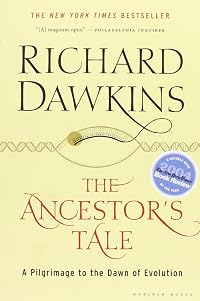










Member Recommendations

StephenBarkley Ancestor's Tale is a more involved explanation of his argument in River Out of Eden.
Member Reviews
Wonderful little book - I like Dawkins best when he doesn't write for academia. Excellent overview for Darwinian evolution...simple, logical explanations that should serve most receptive readers, and really dispels the "not possible for an intermediate stage" arguments. There are nice turns of phrase throughout (I especially liked "embryological origami"). And he points out an outstanding counter to the "you can't answer 'why' questions":
Well worth the read, and show more likely a re-read. show less
The mere fact that it is possible to frame a question does not make it legitimate or sensible to do so.
[...]
...but at the very least, you have no right to assume that the "Why?" question deserves an answer when posed about a boulder, a misfortune, Mt. Everest or the universe."
Well worth the read, and show more likely a re-read. show less
Another lovely book by Dawkins. Brilliant river analogy describing how genes flow through bodies, and an interesting idea comparing an information explosion to a supernova. Great section on the bee dance and how it plausibly could have evolved.
All in all, a bit of a disappointment. It reads like it was a commissioned book, and very heavily edited at that, at least in terms of style. Don't get me wrong, Dawkins is an extremely lucid writer, but this book appears just to restate a lot of earlier material, in a rather slick journalistic manner. For example, he refers to genes as a stream if pure digital information. Pure? What is an impure stream then. He then goes on to say that mistakes in copying are one of the sources of information. But surely pure information can be copied endlessly? The editors should have caught this.
As a secondary complaint, Dawkins can't resist ramming his brand of reactionary atheism down the reader's throat. As I am already an atheist I find this show more annoying, if I wanted to be preachd at I would read The God Delusion. show less
As a secondary complaint, Dawkins can't resist ramming his brand of reactionary atheism down the reader's throat. As I am already an atheist I find this show more annoying, if I wanted to be preachd at I would read The God Delusion. show less
Dawkins polemic on the "Darwinian view of life" while frustratingly dismissive of religious belief provides convincing counter-arguments to Creationist "got ya" points.
These include that things such as the eye do function beneficially when only partially evolved, in fact nothing is "fully evolved" as everything is constantly adapting and selecting through the generations.
"Science shares with religion the claim that it answers deep questions about origins, the nature of life, and the cosmos. But there the resemblance ends. Scientific beliefs are supported by evidence, and get results. Myths and faiths are not and do not." - p. 33
"Sex is an archivist's nightmare. Instead of leaving ancestral texts intact but for an occasional inevitable show more error, sex wantonly wades in and destroys the evidence. No bull ever abused a china shop as sex abuses the DNA archives." - p. 39-40 show less
These include that things such as the eye do function beneficially when only partially evolved, in fact nothing is "fully evolved" as everything is constantly adapting and selecting through the generations.
"Science shares with religion the claim that it answers deep questions about origins, the nature of life, and the cosmos. But there the resemblance ends. Scientific beliefs are supported by evidence, and get results. Myths and faiths are not and do not." - p. 33
"Sex is an archivist's nightmare. Instead of leaving ancestral texts intact but for an occasional inevitable show more error, sex wantonly wades in and destroys the evidence. No bull ever abused a china shop as sex abuses the DNA archives." - p. 39-40 show less
Dawkins sara' anche un grande divulgatore scientifico, ma richiede conoscenze di base sulla biologia non banali. Le parti piu' interessanti ed utili sono quelle dove non si parla appunto di biologia, ovverosia poche. Che, anche se striminzite, sono comunque intellettualmente devastanti, esposte con un candore ed una imparzialità che rischiano di sconfinare nella crudeltà. Ma non è cattiveria: è il fiume della vita, indifferente e super partes, nel quale nuotiamo presuntuosi, ma pur sempre inconsapevoli - e così tanto patetici...
If someone were to ask me for a simple introduction to Darwinism – something not too deep and without showy technical digressions – River Out of Eden would probably be my recommendation. Dawkins is a wonderful communicator of complex ideas, and a true master of scientific metaphor; anyone already familiar with Darwinism may at times become frustrated with the author's seemingly round-about approach, but anyone new to the subject will surely appreciate his cautiousness in not assuming too much prior knowledge.
Some reviewers have criticised Dawkins's disparagement of religion throughout the book, but this I think misunderstands the point of the work, which is to present a way of thinking about life – how could he have avoided making show more reference to Darwinism's greatest intellectual rival? I don't think he has been gratuitously harsh. But whether you are religiously inclined or not, if you are looking for a brief yet well-explained introduction to the Darwinian way of thinking, this would be a very good choice. show less
Some reviewers have criticised Dawkins's disparagement of religion throughout the book, but this I think misunderstands the point of the work, which is to present a way of thinking about life – how could he have avoided making show more reference to Darwinism's greatest intellectual rival? I don't think he has been gratuitously harsh. But whether you are religiously inclined or not, if you are looking for a brief yet well-explained introduction to the Darwinian way of thinking, this would be a very good choice. show less
It’s a good primer on evolution even though Dawkins does wax dry sometimes. It is ostensibly an open response to creationist pressure against evolution. However, it was published in 1995, well before the creationist/intelligent design controversy really became heated so it doesn’t address many of the issues now known in any detail. It really does read more like a layman’s textbook rather than a refutation but it’s in clear language and relatively brief. A good primer.
“Just because a question can be formulated does not mean it is valid to ask such a question.”
“Just because a question can be formulated does not mean it is valid to ask such a question.”
Members
- Recently Added By
Published Reviews
ThingScore 75
The book breaks no new ground but, as usual, it abounds with metaphors that make things brilliantly clear.
added by jlelliott
Mr. Dawkins is often portrayed as the village reductionist, the man who thinks there is nothing to life but selfish genes. But this is less than fair. . . He is above all a masterly expositor, a writer who understands the issues so clearly that he forces his readers to understand them too. "River Out of Eden" displays these virtues to the full. It is a thinner book than his others, with no show more special message to deliver, but it maintains his high standards of clarity and excitement. show less
added by jlelliott
Author Information

78+ Works 64,049 Members
Richard Dawkins was educated at Oxford University and taught zoology at the University of California and Oxford University, holding the position of the Charles Simonyi Professor of the Public Understanding of Science. He writes about such topics as DNA and genetic engineering, virtual reality, astronomy, and evolution. His books include The show more Selfish Gene, The Extended Phenotype, The Blind Watchmaker, River Out of Eden, Climbing Mount Improbable, The God Delusion, and An Appetite for Wonder: The Making of a Scientist. (Bowker Author Biography) show less
All Editions
Some Editions
Awards and Honors
Awards
Distinctions
Notable Lists
Series
Belongs to Publisher Series
Work Relationships
Contains
Common Knowledge
- Canonical title
- River Out of Eden: A Darwinian View of Life
- Original title
- River Out of Eden: A Darwinian View of Life
- Original publication date
- 1995
- Important places
- Earth
- Quotations
- During the minute it takes me to compose this sentence, thousands of animals are being eaten alive; others are running for their lives, whimpering with fear; others are being slowly devoured from within by rasping parasites; ... (show all)thousands of all kinds are dying of starvation, thirst and disease. It must be so. If there is ever a time of plenty, this very fact will automatically lead to an increase in population until the natural state of starvation and misery is restored.
Nature is not cruel, only pitilessly indifferent - Original language
- English
Classifications
Statistics
- Members
- 2,293
- Popularity
- 8,716
- Reviews
- 26
- Rating
- (3.89)
- Languages
- 14 — Czech, Dutch, English, Estonian, Finnish, French, German, Hungarian, Italian, Korean, Polish, Portuguese, Romanian, Swedish
- Media
- Paper, Audiobook, Ebook
- ISBNs
- 36
- ASINs
- 18