On This Page
Description
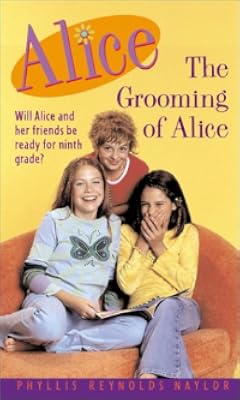
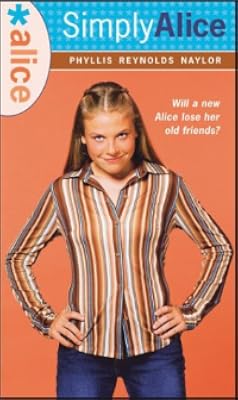
Eighth-grader Alice has lots of questions about sex, relationships, prejudice, and change.Tags
Recommendations








Member Reviews
I do have a problem with the depiction of the lesbian friend here. First, not all lesbians are tomboys who don't like lacy dresses, nor all girls who are tomboys lesbians. Second, as soon as Alice rescues the lesbians from the bullies, they pretty much disappear from the book.., having served their purpose. Third (related), they're not people who happen to be lesbians, they're just simply lesbians, which is disrespectful (but then, lots of secondary characters in this series are just representative types, so it's not a horrible thing given the context).
I do like the CRW event. Sort of like the 'brown eyes/ blue eyes' project but school wide, including teachers, and three groups not just two.
I do like the CRW event. Sort of like the 'brown eyes/ blue eyes' project but school wide, including teachers, and three groups not just two.
Most of the Alice books have a primary story line, and several secondary story lines. Alice on the Outside was a little different. It seemed to have more secondary story lines, but no primary at all. And it worked out great. After all, most people reading this book have probably read the 12 or so books that preceded it., so we like Alice and if we're just wandering around through her life, friends, and interests, that's okay with us.
Here we have, a semi-formal dance, a (dangerous) social experiment at school*, a sex-ed lesson from Carol, Alice's budding sexuality, Pamela's near exploding sexuality, a friend who comes out as a lesbian, Alice's first black friend (she seems to live in a pretty white-bread world. I doubt too many black show more middle school girls have fallen in love with Alice as many white girls have.) A birthday that is overlooked (or is it?) etc.
I thought it was one of the better books in the series.
*The school social experiment will likely ring some bells for the few adult readers of the series. It's the kind of experiment that some college professors have developed, using their students as willing subjects, and generally with horrifying results. And to Naylor's credit, at the end of the week of the experiment, Alice's school is near the breaking point because of it. She acknowledges through the story, that in spite of what you may learn from them, experiments like this can have many frightening and disturbing unintended consequences. I certainly hope no real middle school ever tries anything remotely like this. show less
Here we have, a semi-formal dance, a (dangerous) social experiment at school*, a sex-ed lesson from Carol, Alice's budding sexuality, Pamela's near exploding sexuality, a friend who comes out as a lesbian, Alice's first black friend (she seems to live in a pretty white-bread world. I doubt too many black show more middle school girls have fallen in love with Alice as many white girls have.) A birthday that is overlooked (or is it?) etc.
I thought it was one of the better books in the series.
*The school social experiment will likely ring some bells for the few adult readers of the series. It's the kind of experiment that some college professors have developed, using their students as willing subjects, and generally with horrifying results. And to Naylor's credit, at the end of the week of the experiment, Alice's school is near the breaking point because of it. She acknowledges through the story, that in spite of what you may learn from them, experiments like this can have many frightening and disturbing unintended consequences. I certainly hope no real middle school ever tries anything remotely like this. show less
I really loved this installment and I'm unable to pinpoint why. I think overall it just teaches a very nice lesson about tolerance. Just because people are different than you that doesn't provide you with the grounds to be cruel or to treat them any differently. Alice was a great example of tolerance this go around. I'm excited to continue my journey with her!
i LOVED the alice books growing up! i definitely recommend them to all girls around 9-10 and up, and the good news is that she's still writing them! so the series starts out when alice is in elementary school and now she's in high school!
I really like how it teaches you some things you will need to know in the future i can't waite to read the next one.
Ratings
Members
- Recently Added By
Author Information

185+ Works 37,066 Members
Phyllis Reynolds Naylor was born in Anderson, Indiana on January 4, 1933. She received a bachelor's degree from American University in 1963. Her first children's book, The Galloping Goat and Other Stories, was published in 1965. She has written more than 135 children and young adult books including Witch's Sister, The Witch Returns, The Bodies in show more the Bessledorf Hotel, A String of Chances, The Keeper, Walker's Crossing, Bernie Magruder and the Bats in the Belfry, Please Do Feed the Bears, and The Agony of Alice, which was the first book in the Alice series. She has received several awards including the Edgar Allan Poe Award for Night Cry and the Newberry Award for Shiloh. (Bowker Author Biography) show less
Awards and Honors
Series

Common Knowledge
- Original publication date
- 1999-06-01
- People/Characters
- Alice Kathleen McKinley; Pamela Jones; Elizabeth Ann Price; Ben McKinley; Lester McKinley; Patrick H. Long (show all 13); Sam Mayer; Donald Sheavers; Sally (Aunt); Carol; Marilyn Rawley; Sylvia Summers; Marie McKinley (deceased)
- Important places
- Silver Spring, Maryland, USA
- Dedication
- For Isabelle Archibald
- First words
- Dad says it's the dumbest thing he ever saw, but every year the Washington Post comes out with a list of what's "in" and what's "out"--movies, songs, food, clothes, TV programs, even people.
Classifications
- Genres
- Fiction and Literature, Tween, Children's Books, Kids, Teen, Young Adult
- DDC/MDS
- 820 — Literature & rhetoric English & Old English literatures English and Old English (Anglo-Saxon) literatures
- LCC
- PZ7 .N24 .A — Language and Literature Fiction and juvenile belles lettres Fiction and juvenile belles lettres Juvenile belles lettres
- BISAC
Statistics
- Members
- 199
- Popularity
- 164,864
- Reviews
- 6
- Rating
- (3.70)
- Languages
- 5 — English, French, German, Indonesian, Swedish
- Media
- Paper, Ebook
- ISBNs
- 14
- ASINs
- 1