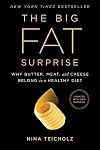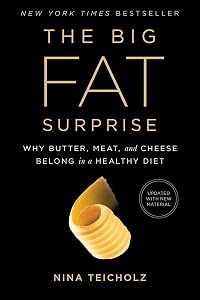
The Big Fat Surprise: Why Butter, Meat, and Cheese Belong in a Healthy Diet
by Nina Teicholz
On This Page
Description
Dish up the red meat, eggs, and whole milk! In this well-researched and captivating narrative, veteran food writer Nina Teicholz proves how everything we've been told about fat is wrong.For decades, Americans have cut back on red meat and dairy products full of "bad" saturated fats. We obediently complied with nutritional guidelines to eat "heart healthy" fats found in olive oil, fish, and nuts, and followed a Mediterranean diet heavy on fruits, vegetables, and grains. Yet the nation's show more health has declined. What is going on?In The Big Fat Surprise, Teicholz reveals how sixty years of nutrition science has gotten it so wrong: how overzealous researchers have made basic scientific mistakes that, through a mix of ego and bias, allow dangerous misrepresentations to become dogma, and how scientists who dared oppose this consensus have been ostracized. For eight years, Teicholz has pored over the massive research literature and interviewed hundreds of leading experts to unravel the shockingly distorted claims of nutrition studies. She brings these researchers to life and shows how their ambitions, loyalties, and rivalries have undermined a field of research already full of difficult pitfalls.With a lively narrative style akin to Michael Pollan's in The Omnivore's Dilemma and the scientific rigor of Gary Taubes in Good Calories, Bad Calories, Teicholz convincingly upends the conventional wisdom about all fats. Her groundbreaking claim is that more dietary fat leads to better health, wellness, and fitness. Science shows that reducing the saturated fat in our diets has been disastrous for our health as a nation, and we can, guilt-free, welcome these "whole fats" back into our lives. show lessTags
Recommendations
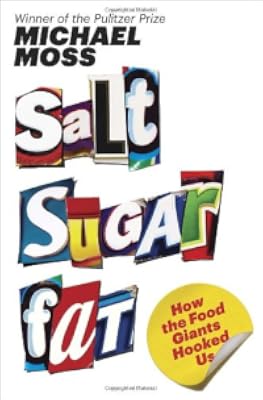
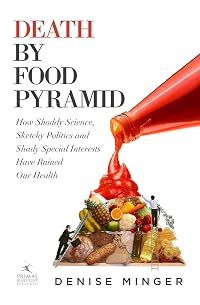
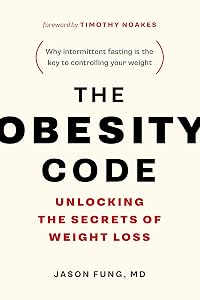
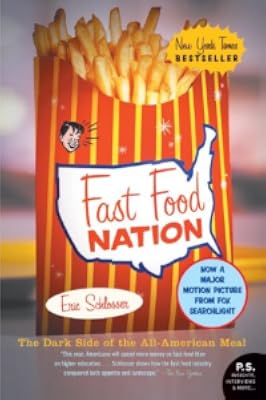

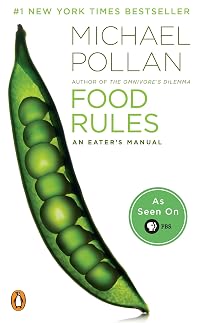
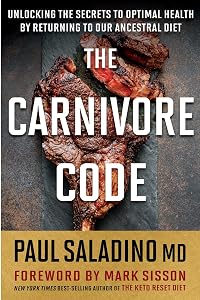
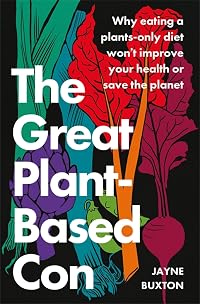
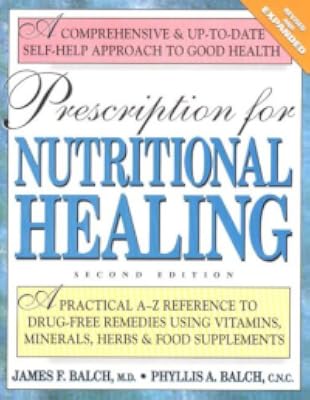

Member Recommendations
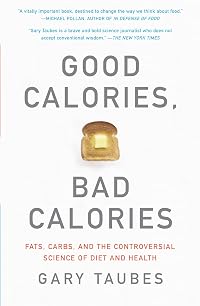
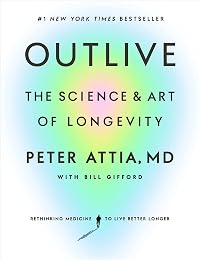
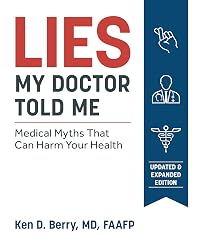
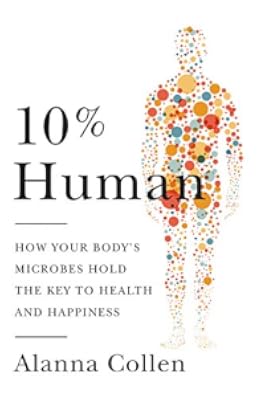
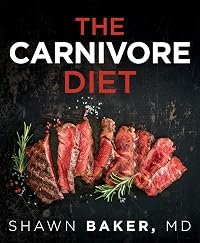
melmore Both books explore the same thesis, that mainstream dietary science has been hijacked by researchers with an agenda (low-fat, high-carb diets), and the results have been disastrous for Western society. Both works are painstakingly researched and show in great detail the ways in which scientific consensus can develop despite, rather than because of, empirical research.
Member Reviews
Wow, so cooking in the vegetable oils is worse than eating lard, and a bowl of beets is worse than a plate of bacon and eggs ... Well, it looks like giving moneyed interests and politicians control of the application of food science benefits their pocketbooks at the cost of our quality of life. That's congress for you, give them disputed science based on less then three dozen post-WWII Cretans around Lent and they call it a food pyramid like industry wants. (Give them rarely disputed science in contradiction to industry and they go against it, of course...)
This is a cogent, well-researched and detailed attack on the foundations of the Western low-fat, carb-encouraging diet
This is a cogent, well-researched and detailed attack on the foundations of the Western low-fat, carb-encouraging diet
The Big Fat Surprise is revelatory. I consider this essential reading for anyone interested in health and modern diet. It offers a powerful challenge to the governing paradigm that a low fat-high carb diet with lots of fruits and vegetables is the healthiest way to eat.
The goal of this book is to look closely at the history of the science behind that low fat-high carb diet and determine if the data actually supports it. Especially impressive is the fact that Ms. Teicholz doesn't simply rely on summaries and abstracts of the numerous studies conducted on this subject over the years—she read all of the original research, the complete published papers, and dug through the full data sets. I know some readers of this book will disagree show more with me, but I found her analysis of this science to be fair and even-handed. She didn't embark on this project with any agenda other than to discover the truth.
The big fat surprise is simply this—there has never been any compelling scientific evidence to suggest that animal fat leads to heart disease. Beyond that, Ms. Teicholz explores in more detail how certain individuals, private interests, and governmental inertia coincided to sell the American people—and the Western world—on a dietary strategy that clearly isn't working.
This isn't a story with any bad guys. I appreciate that Ms. Teicholz goes to some pains to emphasize that each step in this history was taken with the best of intentions in the quest to fight heart disease and to help people be healthier.
Rather, this is a story about the failure of science. The self-criticism and self-correction that the scientific method depends on broke down in the face of strong personalities and a sense of overwhelming urgency.
It's to be expected that this book has already generated controversy. After all, the low fat-high carb diet has been prescribed as the key to fighting heart disease for nigh on half a century now.
One of the major criticisms of The Big Fat Surprise that I've encountered is that it's just another version of the Atkins Diet. It should be made clear—this is not a diet book. It offers no specific prescriptions about how people should eat, and it contains no hard-and-fast rules or recipes. Ms. Teicholz does offer some very compelling evidence that an Atkins-type diet works, and that carbs appear more closely connected to health issues than fat, but that's as much as can be fairly laid at her feet. People who dismiss this book as "just another Atkins book" clearly miss the point.
One criticism of Ms. Teicholz's work that seems to bear weight is that it largely restates analysis and arguments made by Gary Taubes in the 1990s and early 2000s. This is unfair, though—Ms. Teicholz may have been inspired by Mr. Taubes but she spent several years digging through all of the data herself and personally interviewing numerous individuals. Her research for this book is entirely her own. That she identifies the same flaws in the diet-heart hypothesis as Mr. Taubes, and comes to many of the same conclusions—that two independent researchers uncovered the same issues—merely reinforces the strong possibility that the science behind the low fat-high carb diet is flawed.
Besides, Ms. Teicholz openly acknowledges the work of Mr. Taubes in her book and points out these parallels herself, so we can't take this criticism too far.
Other than that, most criticisms of The Big Fat Surprise that I've read are to be expected: many people disagree with her conclusions and continue to support the low fat-high carb diet that's still recommended by most of the major scientific and governing bodies in America.
This is an important debate for us to have—one of our most important debates—and whether you agree with her or not, Ms. Teicholz offers an essential challenge to conventional wisdom.
Right or wrong, The Big Fat Surprise is an important work.
The one thing about The Big Fat Surprise that disappoints me is that Ms. Teicholz has a tendency to resort to overstated, overly dramatic language. I understand that she's rightfully passionate about this subject and this book is written with the intent to sway readers to her argument.
But this book is also intended to be a clear-headed reassessment of the actual science that underpins Ancel Keys' dominant diet-heart hypothesis, and there are moments when her overly dramatic language belies that clear-headedness.
The history of the diet-heart hypothesis is one of people overstating their cases, taking inconclusive findings and over-selling what the data seemed to say. In light of this, Ms. Teicholz's overly dramatic language can be somewhat galling. Then again, her conclusions do seem better supported by the data.
I understand that Ms. Teicholz isn't a scientist and that The Big Fat Surprise is meant for popular consumption—but I would've preferred a more scientific tone to her work. I think it would sell her argument better. show less
The goal of this book is to look closely at the history of the science behind that low fat-high carb diet and determine if the data actually supports it. Especially impressive is the fact that Ms. Teicholz doesn't simply rely on summaries and abstracts of the numerous studies conducted on this subject over the years—she read all of the original research, the complete published papers, and dug through the full data sets. I know some readers of this book will disagree show more with me, but I found her analysis of this science to be fair and even-handed. She didn't embark on this project with any agenda other than to discover the truth.
The big fat surprise is simply this—there has never been any compelling scientific evidence to suggest that animal fat leads to heart disease. Beyond that, Ms. Teicholz explores in more detail how certain individuals, private interests, and governmental inertia coincided to sell the American people—and the Western world—on a dietary strategy that clearly isn't working.
This isn't a story with any bad guys. I appreciate that Ms. Teicholz goes to some pains to emphasize that each step in this history was taken with the best of intentions in the quest to fight heart disease and to help people be healthier.
Rather, this is a story about the failure of science. The self-criticism and self-correction that the scientific method depends on broke down in the face of strong personalities and a sense of overwhelming urgency.
It's to be expected that this book has already generated controversy. After all, the low fat-high carb diet has been prescribed as the key to fighting heart disease for nigh on half a century now.
One of the major criticisms of The Big Fat Surprise that I've encountered is that it's just another version of the Atkins Diet. It should be made clear—this is not a diet book. It offers no specific prescriptions about how people should eat, and it contains no hard-and-fast rules or recipes. Ms. Teicholz does offer some very compelling evidence that an Atkins-type diet works, and that carbs appear more closely connected to health issues than fat, but that's as much as can be fairly laid at her feet. People who dismiss this book as "just another Atkins book" clearly miss the point.
One criticism of Ms. Teicholz's work that seems to bear weight is that it largely restates analysis and arguments made by Gary Taubes in the 1990s and early 2000s. This is unfair, though—Ms. Teicholz may have been inspired by Mr. Taubes but she spent several years digging through all of the data herself and personally interviewing numerous individuals. Her research for this book is entirely her own. That she identifies the same flaws in the diet-heart hypothesis as Mr. Taubes, and comes to many of the same conclusions—that two independent researchers uncovered the same issues—merely reinforces the strong possibility that the science behind the low fat-high carb diet is flawed.
Besides, Ms. Teicholz openly acknowledges the work of Mr. Taubes in her book and points out these parallels herself, so we can't take this criticism too far.
Other than that, most criticisms of The Big Fat Surprise that I've read are to be expected: many people disagree with her conclusions and continue to support the low fat-high carb diet that's still recommended by most of the major scientific and governing bodies in America.
This is an important debate for us to have—one of our most important debates—and whether you agree with her or not, Ms. Teicholz offers an essential challenge to conventional wisdom.
Right or wrong, The Big Fat Surprise is an important work.
The one thing about The Big Fat Surprise that disappoints me is that Ms. Teicholz has a tendency to resort to overstated, overly dramatic language. I understand that she's rightfully passionate about this subject and this book is written with the intent to sway readers to her argument.
But this book is also intended to be a clear-headed reassessment of the actual science that underpins Ancel Keys' dominant diet-heart hypothesis, and there are moments when her overly dramatic language belies that clear-headedness.
The history of the diet-heart hypothesis is one of people overstating their cases, taking inconclusive findings and over-selling what the data seemed to say. In light of this, Ms. Teicholz's overly dramatic language can be somewhat galling. Then again, her conclusions do seem better supported by the data.
I understand that Ms. Teicholz isn't a scientist and that The Big Fat Surprise is meant for popular consumption—but I would've preferred a more scientific tone to her work. I think it would sell her argument better. show less
This rather impressive tome surprised me by immediately sucking me in and keeping me turning pages to the very end. It's a very detailed overview of all research concerning the American diet recommendations that have formed the basis of our society's understanding of healthy food. Beginning just after WWII, it follows the most influential scientists and the faltering steps taken to understand the extremely complex questions surrounding diet and disease. An alarming uptick in heart disease drove the research. Why were so many middle aged American men dying suddenly from heart attacks? What could individuals do to help protect themselves and extend their lives?
What follows is a well-intentioned effort that quickly devolved into a game of show more egos and money. Many recommendations were made to the American people based on very flimsy and preliminary research. Before proper studies hand been conducted, many experts were on record that saturated fat was the cause of all our heart related woes. As more and more studies were done, the results were continually skewed to support this initial finding. Inconvenient data was suppressed and conflicting studies were buried in obscure journals. As the accretion of bias piled up, and industry mobilized to protect their products, it soon became the kiss of death to even question this shaky hypothesis.
Even up to the present day, many highly placed nutritionists continue to cite studies performed in the 50's and ignore or dismiss outright the findings of far more recent and much more controlled studies. It's only now after many years and steadily increasing incidence of heart disease that this question of saturated fat is being openly studies and reexamined. The conclusions of this book are pretty persuasive and I will likely be altering parts of my diet as a result.
A very well written and fascinating story about how science is done and the dangers that come from over-confidence and pride. show less
What follows is a well-intentioned effort that quickly devolved into a game of show more egos and money. Many recommendations were made to the American people based on very flimsy and preliminary research. Before proper studies hand been conducted, many experts were on record that saturated fat was the cause of all our heart related woes. As more and more studies were done, the results were continually skewed to support this initial finding. Inconvenient data was suppressed and conflicting studies were buried in obscure journals. As the accretion of bias piled up, and industry mobilized to protect their products, it soon became the kiss of death to even question this shaky hypothesis.
Even up to the present day, many highly placed nutritionists continue to cite studies performed in the 50's and ignore or dismiss outright the findings of far more recent and much more controlled studies. It's only now after many years and steadily increasing incidence of heart disease that this question of saturated fat is being openly studies and reexamined. The conclusions of this book are pretty persuasive and I will likely be altering parts of my diet as a result.
A very well written and fascinating story about how science is done and the dangers that come from over-confidence and pride. show less
This book is a non-fiction thriller, if such a category exists. The detailed information flows so clearly that you can't wait to see what else Nina Teicholz will uncover from her 9-year journalistic venture into the world of science, nutrition, politics and mass belief. Teicholz painstakingly reviews the available studies that have been used to support the current (incorrect) thoughts on fat in diets and how they have incorrectly been propagated to the forefront nutritional popularity, including influencing the organizations defined as authorities for guidance (i.e. USDA).
Extraordinarily clearly written, I did enjoy reading this book, not purely for the information. Although the research that went into this book is first rate. I have a great deal of respect for this author's ability to digest the methodology of a study and understand the implications of the methods used on the reliability of the results.
While I admit that I am still skeptical that a purely protein and fat diet is the "best", I am extremely grateful for the evidence presented here against the low fat hypothesis.
Am considering buying this one as well.
While I admit that I am still skeptical that a purely protein and fat diet is the "best", I am extremely grateful for the evidence presented here against the low fat hypothesis.
Am considering buying this one as well.
The Big Fat Surprise is one of those life altering books that will stay with you long after you finished reading them. It makes you rethink everything you thought you knew about nutrition. The author Nina Teicholz spent nearly a decade researching dietary fat and the resulting book is more than impressive. Study by study, Teicholz discredits the mainstream nutrition claims that a low fat high carb diet is the healthiest.Instead, her research shows that the opposite may be much better for us. Teicholz is a talented writer and is able to link all the different studies and research findings into a smooth narrative that I found fascinating to read.
One thing I found most impressive is the amount of scientific evidence and research papers show more that Teicholz analyzed. All of those sources are cited at the end of the book, and seeing that list makes you understand how meticulously the author researched her book. I can only recommend this book to anyone interested in health and diet. show less
One thing I found most impressive is the amount of scientific evidence and research papers show more that Teicholz analyzed. All of those sources are cited at the end of the book, and seeing that list makes you understand how meticulously the author researched her book. I can only recommend this book to anyone interested in health and diet. show less
This new book chronicles the author's 9-year research into the science behind the dietary advice Americans have been given for the last sixty years. After years of painstaking research, Teicholz came to the conclusion that the healthiest diet is the one we abandoned long ago, the one that allows lots of meat, butter, animal fats, and eggs. She's pretty convincing in her descriptions of how and why we have been told for decades to eat more plants and less fat and red meat to be healthy and why all those experts were wrong.
This isn't the first time I've read convincing material that agrees with her conclusion and I was already moving in the direction that her conclusions indicate. However, I'm even more committed now to concentrating on show more cutting back on sugars and starches, not animal fats, and getting more exercise. But I like veggies and fruits enough that there will still be a lot of them on my plate, just less added sugars and more eggs and butter! show less
This isn't the first time I've read convincing material that agrees with her conclusion and I was already moving in the direction that her conclusions indicate. However, I'm even more committed now to concentrating on show more cutting back on sugars and starches, not animal fats, and getting more exercise. But I like veggies and fruits enough that there will still be a lot of them on my plate, just less added sugars and more eggs and butter! show less
Members
- Recently Added By
Published Reviews
ThingScore 75
Lists

Top Five Books of 2014
1,064 works; 397 members

Books Read in 2015
3,299 works; 126 members

The Joe Rogan Experience Library
254 works; 3 members

READ IN 2020
172 works; 1 member

Books Read in 2025
4,128 works; 98 members
Author Information

4+ Works 534 Members
Nina Teicholz reported for National Public Radio and has written for Gourmet magazine, The New Yorker, the Economist, the New York Times, and the Washington Post.
Some Editions
Awards and Honors
Awards
Distinctions
Common Knowledge
- Canonical title
- The Big Fat Surprise: Why Butter, Meat, and Cheese Belong in a Healthy Diet
- Original publication date
- 2014-05
- First words
- I remember the day I stopped worrying about eating fat.
Classifications
Statistics
- Members
- 531
- Popularity
- 56,548
- Reviews
- 13
- Rating
- (4.35)
- Languages
- Czech, English, Portuguese
- Media
- Paper, Audiobook, Ebook
- ISBNs
- 15
- UPCs
- 1
- ASINs
- 8