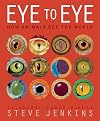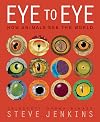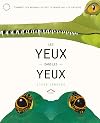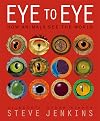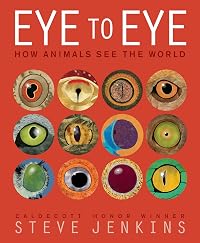
Eye to Eye: How Animals See The World
by Steve Jenkins
On This Page
Description
Profiles a series of animals with unusual eyes and explains how such animals use their uniquely evolved eyes to gain essential information about the biological world.Tags
Recommendations

Member Reviews
Gorgeous book on an usual and interesting topic: kinds of eyes on the animal kingdom. Steven Jenkins organization of information and layout of pages is superb. Love the cropped enlarge pages and small full creature illustrations, adding an element of surprise page after page. The texture and colors on this colored handmade paper collages are a feast to the eyes. The info at the end about each animal is a bonus, plus a diagram about the evolution of the eye and glossary. What a smart way to entice children about science!
Another brilliant science book from Jenkins. Somehow this doesn't have quite the same Wow factor as some of his others ([b:Actual Size|10154118|Actual Size|Steve Jenkins|https://i.gr-assets.com/images/S/compressed.photo.goodreads.com/books/1392590886l/10154118._SX50_.jpg|3289811], for example), but it's still got a lot of wonderful information, engagingly presented for maximum understanding and enrichment. I particularly the page showing how complex eyes evolved from simpler ones, to help ppl understand why creationists are wrong.
Eye to Eye is a visually pleasing book that invites the reader to learn about differences in animals eyes. The book contains information about different kinds of eyes, how they work, and what they are used for. While the book is very informative it still provides visual stimulation for the reader from its large illustrations to its interesting and kid friendly diagrams. The facts are relevant and fun so children will be drawn in throughout the read.
Eye to Eye: How Animal See the World is an amazing example of how illustrations can be used to teach students about difficult topics, such as evolution, biology, and science. In this book, Jenkins begins by introducing his readers to the evolution of the eye and leads into the discussion of the four different types of eyes. After the introduction, the book offers large, close up illustrations of eyes from different creatures. Jenkins does a wonderful job of providing a thumb nail picture of the animal the eye belongs to, as well as interesting facts about that creature’s vision. Students learn important lessons about how eyes have adapted over time to fit the needs of different creatures, as well as the structure of different eyes and show more how they work. The glossary at the end of the book really shows the time, research, and validity of Eye to Eye and how it could be used as a credible scientific source in the classroom. show less
This book includes loads of interesting information about types of eyes and how animals use them. I learned quite a bit from reading this book. I was especially shocked to find out that mantis shrimp have eyes considered the "most highly developed in the animal kingdom," due to the amount of colors they are able to see. I think children would find the facts in this book just as interesting as I did. They would also enjoy the Caldecott Honor illustrations that focus in on the eyes of the animals.
This book explores the world through different animals perspectives which is an incredibly fun and adventurous way for a child or even adult to explore things. I would love to incorporate this book into a lesson with younger students and think it would be fun to have them write a little story about how they would see the world if they were a certain animal.
A brief summary:
This book begins by introducing vision and how it is used by creatures around the world to communicate, stay away from predators, look for food, and find or locate a mate. This is followed with information on the first eyes and the different kinds of eyes that are found in creatures today. Each page thereafter is filled with different creatures and how their special eyes help them to complete tasks, such as hunting at night or comfortably seeing underwater. The end of the book has a list of facts about the animals that are mentioned in the book as well as a glossary of scientific terms that are used throughout the book.
My personal reaction:
This book is able to provide useful, scientific information while still engaging show more the reader through its use of colorful yet informative illustrations. The use of torn and cut paper makes the illustrations stand off the page and catch the reader's eye.
A couple of uses:
- Share this book with the class and lead a discussion on how different eyes serve the needs of different animals. For example, the crocodile's eyes allow it to keep its body under water but its eyes above water, ready to spot prey.
- After sharing the book with the class, assign each student one of the creatures featured in the book. Have the students conduct a more in-depth study on their assigned creatures and share the newly learned information with the class.
Genre:
This book falls under the informational category because it provides factual information about animals and their diverse sense of vision. What makes this book a good informational book is its use of colorful and engaging illustrations that set it apart from other books and make it more likely to be appealing to the reader. It is also a good example of an informational book because it includes details that are not considered common knowledge and therefore would be interesting to the reader.
Media:
torn and cut paper show less
This book begins by introducing vision and how it is used by creatures around the world to communicate, stay away from predators, look for food, and find or locate a mate. This is followed with information on the first eyes and the different kinds of eyes that are found in creatures today. Each page thereafter is filled with different creatures and how their special eyes help them to complete tasks, such as hunting at night or comfortably seeing underwater. The end of the book has a list of facts about the animals that are mentioned in the book as well as a glossary of scientific terms that are used throughout the book.
My personal reaction:
This book is able to provide useful, scientific information while still engaging show more the reader through its use of colorful yet informative illustrations. The use of torn and cut paper makes the illustrations stand off the page and catch the reader's eye.
A couple of uses:
- Share this book with the class and lead a discussion on how different eyes serve the needs of different animals. For example, the crocodile's eyes allow it to keep its body under water but its eyes above water, ready to spot prey.
- After sharing the book with the class, assign each student one of the creatures featured in the book. Have the students conduct a more in-depth study on their assigned creatures and share the newly learned information with the class.
Genre:
This book falls under the informational category because it provides factual information about animals and their diverse sense of vision. What makes this book a good informational book is its use of colorful and engaging illustrations that set it apart from other books and make it more likely to be appealing to the reader. It is also a good example of an informational book because it includes details that are not considered common knowledge and therefore would be interesting to the reader.
Media:
torn and cut paper show less
Members
- Recently Added By
Lists

Children's Books About Science and Math
461 works; 12 members

Favorite Kids Science Books
129 works; 1 member
Author Information

75+ Works 21,314 Members
Awards and Honors
Awards
Distinctions
Classifications
Statistics
- Members
- 303
- Popularity
- 105,662
- Reviews
- 47
- Rating
- (4.15)
- Languages
- English, French
- Media
- Paper, Ebook
- ISBNs
- 6
- ASINs
- 1