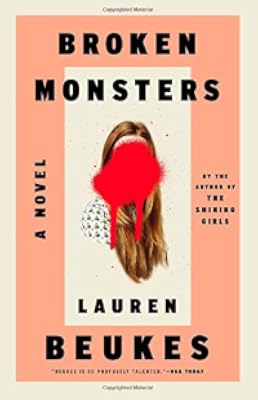
Broken Monsters
by Lauren Beukes
On This Page
Description
"Scary as hell and hypnotic. I couldn't put it down...I'd grab it if I were you." --Stephen King A criminal mastermind creates violent tableaus in abandoned Detroit warehouses in Lauren Beukes's new genre-bending novel of suspense. Detective Gabriella Versado has seen a lot of bodies. But this one is unique even by Detroit's standards: half boy, half deer, somehow fused together. As stranger and more disturbing bodies are discovered, how can the city hold on to a reality that is already show more tearing at its seams? If you're Detective Versado's geeky teenage daughter, Layla, you commence a dangerous flirtation with a potential predator online. If you're desperate freelance journalist Jonno, you do whatever it takes to get the exclusive on a horrific story. If you're Thomas Keen, known on the street as TK, you'll do what you can to keep your homeless family safe--and find the monster who is possessed by the dream of violently remaking the world. If Lauren Beukes's internationally bestselling The Shining Girls was a time-jumping thrill ride through the past, her Broken Monsters is a genre-redefining thriller about broken cities, broken dreams, and broken people trying to put themselves back together again. show lessTags
Recommendations


Member Recommendations

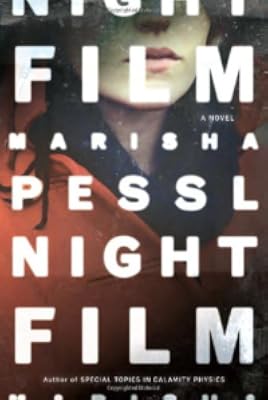
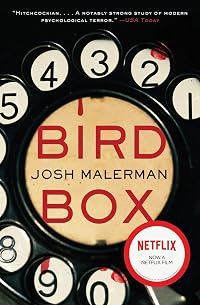
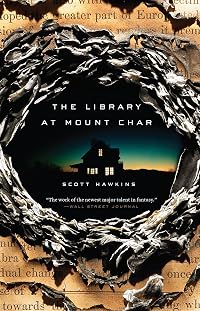
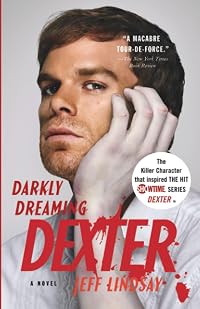
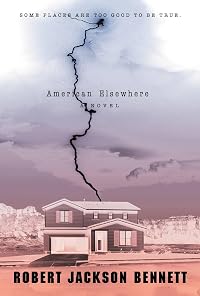
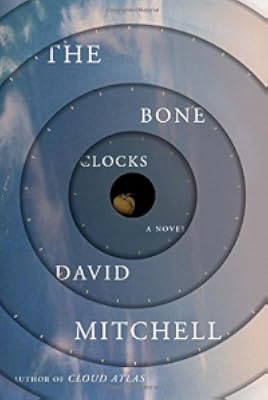
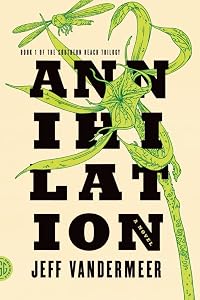
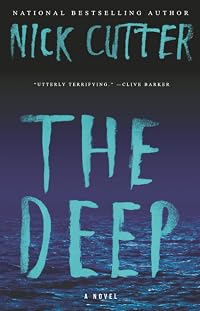
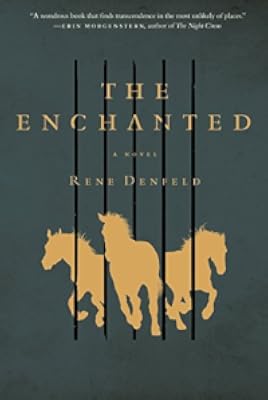
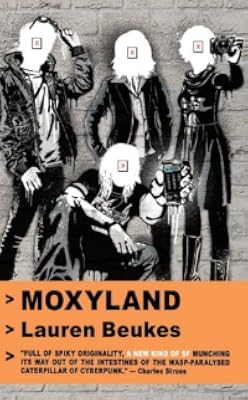
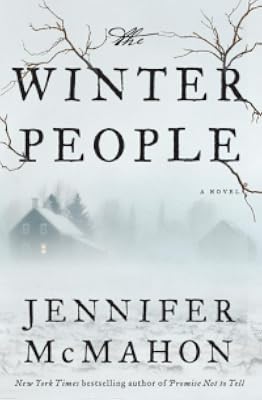
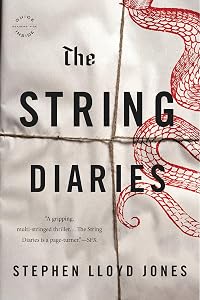
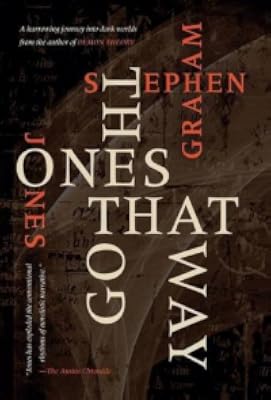
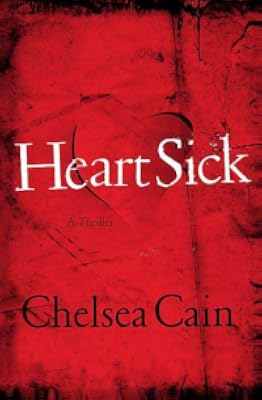
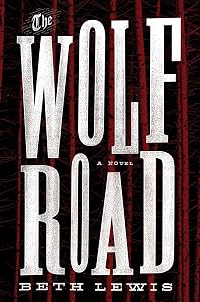
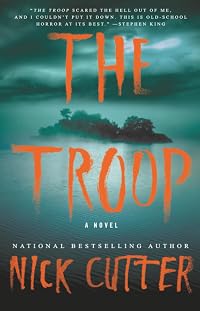
sturlington Urban decay and the thin spaces between realities.
sturlington Both set in Detroit.

WhatUsername Decaying city scape, role of the artist, journalists down on their luck
Member Reviews
I rarely, if ever, comment on a book before completing it or giving up on it, but at this point, I'm halfway through this novel. And it's flat-out amazing so far.
It feels like a slightly more supernatural [a:Robert Pobi|5345272|Robert Pobi|https://d.gr-assets.com/authors/1322153231p2/5345272.jpg]. I love that it's completely grounded and gritty, but the gritty reality is thin is spots and Beukes gives us a hit of something other.
This could be True Detective, season two. Now, I have to get through the second half.
And now, a few days after writing the words above, I've finished the book.
All I can saw is wow. This book is ambitious, going for so many targets and hitting perfect bulls-eyes on each and every one.
The horrible desolation of a show more bankrupt Detroit.
The beautiful desolation of a bankrupt Detroit.
The art that comes out of desperation.
Social media and its intrusiveness into our lives.
Bullying.
Rape culture.
Mental illness.
The power of dreams.
I could go on and on, but there's no need. Just read this book.
Seriously, this is the easiest five-star rating I've given in a long, long time.
...there are places that are borders. Where something was, but isn't any more, and other things can surface...
...everything is so physical. I wanted to get at the meaning.
...I opened them up to let the dreams out, and then I made them into the dreams they wanted. That should have been enough.
But it wasn't.
There's so much I want to say about this book. I want to gush about this book. I want to revel in the hinted supernatural. But there's no way to do this book justice in a simple review. Just read this book.
Quite often through the reading of this novel, I kept wishing it would be adapted as season three of True Detective because it's the perfect companion piece to the fantastic characterization, gritty realism and supernatural undertones of that show's first season. Mix in some [a:Robert Pobi|5345272|Robert Pobi|https://d.gr-assets.com/authors/1322153231p2/5345272.jpg] and you've got a good sense of where this novel is coming from.
Just read this book. show less
It feels like a slightly more supernatural [a:Robert Pobi|5345272|Robert Pobi|https://d.gr-assets.com/authors/1322153231p2/5345272.jpg]. I love that it's completely grounded and gritty, but the gritty reality is thin is spots and Beukes gives us a hit of something other.
This could be True Detective, season two. Now, I have to get through the second half.
And now, a few days after writing the words above, I've finished the book.
All I can saw is wow. This book is ambitious, going for so many targets and hitting perfect bulls-eyes on each and every one.
The horrible desolation of a show more bankrupt Detroit.
The beautiful desolation of a bankrupt Detroit.
The art that comes out of desperation.
Social media and its intrusiveness into our lives.
Bullying.
Rape culture.
Mental illness.
The power of dreams.
I could go on and on, but there's no need. Just read this book.
Seriously, this is the easiest five-star rating I've given in a long, long time.
...there are places that are borders. Where something was, but isn't any more, and other things can surface...
...everything is so physical. I wanted to get at the meaning.
...I opened them up to let the dreams out, and then I made them into the dreams they wanted. That should have been enough.
But it wasn't.
There's so much I want to say about this book. I want to gush about this book. I want to revel in the hinted supernatural. But there's no way to do this book justice in a simple review. Just read this book.
Quite often through the reading of this novel, I kept wishing it would be adapted as season three of True Detective because it's the perfect companion piece to the fantastic characterization, gritty realism and supernatural undertones of that show's first season. Mix in some [a:Robert Pobi|5345272|Robert Pobi|https://d.gr-assets.com/authors/1322153231p2/5345272.jpg] and you've got a good sense of where this novel is coming from.
Just read this book. show less
This is my first Lauren Beukes, but consider me a fan. I saw another comment which called this a police procedural, and I do not know what book she read, but clearly not this one. Calling this a police procedural is like calling To Kill a Mockingbird a legal thriller. It is silly, and misses the entire point. This is a good old-fashioned horror novel, and a really great piece of social satire.
I love that Beukes set this in my hometown. Detroit's little rise from the ashes is a great metaphor for this moment in human history, where people flock not to see beauty or industry, but to celebrate ruin porn, to revel in the almost total annihilation of this bit of civilization. We are all id, responding for the sake of responding, acting so we show more can feel, without worrying about if the feelings we are eliciting are good. Falling "in love" because someone is a warm body, and taking no time to determine if you share anything other then kingdom, phylum, genus and species. There is no interest in analysis or in finding good. The world is one long Reddit thread. This is horror for that world.
Great horror is not primarily about blood and guts, its about being creeped out, and Beukes does a great job with that. Child killers, rapists, online pedophiles, conspiracy theorists, good men defined by mistakes made at 14, pseudo-centaurs, aging hipsters, and the death of empathy! Beaukes throws open the doors of the 21st century anxiety closet.
This book is sad, and sweet, and funny, and terrifying, and really gorgeously researched and written. There were moments I felt like I was in a screenplay, where things were too well drawn and there was no room for me, the reader, to use my imagination. Other than that though, I just enjoyed the hell out of this a 4.5. show less
I love that Beukes set this in my hometown. Detroit's little rise from the ashes is a great metaphor for this moment in human history, where people flock not to see beauty or industry, but to celebrate ruin porn, to revel in the almost total annihilation of this bit of civilization. We are all id, responding for the sake of responding, acting so we show more can feel, without worrying about if the feelings we are eliciting are good. Falling "in love" because someone is a warm body, and taking no time to determine if you share anything other then kingdom, phylum, genus and species. There is no interest in analysis or in finding good. The world is one long Reddit thread. This is horror for that world.
Great horror is not primarily about blood and guts, its about being creeped out, and Beukes does a great job with that. Child killers, rapists, online pedophiles, conspiracy theorists, good men defined by mistakes made at 14, pseudo-centaurs, aging hipsters, and the death of empathy! Beaukes throws open the doors of the 21st century anxiety closet.
This book is sad, and sweet, and funny, and terrifying, and really gorgeously researched and written. There were moments I felt like I was in a screenplay, where things were too well drawn and there was no room for me, the reader, to use my imagination. Other than that though, I just enjoyed the hell out of this a 4.5. show less
Lauren Beukes is a master. In "The Shining Girls" she told of a serial murderer who discovered a time portal who was able to commit his murders then slip to safety in another era--until he mismanaged one of his crimes, leaving his victim alive to pursue him through time. That's a plot that could have itself been horribly mismanaged, but Ms. Beukes told it in a way that was not only thrilling, but filled with characterization and atmosphere.
She does the same "Broken Monsters." Another serial killer--a very disturbed individual. But this one is rooted in a very distinct time period--today--and the story proceeds pretty strictly as a procedural, with no science fiction-y or supernatural elements, until . . .
I'll get to that "until" part in show more a few moments.
There is a pretty extensive cast of characters in the book. And the talent of Ms. Beukes is evident is being able to portray each of them distinctively. Most memorable in my mind is the killer himself. Ms. Beukes is able to get inside this very troubled person's head and relate to us his disturbing take on all around him. Of course, I took his jagged thinking as strictly the result of mental illness. But that brings us to the "until" part again . . .
The characters all begin at disparate points in the narrative. And while the reader knows that they're all going to be brought together somehow in the end, the "fun" comes in seeing how that happens. Again, Ms. Beukes is great at this storytelling.
She is also remarkable in her rendering of setting and atmosphere. Ms. Beukes is South African. But she chose to set "The Shining Girls" in Chicago and "Broken Monsters" in Detroit. She got both cities just right.
I really loved this book and was prepared to give it five stars. It's rare to find a thriller as well-written and as well-told as this. But then came the denouement, and I was caught by surprise by the addition of Stephen King-y elements that I thought were totally unnecessary. I believe that Ms. Beukes was heading to this kind of ending all the time (the thoughts in the killer's mind apparently not so much the result of mental illness but the result of some external influence), but I think it would have been a stronger novel, standing on its own, without it.
I remain a strong fan of Lauren Beukes. But may she remain Lauren Beukes. And may Stephen King remain Stephen King. show less
She does the same "Broken Monsters." Another serial killer--a very disturbed individual. But this one is rooted in a very distinct time period--today--and the story proceeds pretty strictly as a procedural, with no science fiction-y or supernatural elements, until . . .
I'll get to that "until" part in show more a few moments.
There is a pretty extensive cast of characters in the book. And the talent of Ms. Beukes is evident is being able to portray each of them distinctively. Most memorable in my mind is the killer himself. Ms. Beukes is able to get inside this very troubled person's head and relate to us his disturbing take on all around him. Of course, I took his jagged thinking as strictly the result of mental illness. But that brings us to the "until" part again . . .
The characters all begin at disparate points in the narrative. And while the reader knows that they're all going to be brought together somehow in the end, the "fun" comes in seeing how that happens. Again, Ms. Beukes is great at this storytelling.
She is also remarkable in her rendering of setting and atmosphere. Ms. Beukes is South African. But she chose to set "The Shining Girls" in Chicago and "Broken Monsters" in Detroit. She got both cities just right.
I really loved this book and was prepared to give it five stars. It's rare to find a thriller as well-written and as well-told as this. But then came the denouement, and I was caught by surprise by the addition of Stephen King-y elements that I thought were totally unnecessary. I believe that Ms. Beukes was heading to this kind of ending all the time (the thoughts in the killer's mind apparently not so much the result of mental illness but the result of some external influence), but I think it would have been a stronger novel, standing on its own, without it.
I remain a strong fan of Lauren Beukes. But may she remain Lauren Beukes. And may Stephen King remain Stephen King. show less
I just LOVE Lauren Beukes. I really enjoy her last book [b:The Shining Girls|16131077|The Shining Girls|Lauren Beukes|https://d.gr-assets.com/books/1352227705s/16131077.jpg|21956898], and this was even better. She combines horror and crime, brilliantly, and always includes a clear-sighted and sympathetic look at the way the world is and how it treats people, especially young women.
Broken Monsters starts with a number of disparate characters and plots, and slowly weaves them together beautifully. You understand the characters completely, even if you don't always like them. The way she includes modern social media as some parts of the chapters could be gimmicky, but avoids it by coming across as very real.
Broken Monsters starts with a number of disparate characters and plots, and slowly weaves them together beautifully. You understand the characters completely, even if you don't always like them. The way she includes modern social media as some parts of the chapters could be gimmicky, but avoids it by coming across as very real.
I want you to look in a mirror. Are you looking in a mirror? I'll wait.
Okay, ready?
Now recall the worst thing you ever did. Maybe you hurt an author's feelings. Really inhabit that moment. Don't stop looking in the mirror! Are you sad? Yeah? Imagine that you need a hug, but there's no one to hug you. All of the people who might hug you are pervs. There's probably a single tear running down your cheek right now. You're weak.
So, that sums up how you'll feel after finishing Lauren Beukes's Broken Monsters (Mulholland Books, September 2014). You should read it. Like, right now. But prepare to drown the ceremony of innocence. Face down in a kiddie pool with two inches of dirty water in the bottom. In the back yard of a house that serves as a show more meth lab.
Broken Monsters is set in present day Detroit, a provocative choice: The capital of ruin p***, target of political jeremiads, butt of jokes, looming symbol of American decline. Had Beukes failed to tell a story worthy of her chosen setting, Broken Monsters might have been a stillbirth, another corpse to stack in the Motor City's overflowing morgues. But Beukes rightly focuses on her characters, the people who call Detroit home, the humanity that's forgotten amid the point-scoring and jockeying for position, and that becomes the book's saving grace--for what it's worth. To paraphrase an encounter between the disgraced journalist Jonno Haim, who sees in Detroit's deterioration his chance for redemption: "People need to know this is happening," to which an artist replies, "We're here. We know."
Broken Monsters is, superficially, the story of a serial killer with a fetish for weird art. Think corpse montages. roadkill jigsaw puzzles. Imagine the loveliest thing you've ever seen, and then imagine that the devil vomited on it. And that he made eye contact with you while doing it. You get the idea. But Broken Monsters isn't a police procedural. It's not a mystery, not really, although readers will eagerly wonder how the story pans out. The identity of the killer is known from the beginning of the story, you see, so the question isn't "whodunnit," but "How in the hell will the paths of these poor saps intersect those of the murderer? And just what the hell is wrong with him?"
Detective Gabi Versado is the unlucky cop assigned the case that is, unbeknownst to the police, the first public installation of the Detroit Monster's art. It's gruesome, and it's tragic, and Gabi, a good cop, is determined to find the killer, but the police have little evidence to go on, with the exception of some of the, er, materials used in the "piece." Gabi's homelife complicates her efforts: Layla, Gabi's teenage daughter, resents her parents' divorce, and, despite being a good kid, demonstrates a knack for getting into trouble. And Broken Monsters is really Layla's show, Layla's struggle to realize herself as an individual in a fallen world.
Beukes spent time in Detroit prior to (or perhaps during) the writing of Broken Monsters, and it shows, at least to this reader, who confesses that he's never visited. Beukes references neighborhoods the way I imagine a local might, and, during her visit, she clearly spent time at abandoned industrial sites, the derelict remnants of which are like sores on the civic body. There is a sense of emptiness here, that those who had the means fled, and that those who remain are trapped in an oversized, tumbledown municipality built in better days with a brighter future in mind. Characters, such as TK, haunt the streets, scavenging the goods left behind by those evicted from their homes. And if it can't be stolen, or if it's not worth it, then the vultures destroy it, the petty vandalism of those who have nothing left to lose.
And loss is really the unifying theme of Broken Monsters, whether it's the loss of a loved one, or a relationship, or innocence, or sanity. Or, in one memorable scene, teeth. (Don't ask. Best to read it for yourself.) Beukes's Detroit is stalked by a vicious circle of predators and prey, and the delineation between one and the other is never quite clear. Like the Detroit Monster's artwork, individual's roles are transgressive. Beukes's characters are neither fully good nor full bad--like real human beings, incidentally--and nearly all of the major characters undergo a flip-flop at some point in the narrative that shifts the reader's perspective from skepticism to sympathy, or vice versa. For instance, Jonno's "[c]areer highlights: playing Scheherazade to a serial killer." Readers will laugh even as they weep, knowing that Jonna and his fellow characters knowingly chose their fates.
Beukes's atmosphere, her sense of place, her plotting, and her characterization are spot on. She wields tension like a knife, twisting it in the reader's guts: "Something is happening...Something is building like a wave. Tsunamis pull all the ocean back before they come crashing in." Well, shit, Lauren, what choice do I have but to read on? She engages, too, in cutting commentary on our relationship with social media, and the way it creeps into, colonizes, every corner of our lives. There is something awful, something objectifying and voyeuristic, about staring at a blog full of images of Detroit's deterioration--but ashamed of ourselves as we might be, we can't look away. Beukes knows that, holds the mirror up to the reader's face, and refuses to let her flinch.
Broken Monsters isn't perfect. (Although it is damn near.) This reader enjoyed the introductions of the characters, one at a time, early in the novel, and was primed to expect equal treatment of them throughout. That doesn't happen. Nor should it; some characters, and some storylines, are, of course, more important (and interesting) than others. Still, the introduction hinted at an equal time in the narrative that doesn't pan out. TK is present early on, but disappears after the halfway point, only to return. Layla, and her friend Cas, rise to prominence after the first third of the narrative is complete. Jonno dips in and out again as Beukes needs him. Part of this is due to the panoramic story she's telling, but some readers might have hoped for more consistency in Beukes's treatment of her characters.
Certain plot elements are predictable. Readers will be able to predict a certain secondary character's back story early on. Likewise, identifying the killer early on could have been a risk if it weren't for the supernatural elements Beukes eases into the narrative. Beukes evokes tension by leading on the reader, ever curious to see who will next cross paths with the Detroit Monster. That supernatural mystery, too, is a draw. Beukes uses a (blessedly) light touch with the supernatural throughout the novel, although she brings it to frightening fruition at the narrative's climax. It's a bit "squishy," though, never quite clear what it is or is not, which will appeal to some readers but put off those who need more definitive answers. (On a personal note, this reader was uncomfortable with knowing the killer's thoughts, which has the perhaps unintended consequence of rationalizing his behavior.) Readers sensitive to gore and grimness are warned away. Me? I was like, "F*** this, I'm done. I'm all in."
These are minor quibbles, though, when taken in the context of what is otherwise an overwhelming success of a novel. Broken Monsters was well received when published in September, and justly so. This reader will go so far as to say that Broken Monsters will end up on its share of the "best of" lists that are ubiquitous this time of year, although it's likely to be pigeonholed as a "genre" novel. I'm not sure that I would trot out the overused phrase "genre defying" to describe Broken Monsters, but I don't think I need to; it speaks for itself. (And that speech consists of shrieks followed by whimpers in the dark.) Beukes has in Broken Monsters an unqualified success. Highly recommended.
Hey, Lauren: If you see this, you've made me a fan. (And my readers will know I don't say things like that often.) show less
Okay, ready?
Now recall the worst thing you ever did. Maybe you hurt an author's feelings. Really inhabit that moment. Don't stop looking in the mirror! Are you sad? Yeah? Imagine that you need a hug, but there's no one to hug you. All of the people who might hug you are pervs. There's probably a single tear running down your cheek right now. You're weak.
So, that sums up how you'll feel after finishing Lauren Beukes's Broken Monsters (Mulholland Books, September 2014). You should read it. Like, right now. But prepare to drown the ceremony of innocence. Face down in a kiddie pool with two inches of dirty water in the bottom. In the back yard of a house that serves as a show more meth lab.
Broken Monsters is set in present day Detroit, a provocative choice: The capital of ruin p***, target of political jeremiads, butt of jokes, looming symbol of American decline. Had Beukes failed to tell a story worthy of her chosen setting, Broken Monsters might have been a stillbirth, another corpse to stack in the Motor City's overflowing morgues. But Beukes rightly focuses on her characters, the people who call Detroit home, the humanity that's forgotten amid the point-scoring and jockeying for position, and that becomes the book's saving grace--for what it's worth. To paraphrase an encounter between the disgraced journalist Jonno Haim, who sees in Detroit's deterioration his chance for redemption: "People need to know this is happening," to which an artist replies, "We're here. We know."
Broken Monsters is, superficially, the story of a serial killer with a fetish for weird art. Think corpse montages. roadkill jigsaw puzzles. Imagine the loveliest thing you've ever seen, and then imagine that the devil vomited on it. And that he made eye contact with you while doing it. You get the idea. But Broken Monsters isn't a police procedural. It's not a mystery, not really, although readers will eagerly wonder how the story pans out. The identity of the killer is known from the beginning of the story, you see, so the question isn't "whodunnit," but "How in the hell will the paths of these poor saps intersect those of the murderer? And just what the hell is wrong with him?"
Detective Gabi Versado is the unlucky cop assigned the case that is, unbeknownst to the police, the first public installation of the Detroit Monster's art. It's gruesome, and it's tragic, and Gabi, a good cop, is determined to find the killer, but the police have little evidence to go on, with the exception of some of the, er, materials used in the "piece." Gabi's homelife complicates her efforts: Layla, Gabi's teenage daughter, resents her parents' divorce, and, despite being a good kid, demonstrates a knack for getting into trouble. And Broken Monsters is really Layla's show, Layla's struggle to realize herself as an individual in a fallen world.
Beukes spent time in Detroit prior to (or perhaps during) the writing of Broken Monsters, and it shows, at least to this reader, who confesses that he's never visited. Beukes references neighborhoods the way I imagine a local might, and, during her visit, she clearly spent time at abandoned industrial sites, the derelict remnants of which are like sores on the civic body. There is a sense of emptiness here, that those who had the means fled, and that those who remain are trapped in an oversized, tumbledown municipality built in better days with a brighter future in mind. Characters, such as TK, haunt the streets, scavenging the goods left behind by those evicted from their homes. And if it can't be stolen, or if it's not worth it, then the vultures destroy it, the petty vandalism of those who have nothing left to lose.
And loss is really the unifying theme of Broken Monsters, whether it's the loss of a loved one, or a relationship, or innocence, or sanity. Or, in one memorable scene, teeth. (Don't ask. Best to read it for yourself.) Beukes's Detroit is stalked by a vicious circle of predators and prey, and the delineation between one and the other is never quite clear. Like the Detroit Monster's artwork, individual's roles are transgressive. Beukes's characters are neither fully good nor full bad--like real human beings, incidentally--and nearly all of the major characters undergo a flip-flop at some point in the narrative that shifts the reader's perspective from skepticism to sympathy, or vice versa. For instance, Jonno's "[c]areer highlights: playing Scheherazade to a serial killer." Readers will laugh even as they weep, knowing that Jonna and his fellow characters knowingly chose their fates.
Beukes's atmosphere, her sense of place, her plotting, and her characterization are spot on. She wields tension like a knife, twisting it in the reader's guts: "Something is happening...Something is building like a wave. Tsunamis pull all the ocean back before they come crashing in." Well, shit, Lauren, what choice do I have but to read on? She engages, too, in cutting commentary on our relationship with social media, and the way it creeps into, colonizes, every corner of our lives. There is something awful, something objectifying and voyeuristic, about staring at a blog full of images of Detroit's deterioration--but ashamed of ourselves as we might be, we can't look away. Beukes knows that, holds the mirror up to the reader's face, and refuses to let her flinch.
Broken Monsters isn't perfect. (Although it is damn near.) This reader enjoyed the introductions of the characters, one at a time, early in the novel, and was primed to expect equal treatment of them throughout. That doesn't happen. Nor should it; some characters, and some storylines, are, of course, more important (and interesting) than others. Still, the introduction hinted at an equal time in the narrative that doesn't pan out. TK is present early on, but disappears after the halfway point, only to return. Layla, and her friend Cas, rise to prominence after the first third of the narrative is complete. Jonno dips in and out again as Beukes needs him. Part of this is due to the panoramic story she's telling, but some readers might have hoped for more consistency in Beukes's treatment of her characters.
Certain plot elements are predictable. Readers will be able to predict a certain secondary character's back story early on. Likewise, identifying the killer early on could have been a risk if it weren't for the supernatural elements Beukes eases into the narrative. Beukes evokes tension by leading on the reader, ever curious to see who will next cross paths with the Detroit Monster. That supernatural mystery, too, is a draw. Beukes uses a (blessedly) light touch with the supernatural throughout the novel, although she brings it to frightening fruition at the narrative's climax. It's a bit "squishy," though, never quite clear what it is or is not, which will appeal to some readers but put off those who need more definitive answers. (On a personal note, this reader was uncomfortable with knowing the killer's thoughts, which has the perhaps unintended consequence of rationalizing his behavior.) Readers sensitive to gore and grimness are warned away. Me? I was like, "F*** this, I'm done. I'm all in."
These are minor quibbles, though, when taken in the context of what is otherwise an overwhelming success of a novel. Broken Monsters was well received when published in September, and justly so. This reader will go so far as to say that Broken Monsters will end up on its share of the "best of" lists that are ubiquitous this time of year, although it's likely to be pigeonholed as a "genre" novel. I'm not sure that I would trot out the overused phrase "genre defying" to describe Broken Monsters, but I don't think I need to; it speaks for itself. (And that speech consists of shrieks followed by whimpers in the dark.) Beukes has in Broken Monsters an unqualified success. Highly recommended.
Hey, Lauren: If you see this, you've made me a fan. (And my readers will know I don't say things like that often.) show less
Another serial killer with a supernatural connection from Beukes, though a very different supernatural connection than her The Shining Girls. Here, rather than misogyny, the killer is driven by a visitation/possession that makes him want to open the doors of perception and transform his victims (so there’s a lot of Hannibal-type display described); he does not know right from wrong, and the central tension is about how far he’ll get before he’s caught since he’s disorganized enough to be easily caught. Or would be, if he weren’t working in Detroit, where the city is falling apart; the story also follows a police officer on the case, her daughter (who has troubles of her own that intersect with the case), and a predatory show more journalist whose motivations are pathetic, fully human, and awful. It was really well written, but I don’t think I much like the supernatural serial killer genre Beukes has wrested away from Jack the Ripper retellings. show less
This novel starts, more or less, with the Detroit police department finding a gruesome murder scene: the top half of a boy crudely joined onto the bottom half of a deer. And from there, things get... stranger.
I really enjoyed this one, particularly the way it seems to twist around from one genre to another, starting out mostly as a police procedural and slowly becoming creepy supernatural horror, with a lot of interesting stops along the way. This feels like it should result in as much of a stitched-together mess as the boy/deer hybrid, but somehow it all flows together in a way that feels very natural, and while I imagine the surreal fantasy elements are not going to be everybody's cup of tea, they and the strange, skewed, almost show more low-key way they're approached worked extremely well for me. So did the wonderfully well-drawn characters, the assured and confident writing style, and the more-complex-than-they-look themes about art and urban decay and life in the age of the internet. Good stuff. show less
I really enjoyed this one, particularly the way it seems to twist around from one genre to another, starting out mostly as a police procedural and slowly becoming creepy supernatural horror, with a lot of interesting stops along the way. This feels like it should result in as much of a stitched-together mess as the boy/deer hybrid, but somehow it all flows together in a way that feels very natural, and while I imagine the surreal fantasy elements are not going to be everybody's cup of tea, they and the strange, skewed, almost show more low-key way they're approached worked extremely well for me. So did the wonderfully well-drawn characters, the assured and confident writing style, and the more-complex-than-they-look themes about art and urban decay and life in the age of the internet. Good stuff. show less
Members
- Recently Added By
Lists

ALA The Reading List
490 works; 28 members

Best Crime Fiction
262 works; 39 members

Female Protagonist
1,056 works; 57 members

LitReactor Best Horror of the Decade
20 works; 1 member

Paste's 50 Best Horror Novels of All time
50 works; 6 members

Top Five Books of 2014
1,064 works; 398 members

Female Horror Author
35 works; 2 members

Read-Alike - The Final Girl Support Group, Grady Hendrix
8 works; 1 member
Shirley Jackson Award Winners and Shortlist 2007-2020
77 works; 6 members

Diverse Horror
262 works; 6 members

Recommended Horror and Dark Fiction by Women
81 works; 13 members

Best Horror Mega-List
342 works; 6 members

Books for Fans of Stranger Things
84 works; 7 members

Books Set in Michigan
15 works; 4 members
Reedsydiscovery 100 Best Horror Books of All Time
100 works; 5 members

SantaThing 2014 Gifts
299 works; 17 members

Kirkus Reviews Best Fiction of 2014
100 works; 7 members

Strange Cities
30 works; 7 members
Ultimate Thriller Guide
52 works; 4 members

To Read
617 works; 7 members

Books Read in 2016
4,666 works; 199 members

GoodReads Horror Choice Awards
160 works; 4 members
Author Information

36+ Works 8,057 Members
Some Editions
Awards and Honors
Awards
Distinctions
Common Knowledge
- Original publication date
- 2014-09-16
- People/Characters
- Gabriella Versado; Layla Stirling-Versado; Jonno Haim; Thomas "TK" Keen; Clayton Broom; Jenefer "Jen Q" Quillane (show all 32); Cassandra Holt; Bob Boyd; Luke Stricker; Officer Marcus "Sparkles" Jones; Ramón Flores; Mike Croff; Ovella Washington; Captain Joe Miranda; Dorian Lloyd; Philip Lowe; Jessica diMenna; Andy Amis-Holt; Betty Spinks; Diyana Green; Travis Russo; Patrick Thorpe; Dr. Mackay; Ben Amis-Holt; Helen Amis-Holt; Maxie Lautner; Louanne Becker; Juliet Lafonte; Paul Lafonte; Darcy D'Angelo; Iya; Timor
- Important places
- Detroit, Michigan, USA
- First words
- The body.
- Last words
- (Click to show. Warning: May contain spoilers.)You have to find a way to live with it.
- Publisher's editor
- Moffett, Helen
- Blurbers
- Ellroy, James; Abbott, Megan; Pochoda, Ivy; LaPlante, Alice; King, Stephen; Gibson, William (show all 7); Flynn, Gillian
Classifications
Statistics
- Members
- 1,564
- Popularity
- 14,627
- Reviews
- 108
- Rating
- (3.64)
- Languages
- 6 — Dutch, English, French, German, Hungarian, Spanish
- Media
- Paper, Audiobook, Ebook
- ISBNs
- 25
- ASINs
- 8