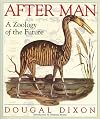
After Man: A Zoology of the Future
by Dougal Dixon
On This Page
Description
What exotic creatures does tomorrow hold? Dougal Dixon's classic work of speculative anthropology blends science and fantasy in a stunning zoology of the future.Tags
Recommendations







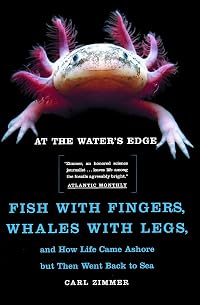


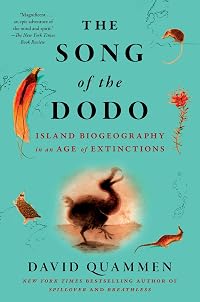

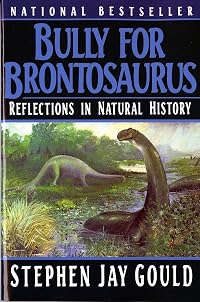


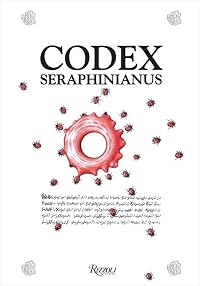





Member Recommendations

Member Reviews
This book is very, very pretty, and also a fascinating excercise in worldbuilding for the fun of it. It describes a postulated future Earth, 50 million years from now, built on the remains of a world which was devastated by mankind and then regenerated after Man wiped himself out.
It's a wonderful demonstration of evolution in action, with a guide to Earth's evolutionary history in the front, and every new animal described in terms of its evolutionary history and sorted by biome, with gorgeous watercolor illustrations of everything.
I had some difficulties with the book itself, though: firstly, the particular species he chose to wipe out as a results of Mankind, and the species which survived - he thinks rabbits and rats would survive show more because of their ability to live among human habitats, but not deer, cats, or horses? I'm sure a lot of the individual choices were simply down to what animals he wanted to work with, and what would give cool results, -- and extinctions do often seem utterly arbitrary - but presenting it as the obvious result seems like sloppy thinking.
Much more importantly, though, he focuses entirely on charismatic animals. There is almost no mention of fish or invertebrates, and plant communities - which have if anything been more wholly altered by human action - are left unmentioned and completely unchanged, so that his fantastical rabbucks and giant predatory rats wander through a forest ecosystem of still entirely recognizable modern plants. show less
It's a wonderful demonstration of evolution in action, with a guide to Earth's evolutionary history in the front, and every new animal described in terms of its evolutionary history and sorted by biome, with gorgeous watercolor illustrations of everything.
I had some difficulties with the book itself, though: firstly, the particular species he chose to wipe out as a results of Mankind, and the species which survived - he thinks rabbits and rats would survive show more because of their ability to live among human habitats, but not deer, cats, or horses? I'm sure a lot of the individual choices were simply down to what animals he wanted to work with, and what would give cool results, -- and extinctions do often seem utterly arbitrary - but presenting it as the obvious result seems like sloppy thinking.
Much more importantly, though, he focuses entirely on charismatic animals. There is almost no mention of fish or invertebrates, and plant communities - which have if anything been more wholly altered by human action - are left unmentioned and completely unchanged, so that his fantastical rabbucks and giant predatory rats wander through a forest ecosystem of still entirely recognizable modern plants. show less
A really interesting idea, well executed. The explanations of the ecosystems and the way they were filled seem plausible to me (a complete amateur, to be fair) and the illustrations, which range from uncanny valley to outright horror, have enough cohesiveness to suggest a real world.
Every biology nerd should read this. What animals would survive man's extinction? How would they evolve in 50 million years? Penguins the size of whales? Antelopes the size of elephants? Predatory running bats the size of dogs? PREDATORY RUNNING BATS THE SIZE OF DOGS? Sign me up!
This fascinating book looks at how life might evolve after humans are gone. It takes us 50 million years into the future, where the only remaining primate is a kind of swimming monkey.
I first discovered this book when I was about eight years old in the local library. But then it was stolen so I could no longer drool over the beautifully drawn images. I found it again in later years, thanks to the internet, and it is one of my all-time favourite books. I can't rave about this book enough!
I remember thinking this was stupid
I remember thinking this was stupid
Members
- Recently Added By
Published Reviews
ThingScore 100
After Man: A Zoology of the Future, Dougal Dixon’s 1981 book that takes readers to the late Cenozoic epoch known as the Posthomic, the era “After Man.” In his introduction to After Man, biologist, author, and TV presenter Desmond Morris would enthuse, “as soon as I saw this book, I wished I had written it.” Nominated for the Hugo Award, and something of a cult classic, After Man show more would go on to spawn a series of books, a television show, and the discipline of speculative evolution, which combines art, literature, and science to imagine not just how creatures might appear in the future, but how they might have developed in alternate timelines or on other planets. show less
added by elenchus
Lists

Best Post-Apocalyptic Stories
143 works; 88 members

Speculative non-fiction
25 works; 2 members
Author Information

239 Works 5,591 Members
Dougal Dixon was born in Dumfries, Scotland in 1947. He received a bachelor of science degree in geology from the University of St. Andrews in 1970 and a master of science degree in 1972. He entered the publishing field in 1973 and became a freelancer in 1980. He is an internationally recognized authority on dinosaurs and is one of the most show more popular science writers in the United Kingdom. His books include After Man: A Zoology of the Future, The New Dinosaurs, Man After Man, and Time Exposure (aka The Age of Dinosaurs). He has also served as a special advisor for programs and motion pictures about dinosaurs in the United States, Great Britain and Japan. He received the Distinguished Achievement Award for Excellence in Educational Journalism by the Educational Press Association of America in 1993, the Helen Roney Sattler Award in 1993, the Children's Book Council 1994 Outstanding Trade Science Book Award, and the Times Educational Supplement Primary Schoolbook Award in 1996. (Bowker Author Biography) show less
All Editions
Some Editions
Awards and Honors
Awards
Common Knowledge
- Canonical title*
- Après l'homme, les animaux du futur
- Original title
- After man, a zoology of the future
- Original publication date
- 1981
- Important places
- Earth; Polar Ocean; Southern Ocean; Northern Continent; Africa; Europe (show all 15); Asia; North America; South America; Lemuria; Islands of Pacaus; Islands of Batavia; Pacific Ocean; Atlantic Ocean; Indian Ocean
- First words
- The form and position of living things on earth can be attributed to two things -- evolution and environment.
- Last words
- (Click to show. Warning: May contain spoilers.)It is almost certain that life will always exist somewhere in the universe in one form or another.
- Blurbers
- Morris, Desmond
*Some information comes from Common Knowledge in other languages. Click "Edit" for more information.
Classifications
Statistics
- Members
- 712
- Popularity
- 40,086
- Reviews
- 7
- Rating
- (4.11)
- Languages
- 10 — Danish, Dutch, English, Finnish, French, German, Hungarian, Japanese, Spanish, Swedish
- Media
- Paper, Ebook
- ISBNs
- 21
- ASINs
- 8