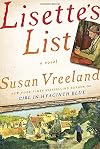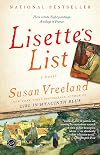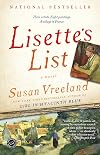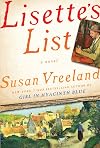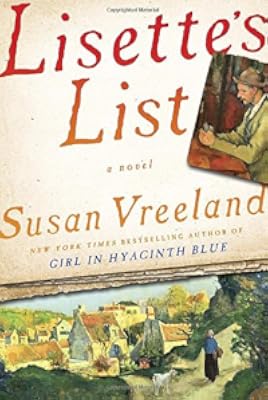
Lisette's List
by Susan Vreeland
On This Page
Description
From Susan Vreeland, bestselling author of such acclaimed novels as Girl in Hyacinth Blue, Luncheon of the Boating Party, and Clara and Mr. Tiffany, comes a richly imagined story of a woman’s awakening in the south of Vichy France—to the power of art, to the beauty of provincial life, and to love in the midst of war.In 1937, young Lisette Roux and her husband, André, move from Paris to a village in Provence to care for André’s grandfather Pascal. Lisette regrets having to give up show more her dream of becoming a gallery apprentice and longs for the comforts and sophistication of Paris. But as she soon discovers, the hilltop town is rich with unexpected pleasures.
Pascal once worked in the nearby ochre mines and later became a pigment salesman and frame maker; while selling his pigments in Paris, he befriended Pissarro and Cézanne, some of whose paintings he received in trade for his frames. Pascal begins to tutor Lisette in both art and life, allowing her to see his small collection of paintings and the Provençal landscape itself in a new light. Inspired by Pascal’s advice to “Do the important things first,” Lisette begins a list of vows to herself (#4. Learn what makes a painting great). When war breaks out, André goes off to the front, but not before hiding Pascal’s paintings to keep them from the Nazis’ reach.
With German forces spreading across Europe, the sudden fall of Paris, and the rise of Vichy France, Lisette sets out to locate the paintings (#11. Find the paintings in my lifetime). Her search takes her through the stunning French countryside, where she befriends Marc and Bella Chagall, who are in hiding before their flight to America, and acquaints her with the land, her neighbors, and even herself in ways she never dreamed possible. Through joy and tragedy, occupation and liberation, small acts of kindness and great acts of courage, Lisette learns to forgive the past, to live robustly, and to love again.
Praise for Lisette’s List
“Vreeland’s love of painters and painting, her meticulous research and pitch-perfect descriptive talents . . . are abundantly evident in her new novel.”—The Washington Post
“This historical novel’s . . . great strength is its lovingly detailed setting. . . . Readers will enjoy lingering in the sun-dappled, fruit-scented Provençal landscape that Vreeland brings to life.”—The Boston Globe. show less
Tags
Recommendations
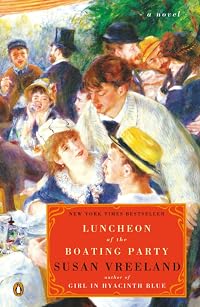
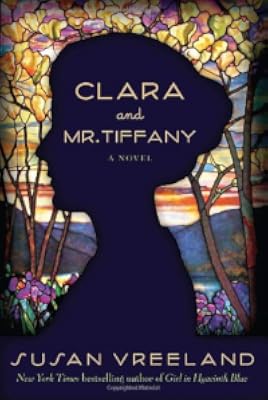


Member Recommendations

cometahalley Un romanzo in cui si intrecciano Storia e Arte
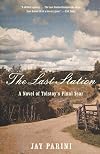
cometahalley Un romanzo che restituisce il profilo umano di un grande scrittore, Tolstoj. Anche in questa opera, come nel libro della Vreeland, l'arte prende vita nell'intimità familiare di grandi personaggi
Member Reviews
In 1937, Lisette and her husband Andre move from the hustle and bustle of Paris to a small French village to help care for Andre's aging grandfather, Pascal. Though Lisette initially struggles to adjust, as an art lover she takes solace in Pascal's small but worthy collection of paintings. When Andre goes off to war, he hides the paintings in order to keep them safe, though doesn't tell anyone, even Lisette, where he's hidden them.
I've read several of Vreeland's novels and it's obvious she loves art and art history. Her novels are well-researched and rich with detail. Unfortunately, sometimes the detail tends to bog down and slow the storytelling a bit too much, and I found that to be the case with this one. I did enjoy it, but I felt show more it was longer than it needed to be. show less
I've read several of Vreeland's novels and it's obvious she loves art and art history. Her novels are well-researched and rich with detail. Unfortunately, sometimes the detail tends to bog down and slow the storytelling a bit too much, and I found that to be the case with this one. I did enjoy it, but I felt show more it was longer than it needed to be. show less
When Lisette and her husband André receive urgent word that André's grandfather's health is failing, they abandon their cosmopolitan Parisian life and blossoming careers and relocate to the the Provençal countryside, where rustic village life awaits them. Lisette is especially disillusioned by all she has left behind, particularly when she learns that Pascal's home is lacking even running water, but she takes solace in a collection of paintings hanging in her new home and in growing to love Pascal himself as her own grandfather. As WWII threatens, André leaves to defend his country, but not before secretly hiding the paintings from even Lisette.
As an owner of a woefully analytical brain and an "underappreciator" of art in general, show more I'm nevertheless drawn inexplicably to Susan Vreeland's evocative tales surrounding art history. I was afraid at first that I would not be able to sympathize with Lisette. She comes off as unbearably whiny as the story opens, but thankfully her attitude improves, and one could even go so far as to say she eventually embraces her new life in this small village. Lisette's story is both inspiring and heartbreaking. show less
As an owner of a woefully analytical brain and an "underappreciator" of art in general, show more I'm nevertheless drawn inexplicably to Susan Vreeland's evocative tales surrounding art history. I was afraid at first that I would not be able to sympathize with Lisette. She comes off as unbearably whiny as the story opens, but thankfully her attitude improves, and one could even go so far as to say she eventually embraces her new life in this small village. Lisette's story is both inspiring and heartbreaking. show less
I loved this book. Several times during the reading I actually shed tears. The characters were so well defined that I could envision each in my mind when they appeared on the pages. It was a gentle book telling the stories of several lives lived in the small town in the South of France during a span of years which included WWII. I learned a lot of valuable insights into paintings as well as writing, The main character, educated and loved as an orphan in Paris, was schooled to not only see things but to describe them by contrasting them with other things. One time she exclaimed something was ugly, she was required to explain why she felt it ugly and after some thought she was able to articulate the feelings each face provoked in her - show more what is a different word for different, individuality. Not only a book about finding love after great loss, but also about embracing love in all its many disguises. show less
Lisette loves living in Paris, but when Pascal, her husband’s grandfather, becomes ill she and Andre must move to a small village in Provence to care for him. Lisette is immediately taken aback by life in Rousillion – the small home with no electricity, an outspoken and often grouchy old man and NO indoor plumbing. Andre quickly builds her an outhouse (the envy of all the neighbours) and she soon discovers Pascal is not the cantankerous old man she thought him to be. Before long he has her enthralled with his reminiscences of being an ochre miner in the countryside and then a pigment salesman and frame maker in Paris. She is astonished when he shows her his small collection of paintings by Pissaro, Cézanne and Picasso, with all of show more whom he traded his frames and pigments for paintings. When there is no denying that Pascal’s death is near, Lisette realizes the she has not only come to love the man but also his paintings and, although she still longs for Paris sometimes, the way of life in Rousillion. When the Second World War begins Andre goes off to the front, but sensing the danger of keeping the paintings in their small home, he hides them to keep them out of Nazi hands.
As the war draws to an end, and Lisette knows Andre is not returning she begins her list of things she must accomplish in her life and at the top of the list is to find the paintings Pascal treasured so much. This search leads her through the countryside surrounding the village. During her quest she meets Marc and Bella Chagall who not only gift her with a painting Chagall produces just for Lisette, but also teach her more about her neighbours and their way of life. With the discovery of each hidden work of art Lisette begins to understand more about herself and what she is capable of accomplishing.
Once again Ms. Vreeland does what she does best, incorporate her knowledge and love of art and history into an interesting story. This story moves along at a comfortable yet somewhat sedate pace, no doubt similar to the pace of life in 1940’s Rousillion. Not being drawn to books set in times of war I was a little apprehensive about picking this one up and, yes, it does contain some descriptions about the atrocities committed during WWII however those were not the central theme. Lisette’s List embodies some of my favorite subjects (and a few tips on making Marzipan, as well) so of course I enjoyed it. show less
As the war draws to an end, and Lisette knows Andre is not returning she begins her list of things she must accomplish in her life and at the top of the list is to find the paintings Pascal treasured so much. This search leads her through the countryside surrounding the village. During her quest she meets Marc and Bella Chagall who not only gift her with a painting Chagall produces just for Lisette, but also teach her more about her neighbours and their way of life. With the discovery of each hidden work of art Lisette begins to understand more about herself and what she is capable of accomplishing.
Once again Ms. Vreeland does what she does best, incorporate her knowledge and love of art and history into an interesting story. This story moves along at a comfortable yet somewhat sedate pace, no doubt similar to the pace of life in 1940’s Rousillion. Not being drawn to books set in times of war I was a little apprehensive about picking this one up and, yes, it does contain some descriptions about the atrocities committed during WWII however those were not the central theme. Lisette’s List embodies some of my favorite subjects (and a few tips on making Marzipan, as well) so of course I enjoyed it. show less
Lisette and her husband Andre leave Paris in 1937 and go to the (real) village of Roussillon in Provence to care for his aging grandfather, Pascal. Lisette is at first frustrated, because she hoped to work as an art museum curator in Paris, but she learns that Pascal met the artists Cezanne and Pissarro (through his work in the ochre mines, as a pigment salesman, and as a frame maker), and has some of their paintings, as well as a possible Picasso. When Andre enlists to fight in World War II, he hides the paintings. Much of the book is about what Lisette does to get through the war, and her quest to find the paintings afterward. She meets Mark and Bella Chagall, and is gifted with one of his paintings as well. The story moves slowly, show more but Vreeland does a wonderful job describing the Provençal countryside and way of life. The audiobook is read by Kim Bubbs, who does a wonderful job with all the French words in the book. The afterword identifies which paintings are real and which are not. show less
On the eve of WWII, Lisette moves from Paris to Roussillon, a small village in Provence, with her husband Andre to help care for his dying grandfather, Pascal. She is disappointed to leave Paris, where the arts culture is so important to her, and where she hopes one day to work as a curator in a museum. She discovers, however, that Pascal developed relationships with the artists Cezanne and Pissarro, through his work in the ochre mines (he became a pigment salesman and frame maker). Pascal ended up with a small collection of paintings from these famous painters as repayment for making frames for their work. WWII enters their lives, and Andre hides the paintings before he leaves for war. The rest of the story evolves around Lisette's show more task of finding the lost paintings after the war.
The premise of the story is interesting, and Vreeland's love of art permeates every page. This was the strength and weakness of the book for me. Learning about the famous painters (including Marc Chagall) was a bonus, but the text at times dragged on, most likely due to the fact that I am not drawn instinctually to discussions of art. So some passages were a stretch for me, but I'm glad I stuck with it. It's definitely worthwhile, and a good historical fiction novel. show less
The premise of the story is interesting, and Vreeland's love of art permeates every page. This was the strength and weakness of the book for me. Learning about the famous painters (including Marc Chagall) was a bonus, but the text at times dragged on, most likely due to the fact that I am not drawn instinctually to discussions of art. So some passages were a stretch for me, but I'm glad I stuck with it. It's definitely worthwhile, and a good historical fiction novel. show less
I liked the book because of its Frenchness. Set a bit in Paris, but mostly in Roussillon (Provence) pre, during, and post WWII, the heroine, Lisette, loves art. The reader learns to understand a painting better, appreciate the ochre mining for pigments, as well as understand the culture and loveliness of Provence. On the dislike side, the plot was contrived and the writing only a little better than acceptable. However, I would read the book again for the feelings evoked by the art and the descriptions of the locale.
Members
- Recently Added By
Author Information

27+ Works 9,046 Members
Susan Vreeland was born in Racine, Wisconsin on January 20, 1946. She received a bachelor's degree in literature from San Diego State University. After graduating, she taught high school English in San Diego from 1969 to 2000. In 1980, she began writing articles about art, culture, and travel for newspapers and magazines. Her first novel What Love show more Sees was published in 1988. Her other novels include Girl in Hyacinth Blue, The Passion of Artemisia, Luncheon of the Boating Party, Life Studies, The Forest Lover, Lisette's List, and Clara and Mr. Tiffany. Her short fiction has appeared in numerous publications including The Missouri Review, Ploughshares, New England Review, Alaska Quarterly Review, and Connecticut Review. She died after heart surgery on August 23, 2017 at the age of 71. (Bowker Author Biography) show less
Awards and Honors
Awards
Common Knowledge
- Canonical title
- Lisette's List
- People/Characters
- Lisette Roux; Andre Roux; Marc Chagall; Maxime Legrand
- Important places
- Occitanie, France; Vaucluse, Provence-Alpes-Côte d'Azur, France; Paris, France
- Epigraph
- In our life there is a single color,
as on an artist's palette,
which provides the meaning of
life and art. It is the color of love.
- - Marc Chagall - Dedication
- For Jane von Mehren
- First words
- Amid the crowd of travelers darting in front of the Avignon train station, the delivery boys on ancient bicycles swerving between children and horse carts, and the automobile drivers honking their horns, Andre stood relaxed, ... (show all)eating an apple from a fruit stand.
Classifications
Statistics
- Members
- 377
- Popularity
- 83,050
- Reviews
- 23
- Rating
- (3.63)
- Languages
- English, German, Italian, Spanish
- Media
- Paper, Audiobook, Ebook
- ISBNs
- 13
- ASINs
- 5