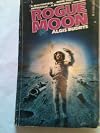
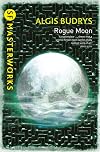
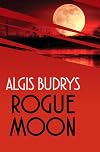
Rogue Moon
by Algis Budrys
On This Page
Description
A Hugo Award Finalist: Humanity struggles to understand a killing labyrinth discovered on the Moon in this science fiction adventure about death and rebirth Hugo and Nebula Award-winning author Robert Silverberg credits Rogue Moon with containing "the most terrifying pages in any SF novel I have ever read." A monstrous apparatus has been found on the surface of the moon. It devours and destroys in ways so incomprehensible to humans that a new language has to be invented to describe it and show more a new kind of thinking to understand it. So far, the human guinea pigs sent there in hopes of unraveling the murderous maze have all died terrible deaths. The most recent volunteer survived but is now on suicide watch. The ideal candidate won't go insane even as he feels the end approaching. Al Barker has already stared into the face of death; he can handle it again. But he won't merely endure the trauma of dying. Barker will die over and over--even as his human qualities are preserved on Earth. With its cast of fascinating characters--like brilliant scientist Edward Hawks, who is obsessed with rebirth--Rogue Moon is a rare thriller that doesn't just make you sweat. It makes you think. show lessTags
Recommendations





















Member Recommendations

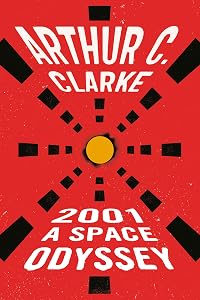
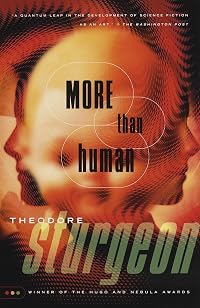
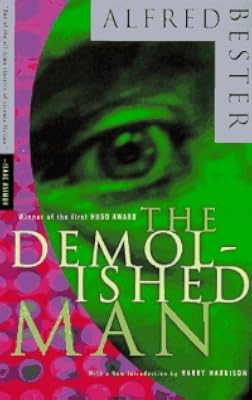
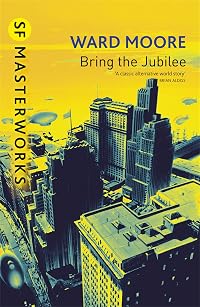
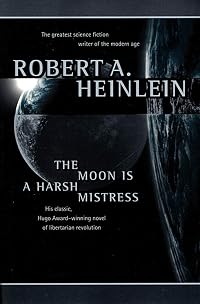
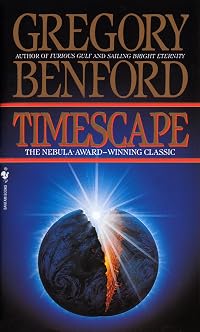
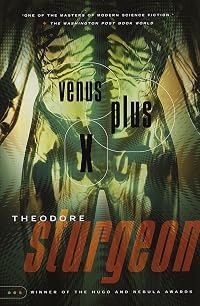
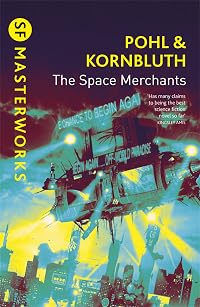
AlanPoulter Both explore humanity exploring a lethal alien artifact
Member Reviews
With "Rogue Moon," Budrys struggles to play out philosophical discussions on life, death, the meaning of True Manhood, and whether memory is immortality or not. To cause these to play out, he's whipped up an alien puzzle box much like that the Strugatski Brothers would perfect in "Roadside Picnic" and put it on the Moon, but it is more a MacGuffin than anything else; also, the matter transporter central to the plot presages that in 'Star Trek' by five years but ends up being the source of a massive, unspoken moral dilemma. Having created sentient, slave dopplegangers that have no rights or individual futures just seems to be a part of the job to everyone involved: ain't that nice?
The SF value is moot, though. The philosophical show more digressions are banal and blustery; the overarching frame of the story is both dated and unbelievable. But what makes this book nearly unreadable is the reduction of characters to theatrical masks, like in Greek tragedy: they are archetypes. There's the Rational But Clueless Man (Hawks), the Arrogant & Toxic Male (Barker), the Whore of Babylon (Claire), the Superficial Fool (Connington), the Blowhard Boss (Cobey), and the Patient Penelope (Elizabeth). What forgiving reviewers call "character development" reads to me like episode after episode of toxic posturing bathed in cigar smoke, Scotch, and pheromones.
This book is not just dated, but fails. Stanislaw Lem wrote a better, similar book then ("Eden," publ. 1959) and Alastair Reynolds intentionally improved on this more recently (novella "Diamond Dogs," 2001). Perhaps its air of sophistication and cerebral ruminations wowed the audience in 1960, but this is nothing more than an artifact now and should be read as such. show less
The SF value is moot, though. The philosophical show more digressions are banal and blustery; the overarching frame of the story is both dated and unbelievable. But what makes this book nearly unreadable is the reduction of characters to theatrical masks, like in Greek tragedy: they are archetypes. There's the Rational But Clueless Man (Hawks), the Arrogant & Toxic Male (Barker), the Whore of Babylon (Claire), the Superficial Fool (Connington), the Blowhard Boss (Cobey), and the Patient Penelope (Elizabeth). What forgiving reviewers call "character development" reads to me like episode after episode of toxic posturing bathed in cigar smoke, Scotch, and pheromones.
This book is not just dated, but fails. Stanislaw Lem wrote a better, similar book then ("Eden," publ. 1959) and Alastair Reynolds intentionally improved on this more recently (novella "Diamond Dogs," 2001). Perhaps its air of sophistication and cerebral ruminations wowed the audience in 1960, but this is nothing more than an artifact now and should be read as such. show less
The best science fiction is about ideas, and Rogue Moon wrestles with at least a couple of big existential ones, e.g. what meaning can there be living in an impersonal universe? In its day (the late 1950s), the book was considered pretty ground-breaking, and perhaps it was. After all, Americans at that time were fairly confident they knew their place in the universe: few questioned America's dominance and with the churches full on Sunday mornings, everyone could easily ride the complacent wave that that's exactly the way God wanted it.
In the half-century since, however, there have been enough crises of confidence that it is no longer considered heresy to entertain the belief that our universe is indeed impersonal and that surrendering show more to that "truth" and discovering personal meaning within it can be a real struggle. In short, while Budrys' ideas may have been challenging at the time of Rogue Moon's publication, a reader of today's generation will probably come to it already having considered them in other contexts.
I'm a creature of the post-Rogue Moon generation. While I liked the book in its presentation of the question, it's nothing that knocked my socks off. show less
In the half-century since, however, there have been enough crises of confidence that it is no longer considered heresy to entertain the belief that our universe is indeed impersonal and that surrendering show more to that "truth" and discovering personal meaning within it can be a real struggle. In short, while Budrys' ideas may have been challenging at the time of Rogue Moon's publication, a reader of today's generation will probably come to it already having considered them in other contexts.
I'm a creature of the post-Rogue Moon generation. While I liked the book in its presentation of the question, it's nothing that knocked my socks off. show less
Very well written though a bit dated. Psychological study of what drives men (use men intentionally) to achieve what is ultimately a pointless goal.
The Gollancz SF Gateway is a wonderful treasure-trove of classic science fiction in ebook format. In particular, their SF Masterworks series identifies and makes available truly great works in the genre. Rogue Moon certainly deserves to be among them.
Published in 1960, it stands out from other contemporary works in the genre by being strongly based on character rather than on speculative gimmicks. And its overriding theme is death.
Yes, there is a science-fiction gimmick. Well, there are a few, I suppose. Unbeknown to other nations, by 1959 the United States has secretly developed the capability of sending rockets to the Moon. One such unmanned probe, in its last moments before crashing, photographs a mysterious structure on the lunar show more surface which is clearly artificial, and not human-made.
As the novel opens, we know none of this. Instead we are introduced to Dr Edward Hawks, talking to Rogan, a man who it appears has become insane. Who has been driven insane, it appears, by something Hawks has had him do. It turns out that Hawks and his colleagues have developed a method of scanning objects and transmitting their ‘pattern’ to a remote receiver where they are reassembled. The original is destroyed in the scanning process. And the objects include human beings, with all of their thoughts and feelings. It is this system which has been used to send humans to a remotely-landed receiver on the Moon.
It’s not this process which has driven Rogan (and several other previous volunteers) insane. Indeed, the Navy has been able to send enough people safely to the Moon through the transmitter for them to establish a modest (and still secret) base next to the mysterious alien artefact. No, what has driven Rogan crazy is that he was one of those who volunteered to investigate the artefact itself. And the artefact kills people if they do the slightest thing wrong while inside it. What is ‘wrong’? Simple, anything which kills you. Discovering what these ‘wrong’ things are has taken the lives of quite a number of volunteers. Rogan was one of them, killed by the alien machine.
But if he was killed, how can Hawks now be talking to him? Simple. When transmitting a volunteer’s pattern to the Moon, a second copy is created on Earth. For a short period of time, the minds of the two copies are in a kind of synchrony (today we would say they are ‘entangled’) and the Earth copy can experience everything that the Moon copy sees and hears. But when the copy on the Moon is killed, the copy on the Earth suffers a tremendous psychic shock, which can kill them or send them mad.
A fascinating science-fictional scenario, that’s for sure. I have said, though, that this novel is primarily about character, and so it is. It’s remarkable, really, that the book doesn’t need to dwell much on the nature or origin of the alien construction itself. Instead, it’s all about the people involved.
Primarily it focuses on the character of Dr Edward Hawks, an engineering genius, but a humane man who suffers tremendous remorse for what he is doing to the volunteers yet feels bound to continue.
Then there’s the character of Al Barker, an ex-soldier who continually dices with death in reckless, near suicidal exploits. It is Barker, already drawn to death, who Hawks approaches to volunteer to explore the alien artefact, gambling that such a man will not be driven mad by experiencing the shock of death. In this he is correct.
Then we have the character of Claire Pack, Barker’s girlfriend, also seeking self-destruction but in a quite different way; and Connington, the sleazy HR man who first introduces Hawks to Barker, and who has lustful designs on Claire.
And finally we have the character of Elizabeth Cummings, a young fashion designer who Hawks meets by accident and falls in love with.
Some of the interplay between Claire, Barker and Connington verges on the histrionic and is a little overwritten; but is nevertheless engaging. Hawks’ mental struggles, though, are much more authentic and thought-provoking, as is the slow dawning of his love for Elizabeth. His interactions with her are again far deeper than those of most of the contemporary genre. And the author’s serious treatment of women is remarkable, I think, for the time in which he was writing.
"‘Do you want to know what it is with you and women?’
Hawks blinked at her. ‘Yes. Very much.’
‘You treat them like people.’
‘I do?’ He shook his head again. ‘I don’t think so. I’ve never been able to understand them very well. I don’t know why they do most of the things they do. I’ve — As a matter of fact, I’ve had a lot of trouble with women.’
Elizabeth touched his hand. ‘I wouldn’t be a bit surprised. But that’s beside the point. Now, you think about something: I’m a good deal younger than you are.’
Hawks nodded, his expression troubled. ‘I’ve thought about that.’
‘Now you think about this, too: you’re not charming, dashing, or debonair. You’re funny-looking, as a matter of fact. You’re too busy to spare much time for me, and even if you did take me out night-clubbing somewhere, you’d be so out of place that I couldn’t enjoy it. But you do one thing: you let me feel that my rules are as worthwhile to me as yours are to you. When you ask me to do something, I know you won’t be hurt if I refuse. And if I do it, you don’t feel that you’ve scored a point in some kind of complex game. You don’t try to use me, cozen me, or change me. I take up as much room in the world, the way you see it, as you do. Do you have any idea of how rare a thing that is?’"
This would be a refreshing passage to read even in much of today’s literary fiction (“Do you have any idea of how rare a thing that is?”). Certainly, these are complex characters a far cry from the flat 2D characters of much SF of the period.
At the same time, the novel raises serious philosophical questions. If two copies of a human being are made, which of them is the ‘real’ person? Does the soul exist, and is it lost when a duplicate human is made and the original destroyed? What is death? Could we face death calmly if we knew that a duplicate of ourselves could be recreated from a stored pattern?
The last sentence of the book, which I won’t spoil by quoting, is a punch to the gut.
A classic indeed, and well worth the read more than 50 years after it was written. show less
Published in 1960, it stands out from other contemporary works in the genre by being strongly based on character rather than on speculative gimmicks. And its overriding theme is death.
Yes, there is a science-fiction gimmick. Well, there are a few, I suppose. Unbeknown to other nations, by 1959 the United States has secretly developed the capability of sending rockets to the Moon. One such unmanned probe, in its last moments before crashing, photographs a mysterious structure on the lunar show more surface which is clearly artificial, and not human-made.
As the novel opens, we know none of this. Instead we are introduced to Dr Edward Hawks, talking to Rogan, a man who it appears has become insane. Who has been driven insane, it appears, by something Hawks has had him do. It turns out that Hawks and his colleagues have developed a method of scanning objects and transmitting their ‘pattern’ to a remote receiver where they are reassembled. The original is destroyed in the scanning process. And the objects include human beings, with all of their thoughts and feelings. It is this system which has been used to send humans to a remotely-landed receiver on the Moon.
It’s not this process which has driven Rogan (and several other previous volunteers) insane. Indeed, the Navy has been able to send enough people safely to the Moon through the transmitter for them to establish a modest (and still secret) base next to the mysterious alien artefact. No, what has driven Rogan crazy is that he was one of those who volunteered to investigate the artefact itself. And the artefact kills people if they do the slightest thing wrong while inside it. What is ‘wrong’? Simple, anything which kills you. Discovering what these ‘wrong’ things are has taken the lives of quite a number of volunteers. Rogan was one of them, killed by the alien machine.
But if he was killed, how can Hawks now be talking to him? Simple. When transmitting a volunteer’s pattern to the Moon, a second copy is created on Earth. For a short period of time, the minds of the two copies are in a kind of synchrony (today we would say they are ‘entangled’) and the Earth copy can experience everything that the Moon copy sees and hears. But when the copy on the Moon is killed, the copy on the Earth suffers a tremendous psychic shock, which can kill them or send them mad.
A fascinating science-fictional scenario, that’s for sure. I have said, though, that this novel is primarily about character, and so it is. It’s remarkable, really, that the book doesn’t need to dwell much on the nature or origin of the alien construction itself. Instead, it’s all about the people involved.
Primarily it focuses on the character of Dr Edward Hawks, an engineering genius, but a humane man who suffers tremendous remorse for what he is doing to the volunteers yet feels bound to continue.
Then there’s the character of Al Barker, an ex-soldier who continually dices with death in reckless, near suicidal exploits. It is Barker, already drawn to death, who Hawks approaches to volunteer to explore the alien artefact, gambling that such a man will not be driven mad by experiencing the shock of death. In this he is correct.
Then we have the character of Claire Pack, Barker’s girlfriend, also seeking self-destruction but in a quite different way; and Connington, the sleazy HR man who first introduces Hawks to Barker, and who has lustful designs on Claire.
And finally we have the character of Elizabeth Cummings, a young fashion designer who Hawks meets by accident and falls in love with.
Some of the interplay between Claire, Barker and Connington verges on the histrionic and is a little overwritten; but is nevertheless engaging. Hawks’ mental struggles, though, are much more authentic and thought-provoking, as is the slow dawning of his love for Elizabeth. His interactions with her are again far deeper than those of most of the contemporary genre. And the author’s serious treatment of women is remarkable, I think, for the time in which he was writing.
"‘Do you want to know what it is with you and women?’
Hawks blinked at her. ‘Yes. Very much.’
‘You treat them like people.’
‘I do?’ He shook his head again. ‘I don’t think so. I’ve never been able to understand them very well. I don’t know why they do most of the things they do. I’ve — As a matter of fact, I’ve had a lot of trouble with women.’
Elizabeth touched his hand. ‘I wouldn’t be a bit surprised. But that’s beside the point. Now, you think about something: I’m a good deal younger than you are.’
Hawks nodded, his expression troubled. ‘I’ve thought about that.’
‘Now you think about this, too: you’re not charming, dashing, or debonair. You’re funny-looking, as a matter of fact. You’re too busy to spare much time for me, and even if you did take me out night-clubbing somewhere, you’d be so out of place that I couldn’t enjoy it. But you do one thing: you let me feel that my rules are as worthwhile to me as yours are to you. When you ask me to do something, I know you won’t be hurt if I refuse. And if I do it, you don’t feel that you’ve scored a point in some kind of complex game. You don’t try to use me, cozen me, or change me. I take up as much room in the world, the way you see it, as you do. Do you have any idea of how rare a thing that is?’"
This would be a refreshing passage to read even in much of today’s literary fiction (“Do you have any idea of how rare a thing that is?”). Certainly, these are complex characters a far cry from the flat 2D characters of much SF of the period.
At the same time, the novel raises serious philosophical questions. If two copies of a human being are made, which of them is the ‘real’ person? Does the soul exist, and is it lost when a duplicate human is made and the original destroyed? What is death? Could we face death calmly if we knew that a duplicate of ourselves could be recreated from a stored pattern?
The last sentence of the book, which I won’t spoil by quoting, is a punch to the gut.
A classic indeed, and well worth the read more than 50 years after it was written. show less
This is definitely not your run of the mill 1960s science fiction adventure yarn. In fact, it’s one of the few books I can remember reading that I would put solidly in the scifi noir genre, if there is such a thing. The plot, which centers around scientists’ efforts to explore a mysterious and deadly artifact discovered on the moon, certainly offers some interesting elements, but is not really what drives the book.
Rogue Moon is character driven science fiction, and features three unscrupulous manipulators in leading roles: our protagonist Ed Hawks, who willingly expends life after life in his quest to solve the riddle of the artifact; Vincent Connington, a personnel man whose instinctive understanding of the motivations of those show more around him allows him to direct them towards his own ends; and the deliciously manipulative Claire Pack, who uses sex like a blunt object, effortlessly driving the men around her to compete for her favors (Claire is a character who would fit in a Raymond Chandler yarn). Juxtaposed with these three are three innocents: the heroic thrill seeker (and yet somehow an everyman) Al Barker, who gradually unlocks the artifact’s secrets; Hawks’ cancer ridden protégé Sam Latourette; and the young artist Elizabeth Cummings, whose romantic relationship with Hawks develops at a glacial pace over the course of the book.
I found the ending somewhat enigmatic and surprising: a poignant question mark as to the nature of identity. I am not aware that this has ever been made into a movie, but it would seem to offer great potential as a film (though with a different title, I would hope). Not really a book that I would call great--but jarringly different and certainly interesting enough to warrant your time. show less
Rogue Moon is character driven science fiction, and features three unscrupulous manipulators in leading roles: our protagonist Ed Hawks, who willingly expends life after life in his quest to solve the riddle of the artifact; Vincent Connington, a personnel man whose instinctive understanding of the motivations of those show more around him allows him to direct them towards his own ends; and the deliciously manipulative Claire Pack, who uses sex like a blunt object, effortlessly driving the men around her to compete for her favors (Claire is a character who would fit in a Raymond Chandler yarn). Juxtaposed with these three are three innocents: the heroic thrill seeker (and yet somehow an everyman) Al Barker, who gradually unlocks the artifact’s secrets; Hawks’ cancer ridden protégé Sam Latourette; and the young artist Elizabeth Cummings, whose romantic relationship with Hawks develops at a glacial pace over the course of the book.
I found the ending somewhat enigmatic and surprising: a poignant question mark as to the nature of identity. I am not aware that this has ever been made into a movie, but it would seem to offer great potential as a film (though with a different title, I would hope). Not really a book that I would call great--but jarringly different and certainly interesting enough to warrant your time. show less
While the name and cover make it look like a typical classic SF book, there is very little SF in this book. The premise is based around going to the moon and the ending is very much SF, but the bulk of the book looks at more individuals and our fears. Fear of being insignificant, fear of being a failure, fear of not being loved, etc. The ideas Algis Budrys is making the reader think through is craftily done and the book's storyline is also great. The SF aspects of the book are very creative and interesting. The writing is good, but descriptions and technical details can get very long winded. (The protagonist even gets called out for it once or twice by other characters in the book). This is a classic SF book that I believe really stands show more the test of time. show less
This is one of the rare "science fiction" titles I've kept around forever ... just because it's so good. If it has a flaw, it's that Budrys is a subtle writer, which means that this will leave some people shaking their heads saying "whatsa big deal?" because not enough stuff exploded. Never mind.
I am unsure how the shorter version (in /The Science Fiction Hall of Fame, vol. IIB) became the somewhat longer novel. There are actually some things about the shorter version I like better. Do pick this up, though. It's an arresting study of character and human nature in the face of something distressingly alien.
I am unsure how the shorter version (in /The Science Fiction Hall of Fame, vol. IIB) became the somewhat longer novel. There are actually some things about the shorter version I like better. Do pick this up, though. It's an arresting study of character and human nature in the face of something distressingly alien.
Members
- Recently Added By
Lists

The Guardian's 1000 Novels Everyone Must Read
1,005 works; 552 members

S.F. Masterworks (Complete)
229 works; 15 members

David Pringle's Science Fiction: The 100 Best Novels
101 works; 9 members

SF Masterworks
193 works; 8 members

Hidden Classics
73 works; 15 members

Books Read in 2018
4,360 works; 110 members

Books Read in 2024
4,727 works; 128 members
Author Information

133+ Works 5,051 Members
Some Editions
Awards and Honors
Awards
Notable Lists
Series
Belongs to Publisher Series
Pocket (5002)
Grandes Éxitos de Bolsillo (B-191)
SF Masterworks (New design)
Delta Science Fiction (134)
Science Fiction Book Club (3481)
Heyne Allgemeine Reihe (31767)
Work Relationships
Common Knowledge
- Canonical title
- Rogue Moon
- Original title
- Rogue Moon
- Original publication date
- 1960-12 (F&SF) (F&SF); 1960
- People/Characters
- Al Barker; Edward Hawks
- Important places
- The Moon
- Epigraph
- Halt, Passenger!
As you are now, so once was I.
As I am now, so you shall be.
Prepare for death, and follow me.
New England gravestone motto - Dedication
- To Larry Shaw
journeyman editor - First words
- Late on a day in 1959, three men sat in a room.
- Last words
- (Click to show. Warning: May contain spoilers.)"Remember me to her."
- Original language
- English
Classifications
Statistics
- Members
- 961
- Popularity
- 27,658
- Reviews
- 36
- Rating
- (3.27)
- Languages
- 6 — Czech, English, French, German, Spanish, Swedish
- Media
- Paper, Audiobook, Ebook
- ISBNs
- 29
- UPCs
- 1
- ASINs
- 39