On This Page
Description
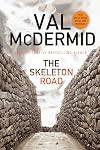
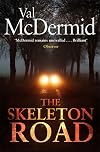
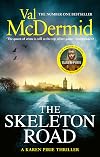
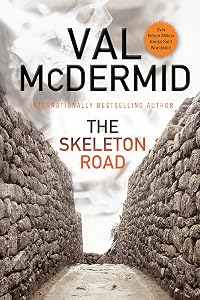
"In the center of historic Edinburgh, builders are preparing to convert a disused Victorian Gothic building into luxury flats. They are understandably surprised to find skeletal remains hidden in a high pinnacle that hasn't been touched by maintenance for years. But who do the bones belong to, and how did they get there? Could the eccentric British pastime of free climbing the outside of buildings play a role? Enter cold case detective Karen Pirie, who gets to work trying to establish the show more corpse's identity. And when it turns out that the bones may be from as far away as former Yugoslavia, Karen will need to dig deeper than she ever imagined into the tragic history of the Balkans: to war crimes and their consequences, and ultimately to the notion of what justice is and who serves it"-- show lessTags
Recommendations

















Member Reviews
Heads up: there is no way I'll be able to discuss the aspect of this book that most annoyed me without spoilers, so there will be spoilers.
In this a skeleton is found in a pinnacle at the top of an old building, that's been disused for 20 odd years. A sole hotel key card provides a clue as to the skeleton's identity. It turns out to be an unusual character, a Croatian General, who was last known of living in Oxford with a professor of geopolitics, who made her name with studies of the Balkan wars of the 1990s. This makes its way to the cold case squad and Karen and The Mint head out to investigate. Along side this, there a new broom in a legal department in London that is associated with the war crimes tribunal for the former show more Yugoslavia. The new boss wants to find out who has been apparently been applying vigilant style justice to some of the people on their list for arrest or have not got evidence for a strong enough case. You don't need to be a expert to see that these two strands will collide - and they do,
The discovery of the general's past, the events at the village and the retribution that follows is hard to listen to, it's very grim (but probably no more grim that what actually happened). It all comes to a head in Oxford and the collision of the two cases results in a solution, of sorts. I guessed the solution along the way, which doesn't usually happen, so this one might be rather obvious!
The thing, however that really annoyed me about this book happens in Karen's private life. At the start, she's moved in with Phil, her former sargent, and he's moved on to another department, tasked with trying to prevent escalating crime by addressing criminal behaviour of all sorts in specific cases. They seem quite happy, a team but not on the same squad, it seems like it should work out. In chasing a particular scumbag, Phil is run down by a car and so ends up in hospital in intensive car - then dies. Why does an author need their detective to have a complicated private life? Can happy people not be good at their jobs? This feels unnecessary and cruel. It is possible to be dedicated to your job and not a tortured soul. And I'm not sure that a happy Karen would be any less interesting to read about.
Come on detective writers, write about a cop with a private life that's stable and relatively happy, just for once. It's not going to stop me reading the next n the series, but it was very very irritating that the author reverted to cliche. show less
In this a skeleton is found in a pinnacle at the top of an old building, that's been disused for 20 odd years. A sole hotel key card provides a clue as to the skeleton's identity. It turns out to be an unusual character, a Croatian General, who was last known of living in Oxford with a professor of geopolitics, who made her name with studies of the Balkan wars of the 1990s. This makes its way to the cold case squad and Karen and The Mint head out to investigate. Along side this, there a new broom in a legal department in London that is associated with the war crimes tribunal for the former show more Yugoslavia. The new boss wants to find out who has been apparently been applying vigilant style justice to some of the people on their list for arrest or have not got evidence for a strong enough case. You don't need to be a expert to see that these two strands will collide - and they do,
The discovery of the general's past, the events at the village and the retribution that follows is hard to listen to, it's very grim (but probably no more grim that what actually happened). It all comes to a head in Oxford and the collision of the two cases results in a solution, of sorts. I guessed the solution along the way, which doesn't usually happen, so this one might be rather obvious!
The thing, however that really annoyed me about this book happens in Karen's private life. At the start, she's moved in with Phil, her former sargent, and he's moved on to another department, tasked with trying to prevent escalating crime by addressing criminal behaviour of all sorts in specific cases. They seem quite happy, a team but not on the same squad, it seems like it should work out. In chasing a particular scumbag, Phil is run down by a car and so ends up in hospital in intensive car - then dies. Why does an author need their detective to have a complicated private life? Can happy people not be good at their jobs? This feels unnecessary and cruel. It is possible to be dedicated to your job and not a tortured soul. And I'm not sure that a happy Karen would be any less interesting to read about.
Come on detective writers, write about a cop with a private life that's stable and relatively happy, just for once. It's not going to stop me reading the next n the series, but it was very very irritating that the author reverted to cliche. show less
This is my first book by this author. Somebody told me it wasn't one of her best but I really enjoyed it. DCI Karen Pirie is in charge of Historic Cold Cases. When a skeleton with a gunshot hole in his skull is found at the top of a building that is due to be demolished she is called in to investigate. It leads her to Professor Maggie Blake who hasn't seen her Croatian lover for eight years and it also takes her to Croatia and deep into the history of the Balkan Wars.
I think this was an intriguing look at those wars as someone who knew little about them. It added an extra level of interest to what otherwise would have been an ordinary crime novel. I found the writing to be good and the story well put together. I liked Karen as a show more character and I wonder if she might turn up in another book, despite this being one of the author's standalone novels. An interesting plot, looking at war crimes, cold cases and retribution, from the perspectives of police, war crimes investigators and those who lived through the conflict. I didn't immediately gel with it but once I was well into the story I really started to like this book.
Thank you to the publishers and Netgalley for providing a copy for review. show less
I think this was an intriguing look at those wars as someone who knew little about them. It added an extra level of interest to what otherwise would have been an ordinary crime novel. I found the writing to be good and the story well put together. I liked Karen as a show more character and I wonder if she might turn up in another book, despite this being one of the author's standalone novels. An interesting plot, looking at war crimes, cold cases and retribution, from the perspectives of police, war crimes investigators and those who lived through the conflict. I didn't immediately gel with it but once I was well into the story I really started to like this book.
Thank you to the publishers and Netgalley for providing a copy for review. show less
I read the first two books in this series a few years ago and enjoyed them a lot, and now that I finally returned to the world of Karen Pirie, I was not disappointed. This was a great read!
When a body is found on the roof of an unused building in Edinburgh, the case brings Karen Pirie to Oxford and also to Croatia, since it is tied up with the history of the Balkan Wars. I'm not saying more to avoid spoilers, but it is a dark and sometimes gruesome story. I learned a lot about the history of the Balkans, and the characters were vivid and real to me. Sometimes it feels a bit like historical fiction because there are many flashbacks, but I did not mind that because all parts of the story were equally compelling.
The ending was a bit weak show more as I was not convinced bythe fact that the last murder was committed - I don't think that it was in character for Maggie , otherwise I would even have given this four and a half stars.
I also liked the underlying topic of geopolitical power and of who gets to write history. It gives the novel more depth without overshadowing the plot. show less
When a body is found on the roof of an unused building in Edinburgh, the case brings Karen Pirie to Oxford and also to Croatia, since it is tied up with the history of the Balkan Wars. I'm not saying more to avoid spoilers, but it is a dark and sometimes gruesome story. I learned a lot about the history of the Balkans, and the characters were vivid and real to me. Sometimes it feels a bit like historical fiction because there are many flashbacks, but I did not mind that because all parts of the story were equally compelling.
The ending was a bit weak show more as I was not convinced by
I also liked the underlying topic of geopolitical power and of who gets to write history. It gives the novel more depth without overshadowing the plot. show less
McDermid has once again crafted an engrossing mystery filled with memorable characters and questions. I still can't quite understand how all the horrific things that occurred in Bosnia and Serbia have faded so quickly and determinedly into the dim past. Without going into masses of gory details, McDermid brings those times to life through the characters she has created.
If anything, there may be a few too many characters, a few too many points of view, that occasionally slow the pace of the book. We have DCI Karen Pirie and her life partner (and fellow police officer) Phil. Pirie's on-the-job partner, Detective Constable Jason "the Mint" Murray. Prickly Oxford professor Maggie Blake, and Macanespie and Proctor, two men trying to find war show more criminals for the International Criminal Court. And I haven't named them all.
Macanespie and Proctor are sometimes referred to as "the dead-end kids," and they provide some much-needed comic relief while they plod through miles of paperwork in search of the bad guys. Pirie often feels as though DC Murray is the albatross hanging around her neck. The young man tends to be as thick as a plank and has absolutely no initiative, but it is heartwarming to see that he is actually learning things by working with her. Pirie does treat him well, regardless what she may think in private. There are also some highly emotional scenes when one of the characters is rushed to the hospital, and I wish I'd had a box of tissues at hand while reading that part.
Yes, McDermid has written a complex, thought-provoking story filled with complex characters. The Skeleton Road is only slightly marred by too many shifts in points of view. It reminds me of why I like Val McDermid's writing so much-- and why I shouldn't take so long to read another of her books. show less
If anything, there may be a few too many characters, a few too many points of view, that occasionally slow the pace of the book. We have DCI Karen Pirie and her life partner (and fellow police officer) Phil. Pirie's on-the-job partner, Detective Constable Jason "the Mint" Murray. Prickly Oxford professor Maggie Blake, and Macanespie and Proctor, two men trying to find war show more criminals for the International Criminal Court. And I haven't named them all.
Macanespie and Proctor are sometimes referred to as "the dead-end kids," and they provide some much-needed comic relief while they plod through miles of paperwork in search of the bad guys. Pirie often feels as though DC Murray is the albatross hanging around her neck. The young man tends to be as thick as a plank and has absolutely no initiative, but it is heartwarming to see that he is actually learning things by working with her. Pirie does treat him well, regardless what she may think in private. There are also some highly emotional scenes when one of the characters is rushed to the hospital, and I wish I'd had a box of tissues at hand while reading that part.
Yes, McDermid has written a complex, thought-provoking story filled with complex characters. The Skeleton Road is only slightly marred by too many shifts in points of view. It reminds me of why I like Val McDermid's writing so much-- and why I shouldn't take so long to read another of her books. show less
Ok.....slight spoiler coming up....so look away :)....yes now :)) For those of you who have read The Skeleton Road we all know that Karen's boyfriend Phil is no more but in true McDermid style we do not dwell over the issue simply mention at the close of the book. The writing as always is excellent, well researched, and excellent characterization expecially in the descritpions and of our 2 main heroes Karen and the ever tasteful mint :) The new itv crime series Karen Pirie has been recently on prime time tv and yet the character playing Karen Pirie is somewhat slim and a little more organised than the Karen we know and love....."a stocky woman of middle height with a shrewd gaze, a messy haircut and a slightly crumpled business show more suit"....."As usual, her thick mop of dark hair looked as if she'd shared a stylist with Dennis the Menace".........:) Jason the "mint" Murray young and eager, if a little geeky is her constant companion but often receiving putdowns form and exasperated DCI...."Karen sighed. Education Jason was an uphill struggle. How come I know? Because I read books, Jason. Because I watch things on the telly that aren't boy comics doing panel games"......." Now do your maths homework or play Candy Crush or something useful while I check my email"........lovely :)
A skeleton is discovered atop a crumbling gothic building in Edinburgh and on close inspection the skull has a neat hole at the front...enter our intrepid duo...always ready for battle which will take Karen and the Mint from the hallowed grounds of Oxford university to the killing fields of Croatia for a killer still active and at large. It would not be a Val McDermid thriller if we did not have a pompous boss and Assistant Chief Constable Simon Lees is perfect for this role. He views Karen with disdain in her slightly crumpled suit...."the trousers a shade too tight over the generous hips"...Karen is equal to his arrogance as..."she perched on the edge of an elegant sideboard he'd bought from his grandmother's house. His secretary kept it buffed to within an inch of its life...Lees felt sure Pirie knew that"......
The dept of justice is also trying to solve a number of murders over the past 7 years and 2 somwhat bumbling individuals, Macanespie and Proctor are cannon fodder to KP. At 450+ pages the novel is the perfect size for McDermid to introduce a number of possible suspects but the brilliance in her writing is left until the last few pages when the person of most interest to me the reader turned out to be a read herring.....so well disguised by the author. This is a wonderful read, writing of the finest order, that ends on a sad note, however knowing the strength of Karen Pirie I know she will soon return for another exciting adventure. Highly highly recommended! show less
A skeleton is discovered atop a crumbling gothic building in Edinburgh and on close inspection the skull has a neat hole at the front...enter our intrepid duo...always ready for battle which will take Karen and the Mint from the hallowed grounds of Oxford university to the killing fields of Croatia for a killer still active and at large. It would not be a Val McDermid thriller if we did not have a pompous boss and Assistant Chief Constable Simon Lees is perfect for this role. He views Karen with disdain in her slightly crumpled suit...."the trousers a shade too tight over the generous hips"...Karen is equal to his arrogance as..."she perched on the edge of an elegant sideboard he'd bought from his grandmother's house. His secretary kept it buffed to within an inch of its life...Lees felt sure Pirie knew that"......
The dept of justice is also trying to solve a number of murders over the past 7 years and 2 somwhat bumbling individuals, Macanespie and Proctor are cannon fodder to KP. At 450+ pages the novel is the perfect size for McDermid to introduce a number of possible suspects but the brilliance in her writing is left until the last few pages when the person of most interest to me the reader turned out to be a read herring.....so well disguised by the author. This is a wonderful read, writing of the finest order, that ends on a sad note, however knowing the strength of Karen Pirie I know she will soon return for another exciting adventure. Highly highly recommended! show less
I think I liked this more for the opportunity to learn more about the Serbian/Croatian/Bosnian conflict than for the mystery aspect -- mostly because I knew what was going on by page 100, which surprised me because I am not usually good at calling these things. Anyway, still well written, plot driven and interesting. Crushing in the personal aspect for Karen, however, and why the heck are mystery writers so cruel to their protagonists?
Do genre writers think they are genre writers? If you write mystery or crime novels, do you think of yourself as a mystery or crime writer? Or just a writer? Do you consider what you write as literature or entertainment? Both? Neither? An unholy union? What did Val McDermid hope to accomplish with The Skeleton Road? A mystery novel that had some sprinklings of literariness? Or a literary novel that also had a mystery edge? Or just a book she wanted to write, so she sat down and did it? One shouldn't just throw in the Balkan conflict of the 1990s, which is the underlying structure of this book, without serious thought. So which is it.
Well, The Skeleton Road has all the trappings of a contemporary mystery novel -- mysterious first show more chapter, cliff-hanger chapter endings, jumping between multiple characters, all with something to hide. As each character is introduced, the narrative stops so we can get a full-on physical description (height, weight, hair style, fashion sense, glasses frames, colour of underwear, etc.). People are conveniently, but unremarkabled-upon-ably, bisexual, to add that sexual dimension.
But then, still, the Balkans, which makes me think that McDermid really wanted this to be more than an airport thriller paperback novel. Except the characters are all defined by their relationships to each other, rather than any pool of depth within themselves. Except the characters are a bunch of standard mystery tropes (the weary academic, the sultry lesbian, the mystery man from behind the Soviet Bloc, the hard-as-nails cop, the dumb strong man) who spend most of their time talking at each other, so that we, the readers, can get at the information we need for this to be a mystery novel. Except that the idea of can you love someone even if, that would have been the central focus of a true literary novel, is shoved to the last fifty-or-so pages, with really no introspection on the parts of any of the characters; accordingly, the answer is yes. You can love someone even if. You don't even have to think about it. BAM!
As for the mystery: predictable, but enjoyable enough that I wanted confirmation that I was right. It's a decent mystery novel. It's definitely not schlock, but it's not high art either, even if it does try to reach up towards it at times. It's an above average mystery novel. The writing is not outstandingly literary but neither is it like trying to read your thirteen-year-old cousin's emo blog.
But the Balkans. I can't feel comfortable with that choice, because I just don't think McDermid's run-of-the-mill mystery novel is deft enough, has enough tact to handle, to contain, such a brutal force without its inclusion being somewhat, unintentionally, disrespectful.
The Skeleton Road by Val McDermid went on sale December 2, 2014.
I received a copy free from Netgalley in exchange for an honest review. show less
Well, The Skeleton Road has all the trappings of a contemporary mystery novel -- mysterious first show more chapter, cliff-hanger chapter endings, jumping between multiple characters, all with something to hide. As each character is introduced, the narrative stops so we can get a full-on physical description (height, weight, hair style, fashion sense, glasses frames, colour of underwear, etc.). People are conveniently, but unremarkabled-upon-ably, bisexual, to add that sexual dimension.
But then, still, the Balkans, which makes me think that McDermid really wanted this to be more than an airport thriller paperback novel. Except the characters are all defined by their relationships to each other, rather than any pool of depth within themselves. Except the characters are a bunch of standard mystery tropes (the weary academic, the sultry lesbian, the mystery man from behind the Soviet Bloc, the hard-as-nails cop, the dumb strong man) who spend most of their time talking at each other, so that we, the readers, can get at the information we need for this to be a mystery novel. Except that the idea of can you love someone even if, that would have been the central focus of a true literary novel, is shoved to the last fifty-or-so pages, with really no introspection on the parts of any of the characters; accordingly, the answer is yes. You can love someone even if. You don't even have to think about it. BAM!
As for the mystery: predictable, but enjoyable enough that I wanted confirmation that I was right. It's a decent mystery novel. It's definitely not schlock, but it's not high art either, even if it does try to reach up towards it at times. It's an above average mystery novel. The writing is not outstandingly literary but neither is it like trying to read your thirteen-year-old cousin's emo blog.
But the Balkans. I can't feel comfortable with that choice, because I just don't think McDermid's run-of-the-mill mystery novel is deft enough, has enough tact to handle, to contain, such a brutal force without its inclusion being somewhat, unintentionally, disrespectful.
The Skeleton Road by Val McDermid went on sale December 2, 2014.
I received a copy free from Netgalley in exchange for an honest review. show less
Members
- Recently Added By
Lists

To Read
617 works; 7 members

Books Read in 2020
4,379 works; 124 members

Books With Body Parts in the Title
153 works; 9 members
Author Information

102+ Works 30,264 Members
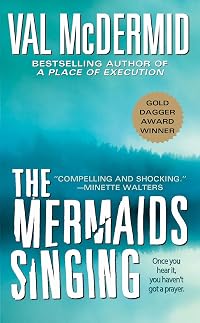
Val McDermid was born in Scotland on June 4, 1955. She was the first student from a state school in Scotland accepted to read English at St Hilda's College, Oxford. She graduated in 1975 and became a journalist. She wrote her first novel at the age of 21. It didn't get published, but she turned it into a play entitled Like a Happy Ending. It was show more performed by the Plymouth Theatre Company and was later adapted for BBC radio. Her first book, Report for Murder, was published in 1987. She is the author of the Lindsay Gordon Mystery series, the Kate Brannigan Mystery series, and the Dr. Tony Hill and Carol Jordan Mysteries series as well as several stand alone books including The Distant Echo, A Darker Domain, Trick of the Dark and Out of Bounds. The Mermaids Singing won the Crime Writers' Association Gold Dagger for Best Crime Novel of the Year. (Bowker Author Biography) show less
Some Editions
Series

Work Relationships
Common Knowledge
- Canonical title
- The Skeleton Road
- Original title
- The Skeleton Road
- Original publication date
- 2014-09-11
- People/Characters
- Karen Pirie (DCI); Jason "the Mint" Murray; Maggie Blake; Tessa Minogue; Fraser Jardine; Ian Macanespie (show all 9); Theo Proctor; Wilson Cagney; Dimitar Petrovic
- Important places
- Edinburgh, Scotland, UK; Balkans; Chania, Crete, Greece; The Hague, South Holland, Netherlands; Glasgow, Scotland, UK; London, England, UK (show all 11); Oxford, Oxfordshire, England, UK; Prague, Czech Republic; Dubrovnik, Croatia; Croatia; Venice, Veneto, Italy
- Important events
- Siege of Dubrovnik; Croatian War of Independence
- Epigraph
- Geography is about power. Although often assumed to be innocent, the geography of the world is not a product of nature but a product of histories of struggle between competing authorities over the power to organise, occupy an... (show all)d administer space.
Critical Geopolitics
Gearóid Tuathail - Dedication
- For my Jo:
'But this dedication is for others to read: These are private words addressed to you in public.' - First words
- Sunset is often a glamorous business in the Cretan holiday harbour of Chania. (Prologue)
- Quotations
- Why could nobody get to the point these days? Everybody seemed determined to turn the most straightforward of conversations into performance art.
- Last words
- (Click to show. Warning: May contain spoilers.)With her eyes fixed on the blue sky and the golden stone, Karen Pirie turned her back on all of it and started walking.
- Original language
- English
Classifications
Statistics
- Members
- 710
- Popularity
- 40,441
- Reviews
- 44
- Rating
- (3.65)
- Languages
- 6 — Dutch, English, French, German, Norwegian (Bokmål), Swedish
- Media
- Paper, Audiobook, Ebook
- ISBNs
- 41
- ASINs
- 11