Time Is the Simplest Thing
by Clifford D. Simak
On This Page
Description
A telepath acquires a powerful alien consciousness--and must run to escape corporate assassins and angry mobs--in this novel by the author of Way Station. Space travel has been abandoned in the twenty-second century. It is deemed too dangerous, expensive, and inconvenient--and now the all-powerful Fishhook company holds the monopoly on interstellar exploration for commercial gain. Their secret is the use of "parries," human beings with the remarkable telepathic ability to expand their minds show more throughout the universe. On what should have been a routine assignment, however, loyal Fishhook employee Shepherd Blaine is inadvertently implanted with a copy of an alien consciousness, becoming something more than human. Now he's a company pariah, forced to flee the safe confines of the Fishhook complex. But the world he escapes into is not a safe sanctuary; Its people have been taught to hate and fear his parapsychological gift--and there is nowhere on Earth, or elsewhere, for Shepherd Blaine to hide. A Hugo Award nominee, Time Is the Simplest Thing showcases the enormous talents of one of the true greats of twentieth-century science fiction. This richly imagined tale of prejudice, corporate greed, oppression, and, ultimately, transcendence stands tall among Simak's most enduring works. show lessTags
Recommendations

















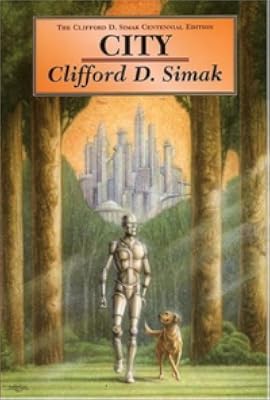


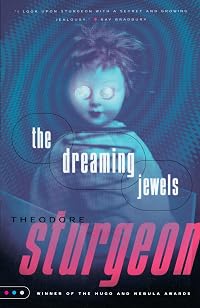


Member Reviews
What starts off as an intriguing novel about encountering an ineffable alien intelligence ("the Pinkness") soon degenerates into an ode to paranormal humans that attempts a naive examination of bigotry.
There was, in the sixties, an over-earnest interest in the paranormal (ESP, telekinesis, etc) among sci-fi writers. Normally, when paranormal abilities are part of a narrative, they are a simple fact: this person can do X, that person can do Y, nobody can explain it (hence it is para-normal) but that's the way it is. In novels such as this, however, paranormal abilities are presented as the next step in human evolution, and the people with paranormal powers in general are endowed as well with traits such as intelligence, compassion, and show more tolerance that are considered characteristic of homo enlighticus and absent from its predecessor, homo hillbillicus.
This is compounded in Simak's novel by the rather crude caricature of people who aren't paranormal. There is no subtlelty here: your typical bigot will be loud, unreasonable, cowardly, smelly, unable to stand upright or to project competence and honesty. That can work fine in, say, a fairy tale, where you do not want to explain to a child that well, the world is complicated, and that witch has a mortgage to pay and her daughter has been kidnapped for sexual slavery so maybe, you know, maybe those two kids are holding a match to a powder keg when they start eating her house. If what you want is a fairy tale, then okay, this is a fine one; as a novel, well, it's a bit lop-sided. show less
There was, in the sixties, an over-earnest interest in the paranormal (ESP, telekinesis, etc) among sci-fi writers. Normally, when paranormal abilities are part of a narrative, they are a simple fact: this person can do X, that person can do Y, nobody can explain it (hence it is para-normal) but that's the way it is. In novels such as this, however, paranormal abilities are presented as the next step in human evolution, and the people with paranormal powers in general are endowed as well with traits such as intelligence, compassion, and show more tolerance that are considered characteristic of homo enlighticus and absent from its predecessor, homo hillbillicus.
This is compounded in Simak's novel by the rather crude caricature of people who aren't paranormal. There is no subtlelty here: your typical bigot will be loud, unreasonable, cowardly, smelly, unable to stand upright or to project competence and honesty. That can work fine in, say, a fairy tale, where you do not want to explain to a child that well, the world is complicated, and that witch has a mortgage to pay and her daughter has been kidnapped for sexual slavery so maybe, you know, maybe those two kids are holding a match to a powder keg when they start eating her house. If what you want is a fairy tale, then okay, this is a fine one; as a novel, well, it's a bit lop-sided. show less
When space flight proved impossible for humans, they discovered a new way to travel to the stars. By projecting their minds and teleporting their equipment the psychic explorers of Fishhook have been bring back alien ideas, technology and trade goods back from alien worlds and beings for a century. Fishhook headquarters in northern Mexico have become the center of interstellar trade. Shepherd Blaine was one of those explorers until the final seconds of his last voyage right up to the time he encountered a twelve foot high, twenty foot wide telepathic pink creature that greeted him, “Hi pal, I trade with you my mind.”
How do you deal with the being that doesn’t think like you is the theme of Simak’s 1961 tale. It’s not just the show more alien mind that Shep Blaine now shares, it’s the way the rest of the world deals with “parries,” humans with paranormal abilities. In northern Mexico they’re the elite, and Fishhook plans to keep it that way, but north of the border in the United States they’re a feared and persecuted minority. Preachers preach against them, and people stay at home after dark and cover their houses with hex signs out of fears of them. Shep Blaine narrowly escapes being lynched by a mob after he crosses the border. Ironically, it’s the alien part of his mind that both gives him away and saves him. Simak’s theme is the folly of narrow-minded bigotry told as a very enjoyable science fiction tale that speaks to the time of its composition and to the present day. show less
How do you deal with the being that doesn’t think like you is the theme of Simak’s 1961 tale. It’s not just the show more alien mind that Shep Blaine now shares, it’s the way the rest of the world deals with “parries,” humans with paranormal abilities. In northern Mexico they’re the elite, and Fishhook plans to keep it that way, but north of the border in the United States they’re a feared and persecuted minority. Preachers preach against them, and people stay at home after dark and cover their houses with hex signs out of fears of them. Shep Blaine narrowly escapes being lynched by a mob after he crosses the border. Ironically, it’s the alien part of his mind that both gives him away and saves him. Simak’s theme is the folly of narrow-minded bigotry told as a very enjoyable science fiction tale that speaks to the time of its composition and to the present day. show less
Overall, this is a good novel. Readers expecting any pulpy alien-adventure will be disappointed. This one looks at humanity’s fear of the Other, the use and misuse of technology, the fear that ignorance breeds, the juxtaposition of persecutor and persecuted, and the control-factor of corporations/capital. The main character is fairly likeable, if a bit robotic. Readers who love vintage science fiction and who would like to read good 1960s offerings will enjoy this one.
Not my favorite Simak. Hotbeds of activity are over the border in Mexico, and then Pierre, South Dakota, really? And what does the man have against contractions (like won't instead of will not)? Still, interesting ideas, terrific exploration of human nature in regards to things we don't understand and to which we develop a fear.
"For it was authority that made men suspicious and stern-faced. Authority and responsibility which made them not themselves, but a sort of corporate body rather than a person."
Give me Simak over Heinlein any day.
"For it was authority that made men suspicious and stern-faced. Authority and responsibility which made them not themselves, but a sort of corporate body rather than a person."
Give me Simak over Heinlein any day.
Simak, Clifford D. Time Is the Simplest Thing. 1961. Open Road, 2015.
It is a pity that Clifford D. Simak never became as famous as Ray Bradbury, Robert Heinlein, or Isaac Asimov. Yes, he was the third SFWA grandmaster, and his 1961 novel Time is the Simplest Thing was nominated for a Hugo Award, but it never became a cultural icon like Heinlein’s Stranger in a Strange Land, published the same year. Simak kept his day job as a Minnesota journalist and imbued his stories with a sense of American communities and landscape that resembles Bradbury at his best. Simak also gives Time Is the Simplest Thing a science news hook that would be right at home in a story by Asimov. The newly discovered Van Allen radiation belt is a harbinger of show more dangers inherent in space flight. The failure of crewed space flight spurs research in out-of-body travel and other paranormal abilities. We begin to explore extraterrestrial life with mental powers augmented by machines. Our hero, Shepherd Blaine, comes home from one such mission with an alien consciousness resident in his mind. His discovery makes him a dangerous outcast and sends him on an odyssey through the nation’s paranormal hinterlands. show less
It is a pity that Clifford D. Simak never became as famous as Ray Bradbury, Robert Heinlein, or Isaac Asimov. Yes, he was the third SFWA grandmaster, and his 1961 novel Time is the Simplest Thing was nominated for a Hugo Award, but it never became a cultural icon like Heinlein’s Stranger in a Strange Land, published the same year. Simak kept his day job as a Minnesota journalist and imbued his stories with a sense of American communities and landscape that resembles Bradbury at his best. Simak also gives Time Is the Simplest Thing a science news hook that would be right at home in a story by Asimov. The newly discovered Van Allen radiation belt is a harbinger of show more dangers inherent in space flight. The failure of crewed space flight spurs research in out-of-body travel and other paranormal abilities. We begin to explore extraterrestrial life with mental powers augmented by machines. Our hero, Shepherd Blaine, comes home from one such mission with an alien consciousness resident in his mind. His discovery makes him a dangerous outcast and sends him on an odyssey through the nation’s paranormal hinterlands. show less
I will always give Simak novels a try but this one annoyed me. It took ideas that could be used in three or more novels and threw them together. Spoiler alert!
1. Telepathic space exploration with the danger of meeting superior alien minds that can take you over and make you a danger to mankind or superman. Great idea and well done beginning of book. This could have won a Hugo but it de-solved into another novel.
2. In future world some people have become super psychic. Some can project their minds. Others can read minds. Others can levitate objects or themselves and fly. the rest of America has become afraid that all of the Halloween characters are now real and try to kill the super brains.
3. Giant corporation controls it's employees show more and hunts them down if they escape. Harmless individuals on the run with secrets. Kill or be killed.
Every one of these could have made a good novel. Instead he mashed them all together and never resolved any of them. No real ending. Maybe he needed another book and he used some unfinished ideas. show less
1. Telepathic space exploration with the danger of meeting superior alien minds that can take you over and make you a danger to mankind or superman. Great idea and well done beginning of book. This could have won a Hugo but it de-solved into another novel.
2. In future world some people have become super psychic. Some can project their minds. Others can read minds. Others can levitate objects or themselves and fly. the rest of America has become afraid that all of the Halloween characters are now real and try to kill the super brains.
3. Giant corporation controls it's employees show more and hunts them down if they escape. Harmless individuals on the run with secrets. Kill or be killed.
Every one of these could have made a good novel. Instead he mashed them all together and never resolved any of them. No real ending. Maybe he needed another book and he used some unfinished ideas. show less
Shepherd Blaine telepathically travels to other planets, working for a corporation called Fishhook. Fishhook has a monopoly on this means of travel, and thereby a monopoly on all the goods and information brought back to Earth. The general public fears and distrusts Fishhook, but still buys their products, and resents the hell out of the whole thing. Other paranormals, or "parries" not working for (and protected by) Fishhook are hunted and killed like witches in the 16th century. When Blaine encounters an alien consciousness and melds with it, he is forced to leave Fishhook and go on the run. Encountering parry hunters, reformers, and always one step ahead of Fishhook agents, he grapples with this new alien side of himself and what his show more new purpose is in life.
Interestingly, the only other book by Simak I have read featured folks who telepathically traveled to the stars as well. I wonder if this is a common theme with him. Also similarly to that other book [A Choice of Gods], this novel is short on action and long on philosophical musings. The action parts are quite suspenseful and well written, which makes me wish there were more of them. The philosophy is thought-provoking, but largely moot, and relates only to this fictional society. It points out some interesting things about religion, fear, and the power of backlash, but ultimately, irrelevant.
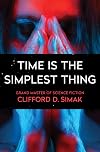
I also have a bone to pick with the cover. I don't think the illustrator even read the book because it contained no scene remotely like the man on a barren planet with a space suit, facing down a spherical alien craft. No one even bodily traveled to another world, or encountered any aliens in battle. It's terribly misleading.
I don't mean to be overly critical, because I very much enjoyed reading it. I would recommend this more for people who like to muse about the great 'what ifs' and not for those who like a tight, action-packed space opera (which is what the cover implies). show less
Interestingly, the only other book by Simak I have read featured folks who telepathically traveled to the stars as well. I wonder if this is a common theme with him. Also similarly to that other book [A Choice of Gods], this novel is short on action and long on philosophical musings. The action parts are quite suspenseful and well written, which makes me wish there were more of them. The philosophy is thought-provoking, but largely moot, and relates only to this fictional society. It points out some interesting things about religion, fear, and the power of backlash, but ultimately, irrelevant.
I also have a bone to pick with the cover. I don't think the illustrator even read the book because it contained no scene remotely like the man on a barren planet with a space suit, facing down a spherical alien craft. No one even bodily traveled to another world, or encountered any aliens in battle. It's terribly misleading.
I don't mean to be overly critical, because I very much enjoyed reading it. I would recommend this more for people who like to muse about the great 'what ifs' and not for those who like a tight, action-packed space opera (which is what the cover implies). show less
Members
- Recently Added By
Published Reviews
ThingScore 50
Simak replonge ainsi dans sa ruralité de prédilection, et l'essentiel du livre est une sorte de road movie, si on prend le road movie, dévoué qu'il est à l'exploration des paysages de l'Ouest américains (et de ses habitants les plus primitifs), pour la forme contemporaine du western. Western auquel Simak emprunte plus que des lieux : du vocabulaire (dans le texte original), des show more personnages comme le shérif ou le prêtre et des épisodes comme l'attaque de la diligence (un camion) par des Indiens (ce sont des jeunes télékinètes, ne pinaillons pas) ou le lynchage d'un prisonnier défendu plus ou moins mollement par le shérif. Blaine, certes, a acquis des pouvoirs extraterrestres sur le déroulement du temps, mais il ne s'en sert que de façon parcimonieuse, un coup chacun, histoire de réserver des surprises au lecteur. show less
added by circeus
Lists

Books Read in 2019
4,052 works; 108 members

Favorite Science Fiction
456 works; 218 members
Author Information

389+ Works 25,307 Members
Some Editions
Awards and Honors
Awards
Series
Belongs to Publisher Series
Work Relationships
Is contained in
Common Knowledge
- Canonical title
- Time Is the Simplest Thing
- Original title
- The Fisherman
- Alternate titles*
- Pescatore di stelle
- Original publication date
- 1961-05
- People/Characters
- Shep Blaine; Kirby Rand; Freddy Bates; Herman Dalton; Charline Whittier; Harriet Quimby (show all 21); Old Sara; Tom; Sheriff; Father Flanagan; Buck Riley; Anita Andrews; Dr. Wetmore; Godfrey Stone; Grant; Pinkness; Bob Collins; Lambert Finn; Andrews; Thomas Jackson; Johnson Carter
- First words
- Finally there came a time when man was ready to admit that he was barred from space.
- Quotations
- Hi pal, I trade with you my mind!
They were hunted animals. Hunted animals in this great United States which for years had valued freedom, which in its later years had stood as a forthright champion before the entire world for the rights of man. - Last words
- (Click to show. Warning: May contain spoilers.)Behind them the flames of hate grew taller, hotter. But ahead, above the bluff top, the distant stars glowed with certain promise.
- Original language
- English
- Canonical DDC/MDS
- 813.087621
*Some information comes from Common Knowledge in other languages. Click "Edit" for more information.
Classifications
- Genres
- Science Fiction, Fiction and Literature
- DDC/MDS
- 813.087621 — Literature & rhetoric American literature in English American fiction in English By type Genre fiction Adventure fiction Speculative fiction Science fiction Time travel
- LCC
- PZ3 .S5884 .T — Language and Literature Fiction and juvenile belles lettres Fiction and juvenile belles lettres Fiction in English
- BISAC
Statistics
- Members
- 771
- Popularity
- 36,269
- Reviews
- 14
- Rating
- (3.57)
- Languages
- 11 — Bulgarian, Czech, Dutch, English, French, German, Hungarian, Italian, Polish, Portuguese, Swedish
- Media
- Paper, Audiobook, Ebook
- ISBNs
- 17
- ASINs
- 32