On This Page
Description
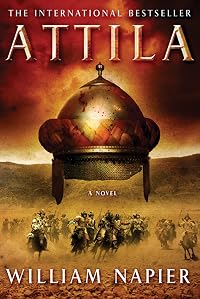
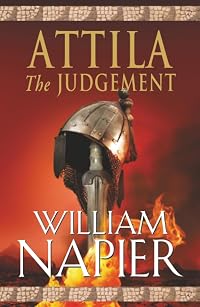
406 AD, and the Roman Empire totters on the edge of the abyss. Already divided into two, the Imperium is looking dangerously vulnerable to her European rivals. The huge barbarian tribes of the Vandals and Visigoths sense that their time is upon them. East. A strange nation of primitive horse-warriors has been striking terror on border peoples for fifty years. But few realise what is about to happen. For these so called 'Huns' now have a new leader. And his name is Attila - 'the Scourge of show more God'. Christian world to its knees, and was only ended on the bloodied fields of France. It is a story of two men - Attila the Hun and Aetius the Roman. One who wanted to destroy the world, and one who fought one final battle save it... show lessTags
Recommendations










Member Reviews
Ambitious enough that I’m going on with the trilogy.
Yes, Attila is a fighting fourteen at the end of this. Or sixteen, I forget. In the beginning he was twelve and the Romans and the tall barbarians of Europe took him for seven or eight, because of his Hun stature. The Huns are very much Mongol-type here, their physical selves disturbing to the Romans; they hark back to the Altai Mountains and Lake Baikal, and he clearly goes with the theory that these were the ‘Huns’ the Chinese knew. He’s a novelist not a scholar, and he likes a wide canvas, and that suits his story.
Most of Rome’s defenders are ex-barbarians, of one tribe or another; again and again people say, ‘Who’s a real Roman nowadays? The barbarians are Rome.’ show more Attila is a precious hostage, a guarantee of peace, along with princes or chief’s sons from other peoples. Most of these foreign hostages Rome corrupts; for this is a corrupt and rotten Rome, and he lays on the decadence, which disgusts our young Attila, who pines for the simple life and freedom of the steppe.
The novel doesn’t follow only a teenage lad; we visit the lives of soldiers and defenders and see the crumbling of the edifice. There is Alaric to invade, while Attila’s still in short pants; the scope of the trilogy seems to be ‘the fall of Rome’, not just the life of Attila. I don’t call this first book background, or even context, I call it the big canvas.
On the Huns themselves, though. As of yet they are Rome’s allies, and Stilicho, one of the last heroes of old Rome, urges that they need never be enemies. Roman civilization has nothing to offer them, ‘they do not envy us’. Napier needs a trilogy, not only to survey the state of Rome but to have the Huns at this start-point, and end where they end. It might be a cautionary tale, in that the Romans mistreat them; we see enough inner disloyalty, Romans’ treachery to Romans or Rome’s cause, through this first book, and after Attila’s adventures here the Huns have a grievance.
As for Attila, if he comes across over-clever, he was very clever, he seems to have been a brain. What with the massive contempt he faces in Rome, for his person and his Mongoloid looks and for his people, a very physical type of prejudice, he seethes with hatred, but he always meets a kindness with a kindness. Loyalty is holy to him. They debate what sort of sense of honour barbarians have – frontier soldiers who know their barbarians – the Goths, for instance, have their unique code of behaviour in war. The Huns too have a different but a strong ethic.
When at last we go among the Huns, I was a trifle let down. Hunnish society has largely to be guesswork, and I didn’t care for a couple of his guesses. In the future novels, I hope he doesn’t give me too much of the subservient women and the men who may express no emotion but rage. A Hun ambassador wonders at the clout allowed to Galla Placida, a woman? If I were to piece together a Hun society from steppe cultures, and contrast to Rome, I’d have done that the other way round. I hope he lets me stay on the Huns’ side, where I am.
There were faults of execution, I felt. But the concept and the story – the width of story – interest me and I enjoyed most. I’d drop a hint that his study of Yeats comes out, but that’d put people off, and give you a false impression, because the writing isn’t what they call poetic or nothing. There is a verve to it; there’s amusement now and then; and he knows how to tell a concentrated short tragedy of a fight. Early on I was grimacing at cliches, but either that cleared up or I forgot to notice, caught up in the story. show less
Yes, Attila is a fighting fourteen at the end of this. Or sixteen, I forget. In the beginning he was twelve and the Romans and the tall barbarians of Europe took him for seven or eight, because of his Hun stature. The Huns are very much Mongol-type here, their physical selves disturbing to the Romans; they hark back to the Altai Mountains and Lake Baikal, and he clearly goes with the theory that these were the ‘Huns’ the Chinese knew. He’s a novelist not a scholar, and he likes a wide canvas, and that suits his story.
Most of Rome’s defenders are ex-barbarians, of one tribe or another; again and again people say, ‘Who’s a real Roman nowadays? The barbarians are Rome.’ show more Attila is a precious hostage, a guarantee of peace, along with princes or chief’s sons from other peoples. Most of these foreign hostages Rome corrupts; for this is a corrupt and rotten Rome, and he lays on the decadence, which disgusts our young Attila, who pines for the simple life and freedom of the steppe.
The novel doesn’t follow only a teenage lad; we visit the lives of soldiers and defenders and see the crumbling of the edifice. There is Alaric to invade, while Attila’s still in short pants; the scope of the trilogy seems to be ‘the fall of Rome’, not just the life of Attila. I don’t call this first book background, or even context, I call it the big canvas.
On the Huns themselves, though. As of yet they are Rome’s allies, and Stilicho, one of the last heroes of old Rome, urges that they need never be enemies. Roman civilization has nothing to offer them, ‘they do not envy us’. Napier needs a trilogy, not only to survey the state of Rome but to have the Huns at this start-point, and end where they end. It might be a cautionary tale, in that the Romans mistreat them; we see enough inner disloyalty, Romans’ treachery to Romans or Rome’s cause, through this first book, and after Attila’s adventures here the Huns have a grievance.
As for Attila, if he comes across over-clever, he was very clever, he seems to have been a brain. What with the massive contempt he faces in Rome, for his person and his Mongoloid looks and for his people, a very physical type of prejudice, he seethes with hatred, but he always meets a kindness with a kindness. Loyalty is holy to him. They debate what sort of sense of honour barbarians have – frontier soldiers who know their barbarians – the Goths, for instance, have their unique code of behaviour in war. The Huns too have a different but a strong ethic.
When at last we go among the Huns, I was a trifle let down. Hunnish society has largely to be guesswork, and I didn’t care for a couple of his guesses. In the future novels, I hope he doesn’t give me too much of the subservient women and the men who may express no emotion but rage. A Hun ambassador wonders at the clout allowed to Galla Placida, a woman? If I were to piece together a Hun society from steppe cultures, and contrast to Rome, I’d have done that the other way round. I hope he lets me stay on the Huns’ side, where I am.
There were faults of execution, I felt. But the concept and the story – the width of story – interest me and I enjoyed most. I’d drop a hint that his study of Yeats comes out, but that’d put people off, and give you a false impression, because the writing isn’t what they call poetic or nothing. There is a verve to it; there’s amusement now and then; and he knows how to tell a concentrated short tragedy of a fight. Early on I was grimacing at cliches, but either that cleared up or I forgot to notice, caught up in the story. show less
Stilicho reached out for more wine, and then stopped himself. Freedom comes when you learn to say no.
I'm sorry to say that this book was a bit of a dud for me. Although interested in the subject matter, I didn't think Napier did a whole lot with it. The character development is flimsy. The reader is introduced to an entire cast of one-dimensional personae, and even Attila himself follows a course too clichéd to be interesting (the Romans were mean to him, so he grew up hating Rome? You don't say.)
The narration itself is also just poorly done. The prose is juvenile and repetitive (how many different battles have to end with the narrator describing the resultant smell as that of "blood, sweat, and loosed bowels"?) It also suffers from a show more lack of perspective - or, I suppose, too much of it. The narrator is all-seeing, including the thoughts and feelings of the characters - which is sometimes ok. For example, a book which switches perspective from chapter to chapter or even sub-section to sub-section can often pull it off. Napier, however, will often switch between the internal perspectives of characters from paragraph to paragraph, or sometimes even from one sentence to the next. It's not necessarily confusing - Napier's writing isn't really sophisticated enough to call it confusing - but it does jar the reader and make for an unnatural flow to the narration.
*** SPOILER BELOW ***
What I found most annoying about the book, is that towards the end it finally began to get a little bit interesting. I don't know if this was the turn the story took, or if I'd finally grown accustomed to Napier's style, but there it was. I want to know what happens NOW, now that he's found his people and has been turned away by Rugu. But after reading 400 pages of "Attila", the boy is still only 15 years old! Who wants to read 400 pages of "historical fiction" that never gets to the interesting historical part? I'm sorry to say that the unpleasantness of reading Napier is enough to outweigh, for me, any interest I might have in spending $15 and several hours of my time on the sequel to find out what happens next. show less
I'm sorry to say that this book was a bit of a dud for me. Although interested in the subject matter, I didn't think Napier did a whole lot with it. The character development is flimsy. The reader is introduced to an entire cast of one-dimensional personae, and even Attila himself follows a course too clichéd to be interesting (the Romans were mean to him, so he grew up hating Rome? You don't say.)
The narration itself is also just poorly done. The prose is juvenile and repetitive (how many different battles have to end with the narrator describing the resultant smell as that of "blood, sweat, and loosed bowels"?) It also suffers from a show more lack of perspective - or, I suppose, too much of it. The narrator is all-seeing, including the thoughts and feelings of the characters - which is sometimes ok. For example, a book which switches perspective from chapter to chapter or even sub-section to sub-section can often pull it off. Napier, however, will often switch between the internal perspectives of characters from paragraph to paragraph, or sometimes even from one sentence to the next. It's not necessarily confusing - Napier's writing isn't really sophisticated enough to call it confusing - but it does jar the reader and make for an unnatural flow to the narration.
*** SPOILER BELOW ***
What I found most annoying about the book, is that towards the end it finally began to get a little bit interesting. I don't know if this was the turn the story took, or if I'd finally grown accustomed to Napier's style, but there it was. I want to know what happens NOW, now that he's found his people and has been turned away by Rugu. But after reading 400 pages of "Attila", the boy is still only 15 years old! Who wants to read 400 pages of "historical fiction" that never gets to the interesting historical part? I'm sorry to say that the unpleasantness of reading Napier is enough to outweigh, for me, any interest I might have in spending $15 and several hours of my time on the sequel to find out what happens next. show less
 This review was written for LibraryThing Early Reviewers.
A little slow in places, but still an excellent book. Napier does a wonderful job in capturing the corruption and decay of the last days of the Roman Empire.
This review was written for LibraryThing Early Reviewers.I thought this book was very well written. Napier paints a vivid picture of life during the fall of Rome. Attila is the first book in a trilogy and follows Attila the Hun through his childhood. Reading this novel is like taking a giant step backward in history.
Attila is a slow-moving story. Napier takes his time and captures the essence of life in a world that was battling for land and religious dominance. And because Napier is such an incredible storyteller, I was more than happy to take that slow stroll along with him.
Attila is a slow-moving story. Napier takes his time and captures the essence of life in a world that was battling for land and religious dominance. And because Napier is such an incredible storyteller, I was more than happy to take that slow stroll along with him.
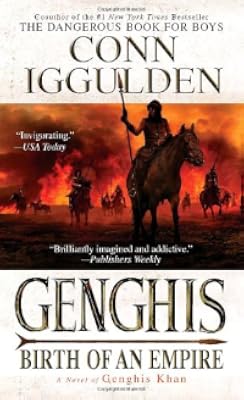
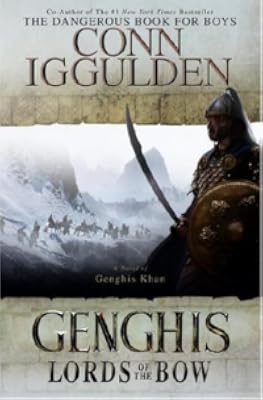
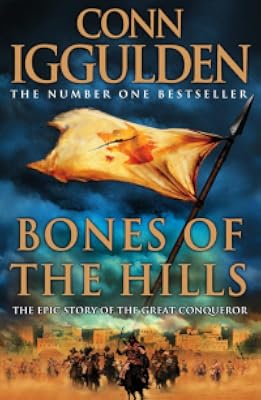
Good historical fiction, especially if you enjoy the "world conquerors" genre. It is hard to resist comparing this to the Conn Iggulden Genghis books, partly because there are so many similarities between these steppe peoples, and also because these have been written at the same time.
The Iggulden books are perhaps more accessible, easier to read. Page turners. I like them. But the Napier is a bit more literary, with better writing, and what seems to me a serious research background into a more complex period in history.
The Iggulden books are perhaps more accessible, easier to read. Page turners. I like them. But the Napier is a bit more literary, with better writing, and what seems to me a serious research background into a more complex period in history.
This review was written for LibraryThing Early Reviewers.Richly written, the book follows the title character from his time as a virtual hostage in Rome through his escape during the Gothic tumult, and to his trek to freedom and return home. At times the book is a little too praising of the Huns and a little too derogatory to the Romans, but given the title this can be forgiven. All in all, it is a good tapestry, woven on a cloth of history and speculation. It reads like the first book of a trilogy, but not painfully so. Many wheels are set in motion by the end of the book, but enough have reached their final resting to be satisfactory on its own. I recommend this book if you enjoy historical fictionalizations, and especially if you like the history surrounding the end of the Roman Empire.
This review was written for LibraryThing Early Reviewers.A quick and interesting tale, I would certainly read the subsequent books in the series if I came across them but haven't hunted them out.
The scope of the story is wide, from Saxon-ravaged England to imperial Rome and Ravenna, to the plains of Eastern Europe. Taught me some things about Attila and the Huns that I didn't know as well.
A good read.
The scope of the story is wide, from Saxon-ravaged England to imperial Rome and Ravenna, to the plains of Eastern Europe. Taught me some things about Attila and the Huns that I didn't know as well.
A good read.
Members
- Recently Added By
Lists

Best historical fiction set in the ancient world
126 works; 40 members
Author Information
11 Works 719 Members
Series

Common Knowledge
- Canonical title*
- Attila - A farkaskölyök
- People/Characters
- Attila the Hun
*Some information comes from Common Knowledge in other languages. Click "Edit" for more information.
Classifications
Statistics
- Members
- 272
- Popularity
- 118,458
- Reviews
- 21
- Rating
- (3.54)
- Languages
- 10 — Czech, English, German, Greek, Hungarian, Italian, Polish, Serbian, Spanish, Turkish
- Media
- Paper, Ebook
- ISBNs
- 19
- ASINs
- 4