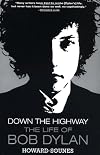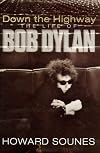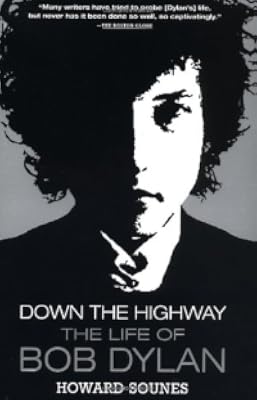
Down the Highway: The Life of Bob Dylan
by Howard Sounes
On This Page
Description
The acclaimed biography substantially updated and revised, Howard Sounes's Down the Highway broke news about Dylan's fiercely guarded personal life and set the standard as the most comprehensive and riveting biography on Bob Dylan. Now, on the occasion of Dylan's seventieth birthday, this edition continues to document the iconic songwriter's life through new interviews and reporting, covering the release of Dylan's first #1 album since the seventies, recognition from the Pulitzer Prize jury show more for his influence on popular culture, and the publication of his bestselling memoir, giving full appreciation to his artistic achievements and profound significance. Candid and refreshing, Down the Highway is a sincere tribute to Dylan's seminal place in postwar American cultural history, and remains an essential book for the millions of people who have enjoyed Dylan's music over the years. show lessTags
Recommendations









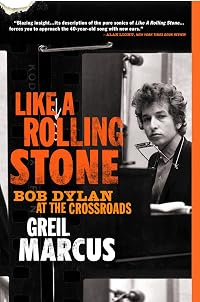
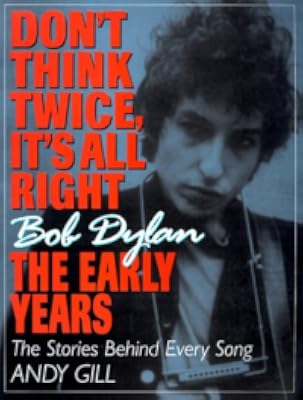
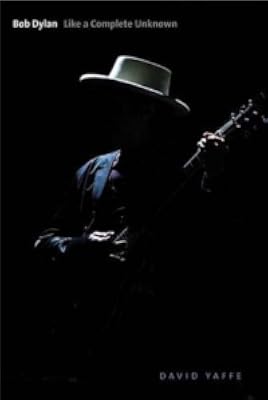


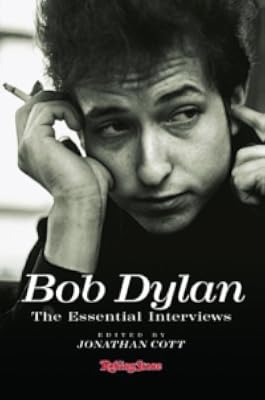








Member Reviews
Since I’ve been listening to Dylans songs now for more than 15 years I decided to learn more about this man. A man whose lyrics echoed trough many events om my life. From the heartbreak frustration of ending love (Blood on the Tracks - “We’re idiots babe, it’s a wonder we can even feed ourself”) to the life-affirming simplicity of family- and country life in the songs on New Morning.
_______________
Footnotes
[1] in contrast with Dylans own Cronicals, that jumps back and forth in time constantly. [2] If you just want to songs to speak for themself, don’t read the book, it does not enrich your listing experience. show less
Build me a cabin in Utah / Marry me a wife, catch rainbow trout / Have a bunch of kids who call me “Pa” / That must be what it’s all about / That must be what it’s all about /Bob has lyrics that open your world, at least they do for me. I knew Bob is a secluded man who rarely gives away anything about is private life. I chose the show more biography because it was praised for its research. Because Bob seems to do most of his talking via his lyrics, Souses research is mainly based on reports from the people around Bob. The picture that appears is of a highly ambiguous man. Howard Souses must be praised for avoiding to psychoanalyze to much by providing the reader accounts that praise and criticise against the backdrop of de context Bob was living in. It seems to be that Bob is a man who has a lust for praise of his work, but avoids being pushed into a corner. A man who is so good with words in his songs, but seems harsh and antisocial to fellow-musicians (firing them without much notice), friends (sometimes just ignoring them) and the media. The only place where he is able to build intimate relationships seems to be with women. With exception of the beginning of his first marriage (that he didn’t even tell his parents about) he always had a couple of intimate relations:
The man in me will hide sometimes to keep from bein’ seen / But that’s just because he doesn’t want to turn into some machine / Took a woman like you / To get through to the man in me (from: Man in me, on New Morning)The never ending touring troubadour is presented in a strict chronological way [1]. The writing style is not exciting most of the times, but when Souses start talking about the performance of songs while quoting the lines Bob is singing, you know you are listing to a devoted fan. The dryness of the book was for me a plus, since I suppose that otherwise this would have been another piece of myth creation around Dylan (we can leave that to him). Though I really missed pictures of i.e. Bob, his entourage and tour material to get a better image of his situation. So if you’re interested in Dylan, the names of supporting artist, some background information about his private life I recommend reading this book.[2] However, if your interested in the cultural context Dylan did raise to fame the book is to much focussed on Dylan’s private situation and I advice you to leave this one closed.
_______________
Footnotes
[1] in contrast with Dylans own Cronicals, that jumps back and forth in time constantly. [2] If you just want to songs to speak for themself, don’t read the book, it does not enrich your listing experience. show less
Down the Highway is a biography of Bob Dylan, which spans his early life, through to the beginning of his career to music, and his subsequent rise to his current status, which it is no exaggeration to say, is probably that of legend.
The book has obviously been meticulously researched, and is crammed with facts and figures. It pulls no punches in describing the low times in Dylan's career, as well as the highlights.
I am not generally a fan of biographies, but this one was a fascinating read. Although, as stated earlier, it is stuffed full with facts, the writing is not 'dry', and the story of Dylan's life unfolds at a satisfying pace.
What I found particularly interesting is that Dylan himself doesn't really come out of this biography show more very well! He appears at best a mass of contradictions, but prior knowledge of him suggests that that is no fault of the author - it's just representative of what Dylan is like. It is refreshing to read a biography that is not constantly gushing about it's subject.
Sounes interviewed fellow musicians, past lovers and family members for the book (although, not surprisingly, there is no contribution from Dylan himself). As with any biography, the book will be more interesting to fans, but even for someone with just a passing interest in Dylan's music, this is an interesting read. show less
The book has obviously been meticulously researched, and is crammed with facts and figures. It pulls no punches in describing the low times in Dylan's career, as well as the highlights.
I am not generally a fan of biographies, but this one was a fascinating read. Although, as stated earlier, it is stuffed full with facts, the writing is not 'dry', and the story of Dylan's life unfolds at a satisfying pace.
What I found particularly interesting is that Dylan himself doesn't really come out of this biography show more very well! He appears at best a mass of contradictions, but prior knowledge of him suggests that that is no fault of the author - it's just representative of what Dylan is like. It is refreshing to read a biography that is not constantly gushing about it's subject.
Sounes interviewed fellow musicians, past lovers and family members for the book (although, not surprisingly, there is no contribution from Dylan himself). As with any biography, the book will be more interesting to fans, but even for someone with just a passing interest in Dylan's music, this is an interesting read. show less
I think Sounes stopped admiring Dylan somewhere about page 450. A great corrective to Dylan's own Chronicles if anyone thought Chronicles told the straight goods. Sara took a lot of c--p after 1972 I d be guessing. The songs after Time Out of Mind *(1997) put anything older in the shade, compel listening, but I just think "womanizer" when I listen to the 60s and 70s stuff except for the Basement Tapes (1967). Well, who knows what relation to reality any of this reflection has: the movie "I'm Not There" with its multiple actors -- including Cate Blanchett as Dylan (!) -- might really tell all that's able to be told. Sounes will somewhat straighten a person out from uncritical admiration, not on the surface, between the lines.
This is a worthy but not spectacular biography.
It thoroughly traces Dylan's love-life, recordings, concert tours and activities right up to the tour following Time Out Of Mind, but is less penetrating on the content of his work. The claims this author makes - to have uncovered startling new evidence (in the form of a marriage certificate!!) that Bob Dylan secretly got married in the eighties, are not as interesting as Sounes thinks they are.
Down The Highway is well written without being stylish - Sounes is no Greil Marcus or Charles Shaar Murray, and nor does he try to be - but his weakness is that he holds Bob Dylan in the sort of admiring regard which is ok if you're a fan, but irritating if you're a biographer. For example, Sounes show more spends a lot of time arguing the uncontroversial assertion - almost to the point of being defensive about it - that Dylan really is one of the most culturally significant figures of the 20th century. Now whether you like Dylan or not, his significance as an artist really isn't debatable, so this is wasted energy. Sounes is also prepared to defend, in some way or other, every one of Dylan's albums, despite acknowledging that many in the late seventies and early eighties were critical and commercial failures. A more dispassionate writer might just face facts - Even Bob Dylan is capable of an iredeemably bad record. Again, this is something which the rest of the world would not dispute.
For all that, Sounes does catalogue all the nasty and unpleasant things Dylan has done in his life (as well as the nice ones), and while this obviously hasn't affected his opinion of the man, it made sobering reading for me. Mahatma Ghandi Dylan is not.
But the most interesting and valuable aspect of Sounes' portrayal was that Dylan never, even in the early days, was particularly political, nor did he consider himself a protest singer. His heroes were the same as everyone else's - Elvis Presley and Buddy Holly - he just happened to like Woody Guthrie too. In the end, in making music Bob Dylan was just trying to make a living - his famous self description as "just a song-and-dance man" may not have been intended as ironically as the world suspected. show less
It thoroughly traces Dylan's love-life, recordings, concert tours and activities right up to the tour following Time Out Of Mind, but is less penetrating on the content of his work. The claims this author makes - to have uncovered startling new evidence (in the form of a marriage certificate!!) that Bob Dylan secretly got married in the eighties, are not as interesting as Sounes thinks they are.
Down The Highway is well written without being stylish - Sounes is no Greil Marcus or Charles Shaar Murray, and nor does he try to be - but his weakness is that he holds Bob Dylan in the sort of admiring regard which is ok if you're a fan, but irritating if you're a biographer. For example, Sounes show more spends a lot of time arguing the uncontroversial assertion - almost to the point of being defensive about it - that Dylan really is one of the most culturally significant figures of the 20th century. Now whether you like Dylan or not, his significance as an artist really isn't debatable, so this is wasted energy. Sounes is also prepared to defend, in some way or other, every one of Dylan's albums, despite acknowledging that many in the late seventies and early eighties were critical and commercial failures. A more dispassionate writer might just face facts - Even Bob Dylan is capable of an iredeemably bad record. Again, this is something which the rest of the world would not dispute.
For all that, Sounes does catalogue all the nasty and unpleasant things Dylan has done in his life (as well as the nice ones), and while this obviously hasn't affected his opinion of the man, it made sobering reading for me. Mahatma Ghandi Dylan is not.
But the most interesting and valuable aspect of Sounes' portrayal was that Dylan never, even in the early days, was particularly political, nor did he consider himself a protest singer. His heroes were the same as everyone else's - Elvis Presley and Buddy Holly - he just happened to like Woody Guthrie too. In the end, in making music Bob Dylan was just trying to make a living - his famous self description as "just a song-and-dance man" may not have been intended as ironically as the world suspected. show less
Recently having viewed the movie, " A Complete Unknown" the day it was released. A very good film and a great acting job for Bob. This sparked my interest it getting more on the great artist and so off I went to the library.
My library did not have "A Complete Unknown" the book and I was disappointed to have to settle for this slightly older bio version which leaves us short of what he is up to recently.
No doubt the man is a artistic genius, a poet more than anything in my estimation. The book takes us from the early forming years of his musical troubador life in Hibbings, Minnesota as one Robert Zimmerman. Growing up in a fairly traditional Jewish household of the 50's era.
From this middle American weaning Bob of course heads to New show more York City to soon be transformed into Bob Dylan. It was not an easy course by any means but the drive to become what he ultimately did was burning brightly and the book gives us a pretty good picture of the hows and whys that drove him through this period.
When success did come and it took a bit he emerges quickly on the folk scene and his attachements to Woody Guthrie and Joan Baez become center stage here. Then as success multiplies the book settles into the yawning spell of his many associations with the endless touring and stage bands and aquaintances. His controlling manager, etc. etc.
We do get glimpses of his behind the scenes personal life with first wife Sara and the family that comes, but only sketchy glimpses. Dylan in his personal life is very private and when it comes to his family seemingly traditional and solid.
The period of drift and loss of compelling creativit then takes over much of latter book and it is a difficult period for him and to read. Finally he emerges somewhat with a later successful album and we are left with that. Bob doggedly playing the small endless out of the way venues because that's what he does. Financially it is not needed but for him it is all he is and will play out to the very end. show less
My library did not have "A Complete Unknown" the book and I was disappointed to have to settle for this slightly older bio version which leaves us short of what he is up to recently.
No doubt the man is a artistic genius, a poet more than anything in my estimation. The book takes us from the early forming years of his musical troubador life in Hibbings, Minnesota as one Robert Zimmerman. Growing up in a fairly traditional Jewish household of the 50's era.
From this middle American weaning Bob of course heads to New show more York City to soon be transformed into Bob Dylan. It was not an easy course by any means but the drive to become what he ultimately did was burning brightly and the book gives us a pretty good picture of the hows and whys that drove him through this period.
When success did come and it took a bit he emerges quickly on the folk scene and his attachements to Woody Guthrie and Joan Baez become center stage here. Then as success multiplies the book settles into the yawning spell of his many associations with the endless touring and stage bands and aquaintances. His controlling manager, etc. etc.
We do get glimpses of his behind the scenes personal life with first wife Sara and the family that comes, but only sketchy glimpses. Dylan in his personal life is very private and when it comes to his family seemingly traditional and solid.
The period of drift and loss of compelling creativit then takes over much of latter book and it is a difficult period for him and to read. Finally he emerges somewhat with a later successful album and we are left with that. Bob doggedly playing the small endless out of the way venues because that's what he does. Financially it is not needed but for him it is all he is and will play out to the very end. show less
A fascinating account of the life of Bob Dylan. It covers his youth as Robert Allen Zimmerman, his name change, his early fame, all that stuff up to 2001. It is slightly out of date due to that, since as of this post, I believe he is still alive. So he is 15 years older and whatnot. I certainly hope things have turned out for him with his record sales and all of that, but meh.
The book does cover a lot of the gossipy details of his life, but it also covers his craft and how he is inspired to write the stuff he does. So I really enjoyed it quite a bit.
The book does cover a lot of the gossipy details of his life, but it also covers his craft and how he is inspired to write the stuff he does. So I really enjoyed it quite a bit.
Bob Dylan is a genius. He was/is inspired and perhaps one of the greatest poets of our time. However, he does not come across as being a particularly faithful friend or lover. And forced to make do after some difficult/expensive divorces, he may have sold out to a certain extent (selling songs to advertisers). But he is a great man and this a good biography.
Members
- Recently Added By
Published Reviews
added by danielx
Author Information

13+ Works 1,766 Members
Howard Sounes is the author of ten nonfiction books including celebrated biographies of Paul McCartney and Charles Bukowski as well as bestselling books about crime. He lives in London, England. howardsounes.com
Some Editions
Awards and Honors
Awards
Work Relationships
Is abridged in
Common Knowledge
- People/Characters
- Bob Dylan
- First words
- Bob Dylan is an artist of almost unrivalled importance in modern, popular music. - Author's Note and Acknowledgments
The man's walk was weirdly jaunty, like a puppet on invisible strings. - Last words
- (Click to show. Warning: May contain spoilers.)After the show, the shiny tour buses snaked out of the Reno Hilton car park, past the Aqua Golf course, and onto the freeway to Pocatello, Idaho, and beyond, through Washington, Montana, and Wyoming, way out into the heart of America and on around the world.
- Original language
- English
Classifications
- Genres
- Music, Biography & Memoir, Nonfiction
- DDC/MDS
- 782.42164092 — Arts & recreation Music Vocal music Secular forms of vocal music Songs General principles and musical forms Traditions of secular songs {genres} Western popular songs
- LCC
- ML420 .D98 .S58 — Music Literature on music Literature on music History and criticism Biography
- BISAC
Statistics
- Members
- 600
- Popularity
- 48,991
- Reviews
- 9
- Rating
- (3.63)
- Languages
- 9 — Czech, Dutch, English, Italian, Norwegian (Bokmål), Polish, Portuguese (Portugal), Spanish, Swedish
- Media
- Paper, Audiobook, Ebook
- ISBNs
- 26
- UPCs
- 1
- ASINs
- 6