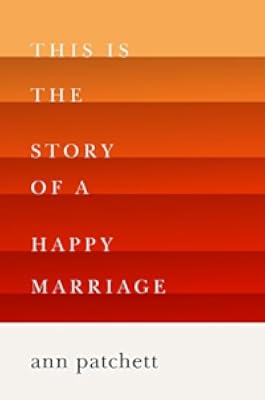
This Is the Story of a Happy Marriage
by Ann Patchett
On This Page
Description
A Reese Witherspoon Book Club Pick"I had been so engaged by Ann Patchett's multifaceted story, so lured in by her confiding voice, that I forgot I was on the job. [...] As the best personal essays often do, Patchett's is a two-way mirror, reflecting both the author and her readers." — New York Times Book Review
Blending literature and memoir, New York Times bestselling author Ann Patchett, author of State of Wonder, Run, and Bel Canto, examines her deepest commitments—to writing, show more family, friends, dogs, books, and her husband—creating a resonant portrait of a life in This is the Story of a Happy Marriage.
This Is the Story of a Happy Marriage takes us into the very real world of Ann Patchett's life. Stretching from her childhood to the present day, from a disastrous early marriage to a later happy one, it covers a multitude of topics, including relationships with family and friends, and charts the hard work and joy of writing, and the unexpected thrill of opening a bookstore.
As she shares stories of the people, places, ideals, and art to which she has remained indelibly committed, Ann Patchett brings into focus the large experiences and small moments that have shaped her as a daughter, wife, and writer.
. show less
Tags
Recommendations
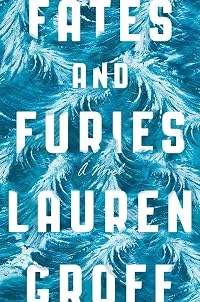
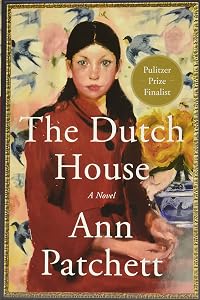
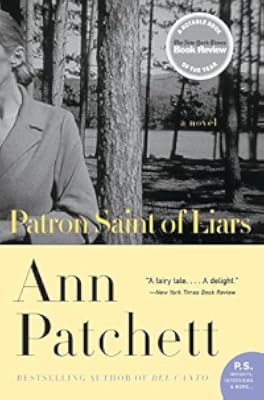
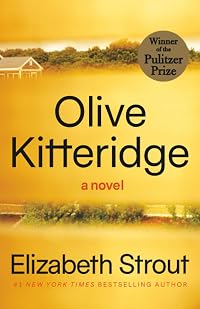

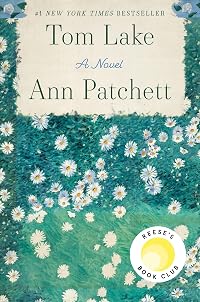
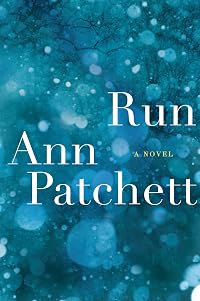
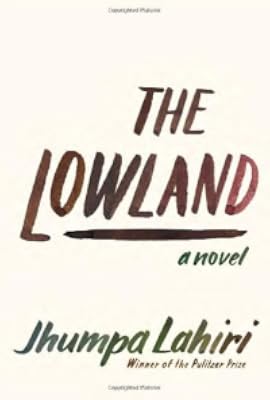
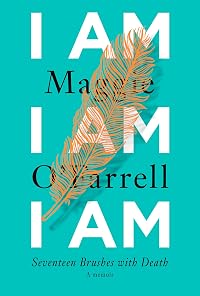

Member Recommendations
BookshelfMonstrosity Though William Styron's prose tends to be bleaker than Ann Patchett's, readers will find both these essay collections absorbing explorations of their personal challenges and their relationships with people, places, and the arts.
Member Reviews
I loved every essay in this book. Reading Ann Patchett is inspiring not as much for her topics, although they are riveting, but for her writing. I feel like I just dive into a pool of words that are put together in exactly the right way. How does she do that? I aspire to be a Patchett completist someday.
Comments on just a couple of the essays
The homage to her father, a retired LA cop, was touching and authentic. I was moved by the extreme effort she put into trying to understand his world.
I am not educated in opera, but to hear her describe the discovery of opera and her resulting passion for it tugged at my heart. How wonderful to make a such a discovery that carries you through life.
Comments on just a couple of the essays
The homage to her father, a retired LA cop, was touching and authentic. I was moved by the extreme effort she put into trying to understand his world.
I am not educated in opera, but to hear her describe the discovery of opera and her resulting passion for it tugged at my heart. How wonderful to make a such a discovery that carries you through life.
This book was a pure pleasure to read. Ann Patchett calls herself a novelust, a fiction writer, but this book contains some of the best, most polished NON-fiction that I've read in many years. There are close to two dozen pieces here, all complete in themselves, but together they make a lovely memoir, by a woman who decided as a child that she would be a writer. Patchett is one of those rare writers who knows how to laugh at herself, who refuses to take herself too seriously. So she is extremely likeable, an important element in a memoirist. Strangely, most of these essays were freelance pieces done over the course of several years, yet they all hang together beautifully to give us a portrait of the writer as a child and a young woman. show more I especially loved the final piece, "The Mercies," about her friendship with Sister Nena, who was her reading and writing teacher in grades one through three at St Bernard's Catholic School in Nashville. We learn, to my surprise, that Ann was a slow learner, and only learned to read and write in the third grade, with extra help and prodding from Nena. (Patchett attended 12 years of Catholic school.) And "Dog without End," about her aged canine companion , Rose, broke my heart, of course. Especially after reading the earlier "This Dog's Life," about how she acquired Rose. And there is another heartbreaking essay about the last years of her beloved grandmother. More than one of the pieces give us glimpses of her husband, Karl (a doctor), and the long on-again off-again (eleven years) relationship they endured before marrying, both of them previously married. The title piece anchors the collection. And rightly so. I was struck by her line, "The love between humans is the thing that nails us to this earth." And, a bit later -
"We are, on this earth, so incredibly small, in the history of time, in the crowd of the world, we are practically invisible, not even a dot, and yet we have each other to hold onto."
Yes. I loved this book. I've never read any of her fiction, but I have Bel Canto on my shelf somewhere, so ... This one? Just the best. My highest recommendation.
- Tim Bazzett, author of the memoir, BOOKLOVER show less
"We are, on this earth, so incredibly small, in the history of time, in the crowd of the world, we are practically invisible, not even a dot, and yet we have each other to hold onto."
Yes. I loved this book. I've never read any of her fiction, but I have Bel Canto on my shelf somewhere, so ... This one? Just the best. My highest recommendation.
- Tim Bazzett, author of the memoir, BOOKLOVER show less
These days, Ann Patchett is best known for her novels, but she began her writing career as a journalist, mastering the art of short non-fiction. This collection of essays, originally published in the New York Times, Atlantic Monthly, and other major media outlets, represents some of her finest work in the genre.
These essays are highly personal, and collectively describe a life with all of its ups and downs. Patchett discusses her writing career, her romantic and family relationships, her dog, the decision to open a bookstore, and her friendship with Lucy Grealy (covered in depth in Patchett's memoir, Truth and Beauty).
Many times, an essay took hold of me, prompting anything from nodding in agreement to outrage to tears. I couldn't show more possibly mention every one of these moments. One that stood out was her 2007 piece about her 2006 appearance at Clemson University. Truth and Beauty was assigned reading for the incoming freshman class, to the outrage of many parents and alumni who wrongly deemed it pornographic. Patchett endured their public shaming, and to its credit the university did not cancel their invitation for her to address the class. Her powerful address, "The Right to Read," follows her essay about these events. The final essay in this collection, "The Mercies," is about an aging nun and at first seemed out of place. But as I turned the final page, I realized it was a perfect way to end this book while leaving room for more books like this in the future. show less
These essays are highly personal, and collectively describe a life with all of its ups and downs. Patchett discusses her writing career, her romantic and family relationships, her dog, the decision to open a bookstore, and her friendship with Lucy Grealy (covered in depth in Patchett's memoir, Truth and Beauty).
Many times, an essay took hold of me, prompting anything from nodding in agreement to outrage to tears. I couldn't show more possibly mention every one of these moments. One that stood out was her 2007 piece about her 2006 appearance at Clemson University. Truth and Beauty was assigned reading for the incoming freshman class, to the outrage of many parents and alumni who wrongly deemed it pornographic. Patchett endured their public shaming, and to its credit the university did not cancel their invitation for her to address the class. Her powerful address, "The Right to Read," follows her essay about these events. The final essay in this collection, "The Mercies," is about an aging nun and at first seemed out of place. But as I turned the final page, I realized it was a perfect way to end this book while leaving room for more books like this in the future. show less
44. This is the Story of a Happy Marriage by Ann Patchett (2013, 306 page Hardcover, Read July 22 – Aug 3)
I'm having a tough time reviewing this. I just can't seem to figure out whether I liked it disproportionately to it's quality, or how to express that with the right amount of imprecision. I loved the collection. The quality is at least good, if not great. I mean Patchett clearly has some skills in writing personal essays (the essays are all about her life). She excels at bringing the reader in and making us interested, not dragging the essays along, and leaving the reader moved, sometimes in only a few words.
As these are all personal essays, cumulatively they work as something like a biography. She covers childhood experiences show more with divorced parents in two states, half siblings, grad school, bad marriages, affairs with the like of David Foster Wallace, dogs, aging, relationships, writing, her odd experience with freedom of expression, and how she has accidentally become the voice of the independent book store. For all she has accomplished, it was her book store, Parnassus in Nashville, TN, that got her on front page of the New York Times and on the Colbert Report.
I found I liked pretty much every essay. They were originally supposed to stand on their own, and they do. The Getaway Car: A Practical Memoir about Writing and Life is a short manual on how to write, or at least how she writes. It's quite brilliant, I think. How to Read a Christmas Story is simply about her dad telling her a Christmas story over the phone on Christmas day. But it's not a simple story. Thanks to her parent's divorce, her father calls Tennessee on Christmas Day from California where he spends the day alone...and just little details like that make this actually a fairly complex story that does a lot to the reader in a few pages.
For me, clearly the best essay was the title one, This Is the Story of a Happy Marriage. Maybe I like this so much because this is where she talks about her relationship with David Foster Wallace (who she merely names David). But also it's just a great fairy tale version of her life. There is naivety, a tragic beginning, a terrible sin, variations of romance, and various snares and adventures that all lead up to a happy ending of sorts. And it was not till afterward that I started to think about how many different elements of the story captured me, or about all those distracting details that were stripped off, to keep simple, if you like.
Anyway, for what it's worth, I got a lot out of this.
2014
https://www.librarything.com/topic/172769#4801109 show less
I'm having a tough time reviewing this. I just can't seem to figure out whether I liked it disproportionately to it's quality, or how to express that with the right amount of imprecision. I loved the collection. The quality is at least good, if not great. I mean Patchett clearly has some skills in writing personal essays (the essays are all about her life). She excels at bringing the reader in and making us interested, not dragging the essays along, and leaving the reader moved, sometimes in only a few words.
As these are all personal essays, cumulatively they work as something like a biography. She covers childhood experiences show more with divorced parents in two states, half siblings, grad school, bad marriages, affairs with the like of David Foster Wallace, dogs, aging, relationships, writing, her odd experience with freedom of expression, and how she has accidentally become the voice of the independent book store. For all she has accomplished, it was her book store, Parnassus in Nashville, TN, that got her on front page of the New York Times and on the Colbert Report.
I found I liked pretty much every essay. They were originally supposed to stand on their own, and they do. The Getaway Car: A Practical Memoir about Writing and Life is a short manual on how to write, or at least how she writes. It's quite brilliant, I think. How to Read a Christmas Story is simply about her dad telling her a Christmas story over the phone on Christmas day. But it's not a simple story. Thanks to her parent's divorce, her father calls Tennessee on Christmas Day from California where he spends the day alone...and just little details like that make this actually a fairly complex story that does a lot to the reader in a few pages.
For me, clearly the best essay was the title one, This Is the Story of a Happy Marriage. Maybe I like this so much because this is where she talks about her relationship with David Foster Wallace (who she merely names David). But also it's just a great fairy tale version of her life. There is naivety, a tragic beginning, a terrible sin, variations of romance, and various snares and adventures that all lead up to a happy ending of sorts. And it was not till afterward that I started to think about how many different elements of the story captured me, or about all those distracting details that were stripped off, to keep simple, if you like.
Anyway, for what it's worth, I got a lot out of this.
2014
https://www.librarything.com/topic/172769#4801109 show less
Ann Patchett glows off the page. I'd read (or in the case of the title story, listened to) several of these essays before, but I could easily read them every year and not tire of them. Patchett is the person you want as your wise aunt, your best friend, your neighbor - and definitely also your local bookseller and novelist. Lucky Nashville.
"The quality of a life is defined not by its length, but by its depth, its actions and achievements. It is defined by our ability to love." ("Fact vs. Fiction," 162)
"No matter what book clubs tell us, reading is a private act, private even from the person who wrote the book. Once the novel is out there, the author is beside the point." ("My Life in Sales," 168)
"But the twenty-eighth time...someone show more says, 'So tell me where the idea for this novel came from,' something in my brain starts to come loose. 'This book is about YOU,' I want to scream. 'I've been stealing your mail for years.'" (168) show less
"The quality of a life is defined not by its length, but by its depth, its actions and achievements. It is defined by our ability to love." ("Fact vs. Fiction," 162)
"No matter what book clubs tell us, reading is a private act, private even from the person who wrote the book. Once the novel is out there, the author is beside the point." ("My Life in Sales," 168)
"But the twenty-eighth time...someone show more says, 'So tell me where the idea for this novel came from,' something in my brain starts to come loose. 'This book is about YOU,' I want to scream. 'I've been stealing your mail for years.'" (168) show less
{T}he story of my marriage, which is the great joy and astonishment of my life, is too much like a fairy tale -- the German kind, unsweetened by Disney. It is the story of children wandering alone through a dark forest, past shadowy animals with razor teeth and yellow eyes, towards an accident that is punishable by years and years of sleep. It is an unpleasant business, even if it ends in love. I am setting out to tell the story of a happy marriage, my marriage, which does not end in divorce, but every single thing about it starts there.
That’s from the title essay* in this collection of 23 short, medium and long personal essays, all previously published in prominent newspapers/ magazines/ books from 1996 to 2012.
Patchett writes on a show more variety of topics (nuns; opera; censorship; trying out RVs; trying out for the police academy) but keeps returning to a core: divorce; family; dogs; home (Tennessee); reading and writing. She also chronicles her co-founding of Parnassus Books, an independent bookstore in Nashville.
Her Bel Canto is on my all-time Top 10 Fiction list; I’ve liked others of her novels less, and have two still in my TBRs. While this collection felt like a bunch of unrelated essays early on, those core themes helped it to coalesce later. And not only is there not a clunker in the bunch, the essays are almost uniformly excellent -- wise and optimistic. A terrific comfort read.
*Note: This work# and this review relate to Patchett’s collection of essays. Reader, browse the tags, ratings and reviews here with caution -- many of them relate to a standalone audio recording of the single, title essay only.
(Review based on an advance reading copy provided by the publisher.) show less
That’s from the title essay* in this collection of 23 short, medium and long personal essays, all previously published in prominent newspapers/ magazines/ books from 1996 to 2012.
Patchett writes on a show more variety of topics (nuns; opera; censorship; trying out RVs; trying out for the police academy) but keeps returning to a core: divorce; family; dogs; home (Tennessee); reading and writing. She also chronicles her co-founding of Parnassus Books, an independent bookstore in Nashville.
Her Bel Canto is on my all-time Top 10 Fiction list; I’ve liked others of her novels less, and have two still in my TBRs. While this collection felt like a bunch of unrelated essays early on, those core themes helped it to coalesce later. And not only is there not a clunker in the bunch, the essays are almost uniformly excellent -- wise and optimistic. A terrific comfort read.
*Note: This work# and this review relate to Patchett’s collection of essays. Reader, browse the tags, ratings and reviews here with caution -- many of them relate to a standalone audio recording of the single, title essay only.
(Review based on an advance reading copy provided by the publisher.) show less
This is a book of fine essays by one of the best writers around. I love Ann Patchett's fiction (Bel Canto, State of Wonder) but had not read any of her magazine articles until now. Truth and Beauty was also non-fic, the biography of Ann's dear friend Lucy Grealy, whose cancer of the jaw left her physically devastated but with a brilliant mind and soul. One of the essays here defends Truth and Beauty and Autobiography of a Face, Lucy's book, which were assigned freshman reading at a Southern college where parents of students attempted to censor the project. Ann's speech to the freshman class is her Gettysburg address of defense of literary freedom, though oddly enough, she repudiates the speech as pretentious later on.
Ann's deliciously show more complex marriage is the subject of the longest story and maybe the best. Everything here is grade A+++ choice. Don't miss it. show less
Ann's deliciously show more complex marriage is the subject of the longest story and maybe the best. Everything here is grade A+++ choice. Don't miss it. show less
Members
- Recently Added By
Lists

Top Five Books of 2022
736 works; 272 members

Top Five Books of 2017
757 works; 231 members

Books Read in 2015
3,299 works; 129 members

Allie's Wishlist
217 works; 2 members

Non-Fiction Worth Reading
1,016 works; 262 members

Short Nonfiction Collections
51 works; 4 members

Bitter Southerner Summer Reading Roundup
198 works; 8 members

Club Read's Recommended Nonfiction Written by Women
618 works; 30 members

Reese's Book Club
122 works; 2 members
Author Information

31+ Works 55,580 Members
Ann Patchett was born on December 2, 1963. She received the Orange Prize for Fiction and the PEN/Faulkner Award in 2002 for her novel Bel Canto. Her other novels include The Patron Saint of Liars, Taft, The Magician's Assistant, and State of Wonder. She has also written several nonfiction works including Truth and Beauty: A Friendship, The Getaway show more Car, The Bookshop Strikes Back, and This Is the Story of a Happy Marriage. Ann's title's Commonweatlth and The Patron Saint of Liars made the New York Time bestseller list. (Bowker Author Biography) show less
Awards and Honors
Distinctions
Reese's Book Club (2017-11 – 2017)
Notable Lists
Work Relationships
Is contained in
Common Knowledge
- Dedication
- For Karl
- First words
- The tricky thing about being a writer, or about being any kind of artist, is that in addition to making art you also have to make a living.
- Quotations
- Page 160: Color, while being the most visible thing we can know about a tree, is…created by that part of light that the tree has cast off. The tree absorbs all the other light waves of color, welcomes them as pa... (show all)rt of itself; the green we see is the negative, the reflected-off reality it wants no part of. Where its definition of itself ends, our definition of it is just beginning.
Writers need not be confined by their own dull lives and petty Christmas sadness. They could cut new stories out of the whole cloth, stories that did not reflect their own experiences but spoke instead to the depth of their e... (show all)motions. (p. 17, How to Read a Christmas Story)
Ninety percent of what I now about fiction writing I learned that year. Write it out. Tell the truth. Stack up the pages. Learn to write by writing. Slowing down was for later, years later. (p. 28, The Getaway Car)
Novel writing, I soon discovered, is like channel swimming: a slow steady stroke over a long distance in a cold, dark sea. (p. 45, The Getaway Car)
In my books, I make up the experiences and characters but the emotional life is real. It is my own. (p. 157, Fact vs. Fiction)
No matter what book clubs tell us, reading is a private act, private even from the person who wrote the book. Once the novel is out there, the author is beside the point. The reader and the book have their own relationship no... (show all)w, and should be left alone to work things out for themselves. (p. 168, My Life in Sales)
Although you appear to be promoting your new novel, you never really tour for the books that's just come out. You tour for the book before that, the one people have read and want to talk about. Unless, of course, you're on to... (show all)ur for your first book, which no one has read or wants to talk about. (p. 169, My Life in Sales)
The ability to have a friend and be a friend, is not unlike the ability to learn. Both are rooted in being accepting and open-minded with a talent for hard work. If you are willing to stretch yourself, to risk yourself, if yo... (show all)u are willing to love and honor and cherish the people who are important to you until one of you dies, then there will be great heartaches and even greater rewards. (p. 193, The Right to Read)
It's not more complicated than that, she said. That's all there is: Does he make you better and do you make him better? (p. 249, This Is the Story of a Happy Marriage)
I tortured myself over what awful thing might happen in the future instead of being wholly present and thankful for this moment. (p. 268, This Is the Story of a Happy Marriage)
We are, on this earth, so incredibly small, in this history of time, in this crowd of the world, we are practically invisible, not even a dot, and yet we have each other to hold on to. (p. 270, This Is the Story of a Happy Ma... (show all)rriage)
Sometimes love does not have the most honorable beginings, and the endings, the endings will break you in half. It's everything in between we live for. (p. 284, Dog Without End)
It turned out the real heartbreak of the vow of poverty was never being able to buy presents for the people who were so clearly in need. (p.303, The Mercies)
Happiness is her mind-set, her decision, and though she often reminds me that God will take care of things, she is also determined not to trouble Him if at all possible. (p. 305, The Mercies) - Last words
- (Click to show. Warning: May contain spoilers.)You first.
- Disambiguation notice
- This is a collection of essays that includes an essay of the same title. Please do not combine the two works.
Classifications
Statistics
- Members
- 1,586
- Popularity
- 14,345
- Reviews
- 85
- Rating
- (4.10)
- Languages
- English
- Media
- Paper, Audiobook, Ebook
- ISBNs
- 17
- ASINs
- 10