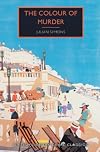
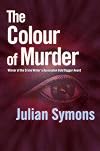
The Colour of Murder
by Julian Symons
On This Page
Description
"John Wilkins meets a beautiful, irresistible girl, and his world is turned upside down. Looking at his wife, and thinking of the girl, everything turns red before his eyes--the colour of murder. But did he really commit the heinous crime he was accused of? Told innovatively in two parts: the psychiatric assessment of Wilkins and the trial for suspected murder on the Brighton seafront, Symons' award-winning mystery tantalizes the reader with glimpses of the elusive truth and makes a daring show more exploration of the nature of justice itself."-- Page [4] of cover. show lessTags
Recommendations





















Member Reviews
I'm always tempted by these British Library Crime Classics editions; they promise nostalgic tales of detection where Cambridge dons lace their rivals' tea with arsenic. The Colour of Murder comes from a later, less comforting period of British history – the postwar years of the Profumo scandal. There are more peroxide blondes and seedy bars than high tables and gowns in this squalid modern environment. At the centre of the book is a relationship that starts out as fantasy and takes a sour turn, not dissimilar from the Thompson/Bywaters murder of the 1920s. Minor characters are clearly important to Symons, and he peoples his suburban and seaside locations with callous and self-centred individuals who would be at home in one of Balzac's show more grimmer novels. The book is well-written; Julian Symons was the brother of AJA Symons, whose biography he wrote, but he has a more 'social realist' bent than his aesthetic sibling. The Colour of Murder is not much fun as a novel, but better than many in the genre – just don't expect anything in the Poirot/Whimsey/Allen/Campion line. show less
This book in the British Library Crime Classics series takes an unusual approach to narrative. The first half is a first-person account, presented as a psychologist’s record of sessions held with the speaker, a young man named John Wilkins. About halfway through the book, we find out that there has been a murder – but it would be a spoiler to say, right now, who’s been killed, or who is the suspect. During the second half, we follow the action in court, watching prosecution and defence in action, we try to understand exactly what happened on the beach at Brighton that dark summer night, and whether the accused truly is guilty. As a murder mystery it isn’t entirely satisfying – there’s very little sense of catharsis to be had show more – but it’s fascinating as a social history. Reading it so soon after The Fortnight in September, I found myself drawing lots of parallels between the modest lives of the Stevens family in the 1930s and that of John Wilkins in the 1950s: a world of humble jobs, social striving, and frustration, which hasn’t changed as much in twenty years as you might expect. However, while the Stevens family ultimately find joy and hope in their lives, Wilkins feels consistently hard-done-by: a man whose search for self-fulfilment leads to a tragic outcome...
For the full review, please see my blog:
https://theidlewoman.net/2020/04/22/the-colour-of-murder-1957-julian-symons/ show less
For the full review, please see my blog:
https://theidlewoman.net/2020/04/22/the-colour-of-murder-1957-julian-symons/ show less
Everyone in this book is awful, pathetic, or both. Not terribly so: just ordinarily awful, mundanely pathetic. And I suppose not quite everyone. There's a barrister whose only character flaw is a measure of egotism, and a likeable prostitute. But every other character, minor or major, is composed in a rebarbative key. It's quite an achievement to make even the brief walk-on parts believably unpleasant.
The narrative centres on John Wilkins, a minor-league fantasist in denial about his drinking problem. His fantasies and his drinking owe much to his grasping, social-climbing wife, May, and his overbearing, meddling mother. Their intertwined lives induce an atmosphere of intense entrapment. The reader is given to wonder how many similar show more miserable situations have been avoided by the liberalisation of the divorce laws and the loosening of stifling middle-class social norms since the 1950s. If John and May could just have separated painlessly, and acceptably to all, none of the plot happens.
Since they can't separate, the plot happens. John's fantasies lead him into a tangle of lies and a delusional semi-affair with a young woman; his lies, along with his drinking and concomitant blackouts, contribute to the credibility of the murder case against him when she's found dead. The book has two parts. The first is a long pre-trial interview between John and a psychiatrist. He was irrationally involved with her. He may have killed her. He doesn't know. He can't remember. The second is the trial itself. An epilogue seems intended to cement the ambiguity surrounding the murder case, but rests on a coincidence so far-fetched that the ambiguity instead collapses. The book might have been better without it.
The Colour of Murder was reissued as a British Library Crime Classic in 2018, so it wasn't just a prize-winner in 1957; it is esteemed today. Both accolades deserve inquiry.
Why did it win a prize in 1957? Perhaps because of the forensic focus on the states of mind of the central suspect. The introduction to the BL edition highlights this as a novelty at the time, and certainly in comparison to novels from the "Golden Age" of crime novels, there is considerable depth, nuance, and plausibility to the psychological characterisation. This is mostly in the first part of the book. The trial part is nicely done, and I might have appreciated it more had I not recently read Grierson's similar, better effort. The introduction claims that Symons uses this part to "explore the nature of justice", but I can't say I found much exploration worth considering.
Symons' reputation in the world of crime fiction now rests mostly on his history of the genre, Bloody Murder, rather than on his own novels. So why reissue this one (and one other, The Belting Inheritance)? While it certainly has merits as a novel, it's also fascinating as a social document of the 1950s. The introduction notes this, but in relation to concrete facts about the prevalence of "television parties" and racism. I was more struck by what the book tells about the claustrophobic, small-minded, straitened nature of lower-middle-class 1950s life: among other elements, how painfully important it was to cleanse oneself from any taint of unsuitable social origins or associations, and how temptingly easy it was to re-associate oneself to disastrous effect. If you ever want to read a novel that makes you both aware and glad that the not-too-distant past really is the past, this is one to consider. show less
The narrative centres on John Wilkins, a minor-league fantasist in denial about his drinking problem. His fantasies and his drinking owe much to his grasping, social-climbing wife, May, and his overbearing, meddling mother. Their intertwined lives induce an atmosphere of intense entrapment. The reader is given to wonder how many similar show more miserable situations have been avoided by the liberalisation of the divorce laws and the loosening of stifling middle-class social norms since the 1950s. If John and May could just have separated painlessly, and acceptably to all, none of the plot happens.
Since they can't separate, the plot happens. John's fantasies lead him into a tangle of lies and a delusional semi-affair with a young woman; his lies, along with his drinking and concomitant blackouts, contribute to the credibility of the murder case against him when she's found dead. The book has two parts. The first is a long pre-trial interview between John and a psychiatrist. He was irrationally involved with her. He may have killed her. He doesn't know. He can't remember. The second is the trial itself. An epilogue seems intended to cement the ambiguity surrounding the murder case, but rests on a coincidence so far-fetched that the ambiguity instead collapses. The book might have been better without it.
The Colour of Murder was reissued as a British Library Crime Classic in 2018, so it wasn't just a prize-winner in 1957; it is esteemed today. Both accolades deserve inquiry.
Why did it win a prize in 1957? Perhaps because of the forensic focus on the states of mind of the central suspect. The introduction to the BL edition highlights this as a novelty at the time, and certainly in comparison to novels from the "Golden Age" of crime novels, there is considerable depth, nuance, and plausibility to the psychological characterisation. This is mostly in the first part of the book. The trial part is nicely done, and I might have appreciated it more had I not recently read Grierson's similar, better effort. The introduction claims that Symons uses this part to "explore the nature of justice", but I can't say I found much exploration worth considering.
Symons' reputation in the world of crime fiction now rests mostly on his history of the genre, Bloody Murder, rather than on his own novels. So why reissue this one (and one other, The Belting Inheritance)? While it certainly has merits as a novel, it's also fascinating as a social document of the 1950s. The introduction notes this, but in relation to concrete facts about the prevalence of "television parties" and racism. I was more struck by what the book tells about the claustrophobic, small-minded, straitened nature of lower-middle-class 1950s life: among other elements, how painfully important it was to cleanse oneself from any taint of unsuitable social origins or associations, and how temptingly easy it was to re-associate oneself to disastrous effect. If you ever want to read a novel that makes you both aware and glad that the not-too-distant past really is the past, this is one to consider. show less
John Wilkins is an unappealing person and his narrative is the majority of the story in Julian Symons innovative mystery The Colour of Murder. The novel has three parts, John Wilkins’ narrative to his psychiatrist who is doing an assessment on behalf of his lawyers takes up Part One. His personality comes through powerfully, which is too bad for him because he is unlikable. Part Two includes conversations between his lawyers, family, supporters, detractors, and trial proceedings including testimony and jury instructions through the verdict. The last part is an epilogue catching you up on reactions and what happened next. It’s an intriguing and unusual format in its formality.
John Wilkins was an unhappy man in an unhappy marriage who show more became infatuated with a local librarian who happened to be pleasant to him. He constructed a fantasy romance built on a few smiles, politeness, and a single theater date. He was a complete stalker and everything women hate but was he a murderer? Even he wasn’t sure. He was a blackout drunk or maybe, who knows, maybe there is some psychological explanation such a disassociative disorder.
The story focuses mainly on whether Wilkins is guilty, not on whether there were persons known or unknown who could have committed murder. I won’t say who is murdered, because that revelation comes quite far into the story. There are plenty of people whom you can see as potential victims since Wilkins resents people and always sees himself as a victim, one of the reasons he is so irritating.
I had altogether too much of John Wilkins and could understand the desire to convict him. Symons makes us understand exactly how unlikable and hard to believe he is. The Colour of Murder succeeds in demonstrating the fallibility of a trial, how personal biases creep in, how the manipulations by lawyers and their appeals to social biases work, less to seek the truth, and more to get a win. The trial is fascinating and I would have enjoyed the book so much more if there were more trial and less John Wilkins. Poor John Wilkins, will he be judged on the facts or his personal appeal? It’s a good question, not just in this case, but in real life.
The Colour of Murder will be released on February 5th. I received an e-galley from the publisher through NetGalley.
The Colour of Murder at Poisoned Pen Press
Julian Symons at Wikipedia
https://tonstantweaderreviews.wordpress.com/2019/01/26/9781464210891/ show less
John Wilkins was an unhappy man in an unhappy marriage who show more became infatuated with a local librarian who happened to be pleasant to him. He constructed a fantasy romance built on a few smiles, politeness, and a single theater date. He was a complete stalker and everything women hate but was he a murderer? Even he wasn’t sure. He was a blackout drunk or maybe, who knows, maybe there is some psychological explanation such a disassociative disorder.
The story focuses mainly on whether Wilkins is guilty, not on whether there were persons known or unknown who could have committed murder. I won’t say who is murdered, because that revelation comes quite far into the story. There are plenty of people whom you can see as potential victims since Wilkins resents people and always sees himself as a victim, one of the reasons he is so irritating.
I had altogether too much of John Wilkins and could understand the desire to convict him. Symons makes us understand exactly how unlikable and hard to believe he is. The Colour of Murder succeeds in demonstrating the fallibility of a trial, how personal biases creep in, how the manipulations by lawyers and their appeals to social biases work, less to seek the truth, and more to get a win. The trial is fascinating and I would have enjoyed the book so much more if there were more trial and less John Wilkins. Poor John Wilkins, will he be judged on the facts or his personal appeal? It’s a good question, not just in this case, but in real life.
The Colour of Murder will be released on February 5th. I received an e-galley from the publisher through NetGalley.
The Colour of Murder at Poisoned Pen Press
Julian Symons at Wikipedia
https://tonstantweaderreviews.wordpress.com/2019/01/26/9781464210891/ show less
A man is on trial for murder, and he’s convicting himself out of his own mouth. He’s prone to blackouts and can’t remember where he was on the night of the murder, but the first thing he said when the news was broken to him was “I would never have done anything to hurt her.” The story is told partly from the suspect’s own statement to a psychiatrist, and then told by a conventional third-person narrator thereafter. This book was published in 1957, but this particular narrative device is still in use today, making the book feel fresher than you might expect. It was a solid addition to the British Library Crime Classics stable.
THE COLOUR OF MURDER is the first book by Julian Symons that I've read and I really enjoyed it. Though it is naturally a book of its time, I found it endearing and charming. The characters were fantastic and the book, for me, is reminiscent of a Patricia Highsmith or a Ruth Rendell mystery.
I thought that the story was captivating and engaging and extremely well structured, both leading up to the murder, as told by the accused, as he relates his account of events to a psychologist and in court, with the cases for the defence and prosecution. I loved that the style of writing was slightly different from the usual types of murder mysteries, although there was still a whodunit theme, as well as a look at the nature of justice. It held my show more interest from start to finish and the way in which Julian Symons brought everything to a conclusion was just fabulous. I loved it and it has left me eager to read more from this author.
Thank you to NetGalley, the publisher and the author for a free ARC of this book in exchange for a voluntary, honest review. show less
I thought that the story was captivating and engaging and extremely well structured, both leading up to the murder, as told by the accused, as he relates his account of events to a psychologist and in court, with the cases for the defence and prosecution. I loved that the style of writing was slightly different from the usual types of murder mysteries, although there was still a whodunit theme, as well as a look at the nature of justice. It held my show more interest from start to finish and the way in which Julian Symons brought everything to a conclusion was just fabulous. I loved it and it has left me eager to read more from this author.
Thank you to NetGalley, the publisher and the author for a free ARC of this book in exchange for a voluntary, honest review. show less
This mystery was sent to me by the publisher Poisoned Pen Press via NetGalley. Thank you.
In part one of The Colour of Murder, John Wilkins is an ordinary young man with a solid job in the complaints department of a large department store. He has an over-protective mother and a bland wife who does not excite him. He escapes his boring existence in his fantasies where he is a top executive whom women find fascinating. It’s fine if the thoughts stay inside his head. Only when he projects his dreams onto actual people does he get in trouble. That is what happens when he meets a pretty librarian who is kind to him. He does believe that she is very interested in him and, in a daring move for a married man, he asks her to go to the theater show more with him. Nothing is the same in his life as a result.
To a psychiatrist, he reveals this and other sad incidents from his childhood to his army career where he was badly beaten by his fellow soldiers for trying too hard to be the perfect soldier. He sustains a brain injury and when he is under stress he has blackouts which could last for hours. He never remembers what he has done during the blackouts, but he accepts responsibility for his behavior during the missing time.
In part two Wilkins is being tried for murder which he may have committed during a blackout. The defense and the prosecution call witnesses, all of them credible, to prove his guilt or innocence. I found Wilkes’ story very interesting but I really enjoyed part two of the novel. Symons is a master of showing how testimony can be manipulated. For example, should the account of Wilkes’ whereabouts be disregarded because the witness is a known prostitute? Can too much technical detail help or hinder the jury’s understanding of the crime?
This is a very satisfying mystery with totally believable characters and a trial that may or may not have resulted in the conviction of the right person. show less
In part one of The Colour of Murder, John Wilkins is an ordinary young man with a solid job in the complaints department of a large department store. He has an over-protective mother and a bland wife who does not excite him. He escapes his boring existence in his fantasies where he is a top executive whom women find fascinating. It’s fine if the thoughts stay inside his head. Only when he projects his dreams onto actual people does he get in trouble. That is what happens when he meets a pretty librarian who is kind to him. He does believe that she is very interested in him and, in a daring move for a married man, he asks her to go to the theater show more with him. Nothing is the same in his life as a result.
To a psychiatrist, he reveals this and other sad incidents from his childhood to his army career where he was badly beaten by his fellow soldiers for trying too hard to be the perfect soldier. He sustains a brain injury and when he is under stress he has blackouts which could last for hours. He never remembers what he has done during the blackouts, but he accepts responsibility for his behavior during the missing time.
In part two Wilkins is being tried for murder which he may have committed during a blackout. The defense and the prosecution call witnesses, all of them credible, to prove his guilt or innocence. I found Wilkes’ story very interesting but I really enjoyed part two of the novel. Symons is a master of showing how testimony can be manipulated. For example, should the account of Wilkes’ whereabouts be disregarded because the witness is a known prostitute? Can too much technical detail help or hinder the jury’s understanding of the crime?
This is a very satisfying mystery with totally believable characters and a trial that may or may not have resulted in the conviction of the right person. show less
Members
- Recently Added By
Lists

The Top 100 Crime Novels of All Time
100 works; 15 members

Books Read in 2021
5,361 works; 114 members

#MysteryBingo2022Gold(Revised)
36 works; 1 member
#JustTheFacts2022Gold
48 works; 1 member
Author Information

116+ Works 3,592 Members
Some Editions
Awards and Honors
Awards
Distinctions
Series
Belongs to Publisher Series
Common Knowledge
- Canonical title
- The Colour of Murder
- Original title
- The Color of Murder
- Original publication date
- 1957
- People/Characters
- John Wilkins; May Wilkins
- Dedication
- For Michael Evelyn with much gratitude for his patient guidance through the legal maze
- First words
- It all began one day in April when I went round to change a library book.
Classifications
Statistics
- Members
- 200
- Popularity
- 162,784
- Reviews
- 15
- Rating
- (3.70)
- Languages
- 6 — Danish, English, Finnish, German, Norwegian (Bokmål), Spanish
- Media
- Paper, Audiobook, Ebook
- ISBNs
- 20
- ASINs
- 9