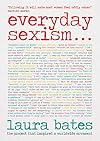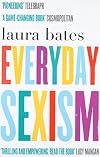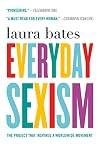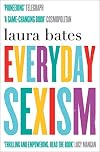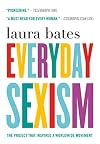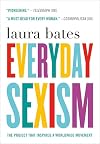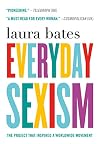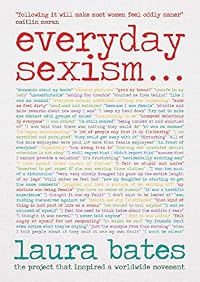
Everyday Sexism
by Laura Bates
On This Page
Description
In a culture that's driven by social media, women are using this online space to come together, share their stories and encourage a new generation to recognise the problems that women face. This book is a call to arms in a new wave of feminism, and it proves sexism is endemic - socially, politically and economically - but women won't stand for it.Tags
Recommendations
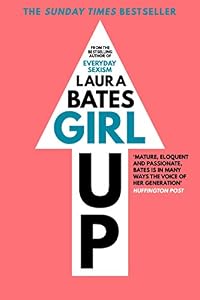
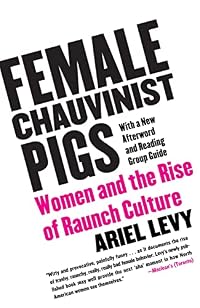
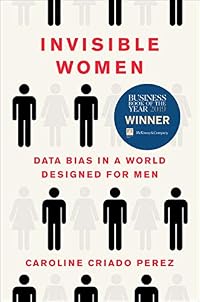
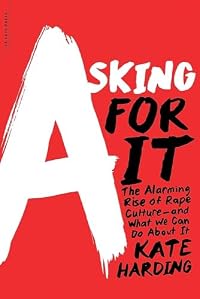


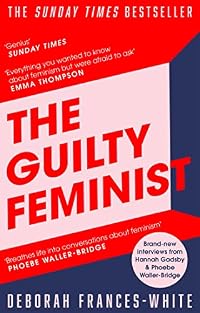
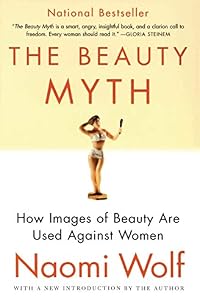
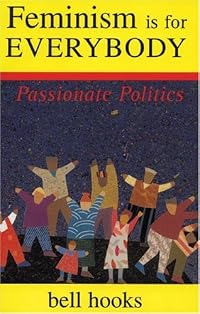
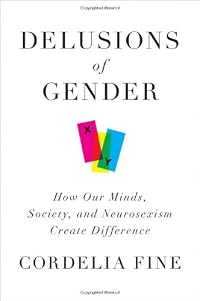





Member Recommendations
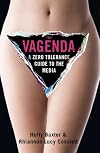
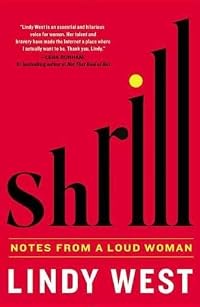
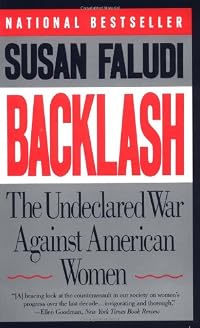
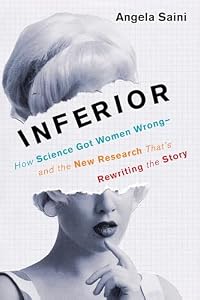
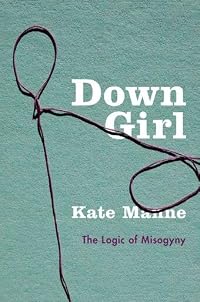
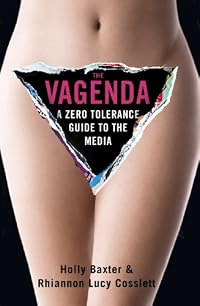
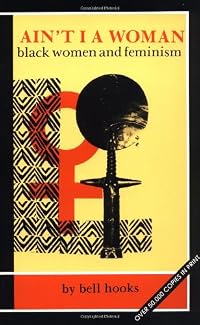
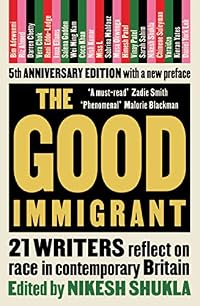
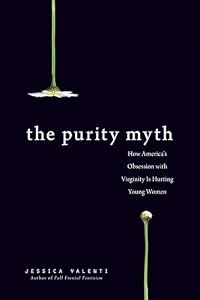
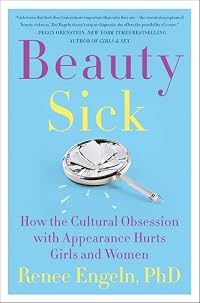
nessreader They're both about ordinary everyday examples of women being objectified and/or harrassed in western Europe. Vagenda is focussed on the dreadfullness of magazines aimed at women consumers, and how insidiously they undermine their readers. Everyday is a compiled twitter feed.
Member Reviews
Three Cheers for the Clinton Cackle!
(Full disclosure: I received a free electronic ARC for review through NetGalley. Trigger warning for sexual harassment and assault, rape, and violence against women.)
Our experiences of all forms of gender prejudice—from daily sexism to distressing harassment to sexual violence—are part of a continuum that impacts all of us, all the time, shaping ourselves and our ideas about the world. To include stories of assault and rape within a project documenting everyday experiences of gender imbalance is simply to extend its boundaries to the most extreme manifestations of that prejudice. To see how great the damage can be when the minor, “unimportant” issues are allowed to pass without comment. To show more prove how the steady drip-drip-drip of sexism and sexualization and objectification is connected to the assumption of ownership and control over women’s bodies, and how the background noise of harassment and disrespect connects to the assertion of power that is violence and rape.
And so we accepted all these stories, and more, until in April 2015—exactly three years after the project was launched—one hundred thousand entries had poured in. This is their story. This is the sound of a hundred thousand women’s voices. This is what they’re telling us.
###
I don’t mean to alarm you, but we are in the middle of an international epidemic. One in three women will be raped or beaten in her lifetime. According to the World Health Organization, 38 percent of all women murdered are killed by their partners. Around the world, women are subjected to forced marriage, stoning, trafficking, female genital mutilation, childhood pregnancy, acid attacks, “honor” killings, “corrective” rape, lives of slavery and servitude because of their second-class citizenship. In some countries they are pushed toward enlarging their breasts to satisfy male demand. In others their breasts are painfully flattened with hot stones to deter male lust. In some places their vaginas are painfully stuffed with dry cotton to make them swell with discomfort so they will tighten for men’s pleasure. In others their sexual organs are decimated to control women’s sexuality.
Actually, I do think you should be alarmed. I think we should all be alarmed.
###
My curiosity was most definitely piqued when I spotted this title on NetGalley. Of course I'd heard of the Everyday Sexism Project - I've been a casual follower for several years on Twitter, though I've yet to submit a story - and so a book encompassing the entries (a hundred thousand and counting!) caught my attention. I wasn't sure what to expect: A catalog of the "best" submissions? (Unlikely, I thought, given the high page count.) An intro-to-feminism guide inspired by women's shared experiences? An art project or a call to action? As it just so happens, Everyday Sexism is a little bit of each of these - and so, so much more.
In addition to combing through thousands of entries, project founder Laura Bates also interviewed girls and women in preparation for Everyday Sexism. Perhaps it's merely because Bates does such an expert job of distilling and organizing them, but the women's stories seem to coalesce around certain areas:
* The silencing of women - by treating the problem [sexism, in its many varied forms] as if it were invisible and/or socially acceptable, and by blaming the victims (Chapter 1).
* Sexism in the political arena, including everything from unequal representation in Congress (or the House of Lords) to sexual harassment and policies shaped by males, for males (Chapter 2).
* Girlhood, when the brainwashing begins early - and so do the unwanted sexual advances (Chapter 3).
* And when girls graduate high school, they have college - complete with toxic lad culture - to look forward to, if they're lucky enough to attend university (Chapter 4).
* Through street harassment, sexual assault (groping, fondling, etc.), stalking, and rape, women are constantly told that we don't belong in public spaces; we travel through the world at our own risk (Chapter 5).
* The stories told in popular culture - including the mainstream media, music videos, movies, television, and magazines - rarely include those of women - so it's not surprising that we're so often sexualized and objectified...when we appear at all (Chapter 6).
* We fare no better in the workplace, where we earn less, are treated differently because of our potential (never mind intent) to bear children, and (surprise, surprise!) may be sexually harassed or even assaulted by our bosses, colleagues, or clients (Chapter 7).
* Reproduction - including pregnancy, motherhood, contraception, abortion, and childlessness - is yet another minefield for women, though perhaps one that best illustrates the sense of ownership that others assume over our bodies (Chapter 8).
* Those women who exist at the nexus of multiple marginalized identities - women of color; lesbians and bisexual women; women suffering from physical or mental disabilities; trans women; older women - must grapple with other forms of prejudice on top of sexism. Often, the two are intertwined in unique and alarming ways (Chapter 9).
* Women aren't the only ones who suffer under this system; sexism, with its stifling gender norms and reliance on "othering," hurts men too (Chapter 10)!
* In its most extreme manifestations, sexism creates a toxic, woman-hating culture that leads to serious, violent crimes, like rape and domestic violence (Chapter 11).
* Lest it all be doom and gloom, Bates ends the discussion with a much-needed look at women (and some men) who are hard at work smashing the patriarchy (Chapter 12).
I don't read a whole lot of feminist literature these days - not because I don't proudly wear that label; rather, it's just all so damn depressing and repetitive! - but I'm so glad I gave Everyday Sexism a try. I think its greatest value is in how Bates so skillfully draws a line between seemingly "innocuous" or less serious forms of sexism - toy aisles segregated by gender; offhanded comments by teachers; the mantra that "boys will be boys" - and more serious issues, such as the wage gap, victim blaming, and the effect of violent, misogynistic pornography on young men and women. All of this exists on the same continuum, with a culture that devalues, dismisses, objectifies, and sexualizes girls and women paving the way for street harassment, sexual harassment, stalking, sexual assault, rape, and domestic violence. While it's true that we can't draw a direct line from The Sun's Page 3 feature to the catcalls directed at French housing minister Cécile Duflot - on the floor at the National Assembly - in July 2012, it helps to create a climate where such a thing is not only possible, but unsurprising. This stuff doesn't occur in a vacuum; it's all about context.
Additionally, Bates peppers the narrative with statistics as well as project entries. The former helps to provide some broader context, while women's individual stories really drive Bates's arguments home. At turns humorous and heartbreaking, infuriating and (occasionally) unbelievable, I think the ultimate value of Everyday Sexism lies in the user submissions. These are our sisters, mothers, and friends; our co-workers and daughters and leaders of tomorrow. They are us. We tell stories of being discouraged, belittled, victim-blamed, harassed, and assaulted, all because of our gender. Some entries literally had me in tears. Instead of sharing those, here are three that made me smile.
Known to be a lesbian by my boarding-school administration, I was forcibly set up on a prom date my last year at school. The guy would not keep his hands off me, and told me the faculty had said he had to kiss me to make it a “real date.” (I am guessing they thought corrective kissing wasn’t as serious, but just as effective, as corrective rape.) After I tried to end the “date” by returning to my single-sex dorm, he followed me across the campus. I eventually shoved him into the duckpond (still in his rented polyester tuxedo). I was not allowed to graduate; he was.
Once had a guy ask “Would you mind telling me your bra-size?” I replied “No, but tell me first how big your cock is.” Amazingly he was shocked and found MY comment highly inappropriate.
Tired of cold callers asking to speak to the “man of the house,” now I put them on to my 6-year-old son … he sings them “Sexy and I Know It.”
While I recognized many of the anecdotes and examples offered up by Bates - Seth MacFarlane's "We Saw Your Boobs!" skit; Ray Rice's 2014 arrest for assaulting his then-girlfriend, Janay Palmer, in a hotel elevator (and the subsequent victim-blaming when she married him); George Will and his "special privileges" campus rape article; Elliot Rodger's sexist and racist killing spree - much of the information was still new to me, owing at least in part to the international focus. (Bates is from the UK.) For example, did you know that Bishops sit in the House of Lords - thus automatically closing 26 seats to women, right off the top? (How is that okay from a religious or a gender discrimination perspective?)
Likewise, despite my cynicism, I still experienced the occasional jaw-drop moment. The story from the young woman, who was having sex with her boyfriend for the first time, really got me. Midway through, he wrapped his hands around her throat and started to squeeze. She (naturally) freaked out ... much to his relief. Turns out the boyfriend didn't want to choke her, but thought it was expected of him - no thanks to what he'd seen depicted in porn videos.
Critics have dismissed the Everyday Sexism Project - and other online activism - as "slacktivism." Yet Everyday Sexism shows how cathartic, informative, and empowering it can be to share your stories, have them heard and validated, and receive support and understanding from others like you. Only by dissecting and interrogating sexism can we dismantle it. And the Everyday Sexism Project has had a measurable impact in the "real" world, too: "The British Transport Police has used thousands of the accounts collected by the Everyday Sexism Project to help them retrain two thousand officers for Project Guardian, an initiative specifically designed to fight back against these crimes and their normalization."
Bates writes with wit, humor, and insight. As depressing a topic as this is, Everyday Sexism is a surprisingly enjoyable, compulsive read. She puts a fresh spin on a old topic in a way that's relatable to readers both young and old. I also appreciate Bates's intersectional approach to the problem, which is both threaded throughout the book - and also receives its own chapter, for extra effect.
I recently finished reading Pushout: The Criminalization of Black Girls in Schools, which deals with the intersection of sexism and racism in the educational setting, and how it can force girls and young women out of school. There is some degree of overlap here, particularly vis-à-vis the design and implementation of school dress codes. Young women's bodies are unnecessarily sexualized and then policed, all in the name of "protecting" them - and keeping their male peers on task. Girls of color - who are perceived as hypersexual and more mature than they are - are judged more harshly under these rules, as are larger or more curvaceous girls. Sometimes the racism is explicit, such as in dress codes that ban natural or traditional black hairstyles, e.g. afros and dreadlocks. If you'd like to learn more about discrimination in schools, it's well worth a read.
I only have two (relatively minor) complaints. Firstly, the chapter organization didn't sit right with me. Sometimes the flow seemed all over the place, with a chapter on women in politics wedged between those on silencing and girlhood, instead of placed next to women in the workplace. Harassment and assault are common across all the chapters, but chapters specifically concerning silencing, street harassment, and violent crimes are located at the beginning, middle, and end of the book. I feel like the conversation would have been better served by beginning with the most serious transgressions - silencing, harassment, and assault - and then transitioning into those areas that help fuel them: girlhood to college to the workplace, then politics, media, and motherhood, perhaps, with dual discrimination, men, and changemakers coming last.
Lastly, Bates bends a little too far backwards ("Not All Men!") to appease the guys in "What About the Men?" While I love that she addresses the impact of sexism on men - if compassion won't command their attention, maybe self-interest will - I had a good laugh (heavy on the eye roll) when she insisted that not all men are sexist. Truth-telling time. We're all at least a little bit sexist (and racist), okay? When you grow up in a culture steeped in sexism, it's kind of impossible not to be; it's the air we breathe. She signals out Simon Pegg, among others, for supporting the project. And while that's great - as is his recent criticism of Mission Impossible posters that objectify Rebecca Ferguson - Pegg, like everyone else living or dead, has also said some sexist shit.
Bates also expresses distaste for the #KillAllMen hashtag, which I see as a way for women - frustrated, angry, without recourse - to blow off steam. No one's really suggesting that we kill all men; and besides, these "threats" aren't remotely comparable to the vitriolic streams unleashed on any woman who dares to voice an opinion on the internet. I challenge you to find a man who felt personally unsafe after seeing that hashtag. Seriously, I'll be waiting.
(It's kind of like that single, isolated group of BLM protesters who chanted "Pigs in a blanket, fry 'em like bacon!" during a march. Cops and right-wing pundits love to trot this example out in support of the "hateful" nature of the Black Lives Matter Movement. But to suggest that these few dozen citizens actually pose a threat to the well-funded and legally bulletproof juggernaut that is the police state is simply laughable - as is the claim that a humorous rhetorical refrain represents a legitimate call to violence.)
4.5 stars, rounded up to 5 where necessary. Everyday Sexism deserves a place (though hopefully not permanent!) in every school and public library. This is a conversation starter and a must read, for would-be, budding, and seasoned feminists from all walks of life.
Read with: Pushout: The Criminalization of Black Girls in Schools by Monique W. Morris; Kate Harding's Asking for It: The Alarming Rise of Rape Culture--and What We Can Do about It; Bitch magazine; The Mary Sue.
http://www.easyvegan.info/2016/04/01/everyday-sexism-by-laura-bates/ show less
(Full disclosure: I received a free electronic ARC for review through NetGalley. Trigger warning for sexual harassment and assault, rape, and violence against women.)
Our experiences of all forms of gender prejudice—from daily sexism to distressing harassment to sexual violence—are part of a continuum that impacts all of us, all the time, shaping ourselves and our ideas about the world. To include stories of assault and rape within a project documenting everyday experiences of gender imbalance is simply to extend its boundaries to the most extreme manifestations of that prejudice. To see how great the damage can be when the minor, “unimportant” issues are allowed to pass without comment. To show more prove how the steady drip-drip-drip of sexism and sexualization and objectification is connected to the assumption of ownership and control over women’s bodies, and how the background noise of harassment and disrespect connects to the assertion of power that is violence and rape.
And so we accepted all these stories, and more, until in April 2015—exactly three years after the project was launched—one hundred thousand entries had poured in. This is their story. This is the sound of a hundred thousand women’s voices. This is what they’re telling us.
###
I don’t mean to alarm you, but we are in the middle of an international epidemic. One in three women will be raped or beaten in her lifetime. According to the World Health Organization, 38 percent of all women murdered are killed by their partners. Around the world, women are subjected to forced marriage, stoning, trafficking, female genital mutilation, childhood pregnancy, acid attacks, “honor” killings, “corrective” rape, lives of slavery and servitude because of their second-class citizenship. In some countries they are pushed toward enlarging their breasts to satisfy male demand. In others their breasts are painfully flattened with hot stones to deter male lust. In some places their vaginas are painfully stuffed with dry cotton to make them swell with discomfort so they will tighten for men’s pleasure. In others their sexual organs are decimated to control women’s sexuality.
Actually, I do think you should be alarmed. I think we should all be alarmed.
###
My curiosity was most definitely piqued when I spotted this title on NetGalley. Of course I'd heard of the Everyday Sexism Project - I've been a casual follower for several years on Twitter, though I've yet to submit a story - and so a book encompassing the entries (a hundred thousand and counting!) caught my attention. I wasn't sure what to expect: A catalog of the "best" submissions? (Unlikely, I thought, given the high page count.) An intro-to-feminism guide inspired by women's shared experiences? An art project or a call to action? As it just so happens, Everyday Sexism is a little bit of each of these - and so, so much more.
In addition to combing through thousands of entries, project founder Laura Bates also interviewed girls and women in preparation for Everyday Sexism. Perhaps it's merely because Bates does such an expert job of distilling and organizing them, but the women's stories seem to coalesce around certain areas:
* The silencing of women - by treating the problem [sexism, in its many varied forms] as if it were invisible and/or socially acceptable, and by blaming the victims (Chapter 1).
* Sexism in the political arena, including everything from unequal representation in Congress (or the House of Lords) to sexual harassment and policies shaped by males, for males (Chapter 2).
* Girlhood, when the brainwashing begins early - and so do the unwanted sexual advances (Chapter 3).
* And when girls graduate high school, they have college - complete with toxic lad culture - to look forward to, if they're lucky enough to attend university (Chapter 4).
* Through street harassment, sexual assault (groping, fondling, etc.), stalking, and rape, women are constantly told that we don't belong in public spaces; we travel through the world at our own risk (Chapter 5).
* The stories told in popular culture - including the mainstream media, music videos, movies, television, and magazines - rarely include those of women - so it's not surprising that we're so often sexualized and objectified...when we appear at all (Chapter 6).
* We fare no better in the workplace, where we earn less, are treated differently because of our potential (never mind intent) to bear children, and (surprise, surprise!) may be sexually harassed or even assaulted by our bosses, colleagues, or clients (Chapter 7).
* Reproduction - including pregnancy, motherhood, contraception, abortion, and childlessness - is yet another minefield for women, though perhaps one that best illustrates the sense of ownership that others assume over our bodies (Chapter 8).
* Those women who exist at the nexus of multiple marginalized identities - women of color; lesbians and bisexual women; women suffering from physical or mental disabilities; trans women; older women - must grapple with other forms of prejudice on top of sexism. Often, the two are intertwined in unique and alarming ways (Chapter 9).
* Women aren't the only ones who suffer under this system; sexism, with its stifling gender norms and reliance on "othering," hurts men too (Chapter 10)!
* In its most extreme manifestations, sexism creates a toxic, woman-hating culture that leads to serious, violent crimes, like rape and domestic violence (Chapter 11).
* Lest it all be doom and gloom, Bates ends the discussion with a much-needed look at women (and some men) who are hard at work smashing the patriarchy (Chapter 12).
I don't read a whole lot of feminist literature these days - not because I don't proudly wear that label; rather, it's just all so damn depressing and repetitive! - but I'm so glad I gave Everyday Sexism a try. I think its greatest value is in how Bates so skillfully draws a line between seemingly "innocuous" or less serious forms of sexism - toy aisles segregated by gender; offhanded comments by teachers; the mantra that "boys will be boys" - and more serious issues, such as the wage gap, victim blaming, and the effect of violent, misogynistic pornography on young men and women. All of this exists on the same continuum, with a culture that devalues, dismisses, objectifies, and sexualizes girls and women paving the way for street harassment, sexual harassment, stalking, sexual assault, rape, and domestic violence. While it's true that we can't draw a direct line from The Sun's Page 3 feature to the catcalls directed at French housing minister Cécile Duflot - on the floor at the National Assembly - in July 2012, it helps to create a climate where such a thing is not only possible, but unsurprising. This stuff doesn't occur in a vacuum; it's all about context.
Additionally, Bates peppers the narrative with statistics as well as project entries. The former helps to provide some broader context, while women's individual stories really drive Bates's arguments home. At turns humorous and heartbreaking, infuriating and (occasionally) unbelievable, I think the ultimate value of Everyday Sexism lies in the user submissions. These are our sisters, mothers, and friends; our co-workers and daughters and leaders of tomorrow. They are us. We tell stories of being discouraged, belittled, victim-blamed, harassed, and assaulted, all because of our gender. Some entries literally had me in tears. Instead of sharing those, here are three that made me smile.
Known to be a lesbian by my boarding-school administration, I was forcibly set up on a prom date my last year at school. The guy would not keep his hands off me, and told me the faculty had said he had to kiss me to make it a “real date.” (I am guessing they thought corrective kissing wasn’t as serious, but just as effective, as corrective rape.) After I tried to end the “date” by returning to my single-sex dorm, he followed me across the campus. I eventually shoved him into the duckpond (still in his rented polyester tuxedo). I was not allowed to graduate; he was.
Once had a guy ask “Would you mind telling me your bra-size?” I replied “No, but tell me first how big your cock is.” Amazingly he was shocked and found MY comment highly inappropriate.
Tired of cold callers asking to speak to the “man of the house,” now I put them on to my 6-year-old son … he sings them “Sexy and I Know It.”
While I recognized many of the anecdotes and examples offered up by Bates - Seth MacFarlane's "We Saw Your Boobs!" skit; Ray Rice's 2014 arrest for assaulting his then-girlfriend, Janay Palmer, in a hotel elevator (and the subsequent victim-blaming when she married him); George Will and his "special privileges" campus rape article; Elliot Rodger's sexist and racist killing spree - much of the information was still new to me, owing at least in part to the international focus. (Bates is from the UK.) For example, did you know that Bishops sit in the House of Lords - thus automatically closing 26 seats to women, right off the top? (How is that okay from a religious or a gender discrimination perspective?)
Likewise, despite my cynicism, I still experienced the occasional jaw-drop moment. The story from the young woman, who was having sex with her boyfriend for the first time, really got me. Midway through, he wrapped his hands around her throat and started to squeeze. She (naturally) freaked out ... much to his relief. Turns out the boyfriend didn't want to choke her, but thought it was expected of him - no thanks to what he'd seen depicted in porn videos.
Critics have dismissed the Everyday Sexism Project - and other online activism - as "slacktivism." Yet Everyday Sexism shows how cathartic, informative, and empowering it can be to share your stories, have them heard and validated, and receive support and understanding from others like you. Only by dissecting and interrogating sexism can we dismantle it. And the Everyday Sexism Project has had a measurable impact in the "real" world, too: "The British Transport Police has used thousands of the accounts collected by the Everyday Sexism Project to help them retrain two thousand officers for Project Guardian, an initiative specifically designed to fight back against these crimes and their normalization."
Bates writes with wit, humor, and insight. As depressing a topic as this is, Everyday Sexism is a surprisingly enjoyable, compulsive read. She puts a fresh spin on a old topic in a way that's relatable to readers both young and old. I also appreciate Bates's intersectional approach to the problem, which is both threaded throughout the book - and also receives its own chapter, for extra effect.
I recently finished reading Pushout: The Criminalization of Black Girls in Schools, which deals with the intersection of sexism and racism in the educational setting, and how it can force girls and young women out of school. There is some degree of overlap here, particularly vis-à-vis the design and implementation of school dress codes. Young women's bodies are unnecessarily sexualized and then policed, all in the name of "protecting" them - and keeping their male peers on task. Girls of color - who are perceived as hypersexual and more mature than they are - are judged more harshly under these rules, as are larger or more curvaceous girls. Sometimes the racism is explicit, such as in dress codes that ban natural or traditional black hairstyles, e.g. afros and dreadlocks. If you'd like to learn more about discrimination in schools, it's well worth a read.
I only have two (relatively minor) complaints. Firstly, the chapter organization didn't sit right with me. Sometimes the flow seemed all over the place, with a chapter on women in politics wedged between those on silencing and girlhood, instead of placed next to women in the workplace. Harassment and assault are common across all the chapters, but chapters specifically concerning silencing, street harassment, and violent crimes are located at the beginning, middle, and end of the book. I feel like the conversation would have been better served by beginning with the most serious transgressions - silencing, harassment, and assault - and then transitioning into those areas that help fuel them: girlhood to college to the workplace, then politics, media, and motherhood, perhaps, with dual discrimination, men, and changemakers coming last.
Lastly, Bates bends a little too far backwards ("Not All Men!") to appease the guys in "What About the Men?" While I love that she addresses the impact of sexism on men - if compassion won't command their attention, maybe self-interest will - I had a good laugh (heavy on the eye roll) when she insisted that not all men are sexist. Truth-telling time. We're all at least a little bit sexist (and racist), okay? When you grow up in a culture steeped in sexism, it's kind of impossible not to be; it's the air we breathe. She signals out Simon Pegg, among others, for supporting the project. And while that's great - as is his recent criticism of Mission Impossible posters that objectify Rebecca Ferguson - Pegg, like everyone else living or dead, has also said some sexist shit.
Bates also expresses distaste for the #KillAllMen hashtag, which I see as a way for women - frustrated, angry, without recourse - to blow off steam. No one's really suggesting that we kill all men; and besides, these "threats" aren't remotely comparable to the vitriolic streams unleashed on any woman who dares to voice an opinion on the internet. I challenge you to find a man who felt personally unsafe after seeing that hashtag. Seriously, I'll be waiting.
(It's kind of like that single, isolated group of BLM protesters who chanted "Pigs in a blanket, fry 'em like bacon!" during a march. Cops and right-wing pundits love to trot this example out in support of the "hateful" nature of the Black Lives Matter Movement. But to suggest that these few dozen citizens actually pose a threat to the well-funded and legally bulletproof juggernaut that is the police state is simply laughable - as is the claim that a humorous rhetorical refrain represents a legitimate call to violence.)
4.5 stars, rounded up to 5 where necessary. Everyday Sexism deserves a place (though hopefully not permanent!) in every school and public library. This is a conversation starter and a must read, for would-be, budding, and seasoned feminists from all walks of life.
Read with: Pushout: The Criminalization of Black Girls in Schools by Monique W. Morris; Kate Harding's Asking for It: The Alarming Rise of Rape Culture--and What We Can Do about It; Bitch magazine; The Mary Sue.
http://www.easyvegan.info/2016/04/01/everyday-sexism-by-laura-bates/ show less
This is a great, depressing book. When I talked to a friend about what I was reading, she didn't have a lot of interest in this one because, being a woman, she knows how much sexism is out there. Why read a book that is 400 pages of statistics and examples and narrative describing how rough it is to be a woman in the world when you’re living it?
Because it's important. It's important to know that we aren't alone. Plus, the book isn't just a giant collection of depressing statistics. It's also a discussion of how women are fighting back. It's really well done, with chapters devoted to different areas like how politicians are treated, how young girls are treated, how mothers (or assumed-to-be mothers) are treated. The author is also well show more aware of intersectionality, and devotes time to exploring how the compounding of harassment comes into play for women of color, or disabled people / people with disabilities, or older women.
I was annoyed that one of the pull quotes on the cover was from Cosmo and said the book was a 'Must read for all women.' No. It is a must read for all MEN first. They need to see the reality of their actions. We live it, we know it. We aren't the ones who need the education so much as men are. It's a long book, so not as easy a sell as, say, We Should All Be Feminists, which is barely longer than a booklet. But it's full of such solid information, in such an accessible form, that I would like to see more people reading it. I'd love to see people giving it to their sons in middle school, to start them understanding that women are not objects that exist for the amusement of men. They are people, they are not a monolith, and they deserve, just by virtue of existence, to be respected. show less
Because it's important. It's important to know that we aren't alone. Plus, the book isn't just a giant collection of depressing statistics. It's also a discussion of how women are fighting back. It's really well done, with chapters devoted to different areas like how politicians are treated, how young girls are treated, how mothers (or assumed-to-be mothers) are treated. The author is also well show more aware of intersectionality, and devotes time to exploring how the compounding of harassment comes into play for women of color, or disabled people / people with disabilities, or older women.
I was annoyed that one of the pull quotes on the cover was from Cosmo and said the book was a 'Must read for all women.' No. It is a must read for all MEN first. They need to see the reality of their actions. We live it, we know it. We aren't the ones who need the education so much as men are. It's a long book, so not as easy a sell as, say, We Should All Be Feminists, which is barely longer than a booklet. But it's full of such solid information, in such an accessible form, that I would like to see more people reading it. I'd love to see people giving it to their sons in middle school, to start them understanding that women are not objects that exist for the amusement of men. They are people, they are not a monolith, and they deserve, just by virtue of existence, to be respected. show less
Originally posted here
"Moments that slip like beads onto an endless string to form a necklace that only you can feel the weight of. It can drag you down without another person ever witnessing a single thing." - Everyday Sexism.
An illuminating examination of sexism in the modern world. Using hard-hitting statistics and submitted personal stories, Laura Bates eloquently summarises many inequalities and injustices that still occur against women worldwide. The stats are as recent as 2013 and relate mostly to the UK but there are some international stats also.
Many situations related to sexism are discussed such as the workplace, motherhood, universities, politics - to name just a few. There is even a chapter dedicated to recognising sexism show more as it relates to men and the issues that uniquely affect them. There is just so much quality information contained in this book, it is recommended reading for everyone.
I think the subject that resonated and shocked me the most was the personal stories about sexual assault and rape, sometimes regarding young girls as young as seven. It is just beyond disgusting and tragic to read that a third of women worldwide will suffer sexual assault or violence at some point during their lifetimes. Despite the gloom of the book it does end on an uplifting and hopeful note which really made me feel less hopeless.
The only little niggle I had about this book was that at points it felt like just an extended narrative of statistics; I would have liked more analysis of why sexism is still so pervasive in societies and I would have personally liked to learn more about sexism that occurs outside of western countries but nonetheless I really enjoyed this book. show less
A massive, well written book. The author combines personal stories with research data to create a picture of the lived experience of real life women. She includes anecdotes from her own life, but not many, so it doesn't feel like a memoir, more like an explanation of why she began this project. She writes well, lucidly, and compellingly, and leaves off a lot of the profane snarkiness characteristic of authors of her generation, which often mars otherwise well done books. The only point that mars this otherwise excellent book is her failure to research the data she used in reference to transwomen; the information she gives is not accurate, and she would have done better if she had checked out what she cited before she published. show more Otherwise, an important book. My other main complaint is not with the author, but with a blurb included that it is a must read for all women. I disagree. This book is a must read for all men; most women are already familiar with this, though reading the book can help a woman realize she is not alone, and perhaps help her get angry enough to act. show less
Coming from a background in science I'm well aware that women are basically the same as men, but with less penises.
Obviously that's a gross simplification, there are many other differences: women tend to be shorter, live longer, and are statistically more likely to have a baby than a man is. But these are all physiological differences. What about the other differences? And that's where things get slippery and slopey.
I have a young cousin who is in her second year of primary school. When looking for an activity book to get her for Christmas the options were split on the shelves into two camps: on one side there were books concerning things like football and Spiderman and trucks; on the other side were activity books about Disney show more princesses and ponies and One Direction. The shelves weren't labelled "For boys" and "For girls", but only because everybody knows one side is for boys and the other side is for girls.
What else does everybody know when it comes to differences between the sexes? Obviously boys like blue whereas girls like pink; boys play outside in the mud while girls play inside with dolls; boys fight with fists and girls bitch with words; guys having casual sex is cool and manly and ladies having casual sex is wrong and slutty; jobs involving heavy industry or management or science are for men while jobs involving staying at home and cooking are for women. These are just plain, self-evident facts, right?
Wrong, obviously. But while we individually know it's wrong, culturally we can't even get over the notion that five-year-old girls should wear pink t-shirts while listening to One Direction while their twin brother sits by the television watching sports in his blue top; never mind the rest of the list.
In the end I bought my cousin an activity book about pirates, because at least we can all agree that pirates are awesome, no matter how many penises you have. show less
Obviously that's a gross simplification, there are many other differences: women tend to be shorter, live longer, and are statistically more likely to have a baby than a man is. But these are all physiological differences. What about the other differences? And that's where things get slippery and slopey.
I have a young cousin who is in her second year of primary school. When looking for an activity book to get her for Christmas the options were split on the shelves into two camps: on one side there were books concerning things like football and Spiderman and trucks; on the other side were activity books about Disney show more princesses and ponies and One Direction. The shelves weren't labelled "For boys" and "For girls", but only because everybody knows one side is for boys and the other side is for girls.
What else does everybody know when it comes to differences between the sexes? Obviously boys like blue whereas girls like pink; boys play outside in the mud while girls play inside with dolls; boys fight with fists and girls bitch with words; guys having casual sex is cool and manly and ladies having casual sex is wrong and slutty; jobs involving heavy industry or management or science are for men while jobs involving staying at home and cooking are for women. These are just plain, self-evident facts, right?
Wrong, obviously. But while we individually know it's wrong, culturally we can't even get over the notion that five-year-old girls should wear pink t-shirts while listening to One Direction while their twin brother sits by the television watching sports in his blue top; never mind the rest of the list.
In the end I bought my cousin an activity book about pirates, because at least we can all agree that pirates are awesome, no matter how many penises you have. show less
Coming from a background in science I'm well aware that women are basically the same as men, but with less penises.
Obviously that's a gross simplification, there are many other differences: women tend to be shorter, live longer, and are statistically more likely to have a baby than a man is. But these are all physiological differences. What about the other differences? And that's where things get slippery and slopey.
I have a young cousin who is in her second year of primary school. When looking for an activity book to get her for Christmas the options were split on the shelves into two camps: on one side there were books concerning things like football and Spiderman and trucks; on the other side were activity books about Disney show more princesses and ponies and One Direction. The shelves weren't labelled "For boys" and "For girls", but only because everybody knows one side is for boys and the other side is for girls.
What else does everybody know when it comes to differences between the sexes? Obviously boys like blue whereas girls like pink; boys play outside in the mud while girls play inside with dolls; boys fight with fists and girls bitch with words; guys having casual sex is cool and manly and ladies having casual sex is wrong and slutty; jobs involving heavy industry or management or science are for men while jobs involving staying at home and cooking are for women. These are just plain, self-evident facts, right?
Wrong, obviously. But while we individually know it's wrong, culturally we can't even get over the notion that five-year-old girls should wear pink t-shirts while listening to One Direction while their twin brother sits by the television watching sports in his blue top; never mind the rest of the list.
In the end I bought my cousin an activity book about pirates, because at least we can all agree that pirates are awesome, no matter how many penises you have. show less
Obviously that's a gross simplification, there are many other differences: women tend to be shorter, live longer, and are statistically more likely to have a baby than a man is. But these are all physiological differences. What about the other differences? And that's where things get slippery and slopey.
I have a young cousin who is in her second year of primary school. When looking for an activity book to get her for Christmas the options were split on the shelves into two camps: on one side there were books concerning things like football and Spiderman and trucks; on the other side were activity books about Disney show more princesses and ponies and One Direction. The shelves weren't labelled "For boys" and "For girls", but only because everybody knows one side is for boys and the other side is for girls.
What else does everybody know when it comes to differences between the sexes? Obviously boys like blue whereas girls like pink; boys play outside in the mud while girls play inside with dolls; boys fight with fists and girls bitch with words; guys having casual sex is cool and manly and ladies having casual sex is wrong and slutty; jobs involving heavy industry or management or science are for men while jobs involving staying at home and cooking are for women. These are just plain, self-evident facts, right?
Wrong, obviously. But while we individually know it's wrong, culturally we can't even get over the notion that five-year-old girls should wear pink t-shirts while listening to One Direction while their twin brother sits by the television watching sports in his blue top; never mind the rest of the list.
In the end I bought my cousin an activity book about pirates, because at least we can all agree that pirates are awesome, no matter how many penises you have. show less
The only strange thing that I find about this book is that it's both epic and wondrous at the same time that it's extremely common and its contents permeates the lives of everyone I know, including myself.
The trees cannot often be seen because of the forest that's there.
I started following the @EverydaySexism account on Twitter about a year ago and have learned a lot about myself, how men work and - above all - how common it is for men to discriminate against women, and to sexually attack women, verbally and physically.
It's one thing to *know* this, but it is something else to realise it; I don't think I ever will, as I was born with penis. As such, the closest that I have come to being submitted to sexual discrimination is when I've show more stood up against sexism at the workplace.
Having said that, women are the target of 98% of all sexual violence, all over the globe. This book displays how women are targeted daily, through snide comments, groping, getting paid lower wages than men, being subjected to a plethora of offences from the minor to the major, in ways that men rarely are subjected to, but mainly commit.
The main three things, I feel, that this book addresses, are:
1. The fact that this pandemic is true and integrated into society in so many ways
2. It shows that one is not mad for recognising it, as one is not alone; there are so many reports from persons who have been subjected to daily sexualised abuse that all the "can't you take a joke?" are truly seen as the offenders, as they should be
3. It provides hope - it looks into what can be done, what has been done and what is being done.
The book is filled with hope, even though the contents are so depressing. But rather than focusing on the victims, this book is feministic; it focuses on the fact that all guilt, all "blame", if you will, should reside with the attackers, and not the persons who are being attacked.
Everything in this book is very well explained, and there are so many examples and good things in here, that I cannot possibly do it justice in a simple review. Buy it, read it, follow the project and better yourself. The book made me want to become a better person. show less
The trees cannot often be seen because of the forest that's there.
I started following the @EverydaySexism account on Twitter about a year ago and have learned a lot about myself, how men work and - above all - how common it is for men to discriminate against women, and to sexually attack women, verbally and physically.
It's one thing to *know* this, but it is something else to realise it; I don't think I ever will, as I was born with penis. As such, the closest that I have come to being submitted to sexual discrimination is when I've show more stood up against sexism at the workplace.
Having said that, women are the target of 98% of all sexual violence, all over the globe. This book displays how women are targeted daily, through snide comments, groping, getting paid lower wages than men, being subjected to a plethora of offences from the minor to the major, in ways that men rarely are subjected to, but mainly commit.
The main three things, I feel, that this book addresses, are:
1. The fact that this pandemic is true and integrated into society in so many ways
2. It shows that one is not mad for recognising it, as one is not alone; there are so many reports from persons who have been subjected to daily sexualised abuse that all the "can't you take a joke?" are truly seen as the offenders, as they should be
3. It provides hope - it looks into what can be done, what has been done and what is being done.
The book is filled with hope, even though the contents are so depressing. But rather than focusing on the victims, this book is feministic; it focuses on the fact that all guilt, all "blame", if you will, should reside with the attackers, and not the persons who are being attacked.
Everything in this book is very well explained, and there are so many examples and good things in here, that I cannot possibly do it justice in a simple review. Buy it, read it, follow the project and better yourself. The book made me want to become a better person. show less
Members
- Recently Added By
Author Information

12+ Works 2,220 Members
Awards and Honors
Work Relationships
Is contained in
Common Knowledge
- Original publication date
- 2014
- Original language
- English
Classifications
- Genres
- Sexuality and Gender Studies, General Nonfiction, Nonfiction
- DDC/MDS
- 305.42 — Society, Government, and Culture Social sciences, sociology & anthropology Social group - Age, Gender, Ethnicity Women Social role and status of women
- LCC
- HQ1237 .B38 — Social sciences The family. Marriage, Women and Sexuality The Family. Marriage. Women Women. Feminism
- BISAC
Statistics
- Members
- 525
- Popularity
- 56,714
- Reviews
- 20
- Rating
- (4.35)
- Languages
- English
- Media
- Paper, Audiobook, Ebook
- ISBNs
- 8
- ASINs
- 8