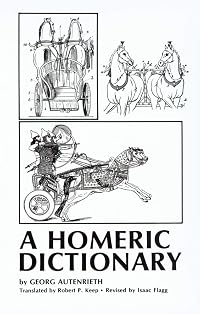
A Homeric Dictionary
by Georg Autenrieth
On This Page
Description
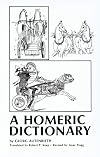
The dialect of ancient Greek in which the Homeric epics the Iliad and the Odyssey were composed and later written down is sufficiently different from classical Attic Greek that it has always proven a stumbling block for students. Perceiving the need for a concise dictionary of Homeric Greek forms, German scholar Georg Autenrieth (1833-1900) compiled this now famous work, first published in 1873 and translated into English by Robert P. Keep (1844-1904) in 1877. Keep, who taught Greek at Yale show more University and various New England colleges, recognised from his own experience that Autenrieth's book would enable students to proceed faster and further in their studies of Homer than could ever be the case using a conventional dictionary, where dialect forms received a relatively cursory treatment at the end of each entry. The worldwide success of the work, reissued here in its first English edition, has justified this belief. show lessTags
Recommendations







Member Reviews
This is considered one of the standard reference works for Homeric Greek, and having been advised by one of my college professors that the Homeric vocabulary was extensive, full of unique words that appear only once in the entire canon of ancient Greek literature, I was convinced to run right out and buy it.
Not knowing enough about Homeric lexicography, I can neither dispute nor confirm this book's predominance in its field. I am sure that it is quite comprehensive, and has proved helpful to numerous students. But the fact of the matter is, I NEVER used it in my studies. I either used the Liddell and Scott's Lexicon at the library, or the Perseus Project website at home. Everything in this book can be found in those works...
However, show more despite the fact that I did not use it much myself, I think it might make a useful addition to the beginning classicist's bookshelf - after all, Lidell and Scott is a huge tome, and very expensive. This book is reasonably priced, and quite specific. show less
Not knowing enough about Homeric lexicography, I can neither dispute nor confirm this book's predominance in its field. I am sure that it is quite comprehensive, and has proved helpful to numerous students. But the fact of the matter is, I NEVER used it in my studies. I either used the Liddell and Scott's Lexicon at the library, or the Perseus Project website at home. Everything in this book can be found in those works...
However, show more despite the fact that I did not use it much myself, I think it might make a useful addition to the beginning classicist's bookshelf - after all, Lidell and Scott is a huge tome, and very expensive. This book is reasonably priced, and quite specific. show less
A very handy dictionary for use when travelling or when one does not wish to be otherwise burdened with the weight of Liddell and Scott. Provides complete Homeric vocabulary, notes where less common words are used (obviously epeite is pointless to track) including noting all hapax and dis legomena. Now doubly handy because it is available free via Google Books (although I still have my paper copy).
some age wear - scarce
Edition: // Descr: xxi, 337 p. : ill., maps 19 cm. // Series: Call No. { 883 H75.04 1 } From the German of Dr. Georg Autenrieth Translated, with Additions and Corrections by Robert P. Keep Contains Plates Greek Words with English Definitions. // //
Ratings
Members
- Recently Added By
Author Information
4 Works 311 Members
Some Editions
Common Knowledge
- Canonical title
- A Homeric Dictionary
- Original title
- Wörterbuch zu den Homerischen Gedichten
- Original publication date
- 1873
Classifications
Statistics
- Members
- 308
- Popularity
- 104,153
- Reviews
- 4
- Rating
- (3.50)
- Languages
- English, German, Greek (Ancient), Greek
- Media
- Paper, Ebook
- ISBNs
- 16
- UPCs
- 1
- ASINs
- 20