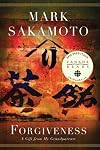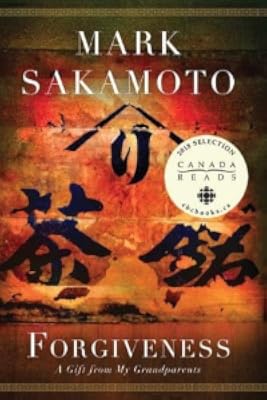
Forgiveness
by Mark Sakamoto
On This Page
Description
#1 NATIONAL BESTSELLERWhen the Second World War broke out, Ralph MacLean chose to escape his troubled life on the Magdalen Islands in eastern Canada and volunteer to serve his country overseas. Meanwhile, in Vancouver, Mitsue Sakamoto saw her family and her stable community torn apart after the Japanese attack on Pearl Harbor.
Like many young Canadian soldiers, Ralph was captured by the Japanese army. He would spend the war in prison camps, enduring pestilence, beatings and starvation, as show more well as a journey by hell ship to Japan to perform slave labour, while around him his friends and countrymen perished. Back in Canada, Mitsue and her family were expelled from their home by the government and forced to spend years eking out an existence in rural Alberta, working other people's land for a dollar a day.
By the end of the war, Ralph emerged broken but a survivor. Mitsue, worn down by years of back-breaking labour, had to start all over again in Medicine Hat, Alberta. A generation later, at a high school dance, Ralph's daughter and Mitsue's son fell in love.
Although the war toyed with Ralph's and Mitsue's lives and threatened to erase their humanity, these two brave individuals somehow surmounted enormous transgressions and learned to forgive. Without this forgiveness, their grandson Mark Sakamoto would never have come to be.
. show less
Tags
Recommendations








Member Reviews
I have to begin by admitting that I am a person who has never understood the abstract concept of forgiveness. People who forgive the murderers of their children, for example. Makes absolutely no logical sense to me. Then, last year, I saw a documentary film of the Dalai Lama and he said that forgiveness was not for the person being forgiven, rather, for the person doing the forgiving. A tiny light went on for me. I still don't totally buy it, myself, but it explained the concept for me, a bit more.
Mark Sakamoto's book, one of the 5 finalists for the Canada Reads competition, which takes place from March 26 - 29, is subtitled: A Gift From my Grandparents*. I think a couple of quotes from the end of the book are actually a good place to show more begin my review:
"My grandparents bore witness to the worst in humanity. Yet they also managed to illuminate the finest in humanity. Their hearts were my home. I saw none of the ugliness they had. I felt none of the bitterness.
How on earth did they manage that?
Forgiveness is moving on. It is a daily act that looks forward. Forgiveness smiles."
" Life happens one decision at a time. You have no idea where each will take you. Maybe it is fate. Maybe it's God's will. Maybe everything does happen for a reason. All I know is that you have to find a reason in it. The reason is usually the future. I was inching closer to forgiveness.
As I sat in King's War Room, the sun broke through thick clouds, its light filtering in through the massive arched windows. The brightness seemed to open the room to me. And then it opened my country to me, illuminating, in that moment, in how precious few places in the world my family's story -- my grandparents', my parents', and mine -- would be possible."
~~~~~~
Mark Sakamoto's paternal grandparents were Japanese Canadians who were expelled from British Columbia and interned in Alberta during and after WWII, along with thousands of other Japanese Canadians, many of whom were Canadian-born. A truly disgraceful chapter of our country's history. Mark's maternal grandfather was Canadian born, in the Magdalen Islands, in the Gulf of St. Lawrence. To escape an abusive father, he joined the army with his best friend and eventually saw action. He became a prisoner of war in Japan and was interned there for 4 long and brutal years. This book tells their stories in sometimes heart-breaking detail. Their backgrounds, how they lived, how they survived and how his grandparents somehow, despite it all, found it within themselves to allow their children to marry, at a time when inter-marriage, let alone this particular inter-marriage, was not nearly as acceptable as it might be today.
[Forgiveness] is also Mark's story, his own childhood, fraught and sad, yet throughout, he always knew he was loved. Sakamoto is a powerful writer. Here, he describes, how, as a 9-year old, his parents' marriage was beginning to unravel:
"On the surface, many things remained the same. Our morning routine was unchanged...But the cracks began to appear. I kept my eye on them like a home inspector, hoping they wouldn't impact the foundation. As I watched the small cracks grow, I wondered if anyone else saw them."
~~~~~~~~~~~~~~~~~~
One of the things I came to understand from reading this story is that there is an awful lot we were not taught about in school when I was growing up. The internment of Japanese-Canadians is just one of those things. A quote from the book, about Mark's paternal grandmother:
"Mitsue felt a little safer than most. She was a Canadian citizen after all. They wouldn't do all the terrible things people were talking about to Canadian citizens. She had been born here, all her brothers and sisters had been born here. She'd never even been to Japan. Canada was all she knew. She felt Canadian through and through. And even though she was not permitted to vote, Canada was a democracy. That meant it was a safe country. That is what she had learned in school, and she believed it.
The next two months shattered those beliefs. Fear and greed can do terrible things to the human heart..."
~~~~~~~~~~~~~~~~~~~
It is gut-wrenching and startling to realize just how contemporary such sentiments still resonate. Humans don't really seem capable of learning from history, do they? The focus of bad politics these days seem aimed at trump, in the States, but Canada has plenty of its own shameful baggage to carry and deal with. Heaven help us.
This was a powerful and very well-written book. show less
Mark Sakamoto's book, one of the 5 finalists for the Canada Reads competition, which takes place from March 26 - 29, is subtitled: A Gift From my Grandparents*. I think a couple of quotes from the end of the book are actually a good place to show more begin my review:
"My grandparents bore witness to the worst in humanity. Yet they also managed to illuminate the finest in humanity. Their hearts were my home. I saw none of the ugliness they had. I felt none of the bitterness.
How on earth did they manage that?
Forgiveness is moving on. It is a daily act that looks forward. Forgiveness smiles."
" Life happens one decision at a time. You have no idea where each will take you. Maybe it is fate. Maybe it's God's will. Maybe everything does happen for a reason. All I know is that you have to find a reason in it. The reason is usually the future. I was inching closer to forgiveness.
As I sat in King's War Room, the sun broke through thick clouds, its light filtering in through the massive arched windows. The brightness seemed to open the room to me. And then it opened my country to me, illuminating, in that moment, in how precious few places in the world my family's story -- my grandparents', my parents', and mine -- would be possible."
~~~~~~
Mark Sakamoto's paternal grandparents were Japanese Canadians who were expelled from British Columbia and interned in Alberta during and after WWII, along with thousands of other Japanese Canadians, many of whom were Canadian-born. A truly disgraceful chapter of our country's history. Mark's maternal grandfather was Canadian born, in the Magdalen Islands, in the Gulf of St. Lawrence. To escape an abusive father, he joined the army with his best friend and eventually saw action. He became a prisoner of war in Japan and was interned there for 4 long and brutal years. This book tells their stories in sometimes heart-breaking detail. Their backgrounds, how they lived, how they survived and how his grandparents somehow, despite it all, found it within themselves to allow their children to marry, at a time when inter-marriage, let alone this particular inter-marriage, was not nearly as acceptable as it might be today.
[Forgiveness] is also Mark's story, his own childhood, fraught and sad, yet throughout, he always knew he was loved. Sakamoto is a powerful writer. Here, he describes, how, as a 9-year old, his parents' marriage was beginning to unravel:
"On the surface, many things remained the same. Our morning routine was unchanged...But the cracks began to appear. I kept my eye on them like a home inspector, hoping they wouldn't impact the foundation. As I watched the small cracks grow, I wondered if anyone else saw them."
~~~~~~~~~~~~~~~~~~
One of the things I came to understand from reading this story is that there is an awful lot we were not taught about in school when I was growing up. The internment of Japanese-Canadians is just one of those things. A quote from the book, about Mark's paternal grandmother:
"Mitsue felt a little safer than most. She was a Canadian citizen after all. They wouldn't do all the terrible things people were talking about to Canadian citizens. She had been born here, all her brothers and sisters had been born here. She'd never even been to Japan. Canada was all she knew. She felt Canadian through and through. And even though she was not permitted to vote, Canada was a democracy. That meant it was a safe country. That is what she had learned in school, and she believed it.
The next two months shattered those beliefs. Fear and greed can do terrible things to the human heart..."
~~~~~~~~~~~~~~~~~~~
It is gut-wrenching and startling to realize just how contemporary such sentiments still resonate. Humans don't really seem capable of learning from history, do they? The focus of bad politics these days seem aimed at trump, in the States, but Canada has plenty of its own shameful baggage to carry and deal with. Heaven help us.
This was a powerful and very well-written book. show less
It seems every year I need to have one bad Canada Reads experience, and this year it was Forgiveness.
This might be too harsh. It's not a terrible book. It's just that in its current incarnation, it is two badly connected books unhappily inhabiting a single set of covers, or one book missing badly needed connective tissue, written by someone who I really think needs counseling.
The narratives of his grandparents during World War II was the book's standout. The details were impressive, the stories were amazing, the people he paints were incredible. This is one of the books, and it was, on the whole, well done. Mark Sakamoto is not a fantastic writer; his sentences are often clumsy and, as other reviewers have pointed out, there were basic show more factual errors and typos that really ought to have been caught before publication. But on the whole, I enjoyed--if that's the right word for such tragic material--this section enormously.
The part about his mother was just weird. It didn't belong with the rest of it at all.
1. One of the forgiveness-heroes of the narrative, Ralph MacLean, never forgave his own father for being an abusive drunk. This should have been Sakamoto's clearest clue that the ties he was trying to draw between "forgiving a harmless representative of an ethnic group that did you enormous harm" is 100% completely different than "forgiving a person who themselves did you enormous harm." The result is a book in which Ralph MacLean goes off to war in part to get away from his abusive drunkard father who (at least according to the book) he never forgives nor reconciles with, experiences terrible injustice and deprivation, is able to forgive the Japanese people and/or individual Canadian-Japanese people (is it just the Japanese in Canada that he forgives, or all of them? It's never stated), and this inspires Mark Sakamoto to ... forgive his abusive drunkard mother. What?
2. Sakamoto relays a whole lot of damaging, codependent, problematic ideas in the section about his mother without any apparent awareness that they're damaging, codependent and problematic. *It is not a child's job to save an abusive alcoholic parent.* Ever. Period! Yet right up until the end of the book he wonders how his mother "forgave" him for "abandoning" her--he didn't abandon her! This is such a boilerplate enabling mindset and if he'd come to terms with that story as much as he seems to think he has, he'd have some awareness of it. There is *one* instance in that part of the book where he visits Al-Anon with his father--one! And if he ever went back, it's not described, nor does he show any evidence of participation in that kind of program in the way he reflects on and relates his story of growing up with his mother.
3. His apparent belief that it's required for children of abusive alcoholic parents to forgive those parents in order to be good parents themselves--his idea at the end that it would have been great for his mother to be in his kids' lives if only she hadn't killed herself with excessive drinking--I just. No. What a horrifyingly awful idea. She still would have been an abusive alcoholic, but with much more vulnerable baby humans to scar and hurt. What kind of father would bring his babies around to visit an abusive alcoholic, or speculate that this would have been a good or even moderately ok idea?
I think the author will find, if he ever cares to look into it, that most adult children of alcoholics and/or abusers find that they are more effective parents when they accept, move on, draw and enforce boundaries, protect their kids, and get help. Maybe forgiveness is a part of that, and maybe it isn't.
Oy.
So this book is one pretty good story of World War II heroics and overcoming, and one hot-mess of an abuse memoir, with some pretty thin and rotten strings connecting them. If you're going to read it, my advice is to put the book down when he starts talking about his mother. show less
This might be too harsh. It's not a terrible book. It's just that in its current incarnation, it is two badly connected books unhappily inhabiting a single set of covers, or one book missing badly needed connective tissue, written by someone who I really think needs counseling.
The narratives of his grandparents during World War II was the book's standout. The details were impressive, the stories were amazing, the people he paints were incredible. This is one of the books, and it was, on the whole, well done. Mark Sakamoto is not a fantastic writer; his sentences are often clumsy and, as other reviewers have pointed out, there were basic show more factual errors and typos that really ought to have been caught before publication. But on the whole, I enjoyed--if that's the right word for such tragic material--this section enormously.
The part about his mother was just weird. It didn't belong with the rest of it at all.
1. One of the forgiveness-heroes of the narrative, Ralph MacLean, never forgave his own father for being an abusive drunk. This should have been Sakamoto's clearest clue that the ties he was trying to draw between "forgiving a harmless representative of an ethnic group that did you enormous harm" is 100% completely different than "forgiving a person who themselves did you enormous harm." The result is a book in which Ralph MacLean goes off to war in part to get away from his abusive drunkard father who (at least according to the book) he never forgives nor reconciles with, experiences terrible injustice and deprivation, is able to forgive the Japanese people and/or individual Canadian-Japanese people (is it just the Japanese in Canada that he forgives, or all of them? It's never stated), and this inspires Mark Sakamoto to ... forgive his abusive drunkard mother. What?
2. Sakamoto relays a whole lot of damaging, codependent, problematic ideas in the section about his mother without any apparent awareness that they're damaging, codependent and problematic. *It is not a child's job to save an abusive alcoholic parent.* Ever. Period! Yet right up until the end of the book he wonders how his mother "forgave" him for "abandoning" her--he didn't abandon her! This is such a boilerplate enabling mindset and if he'd come to terms with that story as much as he seems to think he has, he'd have some awareness of it. There is *one* instance in that part of the book where he visits Al-Anon with his father--one! And if he ever went back, it's not described, nor does he show any evidence of participation in that kind of program in the way he reflects on and relates his story of growing up with his mother.
3. His apparent belief that it's required for children of abusive alcoholic parents to forgive those parents in order to be good parents themselves--his idea at the end that it would have been great for his mother to be in his kids' lives if only she hadn't killed herself with excessive drinking--I just. No. What a horrifyingly awful idea. She still would have been an abusive alcoholic, but with much more vulnerable baby humans to scar and hurt. What kind of father would bring his babies around to visit an abusive alcoholic, or speculate that this would have been a good or even moderately ok idea?
I think the author will find, if he ever cares to look into it, that most adult children of alcoholics and/or abusers find that they are more effective parents when they accept, move on, draw and enforce boundaries, protect their kids, and get help. Maybe forgiveness is a part of that, and maybe it isn't.
Oy.
So this book is one pretty good story of World War II heroics and overcoming, and one hot-mess of an abuse memoir, with some pretty thin and rotten strings connecting them. If you're going to read it, my advice is to put the book down when he starts talking about his mother. show less
This is a very powerful and moving book in which Mark Sakamoto tells the story of his grandparents. His maternal grandparents (Mitsue and Hideo) were Canadians of Japanese descent. They were forced from their home in British Columbia after the bombing of Pearl Harbour, and forced to work as labourers on an Alberta beet farm. They faced harsh conditions, the "pay" was insulting, but the biggest offense was the sheer injustice in the way these Canadian-born citizens were treated. Mr. Sakamoto's maternal grandfather, Ralph MacLean, served in World War II and was a prisoner of war in Japan for almost four years. He endured unbelievable conditions: no food for days at at time, work details, disease, witnessing the torture and/or death of show more friends. Yet, when Mitsue's son and Ralph's daughter fell in love, the families welcomed each other into their lives.
The concept of forgiveness is strong throughout the book. Mitsue and Ralph displayed incredible strength during the awful war years and even more strength, I think, in putting the past behind them and moving on with their lives. Here, we see how forgiveness empowers and frees those who forgive...it opens their hearts to the future.
For me, it was such a tragedy that Mr. Sakamoto's parents didn't stay together. After all the history and prejudice that was overcome to celebrate their love...it made me sad. The part of the book about Mr. Sakamoto's own life and that of his parents interested me less than the story of his grandparents, though it was nice to complete the family history. show less
The concept of forgiveness is strong throughout the book. Mitsue and Ralph displayed incredible strength during the awful war years and even more strength, I think, in putting the past behind them and moving on with their lives. Here, we see how forgiveness empowers and frees those who forgive...it opens their hearts to the future.
For me, it was such a tragedy that Mr. Sakamoto's parents didn't stay together. After all the history and prejudice that was overcome to celebrate their love...it made me sad. The part of the book about Mr. Sakamoto's own life and that of his parents interested me less than the story of his grandparents, though it was nice to complete the family history. show less
This quick, engrossing read packed a lot more punch than I expected. At just 256 pages, I learned a lot about the Japanese Canadians in Vancouver pre - WW11 and during the internment of the Japanese in Canada. I was also very interested about the war experiences of Ralph McLean as he battled and became a POW of the Japanese during WW11. After WW11, Mark Sakamoto's life as a biracial child in Medicine Hat was also fascinating. My impression of Mark's life is that it was perhaps more affected by the fact that his mom had to contend with mental health and drinking issues, rather than the issues he faced as a Japanese- Canadian . Well worth the read and recommended.
Mark Sakamoto’s grandparents were on two different sides of WWII. His maternal grandfather fought in the war and was captured and spent years as a prisoner of war, first in Hong Kong, then in Japan. Mark’s paternal grandmother, a Japanese-Canadian, and her family lost their home and livelihood in BC and were sent to rural Alberta to farm. Mark and his brother were born and raised in Medicine Hat, Alberta. After Mark’s parents marriage ended, his mother had a really hard time (to put it lightly, but trying not to give too much away in my summary).
The summaries of this book make it sound like it’s all WWII, but it’s not. I found the book to be an entire biography of his grandparents, then his own – with a focus on his show more relationship with his mom. I really liked this. A little “bonus” for me was that Mark’s wife is from Assiniboia, Sask, a small town about 45 minutes from the town I grew up in. show less
The summaries of this book make it sound like it’s all WWII, but it’s not. I found the book to be an entire biography of his grandparents, then his own – with a focus on his show more relationship with his mom. I really liked this. A little “bonus” for me was that Mark’s wife is from Assiniboia, Sask, a small town about 45 minutes from the town I grew up in. show less
Although Forgiveness is billed as a memoir, only a small portion of it is devoted to Mark Sakamoto's own story. It is mostly about his paternal grandmother's and his maternal grandfather's ordeals during WWII. His grandmother's Japanese Canadian family was treated unconscionably by the Canadian government, despite the fact that she and her siblings were Canadian citizens. His grandfather suffered greatly as a POW in Japan. Yet, these two people were able to overcome their anger and prejudices to come together as a family when their children decided to wed.
Sakamoto is a great storyteller, and I found this book very hard to put down. Sakamoto's own youth seemed very difficult, as his mother had been an alcoholic. It's impressive that he show more has accomplished so much. This is his first book, and before that, he worked as a lawyer and political advisor. show less
Sakamoto is a great storyteller, and I found this book very hard to put down. Sakamoto's own youth seemed very difficult, as his mother had been an alcoholic. It's impressive that he show more has accomplished so much. This is his first book, and before that, he worked as a lawyer and political advisor. show less
An incredibly touching memoir reflecting back on his two sets of grandparents and their WW2 experiences - his paternal grandparents were Japanese living in BC and his maternal grandfather raised on the Magdalen Islands in the Gulf of St. Lawrence and his 5 horrible years as a Japanese POW. His story comes from interviews with his grandmother Mitsue Sakamoto and his grandfather Ralph MacLean. In spite of their experiences under some extreme conditions and more than a few very sad events, these two incredibly strong and resilient people taught their grandson about forgiveness.
Members
- Recently Added By
Published Reviews
This domestic violence serves as a prologue and epilogue to the great parallel tragedies of Forgiveness — the brutal treatment of Canadian POWs by their Japanese captors in Hong Kong, and the internment of Japanese families in British Columbia....So Forgiveness is not a novel. At the same time it doesn’t feel like a memoir, mainly because there is no dominant point of view — no subject show more of a memoir. The heart of the book are the prison camp portions and the internment segments and in these portions the memoir writer is totally absent...The result is a readable account of one of Canada’s darkest moments, but an account still begging for adequate imaginative treatment. show less
added by vancouverdeb
Pieced together through Sakamoto's interviews with his maternal grandmother, Mitsue Sakamoto, and paternal grandfather, Ralph MacLean, these wartime recollections from contrasting sides of a human tragedy offer a unique perspective on the idea of a Canadian family. It also links two families together through compassion and understanding, which is the stimulus for Sakamoto's own process of show more recovery...Sakamoto writes of in vivid detail – deferring, generously, to lived memory over history books ...In this war story, Canada isn't an innocent bystander or righteous do-gooder but actively complicit in the death and oppression of its own citizens, both white and Japanese. Sakamoto writes about forgiveness through the lens of Canada's political foibles, a noble sentiment coming from someone with close ties to a partisan agenda. But in doing so he resurrects the troubled past of this country at a time when the government (national, and municipal, in the case of Toronto) is being accused of being more brutal, restrictive and intolerant than any other point in recent memory. Forgiveness is a personal journey but it also reminds us not to forget. show less
added by vancouverdeb
Lists

Canada Reads Winners and Nominees
129 works; 9 members

Evergreen Award™ Winners and Nominees 2005–2024
200 works; 3 members
Author Information
3 Works 187 Members
Awards and Honors
Common Knowledge
- Original publication date
- 2014
- People/Characters
- Mitsue Sakamoto; Ralph MacLean; Mark Sakamoto
- Important places
- Vancouver, British Columbia, Canada; Medicine Hat, Alberta, Canada; Japan
- Important events
- World War II
- Dedication
- For my daughters, Miya and Tomi, so you know what you are made of
- First words
- I held the cassette gently in my hands, flipping it from side to side.
- Last words
- (Click to show. Warning: May contain spoilers.)I smiled and moved on.
- Blurbers
- Fung, Mellissa; Twain, Shania; Greenfield, Nathan; Ignatieff, Michael
Classifications
Statistics
- Members
- 180
- Popularity
- 181,876
- Reviews
- 13
- Rating
- (3.99)
- Languages
- English
- Media
- Paper, Audiobook, Ebook
- ISBNs
- 8
- ASINs
- 1