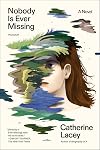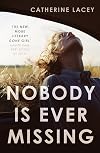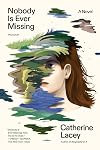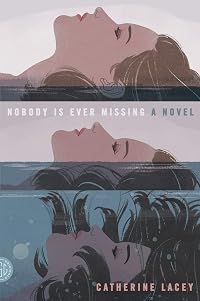
Nobody Is Ever Missing
by Catherine Lacey
On This Page
Description
"The story of a young woman who takes a one-way flight to New Zealand, abruptly leaving her stable but unfulfilling life in Manhattan, hurtling herself into the unknown, testing fate by hitchhiking, tacitly being swept into the lives of strangers and sleeping in fields, forests or public parks"--Tags
Recommendations













Member Reviews
Run away, find yourself, start afresh?
This starts off with 28-year old Elyria attempting such an adventure, but it becomes darker and more introspective as the tragic backstory bleeds into her present and future. It reminded me of an oft-repeated fable from my housemistress:
Image: Woman’s feet on steps into a lake, captioned “Should I stay or should I go?” (Source)
Elyria realises that no matter where she goes:
“I could never be missing to myself, I could never delete my own history”
“Running from something isn’t freedom.”
The fable, and now this story, rein me in and tie me down. Perhaps they shouldn’t.
Slippery wandering and wondering
“My husband was a song that I had forgotten the words to and I was a fuzzy photograph of someone he used to love.”
Elyria, named after a town her mother never even visited, buys a one-way ticket from New York to New Zealand. She doesn’t leave a note for her husband or mother. All three are linked by losing someone to suicide, and Elyria and her nameless (for most of the book) husband grew up with alcoholic mothers and absent fathers.
“It was possible that I was not in love with a person but a person-shaped hole.”
Hitchhiking alone, she’s given advice, works out more, but largely ignores it.
“You must seem both harmless and able, if necessary, to push a knife through any tender gut.”
She has no particular plans beyond turning up at the farm of a writer she once met who had vaguely invited her to visit.
Although it starts off breezily, Elyria’s frequent observations about people’s faces and her musings about what happens to blood samples are not quite normal.
“The flesh hung on his face like it was clay pressed on in a rush.”
There are hints of synaesthesia, with colours, keys, and chords recurring in her rambling analogies.
“It’s like you’ve turned into a color or a sound… no harmony, no pattern, no sense, no order.”
And then there’s the wildebeest inside, that she wants to suppress or express, or maybe just tame.
Image: A zebra, patterned with a maze, saying to a regular zebra, “I’m trying to find myself”, by Steph. (Source)
Quotes
• “He was looking at me like I was a very nice thing of his that wasn’t working quite like it should.” [Her husband, on their honeymoon.]
• “I needed to live in some other story for a half hour.”
• “Childhood was a movie I’d only seen the previews to.”
• “I was a human non-sequitur - senseless and misplaced.”
• “She had skin the texture of cheap toilet paper and luminous green eyes, little luxury items planted in her skull.”
• “Pointless hills rippling around us - the trees all captive to the ground, a grey mountain in the distance, stoic and bored.”
• “Memories are so often made by one hand and deleted by the other.”
• “I wasn’t lost because I no longer had a destination.”
See also
• Rebecca Solnit’s A Field Guide to Getting Lost is a beautiful and unsettling collection of pieces about distance, separation, and loss, so you can find yourself. I wrote two very different reviews: a poetic response, HERE, and a more conventional review HERE.
• A very different take on hitchhiking and its risks, but one that also features a character a world away from the land they know, is Michel Faber’s Under the Skin, which I reviewed HERE.
• Hemingway’s very short story, A Clean, Well-Lighted Place, which I reviewed HERE, touches on suicide, but in a more elliptical way.
• Elyria is reading Mrs. Bridge by Evan S Connell, about a suburban woman struggling with ennui and the expectations of others, and in which someone dies by suicide.
• The only other Lacey book I’ve read so far is more about being found than lost: Pew, which I reviewed HERE. show less
This starts off with 28-year old Elyria attempting such an adventure, but it becomes darker and more introspective as the tragic backstory bleeds into her present and future. It reminded me of an oft-repeated fable from my housemistress:
A longstanding resident baked cakes for two new families, as was tradition. She took the cakes, introduced herself, and welcomed them to the village.show more
The first family were full of smiles and gladly invited her in. They were relieved to have left their previous place: everyone there was unfriendly, gossipy, selfish, and generally unpleasant. The baker sympathised, but warned them that they’d find the same was true in this village.
The second family were polite but
more subdued. They were heartbroken to have left their previous place: a warm, friendly community, where everyone looked out for each other. The baker smiled and reassured them that they’d find the same was true in this village.
Image: Woman’s feet on steps into a lake, captioned “Should I stay or should I go?” (Source)
Elyria realises that no matter where she goes:
“I could never be missing to myself, I could never delete my own history”
“Running from something isn’t freedom.”
The fable, and now this story, rein me in and tie me down. Perhaps they shouldn’t.
Slippery wandering and wondering
“My husband was a song that I had forgotten the words to and I was a fuzzy photograph of someone he used to love.”
Elyria, named after a town her mother never even visited, buys a one-way ticket from New York to New Zealand. She doesn’t leave a note for her husband or mother. All three are linked by losing someone to suicide, and Elyria and her nameless (for most of the book) husband grew up with alcoholic mothers and absent fathers.
“It was possible that I was not in love with a person but a person-shaped hole.”
Hitchhiking alone, she’s given advice, works out more, but largely ignores it.
“You must seem both harmless and able, if necessary, to push a knife through any tender gut.”
She has no particular plans beyond turning up at the farm of a writer she once met who had vaguely invited her to visit.
Although it starts off breezily, Elyria’s frequent observations about people’s faces and her musings about what happens to blood samples are not quite normal.
“The flesh hung on his face like it was clay pressed on in a rush.”
There are hints of synaesthesia, with colours, keys, and chords recurring in her rambling analogies.
“It’s like you’ve turned into a color or a sound… no harmony, no pattern, no sense, no order.”
And then there’s the wildebeest inside, that she wants to suppress or express, or maybe just tame.
Image: A zebra, patterned with a maze, saying to a regular zebra, “I’m trying to find myself”, by Steph. (Source)
Quotes
• “He was looking at me like I was a very nice thing of his that wasn’t working quite like it should.” [Her husband, on their honeymoon.]
• “I needed to live in some other story for a half hour.”
• “Childhood was a movie I’d only seen the previews to.”
• “I was a human non-sequitur - senseless and misplaced.”
• “She had skin the texture of cheap toilet paper and luminous green eyes, little luxury items planted in her skull.”
• “Pointless hills rippling around us - the trees all captive to the ground, a grey mountain in the distance, stoic and bored.”
• “Memories are so often made by one hand and deleted by the other.”
• “I wasn’t lost because I no longer had a destination.”
See also
• Rebecca Solnit’s A Field Guide to Getting Lost is a beautiful and unsettling collection of pieces about distance, separation, and loss, so you can find yourself. I wrote two very different reviews: a poetic response, HERE, and a more conventional review HERE.
• A very different take on hitchhiking and its risks, but one that also features a character a world away from the land they know, is Michel Faber’s Under the Skin, which I reviewed HERE.
• Hemingway’s very short story, A Clean, Well-Lighted Place, which I reviewed HERE, touches on suicide, but in a more elliptical way.
• Elyria is reading Mrs. Bridge by Evan S Connell, about a suburban woman struggling with ennui and the expectations of others, and in which someone dies by suicide.
• The only other Lacey book I’ve read so far is more about being found than lost: Pew, which I reviewed HERE. show less
Dark and edgy though what makes it so? The sentences, the syntax, the protag’s repetitive thoughts, her flirtation with her own dissolution. I’m quite taken with this book. It’s one that matters to me. The aloneness it seeks and the sickness that aloneness brings and the holiness that aloneness brings. In an interview the author says it doesn’t matter that the protagonist is a woman, and I’m gravely disappointed. I don’t just disagree, my mood is ruined. Catherine! Come on.
I will say it isn’t exactly a fun book to read. It’s grating. It goes on and on and yet it’s pretty short. It’s also surprisingly funny, but it’s grindingly in the protag’s head and she’s obsessed with herself so it’s grinding. But it show more really captures what it’s like, grinding out the head noise, being a person. The book feels like an indictment of white women and narcisssism. Of marriage and American priorities. Of community and belonging. Of the American family. It’s such a great rebuttal to all those boy books about finding yourself and adventure. I’m grateful to this book for being such a dangerous little grenade. show less
I will say it isn’t exactly a fun book to read. It’s grating. It goes on and on and yet it’s pretty short. It’s also surprisingly funny, but it’s grindingly in the protag’s head and she’s obsessed with herself so it’s grinding. But it show more really captures what it’s like, grinding out the head noise, being a person. The book feels like an indictment of white women and narcisssism. Of marriage and American priorities. Of community and belonging. Of the American family. It’s such a great rebuttal to all those boy books about finding yourself and adventure. I’m grateful to this book for being such a dangerous little grenade. show less
Elyria and her husband meet ugly on the day her brilliant sister, Husband's TA, makes Elly have to think about "what a woman can do to herself and how a brick courtyard on a nice autumn afternoon can so quickly become a place you'll never want to see again." The aftermath of this incident rolls out slowly, in flashbacks, as Elly hitchhikes and just plain hikes through New Zealand, where she's flown suddenly without telling any of her family. To me the backstory felt janky and not terribly compelling, but I couldn't resist the forward story in which Elly wanders, sleeping in sheds and on roadsides, befriending and unfriending strangers as her sanity wobbles right up to the edge. To my surprise I liked the ending too, for what it did and show more didn't reveal. show less
Elyria tut das, wovon viele träumen, sich aber nie wagen in die Tat umzusetzen: sie verschwindet. Sie setzt sich in einen Flieger und reist von den USA nach Neuseeland. Sie weiß, wovor sie wegläuft, wohin sie will ist schon schwieriger. Zunächst einmal auf die Farm eines Mannes, den sie kennenlernte und der ihr leichtsinnigerweise anbot, bei ihm in der Abgeschiedenheit zu leben und arbeiten. Trampend bestreitet sie den Weg, Gelegenheitsjobs bringen immer wieder ein wenig Geld ein.- Was ihr Ehemann und ihre Mutter machen, interessiert sie nicht, das hat sie hinter sich gelassen. Was sie jedoch nicht zurücklassen kann, ist die Erinnerung, vor allem an ihre Stiefschwester, deren Tod sie nie überwunden hat. In der Ferne sucht sie nach show more etwas, sich selbst, und sie versucht ihrem alten Ich und all seinen Erinnerungen zu entkommen.
Catherine Lacey hat einen ungewöhnlichen Roman geschrieben, der einem direkt packt und mitreißt. Zunächst ist man verwundert über den Mut der Protagonistin, einfach alle Zelte abzubauen und in eine ungewisse Zukunft zu reisen. Dann kommen Zweifel, ob ihr Handeln wirklich durchdacht ist – nein – ob die Suche nach ihrem Selbst so erfolgreich ist – zweifelhaft – ob sie einfach leichtsinnig oder gar verrückt ist – naheliegend. Die Reise ist viel weniger eine Suche denn ein Weglaufen. Sie stellt sich nicht den Dingen, die sie dringend besprechen und bearbeiten müsste. Jede Begegnung mit einem Menschen wird zur Qual, weil sie Fragen zu sich beantworten soll, dabei will sie nichts weniger sein als sie selbst. Aus der mutigen wird plötzlich eine eher feige Frau, die nicht den Schneid hat, ihrem Leben entgegenzutreten.
Elyria muss dies im Laufe ihrer Reise erkennen. Hier liegen die besonderen Stärken des Romans. Die Handlung bewegt sich zwischen den Stationen in Neuseeland und den kurzen Episoden des Kontakts mit eigentlich fremden Menschen, zu denen Elyria nie eine Verbindung aufbauen kann, bleibt so recht überschaubar. Spannender und interessanter indes ihre psychische Entwicklung. Nach und nach reift jedoch in ihr die Erkenntnis, dass ihr Ziel verfehlt werden wird:
„damals, als ich noch dachte ich hätte herausgefunden, wer ich war und warum ich anscheinend mit dem Leben nicht so gut umgehen konnte, wie andere Leute das taten“ (S. 148) und
„Selbst wenn niemand mich je fände, wenn ich den Rest meines Lebens hier verbrächte und für immer verschwunden bliebe, von anderen für vermisst erklärt, könnte ich aus meinem eigenen Leben doch nie verschwinden; ich könnte nie den Verlauf meiner Geschichte löschen, sondern wüsste immer genau, wo ich war und gewesen war (...) das, was ich die ganze Zeit gewollt hatte, vollständig verschwinden, doch eben das würde mir nie gelingen – niemand verschwindet einfach so, niemand hat diesen Luxus je gehabt oder wird ihn je haben“ (S. 160)
Sie muss zurückkehren in ihr altes Leben, sich diesem wieder stellen oder etwas ändern, denn weglaufen und verschwinden funktioniert nicht. show less
Catherine Lacey hat einen ungewöhnlichen Roman geschrieben, der einem direkt packt und mitreißt. Zunächst ist man verwundert über den Mut der Protagonistin, einfach alle Zelte abzubauen und in eine ungewisse Zukunft zu reisen. Dann kommen Zweifel, ob ihr Handeln wirklich durchdacht ist – nein – ob die Suche nach ihrem Selbst so erfolgreich ist – zweifelhaft – ob sie einfach leichtsinnig oder gar verrückt ist – naheliegend. Die Reise ist viel weniger eine Suche denn ein Weglaufen. Sie stellt sich nicht den Dingen, die sie dringend besprechen und bearbeiten müsste. Jede Begegnung mit einem Menschen wird zur Qual, weil sie Fragen zu sich beantworten soll, dabei will sie nichts weniger sein als sie selbst. Aus der mutigen wird plötzlich eine eher feige Frau, die nicht den Schneid hat, ihrem Leben entgegenzutreten.
Elyria muss dies im Laufe ihrer Reise erkennen. Hier liegen die besonderen Stärken des Romans. Die Handlung bewegt sich zwischen den Stationen in Neuseeland und den kurzen Episoden des Kontakts mit eigentlich fremden Menschen, zu denen Elyria nie eine Verbindung aufbauen kann, bleibt so recht überschaubar. Spannender und interessanter indes ihre psychische Entwicklung. Nach und nach reift jedoch in ihr die Erkenntnis, dass ihr Ziel verfehlt werden wird:
„damals, als ich noch dachte ich hätte herausgefunden, wer ich war und warum ich anscheinend mit dem Leben nicht so gut umgehen konnte, wie andere Leute das taten“ (S. 148) und
„Selbst wenn niemand mich je fände, wenn ich den Rest meines Lebens hier verbrächte und für immer verschwunden bliebe, von anderen für vermisst erklärt, könnte ich aus meinem eigenen Leben doch nie verschwinden; ich könnte nie den Verlauf meiner Geschichte löschen, sondern wüsste immer genau, wo ich war und gewesen war (...) das, was ich die ganze Zeit gewollt hatte, vollständig verschwinden, doch eben das würde mir nie gelingen – niemand verschwindet einfach so, niemand hat diesen Luxus je gehabt oder wird ihn je haben“ (S. 160)
Sie muss zurückkehren in ihr altes Leben, sich diesem wieder stellen oder etwas ändern, denn weglaufen und verschwinden funktioniert nicht. show less
Learned about this book through a Joss Whedon tweet and wondered if it was a "how-to manual" for women to leave their husbands.
Turns out, Ms. Lacey has written a beautiful, almost stream of consciousness, lonely story about the inner turmoil of one wife.
Elyria decides to leave her husband and heads to New Zealand to stay with a man named Werner whom she met at a social gathering once and he left her with an open invitation to visit.
Elyria's memories of her sister, mother and early times with her husband are entwined with her inner turmoil about being a wife, a daughter, a sane person. Ms/ Lacey describes, in beautifully intricate phrases, the "wildebeast" that lives inside Elyria and refuses to be tamed.
A few favorite phrases:
About show more marriage - "can't keep looking at the same person every day and being looked at by the same person every day without wanting to make him swallow a tiny bomb and set that bomb off and make him disappear" (61)
About the ocean - "what they are looking at is just the blue curtain over the wild violence, lives eating lives, the unstoppable chew , , , that ferocious pulse under all things placid" (86)
On her own sadness - "it didn't matter how much or how little I thought I understood the mess of myself, because I would never =, no matter what I did, be missing to myself and that was what I had wanted all this time, to go fully missing, but I would never be able to go fully missing -- nobody is missing like that, no one has ever had that luxury and no one ever will" (182)
While sometimes a little close to home, I did enjoy the sad story. It is not a "how to manual" - it is one story of one woman's internal struggle to make sense of everything around her and often failing, as we all do. show less
Turns out, Ms. Lacey has written a beautiful, almost stream of consciousness, lonely story about the inner turmoil of one wife.
Elyria decides to leave her husband and heads to New Zealand to stay with a man named Werner whom she met at a social gathering once and he left her with an open invitation to visit.
Elyria's memories of her sister, mother and early times with her husband are entwined with her inner turmoil about being a wife, a daughter, a sane person. Ms/ Lacey describes, in beautifully intricate phrases, the "wildebeast" that lives inside Elyria and refuses to be tamed.
A few favorite phrases:
About show more marriage - "can't keep looking at the same person every day and being looked at by the same person every day without wanting to make him swallow a tiny bomb and set that bomb off and make him disappear" (61)
About the ocean - "what they are looking at is just the blue curtain over the wild violence, lives eating lives, the unstoppable chew , , , that ferocious pulse under all things placid" (86)
On her own sadness - "it didn't matter how much or how little I thought I understood the mess of myself, because I would never =, no matter what I did, be missing to myself and that was what I had wanted all this time, to go fully missing, but I would never be able to go fully missing -- nobody is missing like that, no one has ever had that luxury and no one ever will" (182)
While sometimes a little close to home, I did enjoy the sad story. It is not a "how to manual" - it is one story of one woman's internal struggle to make sense of everything around her and often failing, as we all do. show less
This is a tough book, depicting an emotionally broken life.
I see by some of the other reviews that this is not a book for everybody. The mood of the book is brooding, sometimes emotionally desperate and “lost.”
Elyria is the principal character and narrator. In fact, she’s pretty much the only character Lacey really develops in the story. Elyria is a young, married woman, married to a man she calls “Husband.” There’s nothing conventionally wrong with their marriage, at least no more than falls under the umbrella of “convention.” Husband is a mathematics professor, and Elyria is a writer for television soap operas, an assignment that is so ironic that it isn’t even ironic.
The momentum in Elyria’s life runs out. The show more day to day forward motion just can’t carry her anymore. There are special reasons. She’s coasted since her adopted sister, Ruby, committed suicide, and since she left her abusive mother. But she’s married, she has a job, she’s on some sort of course. But her momentum runs out.
There are times when everyone’s momentum runs out. A career stalls, a marriage becomes boring, nothing seems to provide interest or excitement. Yes, it’s different and more dramatic in Elyria’s case, but it’s something we all know something of.
Elyria calls a time-out. She just leaves that life that she has with Husband. She doesn’t explain anything, she just leaves one day, gets on an airplane and heads off to New Zealand where she was once offered a place to stay with a man named Werner. Despite the sound of it, Werner has no bad intentions. He’s just a guy, seemingly in life’s idle lane himself. But he owns a farm, and he’s willing to give Elyria a room in exchange for some farm-related chores.
But Elyria has to get there. Husband cuts off her credit cards, and she’s left with minimal cash/travelers checks. She hitches, she has adventures along the road in a kind of odyssey, an odyssey of a lost soul. It’s not as if getting to Werner’s farm is a compelling goal, it just happens to be a place she knows she can stay for a while. It’s not even really a destination in the story. That’s the whole point — Elyria has no destination.
Plot-wise, that’s about it. Elyria’s adventures are not adventurous. She meets and befriends Jaye, a transgender woman who promises to at least provide a fun environment. But that’s not really Elyria’s thing, at least not now. She broods and she wanders.
She imagines a wildebeest inside her, running, just running, and destroying things as it goes, things like her marriage and like the life she left.
Elyria is “lost” but she’s not “missing.” She’s right there with herself. She’s taken a time out from the direction her past took her and from the direction her future was headed. She would be “in the moment” if only the moment would stand still.
She’s continually tempted to contact Husband, but she can’t explain herself to him. He grows impatient. After all, unlike her, his life is in motion.
As I keep saying, this is a brooding book. What it broods about, to me as a reader, is what you need in order to keep your life in motion, to keep you headed somewhere. Elyria spends much of her time “thinking about what she should be thinking about.” Whatever it is isn’t there now.
She wonders, do we all need some fiction in life to sustain us? To sustain what? Hope? Peace of mind?
After all, she’s a soap opera writer — fictions that sustain fictitious lives. She just doesn’t have the fictions to sustain her own life.
In walking away, Elyria is free. Is being free just the same thing as being unmoored? Do we need to be moored somehow, to have a place, to know what to think about, to do what you “should” do, to have a something to be about even if it’s fiction?
Husband has told her, “Elyria, it’s like this, you have two options.” It doesn’t even really matter what the options are. Being limited to two options is not freedom. She wants all options.
But you have to be free FOR something, to pursue something, to give yourself some sort of direction and momentum. and it has to be more than just endless repetition, playing out the clock.
It’s easy to say that Elyria is “just depressed.” What’s the big deal? Why is her story significant?
Lives are very particular. Broken lives are very particular. And the people living them are very particular, not cases, not “suffering from depression” — what they are living is what they are living and nothing else, nothing exhausted in a diagnosis or a label.
How lazy it is to say, “She’s depressed,” and imagine you’ve described her condition, when her condition is a very particular history and a very particular circumstance with very particular possible futures.
There is a kind of ending to Elyria’s story, at least with Husband (she finally happens upon his name somewhere in her mind). But not really a resolution.
All in all, it’s also worth remembering that not fitting in is a two-way relationship. Elyria’s story is only one side of it. show less
I see by some of the other reviews that this is not a book for everybody. The mood of the book is brooding, sometimes emotionally desperate and “lost.”
Elyria is the principal character and narrator. In fact, she’s pretty much the only character Lacey really develops in the story. Elyria is a young, married woman, married to a man she calls “Husband.” There’s nothing conventionally wrong with their marriage, at least no more than falls under the umbrella of “convention.” Husband is a mathematics professor, and Elyria is a writer for television soap operas, an assignment that is so ironic that it isn’t even ironic.
The momentum in Elyria’s life runs out. The show more day to day forward motion just can’t carry her anymore. There are special reasons. She’s coasted since her adopted sister, Ruby, committed suicide, and since she left her abusive mother. But she’s married, she has a job, she’s on some sort of course. But her momentum runs out.
There are times when everyone’s momentum runs out. A career stalls, a marriage becomes boring, nothing seems to provide interest or excitement. Yes, it’s different and more dramatic in Elyria’s case, but it’s something we all know something of.
Elyria calls a time-out. She just leaves that life that she has with Husband. She doesn’t explain anything, she just leaves one day, gets on an airplane and heads off to New Zealand where she was once offered a place to stay with a man named Werner. Despite the sound of it, Werner has no bad intentions. He’s just a guy, seemingly in life’s idle lane himself. But he owns a farm, and he’s willing to give Elyria a room in exchange for some farm-related chores.
But Elyria has to get there. Husband cuts off her credit cards, and she’s left with minimal cash/travelers checks. She hitches, she has adventures along the road in a kind of odyssey, an odyssey of a lost soul. It’s not as if getting to Werner’s farm is a compelling goal, it just happens to be a place she knows she can stay for a while. It’s not even really a destination in the story. That’s the whole point — Elyria has no destination.
Plot-wise, that’s about it. Elyria’s adventures are not adventurous. She meets and befriends Jaye, a transgender woman who promises to at least provide a fun environment. But that’s not really Elyria’s thing, at least not now. She broods and she wanders.
She imagines a wildebeest inside her, running, just running, and destroying things as it goes, things like her marriage and like the life she left.
Elyria is “lost” but she’s not “missing.” She’s right there with herself. She’s taken a time out from the direction her past took her and from the direction her future was headed. She would be “in the moment” if only the moment would stand still.
She’s continually tempted to contact Husband, but she can’t explain herself to him. He grows impatient. After all, unlike her, his life is in motion.
As I keep saying, this is a brooding book. What it broods about, to me as a reader, is what you need in order to keep your life in motion, to keep you headed somewhere. Elyria spends much of her time “thinking about what she should be thinking about.” Whatever it is isn’t there now.
She wonders, do we all need some fiction in life to sustain us? To sustain what? Hope? Peace of mind?
After all, she’s a soap opera writer — fictions that sustain fictitious lives. She just doesn’t have the fictions to sustain her own life.
In walking away, Elyria is free. Is being free just the same thing as being unmoored? Do we need to be moored somehow, to have a place, to know what to think about, to do what you “should” do, to have a something to be about even if it’s fiction?
Husband has told her, “Elyria, it’s like this, you have two options.” It doesn’t even really matter what the options are. Being limited to two options is not freedom. She wants all options.
But you have to be free FOR something, to pursue something, to give yourself some sort of direction and momentum. and it has to be more than just endless repetition, playing out the clock.
It’s easy to say that Elyria is “just depressed.” What’s the big deal? Why is her story significant?
Lives are very particular. Broken lives are very particular. And the people living them are very particular, not cases, not “suffering from depression” — what they are living is what they are living and nothing else, nothing exhausted in a diagnosis or a label.
How lazy it is to say, “She’s depressed,” and imagine you’ve described her condition, when her condition is a very particular history and a very particular circumstance with very particular possible futures.
There is a kind of ending to Elyria’s story, at least with Husband (she finally happens upon his name somewhere in her mind). But not really a resolution.
All in all, it’s also worth remembering that not fitting in is a two-way relationship. Elyria’s story is only one side of it. show less
5
This is a startlingly good debut novel. The writing is crisp and assured and, in the rambling internal monologue narrative style, Lacey pulls off the sort of trick that most established writers couldn't hope to achieve. Elyria is the sort of character who speaks to a type of reader, a type of human being, and while she might infuriate some... I think everyone needs to have respect, understanding, dare-I-say patience with Elyria and with any folks in the reader's life who might suffer similarly. This world can be impossibly difficult to deal with in the best of circumstances - so if someone needs to step off the merry-go-round for a little while, it's wrong to attack them for it. It's wrong not to try to understand or allow it. Nobody show more is ever missing, not to themselves - it might just take a little while to understand where you are.
A lot more, some of it really rather personal, at RB: http://ragingbiblioholism.com/2014/07/21/nobody-is-ever-missing/ show less
This is a startlingly good debut novel. The writing is crisp and assured and, in the rambling internal monologue narrative style, Lacey pulls off the sort of trick that most established writers couldn't hope to achieve. Elyria is the sort of character who speaks to a type of reader, a type of human being, and while she might infuriate some... I think everyone needs to have respect, understanding, dare-I-say patience with Elyria and with any folks in the reader's life who might suffer similarly. This world can be impossibly difficult to deal with in the best of circumstances - so if someone needs to step off the merry-go-round for a little while, it's wrong to attack them for it. It's wrong not to try to understand or allow it. Nobody show more is ever missing, not to themselves - it might just take a little while to understand where you are.
A lot more, some of it really rather personal, at RB: http://ragingbiblioholism.com/2014/07/21/nobody-is-ever-missing/ show less
Members
- Recently Added By
Published Reviews
ThingScore 100
We are in the company of a mind relentlessly interrogating itself, in the tradition of Beckett and now Eimear McBride, but with its own singular flavour. As the book opens, the reader is as lost in Elyria’s thoughts as she is herself: all she knows is that her present situation is unbearable, she is in need of a “small and manageable life”, and has for some reason fixated on the show more half-hearted offer of a spare room on the other side of the world from a poet she met at a party. show less
added by charl08
Lists

Anti-heroines in fiction
59 works; 9 members
Author Information

10+ Works 2,349 Members
Some Editions
Awards and Honors
Common Knowledge
- Canonical title
- Nobody Is Ever Missing
- Important places
- New Zealand
Classifications
Statistics
- Members
- 506
- Popularity
- 59,124
- Reviews
- 28
- Rating
- (3.18)
- Languages
- 6 — Dutch, English, French, German, Italian, Spanish
- Media
- Paper, Audiobook, Ebook
- ISBNs
- 19
- ASINs
- 7