Dear Mr M
by Herman Koch
On This Page
Description
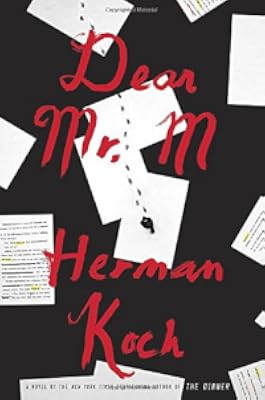
"Once a celebrated writer, M had his greatest success with a suspense novel based on a real-life disappearance. It told the story of a history teacher who went missing one winter after having a brief affair with a beautiful student of his. The teacher was never found. Upon publication, M's novel was a runaway bestseller, one that marked his international breakthrough. That was years ago, and now M's career is fading. But not when it comes to his bizarre, seemingly timid neighbor who keeps a show more close eye on him and his wife. Why? From alternating points of view, where no one is to be trusted, Herman Koch weaves together an intricate tale of a writer in decline, a teenage couple in love, a missing teacher, and a single book that entwines all of their fates. Thanks to M's novel, supposedly a work of fiction, everyone seems to be linked forever, until something unexpected spins the "story" off its rails."--Provided by publisher. show lessTags
Recommendations




































Member Recommendations
by anonymous user

by anonymous user
Member Reviews
Before getting into spoiler territory I’ll say that this is probably Koch’s most accomplished work that I’ve read so far (The Dinner & Summer House with Swimming Pool being the others). The construction is a bit odd and the story isn’t told in a linear way, so those easily confused need not apply. If you can follow the story you’ll find a lot to like including a lovely send-up of the publishing world (at least as it exists in the Netherlands, but it probably applies everywhere) and how making movies based on books wrecks a reader’s imagination. There’s also quite a bit on a writer’s fear of becoming washed up; a fraud who couldn’t ever really write anyway. The main thrust of the book, however, is about obsession and show more the illusion of control.
Spoilers on the move, especially in the last paragraph.
The story starts out with a letter to Mr. M telling him that while his famous book, Payback, was a success and is now included in college coursework, it’s not entirely accurate; the letter writer has additional material that Mr. M could use to update his book. After that comes the story of some teenagers forging their way through a love triangle and the aftermath of an affair between a girl and a history teacher. The gulf between American teens and Dutch teens must be immense because Laura, Herman, David, Stella and the rest are very sophisticated. Laura is manipulative beyond what I think the normal emotions of a teenage girl would allow. She’s very calculating and by the end she gets what she wants. That Landzaat was so manipulative himself was a little surprising. He wanted Laura and Herman to suffer, but the situation got loose on him and in the end he got way more than he intended.
Interspersed with the “material” are vignettes out of Mr. M’s current life. His wife who is 40 years his junior. His inability to do anything so simple as work the microwave. His waning literary reputation. The fact that the letter writer and downstairs neighbor is watching all of this and reporting with disdain and not a little jealousy. Never along the way does Mr. M acknowledge who his neighbor really is; Herman of the teenagers in the “material”. The one who was arrested, along with Laura, in the disappearance of the history teacher, but released due to lack of evidence. In the end it is revealed that he does in fact know what Herman looks like and should by all accounts recognize his neighbor, but he’s silent on this fact. It’s a bit weird and I don’t know why it was done.
While Payback is largely fiction, it’s revealed that Mr. M could have had access to more of the facts than he availed himself of. He never contacted any of the kids involved because he says it would ruin his fictional universe. He needed to tell the story in his own way, needed it to be fiction not another In Cold Blood. The revelation at the end where Mr. M admits to having met the missing professor after being sent a letter from him is very dramatic, but I had a feeling that was coming so it didn’t surprise me, but it was gratifying all the same. show less
Spoilers on the move, especially in the last paragraph.
The story starts out with a letter to Mr. M telling him that while his famous book, Payback, was a success and is now included in college coursework, it’s not entirely accurate; the letter writer has additional material that Mr. M could use to update his book. After that comes the story of some teenagers forging their way through a love triangle and the aftermath of an affair between a girl and a history teacher. The gulf between American teens and Dutch teens must be immense because Laura, Herman, David, Stella and the rest are very sophisticated. Laura is manipulative beyond what I think the normal emotions of a teenage girl would allow. She’s very calculating and by the end she gets what she wants. That Landzaat was so manipulative himself was a little surprising. He wanted Laura and Herman to suffer, but the situation got loose on him and in the end he got way more than he intended.
Interspersed with the “material” are vignettes out of Mr. M’s current life. His wife who is 40 years his junior. His inability to do anything so simple as work the microwave. His waning literary reputation. The fact that the letter writer and downstairs neighbor is watching all of this and reporting with disdain and not a little jealousy. Never along the way does Mr. M acknowledge who his neighbor really is; Herman of the teenagers in the “material”. The one who was arrested, along with Laura, in the disappearance of the history teacher, but released due to lack of evidence. In the end it is revealed that he does in fact know what Herman looks like and should by all accounts recognize his neighbor, but he’s silent on this fact. It’s a bit weird and I don’t know why it was done.
While Payback is largely fiction, it’s revealed that Mr. M could have had access to more of the facts than he availed himself of. He never contacted any of the kids involved because he says it would ruin his fictional universe. He needed to tell the story in his own way, needed it to be fiction not another In Cold Blood. The revelation at the end where Mr. M admits to having met the missing professor after being sent a letter from him is very dramatic, but I had a feeling that was coming so it didn’t surprise me, but it was gratifying all the same. show less
 This review was written for LibraryThing Early Reviewers.
A high school senior and his girlfriend are accused (but never taken to court) for the disappearance of their teacher. A local author writes an "In Cold Blood"-style novel, loosely based on the true story and what the author imagines may have happened. Years pass and many people assume the book is the gospel truth. Intriguingly, the now aged author finds himself stalked by a mysterious man.
Fans of Koch's "The Dinner" will find much here to enjoy. Solid writing with careful character development, shifts between those teen-aged years and now, from character to character, with the surprise twist at the end. As we delve into each main player's psyche, the tension ratchets up.
I quite enjoyed this one, particularly the ending, I appreciated show more how it delves into what responsibility a writer has to his own creative process, and also to those actual people behind those Ripped From the Headlines stories. To what extent is it permissible to change significant portions to improve on plot? To add or remove characters? Lots to ponder here. show less
Fans of Koch's "The Dinner" will find much here to enjoy. Solid writing with careful character development, shifts between those teen-aged years and now, from character to character, with the surprise twist at the end. As we delve into each main player's psyche, the tension ratchets up.
I quite enjoyed this one, particularly the ending, I appreciated show more how it delves into what responsibility a writer has to his own creative process, and also to those actual people behind those Ripped From the Headlines stories. To what extent is it permissible to change significant portions to improve on plot? To add or remove characters? Lots to ponder here. show less
This review was written for LibraryThing Early Reviewers.Now in his eighties, M, the Dutch novelist, is famous and respected despite the fact that his most significant literary triumphs are behind him. Best known for his novel, Payback, M continues to add to his literary legacy while leading a quiet existence with his daughter and much younger wife, Ana, in their urban apartment. But M is about to face an unpleasant reckoning. Payback, published several decades ago, was a best-selling fictional treatment of a notorious real-life incident: two high school students, Herman and Laura, were accused of murder after their teacher, Mr. Landzaat, vanished. Laura and Landzaat had been involved sexually, albeit briefly: after only a couple of weeks Laura decided to end the affair. But Landzaat was show more unable to accept rejection, and his subsequent behaviour became obsessive and irrational. Ultimately, he tracked Laura down at her family’s rural property and one snowy evening drove there to confront the two teenagers, who were staying at the house on their own. He was never seen again. However, since no body was ever found the police were unable to assemble a case and charge the two with a crime. In Payback, M fills in the blanks, imagining a sequence of events resulting in the teacher’s disappearance. As Koch’s novel opens, a neighbour in the apartment building is fixated on M and, using lies and subterfuge, insinuates his way into the novelist’s life. At this point, since we know nothing about his motives, we can only wonder, to what end? Koch’s narrative builds suspense as the neighbour finds ways to observe the novelist’s comings and goings and get ever closer to M and his family. But when the story switches gears to focus on Laura and Herman and their high school antics of forty years ago, much of this tension is frittered away. Indeed, Koch relies on a multitude of perspectives to tell a lurid tale that weaves an intricate web of deceit. The problem is not necessarily that none of the characters is likeable or admirable. In other of his works that have been made available to English readers—such as The Dinner and Summer House with Swimming Pool—Koch populates his story with deceivers and conniving manipulators to great effect. These are gripping novels in which little is as it seems, and everyone has something to hide. But in Dear Mr. M, Koch’s characters are not just despicable, they are tiresome and tediously loquacious. Koch spends far too much time with the teenagers, establishing that young Herman is a smart but calculating and narcissistic schemer and that Laura’s attraction to him is ill-advised. M himself is petty and arrogant and burns with envy at the successes of his literary colleagues and rivals. Throughout, Koch is having so much fun describing the bad behaviour of his characters that he forgets to give the reader any reason to care what happens to them, with the result that when the mystery of Landzaat’s disappearance—the novel’s central issue—is finally resolved, the reader, worn down by excessive detail and scene after pointless scene that fails to advance the plot, greets it with a shrug. No doubt this is a novel that would have benefitted from a ruthless and uncompromising edit because we sense that lurking somewhere within the glut of words is a powerful and lively drama. Though it’s also possible this might not have been enough to save it because, apart from the flaccid narrative, some elements of the story come across as ill-conceived and are not entirely persuasive. Readers approaching the works of Herman Koch for the first time will find their interest amply rewarded by the two titles mentioned above. But anyone who decides to take up Dear Mr. M is advised to lower their expectations. show less
A prominent aging writer lives upstairs and the man downstairs writes him oddly intimate letters, detailing how closely he follows the author's life. Because this is Herman Koch, you can trust that this book begins dark and only becomes more sinister as the novel proceeds. The stalker, Herman, has a connection to Mr. M, along with no small amount of resentment. For his part, Mr. M is not a sympathetic character. And while Koch keeps the reader guessing as to the final outcome of the men's encounters, there's no doubt that it will be satisfactorily horrific.
The narration of Dear Mr. M passes between Herman, Mr. M and Herman's high school girlfriend, Laura, whose growing fascination with the odd and manipulative Herman will culminate show more with the disappearance of one of the teachers at their school. How they were involved, however, remains uncertain until the very end of this superbly plotted novel. If you need sympathetic characters, this isn't the book for you, but I found it gripping and impossible to put down. show less
The narration of Dear Mr. M passes between Herman, Mr. M and Herman's high school girlfriend, Laura, whose growing fascination with the odd and manipulative Herman will culminate show more with the disappearance of one of the teachers at their school. How they were involved, however, remains uncertain until the very end of this superbly plotted novel. If you need sympathetic characters, this isn't the book for you, but I found it gripping and impossible to put down. show less
This review was written for LibraryThing Early Reviewers.Mr. M is an elderly writer in decline most well known for his bestseller about a teenage couple who, forty years ago, may or may not have murdered their teacher, who had had an affair with the girl. The boy--now a middle-aged man--is stalking Mr. M and his family decades after the fact for reasons that remain murky. This was a ponderous, sluggish, rudderless book, difficult to get through. None of the characters became real or relatable for me. It seemed to mostly be about the writing of a story based on real events with an unknown resolution, an exercise that was probably more interesting to the writer than to the reader. Compared with The Dinner, this novel seems more artificial, less shocking, and the "twist" more contrived and show more unsatisfying. show less
This review was written for LibraryThing Early Reviewers.This is a mystery novel told in an unusual fashion, so I wanted to like it. I wanted it to suck me into the tale. But the frequency of casual misogyny in this novel -- unremarked on, not as a characterization strategy, just periodic casual reminders that women are less-than and meant mostly as eye candy -- made any enjoyment impossible. Not recommended. Also, sigh.
This review was written for LibraryThing Early Reviewers.This is a “literary” thriller: it has a mystery to be solved but also examines the literary world.
The book opens with an unnamed narrator (later identified as Herman) stalking his neighbour, a writer known as M. There is a definite undertone of menace as the narrator makes statements like “Yes, I have certain plans for you, Mr. M” and “I’m here, and I won’t be going away, not for a while yet” and “I consider you a military target” and then proceeds to follow not just the writer but his family. Gradually, it is revealed that in his bestselling book, M used events from Herman’s adolescence and distorted them to create an exciting plot. Using a highly publicized case involving a teacher, Jan Landzaat, who went missing show more and was never found, M distorted events in his fictionalization and basically portrayed Herman and a friend as killers.
The novel examines the connection between fact and fiction and the process of creating and crafting a work of fiction. Does a writer have the right to appropriate facts and use people as material for fiction, especially if by rearranging events for the sake of the plot he negatively impacts the lives of the real-life people involved? Herman certainly wants to exact retribution because he feels M exploited his life. Authors observe people and the world around them and inevitably incorporate them in their work, but should they be allowed to do so with impunity? Writers are taught to eliminate coincidence because “Coincidence undermines a story’s credibility” and “Coincidence ruins the credibility of a writer” though “reality is glued together with coincidence.” What if a coincidence is a key factor in a real-life event and its omission totally distorts reality? Koch introduces his theme in a tongue-in-check epigraph: “Anyone who thinks he recognizes himself or others in one or more characters in this book is probably right. Amsterdam is a real city in the Netherlands.”
There is considerable suspense in the book. Koch uses a number of techniques to keep tension. When action reaches a dramatic point, the perspective is abruptly shifted to a different point of view. The viewpoints of a number of characters are given, some in first and some in third person narration, and there are frequent shifts between past and present. There is more than one unreliable narrator so the reader is left to try and decipher the truth. And, yes, there are unexpected twists in the plot.
One benefit of the changing points of view is that the reader’s feelings about a character change. Herman describes M as a fading, mediocre writer who is narcissistic and exploitative. When M becomes the narrator and the reader becomes privy to some of his thoughts and feelings, a more sympathetic picture emerges. When the opinion of others is added, like that of M’s wife, another dimension is added. By the end, M is fully developed. The same is the case for Herman; parts of his personality are described by various people with whom he comes in contact. Flashbacks to his youth help round out his character.
What is interesting is how similar M and Herman are. Herman accuses M of invading his life and stealing it for his purposes, yet Herman does the same with his video camera. He photographs people in personally devastating moments, invading their privacy, and then mocks those people in a public way. There are other similarities: both have troubled pasts, both are jealous of others who are more successful, and both have mean streaks that occasionally come to the fore.
One aspect I really enjoyed is the way characters mock others for things which worry them. Herman constantly refers to Landzaat’s long teeth and Landzaat agrees that “his own teeth weren’t exactly his ace in the hole” but when he thinks of Herman he describes his teeth at length: “And his teeth! His teeth were too weird to be true. To call them irregular would be putting it mildly. Those front teeth that curved inward and the open spaces between his canines and the molars behind made him look like a mouse more than anything else. A mouse that had been smacked in the teeth by a much bigger mouse. How could a girl be drawn to that? They were teeth that let the wind through, a girl’s tongue would have a hard time not getting lost in there.” M is married to a much younger woman and worries about growing older and being forgotten, yet M and his wife mock N, an older colleague who always has a young woman on his arm, and M comments that N’s “countless wrinkles and folds in his cheeks and around his eyes seem to deepen even further – the landscape of gorges and deep valleys above which the sun is now doing down.” Koch definitely knows a lot about human psychology.
Readers who enjoyed Koch’s previous books The Dinner and Summer House with Swimming Pool will certainly enjoy this one. There are sections that I found a tad tedious – the discussion of Dutch politics and the changing relationships among Herman’s various friends – but there is much to recommend this book. Koch is an author who pokes fun at authors but examines serious issues as well. And provides well-rounded characters and an entertaining plot that keeps the reader guessing.
Note: I received an ARC of this book from the publisher via NetGalley.
Please check out my reader's blog (http://schatjesshelves.blogspot.ca/) and follow me on Twitter (@DCYakabuski). show less
The book opens with an unnamed narrator (later identified as Herman) stalking his neighbour, a writer known as M. There is a definite undertone of menace as the narrator makes statements like “Yes, I have certain plans for you, Mr. M” and “I’m here, and I won’t be going away, not for a while yet” and “I consider you a military target” and then proceeds to follow not just the writer but his family. Gradually, it is revealed that in his bestselling book, M used events from Herman’s adolescence and distorted them to create an exciting plot. Using a highly publicized case involving a teacher, Jan Landzaat, who went missing show more and was never found, M distorted events in his fictionalization and basically portrayed Herman and a friend as killers.
The novel examines the connection between fact and fiction and the process of creating and crafting a work of fiction. Does a writer have the right to appropriate facts and use people as material for fiction, especially if by rearranging events for the sake of the plot he negatively impacts the lives of the real-life people involved? Herman certainly wants to exact retribution because he feels M exploited his life. Authors observe people and the world around them and inevitably incorporate them in their work, but should they be allowed to do so with impunity? Writers are taught to eliminate coincidence because “Coincidence undermines a story’s credibility” and “Coincidence ruins the credibility of a writer” though “reality is glued together with coincidence.” What if a coincidence is a key factor in a real-life event and its omission totally distorts reality? Koch introduces his theme in a tongue-in-check epigraph: “Anyone who thinks he recognizes himself or others in one or more characters in this book is probably right. Amsterdam is a real city in the Netherlands.”
There is considerable suspense in the book. Koch uses a number of techniques to keep tension. When action reaches a dramatic point, the perspective is abruptly shifted to a different point of view. The viewpoints of a number of characters are given, some in first and some in third person narration, and there are frequent shifts between past and present. There is more than one unreliable narrator so the reader is left to try and decipher the truth. And, yes, there are unexpected twists in the plot.
One benefit of the changing points of view is that the reader’s feelings about a character change. Herman describes M as a fading, mediocre writer who is narcissistic and exploitative. When M becomes the narrator and the reader becomes privy to some of his thoughts and feelings, a more sympathetic picture emerges. When the opinion of others is added, like that of M’s wife, another dimension is added. By the end, M is fully developed. The same is the case for Herman; parts of his personality are described by various people with whom he comes in contact. Flashbacks to his youth help round out his character.
What is interesting is how similar M and Herman are. Herman accuses M of invading his life and stealing it for his purposes, yet Herman does the same with his video camera. He photographs people in personally devastating moments, invading their privacy, and then mocks those people in a public way. There are other similarities: both have troubled pasts, both are jealous of others who are more successful, and both have mean streaks that occasionally come to the fore.
One aspect I really enjoyed is the way characters mock others for things which worry them. Herman constantly refers to Landzaat’s long teeth and Landzaat agrees that “his own teeth weren’t exactly his ace in the hole” but when he thinks of Herman he describes his teeth at length: “And his teeth! His teeth were too weird to be true. To call them irregular would be putting it mildly. Those front teeth that curved inward and the open spaces between his canines and the molars behind made him look like a mouse more than anything else. A mouse that had been smacked in the teeth by a much bigger mouse. How could a girl be drawn to that? They were teeth that let the wind through, a girl’s tongue would have a hard time not getting lost in there.” M is married to a much younger woman and worries about growing older and being forgotten, yet M and his wife mock N, an older colleague who always has a young woman on his arm, and M comments that N’s “countless wrinkles and folds in his cheeks and around his eyes seem to deepen even further – the landscape of gorges and deep valleys above which the sun is now doing down.” Koch definitely knows a lot about human psychology.
Readers who enjoyed Koch’s previous books The Dinner and Summer House with Swimming Pool will certainly enjoy this one. There are sections that I found a tad tedious – the discussion of Dutch politics and the changing relationships among Herman’s various friends – but there is much to recommend this book. Koch is an author who pokes fun at authors but examines serious issues as well. And provides well-rounded characters and an entertaining plot that keeps the reader guessing.
Note: I received an ARC of this book from the publisher via NetGalley.
Please check out my reader's blog (http://schatjesshelves.blogspot.ca/) and follow me on Twitter (@DCYakabuski). show less
Members
- Recently Added By
Published Reviews
ThingScore 75
Want meer dan een thriller en een verhaal over de grenzen van de moraal, is Geachte heer M. een boek over de mythe van het schrijverschap, het spel met de waarheid in een plot, de verantwoordelijkheid van de schrijver voor leven en dood van personages, de willekeurige beslissingen, romaneske amoraliteit. En over de zwaar drukkende last van ouders voor hun kinderen.
De roman raakt zodanig uit show more balans dat als eerste de suspense wegebt. Dat roept de vraag op wat meesterplotter Herman Koch na dat strakke begin bezielde. Hij breekt met de thrillerachtige inzet. show less
De roman raakt zodanig uit show more balans dat als eerste de suspense wegebt. Dat roept de vraag op wat meesterplotter Herman Koch na dat strakke begin bezielde. Hij breekt met de thrillerachtige inzet. show less
added by sneuper
Koch wisselt meningmaal van vertelperspectief. Schrijver M, die in eerste instantie is beschreven als een middelmatige auteur met WO2 als perpetuum mobile in zijn oeuvre, komt later zelf aan bod. Hij kaart boeiende kwesties aan over het manipuleren van de waarheid in romans.
Na verloop van tijd lijkt het wel een andere roman te zijn geworden, als een verkeerd geleverd onderdeel van een show more modulaire bank; een die best lekker zit, maar toch. show less
Na verloop van tijd lijkt het wel een andere roman te zijn geworden, als een verkeerd geleverd onderdeel van een show more modulaire bank; een die best lekker zit, maar toch. show less
added by sneuper
Omdat ze spannend zijn, worden de romans van Herman Koch vaak weggezet in categorieën als lectuur, misdaad, thrillers. Op zichzelf zou het weinig uit moeten maken hoe een boek wordt bestempeld, als er niet zo'n nadrukkelijk waardeoordeel uit sprak. Neerbuigende complimenten: vermakelijk vakwerk. Het is een goed boek, maar het is geen literatuur.
Hij maakt de types die hij beschrijft show more belachelijk, en tegelijkertijd geeft hij hen de ruimte om zichzelf belachelijk te maken. 'Geachte heer M.' is niet alleen spannend, maar ook regelmatig goed voor een schaterlach. Het zal dus wel geen literatuur zijn. show less
Hij maakt de types die hij beschrijft show more belachelijk, en tegelijkertijd geeft hij hen de ruimte om zichzelf belachelijk te maken. 'Geachte heer M.' is niet alleen spannend, maar ook regelmatig goed voor een schaterlach. Het zal dus wel geen literatuur zijn. show less
added by sneuper
Lists

EU Fiction: 1950-2022
223 works; 70 members

Books Read in 2016
4,666 works; 199 members

Traveling the world in books
24 works; 1 member

GeoCAT 2016
15 works; 1 member

To Read
617 works; 7 members

Global Reads: Books Set in Western Europe
186 works; 10 members
Author Information

36+ Works 9,396 Members
All Editions
Some Editions
Awards and Honors
Awards
Notable Lists
Common Knowledge
- Canonical title
- Dear Mr M
- Original title
- Geachte Heer M
- Original publication date
- 2014-05-06
- People/Characters
- Meneer M.; Laura; Herman; Jan Landzaat; Ana M.; David (show all 8); Lodewijk; Marie Claude Bruinzeel
- Important places
- Amsterdam, North Holland, Netherlands; Retranchement, Zeeland, Netherlands; Zwin (North Sea inlet at the border of Belgium and the Netherlands)
- Dedication
- Voor
Cootje Koch-Lap
(1914-1971)
Herman Koch
(1903-1978) - First words
- Geachte Heer M.,
Ik wil beginnen met u te zeggen dat het inmiddels beter met mij gaat. Ik doe dat omdat u waarschijnlijk niet weet dat het ooit slechter met mij is gegaan. Veel slechter zelfs, maar daar kom ik later nog we... (show all)l op terug. - Original language
- Dutch
Classifications
- Genres
- Fiction and Literature, General Fiction
- DDC/MDS
- 839.313 — Literature & rhetoric German & related literatures Other Germanic literatures Netherlandish literatures Dutch Dutch fiction
- LCC
- PT5881.21 .O25 .G4313 — Language and Literature German, Dutch and Scandinavian literatures Dutch literature Individual authors or works 1961-2000
- BISAC
Statistics
- Members
- 779
- Popularity
- 35,867
- Reviews
- 86
- Rating
- (3.31)
- Languages
- 11 — Catalan, Dutch, English, Finnish, French, German, Hebrew, Hungarian, Italian, Korean, Spanish
- Media
- Paper, Audiobook, Ebook
- ISBNs
- 46
- ASINs
- 9