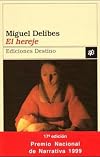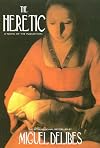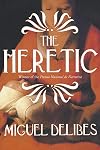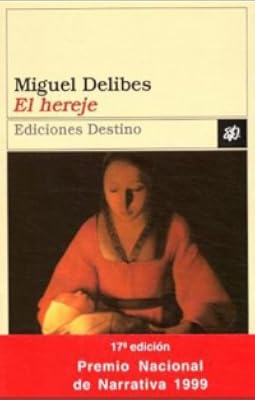
The Heretic
by Miguel Delibes
On This Page
Description
In this winner of the Premio Nacional de Narrativa, Spain's most prestigious literary prize, Miguel Delibes takes us into the heart of sixteenth-century Spain. At the very moment Martin Luther nails his ninety-five theses to a church door and launches the movement that will divide the Roman Catholic Church, a child is born, his fate marked by the political and religious upheaval taking root in Europe. His mother having perished in childbirth, his father alienated and disconnected, Cipriano show more Salcedo's only source of affection is his wet nurse and foster mother, Minerva. He grows up to become a prosperous merchant and joins the Reformation movement, which is secretly advancing on the Iberian Peninsula, the historical bastion of the Catholic church. But before long, the Spanish Inquisition will drive the Reformers to put their lives at stake. Through the story of Cipriano Salcedo, Delibes paints a masterful portrait of the time of Spain's Charles V and recreates with uncanny accuracy and unparalleled artistry the social and intellectual atmosphere of Europe at one of history's most pivotal moments. show lessTags
Recommendations


















Member Recommendations
by anonymous user
Member Reviews
En el año 1517, Martín Lutero fija sus noventa y cinco tesis contra las indulgencias en la iglesia de Wittenberg, un acontecimiento que provocará el cisma de la Iglesia Romana de Occidente. Ese mismo año nace en Valladolid Cipriano Salcedo. En un momento de agitación política y religiosa, esta mera coincidencia de fechas marcará fatalmente su destino. Convertido en próspero comerciante se pondrá en contacto con las corrientes protestantes que, de manera clandestina, empezaban a introducirse en la Península, pero la difusión de este movimiento será cortada progresivamente por el Santo Oficio.
A través de las peripecias vitales y espirituales de Cipriano Salcedo, Delibes dibuja con mano maestra un vivísimo retrato del show more Valladolid de la época de Carlos V, de sus gentes, sus costumbres y sus paisajes. Pero El hereje es sobre todo una indagación sobre las relaciones humanas en todos sus aspectos; la historia de unos hombres y mujeres de carne y hueso en lucha consigo mismos y con el mundo que les ha tocado vivir.
Un canto apasionado por la tolerancia y la libertad de conciencia, una novela inolvidable sobre las pasiones humanas y los resortes que las mueven. show less
A través de las peripecias vitales y espirituales de Cipriano Salcedo, Delibes dibuja con mano maestra un vivísimo retrato del show more Valladolid de la época de Carlos V, de sus gentes, sus costumbres y sus paisajes. Pero El hereje es sobre todo una indagación sobre las relaciones humanas en todos sus aspectos; la historia de unos hombres y mujeres de carne y hueso en lucha consigo mismos y con el mundo que les ha tocado vivir.
Un canto apasionado por la tolerancia y la libertad de conciencia, una novela inolvidable sobre las pasiones humanas y los resortes que las mueven. show less
Cipriano Salcedo is the son of a businessman in 16th century Valladollid, Spain. He grows up to be wise in business matters, a loving husband to his wife, generous to the poor and working classes, but has the misfortune to experience religious conversion to Lutheranism during the Inquisition. Captured and tortured by the Inquisition, he suffers martyrdom at an auto-da-fé. The Heretic is a searing indictment of the evils of the Roman Catholic Church at this time, marking the Inquisition as the progenitor of the long draw out decline and eventual irrelevance of Roman Catholicism.
Originally published in Spain, this is a novel of a young man who grows up unloved and unwanted in an orthodox family. Eventually he becomes involved with an underground Protestant group, and becomes an enemy of the state. This is a book that would be hard going as a bestseller in America, because it is cerebral and not particularly action-packed (this is NOT meant as a dis!). The lead character is well drawn out, but most of the other characters are somewhat fuzzy. Overall, it was a pleasant read.
The story is of Cipriano Salcedo, citizen of Valladolid, Spain set in the 1500s. In fact, Cipriano Salcedo was born on October 31, 1517, the day Luther posted his Ninety-Five Theses. There is a brief introduction to Luther and Calvin and the Council of Trent. Cipriano’s mother died shortly after childbirth and his father never approached the son with anything but disdain. Cipriano was raised in the Catholic faith but along the way, without his fully realizing, he becomes a believer in the doctrine of beneficence. His desire for fraternity leads him to trust that others will stay true to their oaths. The author dedicated this book to his hometown of Valladolid in which he creates the landscape, the man and the passion. Cipriano is a show more merchant and the novel is the story of man’s freedom to think and the intolerance of mankind. The story does immerse you in the sixteenth century. I recommend this to anyone interested in the inquisition, the reformation or the 16th century. show less
This international bestseller follows the life of a boy born on the day the Protestant reformation began-when Martin Luther nailed his list of ninety-five theses to a church door in Wittenberg-through his last days in prison as a so-called heretic. I really enjoyed this story but wondered how much was lost in the translation. And his English publishers need a kick in the pants for all the typos they didn't have edited out.Very distracting in a well-written book of the times. I hope they translate and publish more of his work but...looking to hire any proofreaders there guys? I'm avalable
From Amazon:
"Miguel Delibes is one of Spain's literary treasures. At the age of eighty-six he is author of over fifty books; he received the Cervantes show more Prize in 1994, and The Heretic won the Premio Nacional de Narrativa, perhaps Spain's most important literary prize, in 1999. Delibes wrote it while fighting cancer, and at times Cipriano's meditations on the end of life during the year he spends in the Inquisition's prison seem almost autobiographical. By whatever means and experience, in The Heretic Delibes has produced as enduring and thought-provoking a tale as those of his national literary forefathers." show less
From Amazon:
"Miguel Delibes is one of Spain's literary treasures. At the age of eighty-six he is author of over fifty books; he received the Cervantes show more Prize in 1994, and The Heretic won the Premio Nacional de Narrativa, perhaps Spain's most important literary prize, in 1999. Delibes wrote it while fighting cancer, and at times Cipriano's meditations on the end of life during the year he spends in the Inquisition's prison seem almost autobiographical. By whatever means and experience, in The Heretic Delibes has produced as enduring and thought-provoking a tale as those of his national literary forefathers." show less
This novel is set in Valladolid, Spain, at the onset of the Inquisition, and the main character, a truly good, even heroic, character, is drawn to Protestantism, though the bulk of the story describes his coming of age, his development of his business interests, & his marriage (the one area where he's not successful in life). The story, told straightforwardly by a third-person, omnisicient narrator, is only modestly compelling, the translation seems not very good, & I've never seen so many egregious typos in a commercially published book.
Don't buy this book! Such incredibly sloppy translating and editing should not be condoned. The story itself was boring and with the addition of the truly awful translating it was unreadable. I would imagine that a computer could have done a better job than the translator/editor did on the travesty.
Members
- Recently Added By
Lists

My TBR
371 works; 3 members

Canon de la narrativa universal del s. XX (cicutadry)
499 works; 3 members
Author Information

143+ Works 6,695 Members
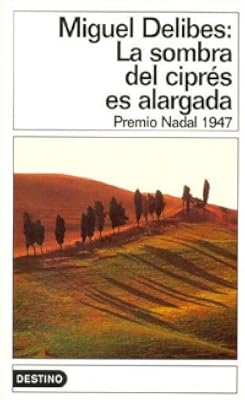
Miguel Delibes was born in Valladolid, Spain on October 17, 1920. During the Spanish civil war, he served in the navy. In 1941, he worked as a cartoonist for Valladolid's main paper, El Norte de Castilla (The North of Castile). A year later, he wrote his first article and by 1944 was a reporter. He became editor of El Norte de Castilla in 1958, show more but was forced to resign in 1963. His first novel, La Sombra del Ciprés es Alargada (The Cypress Casts a Long Shadow), won the Nadal prize in 1948. His other works include Aún es de Día (It's Still Light), Las Ratas (The Rats), Cinco Horas con Mario (Five Hours with Mario), Los Santos Inocentes (The Holy Innocents), La Tierra Herida (The Wounded Earth), and El Hereje (The Heretic). He won numerous awards including the National Literature prize in 1955 and 1999, the Príncipe de Asturias in 1982, and the Cervantes Prize in 1994. He died on March 12, 2010 at the age of 89. (Bowker Author Biography) show less
Awards and Honors
Series
Belongs to Publisher Series
Áncora y Delfín (828)
Common Knowledge
- Canonical title
- The Heretic
- Original title
- El hereje
- Original publication date
- 1998
- People/Characters*
- Cirpiano Salcedo
- Important places*
- Valladolid, Castilla y León, España
- Epigraph*
- ¿Cómo callar tantas formas de violencia perpetradas también en nombre de la fe? Guerras de religión, tribunales de la Inquisición y otras formas de violación de los derechos de las personas… Es preciso que la Iglesia,... (show all) de acuerdo con el Concilio Vaticano II, revise por propia iniciativa los aspectos oscuros de su historia, valorándolos a la luz de los principios del Evangelio.
(Juan Pablo II a los cardenales, 1994) - Dedication*
- A Valladolid, mi ciudad
- First words*
- El Hamburg, una galeaza a remo y vela, de tres palos, línea enjuta y setenta y cinco varas de eslora, dedicada al cabotaje, rebasó lentamente la bocana y salió a mar abierta.
- Last words*
- (Click to show. Warning: May contain spoilers.)(Declaración de Minervina Capa, de Santovenia de Pisuerga, en el informe de las personas que asistieron a las ejecuciones del día 21 de mayo de 1559.)
- Original language*
- Español
- Canonical DDC/MDS
- 863.64
*Some information comes from Common Knowledge in other languages. Click "Edit" for more information.
Classifications
- Genres
- Fiction and Literature, General Fiction, Historical Fiction
- DDC/MDS
- 863.64 — Literature & rhetoric Spanish Literature Spanish fiction 20th Century 1945-2000
- LCC
- PQ6607 .E45 .H47 — Language and Literature French, Italian, Spanish and Portuguese literatures Spanish literature Individual authors, 1868-1960
- BISAC
Statistics
- Members
- 717
- Popularity
- 39,789
- Reviews
- 26
- Rating
- (3.97)
- Languages
- 6 — Dutch, English, French, German, Russian, Spanish
- Media
- Paper, Audiobook, Ebook
- ISBNs
- 37
- ASINs
- 8