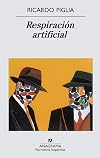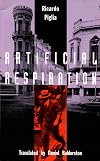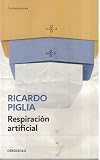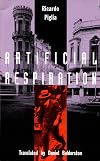
Artificial Respiration
by Ricardo Piglia
On This Page
Description
Acclaimed as one of the most important Latin American novels in recent decades, Artificial Respiration is a stunning introduction for English readers to the fiction of Ricardo Piglia. Published in Argentina in 1981, it was written at a time when thousands of Argentine citizens "disappeared" during the government's attempt to create an authoritarian state. In part a reflection on one of the most repressive and tragic times in Argentine history, this is one of those rare works of fiction in show more which multiple philosophical, political, and narrative dimensions are all powerfully and equally matched. As a prize winning detective novel, Artificial Respiration reaches through many levels of mystery to explore the forces that have been at play in Argentina throughout its violent history. The narrator, a writer named Renzi, begins to look for an uncle who has vanished, a man he knows only through a web of contradictory family stories and an exchange of letters. Through these letters he learns about his uncle's research into the life of Enrique Ossario, secretary to the 19th-century Argentine dictator Rosas and spy for the dictator's enemy. As Renzi's search leads further into his uncle's work and to conversations with his literary and chess-playing friends, the reader is led by Piglia to consider the nature of Argentine identity, its literature and history, and its relation, for example, to Europe, exile, and democracy. Finally, and made most vividly appreciable by the retelling of a story in which Kafka meets Hitler, it is the encounter between literature and history that is explored. show lessTags
Recommendations






























Member Reviews
Emilio Renzi is a young writer whose first book is about an uncle with a tumultuous life, who left his wife for a cabaret dancer named Coca, maybe stole his wife's fortune, was imprisoned for the theft, got out and pretty much fell off the face of the map, but at the same time paid back the money he'd stolen. I like how Renzi describes his novel as "employing the tone of The Wild Palms; better: employing the tones that Faulkner acquires when translated by Borges, which resulted in a story that sounds like a more or less parodic version of Onetti." That's a pretty funny description of an imaginary Argentine book. He then receives a letter from the uncle in question, Marcelo Maggi, who's living up on the border between Argentina an show more Uruguay in Concordia, Entre Ríos. The uncle makes a few comments and rectifications regarding the fictional version of his story, as told by his nephew. Their epistolary relationship continues through the first part of the book, and Renzi learns of the importance of a trunk full of documents pertaining to a certain Enrique Ossorio, a bounty that had a lot to do with Maggi's marriage and subsequent abandonment of his wife. Ossorio was the secretary of Juan Manuel de Rosas, a traitor (or maybe a hero) who lived a long and complicated exile in the middle of the 19th century. He ended up on the East River, writing a utopic book that consists of letters received from a date far in the future (a date that corresponds with the Renzi/Maggi correspondence). The first hundred pages of the book are a mix of letters (not just betwen Renzi and Maggi), journal entries written by Ossorio, and the investigations of a man named Arocena who is trying to decipher a message embedded in code in some of the letters. Over the course of their correspondence, Renzi agrees to make a trek up to Concordia to see uncle Marcelo.
That visit takes place in the second part of the book, but instead of encountering Maggi in Concordia, Renzi makes the acquaintance of a Polish ex-student of Wittgenstein named Tardewski who now lives in Concordia and teaches private lessons in logic to high school students preparing to take a national entrance exam. Tardewski and Maggi are buddies who both frequent the same club. While they sit at the club, Tardewski and Renzi talk about a few of the more compelling members of Maggi's social circle. Their conversation often strays onto literary grounds, especially when they're joined briefly by a guy named Marconi whose ears perk up when he hears them talking about Borges. This was my favorite part of the book. Piglia puts some ingenious/hilarious comments on Argentine literature into the mouths of his characters. One affirms that "Pierre Menard, autor del Quijote" is actually a biting parody of the Frenchman Paul Groussac, who came to Argentina and became an influential member of intellectual circles in the later years of the 19th century. Another speaks of the involuntary humor of Leopoldo Lugones, suggesting that one might find a more refined comic talent in his La guerra gaucha than in the renowned jokes of Macedonio Fernández. At one point somebody suggests that the vein through which Argentine literature flowed was abruptly cut off by the death of Arlt in 1942. They then discuss Arlt's fiction, his style and his originality/genius, eventually bringing the conversation full circle by pointing out that one of Borges' stories can be read as a retelling/homage to El juguete rabioso. It's a fun 30-40 pages. I feel like the fictional setting, and the way that it's not Piglia speaking but rather the characters he's created, makes it possible for him to voice some really inspired readings of the Argentine canon. It's fiction and it's literary criticism, and the fact that it's the former makes it easier to make the extravagant declarations that make it so inspired as the latter. After they're done at the club, Renzi and Tardewski go back to the hotel where Maggi resides, and as they wait for him, Tardewski tells his life story. He's something of a mix between Wytold Gombrowicz and a character from an Onetti novel, and he once made a monumental discovery concerning a possible series of meetings between Hitler and Kafka, and the way that the two men mutually influenced each other. The excitement that the extended discourse on literature and the fundamental importance of Bob Arlt had inspired in me was somewhat cooled during this final section of the book, but I basically read the whole thing in one sitting and I think I was just fatigued. As I think about it, that story of Tardewski's was pretty extraordinary too, and it might have more universal appeal (considering that more people are familiar with Wittgenstein, Hitler and Kafka than are familiar with Arlt and Leopoldo Lugones).
There was one really odd thing about the form of this book. The conversations were often indirect, and sometimes doubly indirect, and you end up reading a lot of phrases like this one: "...the woman said, Marconi recounted, Tardewski tells me," or "Marcelo used to say, Renzi tells me." People retell things that other people told them, and the chain of communication is represented in its entirety. I can't think of many books that do this. It seems very convoluted and I'm pretty sure these are constructions that writers generally avoid because they're awkward. One book that does make extensive use of these sort of chains of communication is Don Quijote (Cide Hamete writes about what Don Quijote says and his words are translated into Spanish), but I can't really think of any others that go to such great lengths to document the degrees of indirectness of statements being made by different characters. This book by Piglia is about readers and writers, and I think that may have something to do with this formal oddity. Renzi is a writer who reads the story of Maggi's life and interprets it. Maggi is a historian who reads Ossorio's documents and interprets them. Tardewski is a philosopher who's accidentally given Mein Kampf when he goes to the library to pick up a book on the ancient philosopher Hippias. All the characters are interpreting things written by other people, and maybe that's why Piglia goes to such lengths to represent the ways that they interpret things other people have told them as they converse with each other.
All in all, this was a really fun book for me to read. I underlined sentences I found particularly interesting, because I think it's a book that begs to be deciphered, as Arocena tries to decipher the letters that come into his hands. I read it quickly, and I'm hoping that future readings unlock more secrets embedded in the text, the sort of text-within-the-text that Maggi looks for in the life of Ossorio, or that Arocena looks for in the letters. show less
That visit takes place in the second part of the book, but instead of encountering Maggi in Concordia, Renzi makes the acquaintance of a Polish ex-student of Wittgenstein named Tardewski who now lives in Concordia and teaches private lessons in logic to high school students preparing to take a national entrance exam. Tardewski and Maggi are buddies who both frequent the same club. While they sit at the club, Tardewski and Renzi talk about a few of the more compelling members of Maggi's social circle. Their conversation often strays onto literary grounds, especially when they're joined briefly by a guy named Marconi whose ears perk up when he hears them talking about Borges. This was my favorite part of the book. Piglia puts some ingenious/hilarious comments on Argentine literature into the mouths of his characters. One affirms that "Pierre Menard, autor del Quijote" is actually a biting parody of the Frenchman Paul Groussac, who came to Argentina and became an influential member of intellectual circles in the later years of the 19th century. Another speaks of the involuntary humor of Leopoldo Lugones, suggesting that one might find a more refined comic talent in his La guerra gaucha than in the renowned jokes of Macedonio Fernández. At one point somebody suggests that the vein through which Argentine literature flowed was abruptly cut off by the death of Arlt in 1942. They then discuss Arlt's fiction, his style and his originality/genius, eventually bringing the conversation full circle by pointing out that one of Borges' stories can be read as a retelling/homage to El juguete rabioso. It's a fun 30-40 pages. I feel like the fictional setting, and the way that it's not Piglia speaking but rather the characters he's created, makes it possible for him to voice some really inspired readings of the Argentine canon. It's fiction and it's literary criticism, and the fact that it's the former makes it easier to make the extravagant declarations that make it so inspired as the latter. After they're done at the club, Renzi and Tardewski go back to the hotel where Maggi resides, and as they wait for him, Tardewski tells his life story. He's something of a mix between Wytold Gombrowicz and a character from an Onetti novel, and he once made a monumental discovery concerning a possible series of meetings between Hitler and Kafka, and the way that the two men mutually influenced each other. The excitement that the extended discourse on literature and the fundamental importance of Bob Arlt had inspired in me was somewhat cooled during this final section of the book, but I basically read the whole thing in one sitting and I think I was just fatigued. As I think about it, that story of Tardewski's was pretty extraordinary too, and it might have more universal appeal (considering that more people are familiar with Wittgenstein, Hitler and Kafka than are familiar with Arlt and Leopoldo Lugones).
There was one really odd thing about the form of this book. The conversations were often indirect, and sometimes doubly indirect, and you end up reading a lot of phrases like this one: "...the woman said, Marconi recounted, Tardewski tells me," or "Marcelo used to say, Renzi tells me." People retell things that other people told them, and the chain of communication is represented in its entirety. I can't think of many books that do this. It seems very convoluted and I'm pretty sure these are constructions that writers generally avoid because they're awkward. One book that does make extensive use of these sort of chains of communication is Don Quijote (Cide Hamete writes about what Don Quijote says and his words are translated into Spanish), but I can't really think of any others that go to such great lengths to document the degrees of indirectness of statements being made by different characters. This book by Piglia is about readers and writers, and I think that may have something to do with this formal oddity. Renzi is a writer who reads the story of Maggi's life and interprets it. Maggi is a historian who reads Ossorio's documents and interprets them. Tardewski is a philosopher who's accidentally given Mein Kampf when he goes to the library to pick up a book on the ancient philosopher Hippias. All the characters are interpreting things written by other people, and maybe that's why Piglia goes to such lengths to represent the ways that they interpret things other people have told them as they converse with each other.
All in all, this was a really fun book for me to read. I underlined sentences I found particularly interesting, because I think it's a book that begs to be deciphered, as Arocena tries to decipher the letters that come into his hands. I read it quickly, and I'm hoping that future readings unlock more secrets embedded in the text, the sort of text-within-the-text that Maggi looks for in the life of Ossorio, or that Arocena looks for in the letters. show less
No me parece justo darle un rating a este libro porque siento que no se conforma a lo que leo normalmente y admito que mucho del simbolismo no lo pude captar en mi primera lectura y me parece que en un par de años voy a revisitar el libro y descubrir muchas cosas mas.
Ahora, con eso dicho, ¿Me gusto? Realmente no lo se.
Me parece que este libro es muy experimental y mucho mas vanguardistico que todas las vanguardias argentinas combinadas. Es epistolar, por ahi no al nivel de boquitas pintadas pero la primera mitad esta increiblemente escrita, trata el tema de los desaparecidos en plena dictadura, habla de literatura argentina, el holocausto, kafka, la filosofia occidental y el circlejerk academico. Y aunque el dicho es que el que show more mucho aprieta poco abarca, Pigilia aprieta mucho y abarca mucho mas. Porque ademas de todo lo que te cuenta filosoficamente, tambien te narra docenas de pequeñas historias humanas que hacen de este libro una obra maestra.
Mi tema con el libro es que no es algo que yo tradicionalmente leeria y hay un par de cosas menores que no me cierran. Pero aun asi es un clasico que se merece su titulo y lo unico que puedo afirmar sin ninguna duda es que piglia sabia lo que estaba haciendo, que es mucho mas de lo que puedo decir de la mayoria de autores show less
Ahora, con eso dicho, ¿Me gusto? Realmente no lo se.
Me parece que este libro es muy experimental y mucho mas vanguardistico que todas las vanguardias argentinas combinadas. Es epistolar, por ahi no al nivel de boquitas pintadas pero la primera mitad esta increiblemente escrita, trata el tema de los desaparecidos en plena dictadura, habla de literatura argentina, el holocausto, kafka, la filosofia occidental y el circlejerk academico. Y aunque el dicho es que el que show more mucho aprieta poco abarca, Pigilia aprieta mucho y abarca mucho mas. Porque ademas de todo lo que te cuenta filosoficamente, tambien te narra docenas de pequeñas historias humanas que hacen de este libro una obra maestra.
Mi tema con el libro es que no es algo que yo tradicionalmente leeria y hay un par de cosas menores que no me cierran. Pero aun asi es un clasico que se merece su titulo y lo unico que puedo afirmar sin ninguna duda es que piglia sabia lo que estaba haciendo, que es mucho mas de lo que puedo decir de la mayoria de autores show less
Este livro me aborreceu deveras na primeira parte, mas a segunda parte é tão brilhante e explicita a razão de ser daquela primeira de uma forma tão engenhosa que chega às vias da metalinguagem, de uma erudição cavalar, vou sair dessa leitura com uma boa dezena de livros a serem lidos, afinal, somente o Piglia para instigar na leitura de Mein Kampf.
P.S. A julgar, há 531 fãs de Hitler no goodreads, ele deve ser um escritor muito bom mesmo. Rá!
P.S. A julgar, há 531 fãs de Hitler no goodreads, ele deve ser um escritor muito bom mesmo. Rá!
Piglia makes Borges the ghost in the machine — in Respiración artificial, stories contain hidden stories, and texts are puzzles.
It's interesting that no one else has this book. This is the best work of fiction that I've ever read coming out of Latin America and I've read most of the major authors. In any case it's set during the dirty war during the late 70's and the early 80's when the Military junta controlled Argentina after a coup. They were finally brought down in the wake of the Falklands debacle. Estimate as high as 30,000 people 'disappeared' during this time for a variety of reasons such as being dissidents or even witnesses in the wrong place at the wrong time. This novel written during that time deals with that situation in an oblique way--as a detective type of novel as a writer named Renzi searches for his lost uncle--finally seeming to catch up show more with him in a rural village he runs into a friend of his uncle--somewhat based on the Polish writer Gombrowicz who relates to Renzi a story from his youth searching through the archives of the library of the British Museum in London he had come across some letters from Kafka relating of some encounters with a young Austrian anti-semite named Adolph. The uncle does not appear leaving one to draw the sinister conclusion that he himself has disappeared.. show less
I couldn't move through this book easily, because I kept trying to read it like a more traditional narrative. I had to keep reminding myself which character was which, and asking myself who exactly was telling the story. Reading from a review that this book is actually about the history of Argentinian fiction (in a way) helped, because I could let go of those expectations. But I still wasn't able to finish.
Some of my favorite passages from Artificial Respiration:
Last night, for example, I stayed up until dawn discussing certain changes that could be made in the chess game with my Polish friend Tardewski. A game must be invented, he tells me, in which the functions of the pieces change after they stay in the same spot for a while; they should become stronger or weaker. Under the present rules the game does not develop, but always remains identical to itself. Only what changes is transformed, Tardewski says, has meaning. In these feigned arguments we pass the idle provincial hours, because life in the provinces is famous for its monotony.
---------------------------
The exile is the utopian man par excellence, he lives in a constant state of show more homesickness for the future.
---------------------------
Besides the emptiness that exile brings, I have had another personal experience of utopia that helps me imagine the romance I would like to write. The gold rush of California – that feverish march of the adventurers who eagerly advanced westward – what was that but a search for the ultimate utopia – gold? Utopian metal, treasure to be found, a fortune waiting to be picked up in river beds: alchemical utopia. The soft sand runs between the fingers. We shall be rich at once now, with California gold, Sir, sang the men on the brave Wells Fargo coaches. So I know what the fuss is all about. Every night before going to sleep I feel the weight of that golden illusion against the skin of my waist. A personal secret, hidden like a crime. Not even Lisette knows about this. What do you carry there? she has asked me. A bronze sash, I have replied; a doctor recommended that I wear it to correct a curvature of the spine. And I don’t lie: didn’t I walk bent over double like a slave for years? Nobody can be surprised now if in order to combat the effects of the uncomfortable posture prescribed for me by history I should have to use a sort of corset made of solid gold. Only gold cures the memory of subjection and betrayal.
Besides, on those caravans to utopia that crossed the alkali deserts of New Mexico I have seen horrors and crimes that I would never imagine in my wildest nightmares. A man cut off his friend’s hand with the edge of a shovel so as to be able to reach a river bed first, a river bed where, it should be said in passing, no gold was found. What lessons have I learned from that other experience I underwent in the hallucinatory world of utopia? That in its quest all crimes are possible. And that the only ones to reach the happy, gentle realm of pure utopia are those (like me) who are willing to drag themselves down into the most utter depravity. Only in the minds of traitors and evildoers, of men like myself, can the beautiful dreams we call utopias flourish.
Thus the third experience that serves as material for my imagination is betrayal. The traitor occupies the classic position of the utopian hero: a man from nowhere, the traitor lives in between two sets of loyalties; he lives in duplicity, in disguise. He must pretend, remain in the wasteland of perfidy, sustained by impossible dreams of a future where his evil deeds will at last be rewarded. But – how can the traitor’s evil deeds be rewarded in the future?
---------------------------
One day, it seems, he decided to go away on a trip, to change his life, to begin again – who knows? – somewhere else. And what’s that, after all, I tell him, if not a modern illusion? It happens to all of us eventually. We all want, I say, to have adventures. Renzi told me that he was convinced that neither experiences nor adventures existed any longer. There are no more adventures, he told me, only parodies. He thought, he said, that today adventures were nothing but parodies. Because, he said, parody had stopped being what the followers of Tynianov thought, namely the signal of literary change, and had turned into the very centre of modern life. It’s not that I am inventing a theory or anything like that, Renzi told me. It’s simply that I believe that parody had been displaced and that it now invades all gestures and actions. Where there used to be events, experiences, passions, now there are nothing but parodies. This is what I tried to tell Marcelo so many times in my letters: that parody had completely replaced history. And isn’t parody the very negation of history?
---------------------------
Once I was in a Warsaw hospital. Motionless, unable to use my body, accompanied by a pathetic series of invalids. Tedium, monotony, introspection. A long white hall, a row of beds – it was like being in jail. There was a single window, at the end of the room. One of the patients, a bony, feverish guy, consumed by cancer, named Guy by his French parents, had had the luck to be placed near that opening. From there, barely sitting up, he could look out, see the street. What a spectacle! A square, water, pigeons, people passing. Another world. He clung desperately to that place and told us what he saw. He was the lucky one. We detested him. We waited, to be frank, for him to die so as to take his place. We kept count. Finally he dies. After complicated maneuvers and bribes I succeeded in being transferred to the bed at the end of the hall and was able to take his place. Well, I tell Renzi. Well. From the window all that could be seen was a gray wall and a bit of dirty sky. I too, of course, began telling them stories about the square and the pigeons and the traffic in the streets. Why do you laugh? It’s funny, Renzi says. It’s like a Polish version of Plato’s cave. Why not, I tell him; it serves to prove that adventures can be found anywhere. Doesn’t that seem like a beautiful practical lesson? A fable with a moral, he says to me. Exactly I say.
---------------------------
He identified with what are usually called failures, he said. But what, he asked, is a failure? Perhaps a man with less than all the talents imaginable, but talented, more talented than many successful men. He has those gifts, he said, but he does not make use of them. He wastes them. So, he said, in essence he wastes his life. He was fascinated by all of those failures who wander around, especially on the fringes of the intellectual world, always with projects and books they mean to write, he said. There are many, he said, all over the place, but some of them are very interesting people, especially when they get older and know themselves well. I would search them out, he said, when I was young, as one seeks out the wise. There was a fellow, for instance, that I used to see often. In Poland. This man had made a career of being a student at the university, without ever being able to make up his mind to take the exams that he needed to finish his degree. In fact he left the university just before getting a degree in mathematics and had then left his fiancée waiting for him at the altar on their wedding day. He saw no particular merit in finishing anything. One night, Tardewski tells me, we were together and they introduce us to a woman that I like, that I like a lot. When he observes this he says to me: Ah, but how is it possible? haven’t you noticed her right ear? Her right ear? I answered him: You’re crazy, I don’t care. But then, take note, he told me, Tardewski. Take note. Look. At last I managed to look at what she had behind her ear. She had a horrible wart, or a wart anyway. Everything ended. A wart. Do you see? The guy was a devil. His function was to sabotage everyone else’s enthusiasm. He had a deep knowledge of human beings. Tardewski said that in his youth he had been very interested in people like that, in people, he said, that always saw more than they needed to. That’s what was at issue, he said, at bottom: a particular way of seeing. There was a Russian term, you must know it, he tells me, as I understand you are interested in the formalists: the term, in any case, is ostranenie. Yes, I tell him, it interests me, of course; I think that’s where Brecht got the idea of distancing. I never thought of that, Tardewski tells me. Brecht knew a lot about the theory of the Russian formalists and the whole experience of the Russian avant-garde in the twenties, I tell him, through Sergei Tretiakov, a really notable guy; he was the one who invented the theory of literatura fakta, which has since circulated so widely, that literature should work with raw documents, with the techniques of reporting. Fiction, said Tretiakov, I say to Tardewski, is the opiate of the people. He was a great friend of Brecht’s and it was through him that Brecht surely found out about the concept of ostranenie. Interesting, said Tardewski. But returning to what I was saying, that form of looking that I would call ostranenie: to be always outside, at some distance, in some other place, and thus to be able to see reality beyond the veil of custom and habit. Paradoxically, the tourist’s vision is like that, but so too, ultimately, is the philosopher’s vision. I mean, he said, that philosophy is definitely nothing other than that. It is constituted in that way, at least since Socrates. “What is this?” Right? Socrates’ questions everything, continually, with that sort of vision. That aberrant lucidity, of course, makes them sink deeper into failure. I was very interested in people like that, in my youth. They had a devilish enchantment for me. I was convinced that those individuals were the ones who exercised, he said, the true function of knowing, which is always destructive. But here we are at my house, Tardewski says now, going up to open the front gate.
---------------------------
So he returned to Cambridge to say so and began to do philosophy again or, as he said, if not to do philosophy then at least to teach philosophy. While his book made his influence ever greater, while his ideas were decisively influencing the Viennese Circle and in general all of the later developments of logical positivism, Wittgenstein felt more and more empty and dissatisfied. He viewed his own philosophy, he once said in class, the way Husserl had said that psychoanalysis should be viewed: as a sickness that confuses itself with the cure. That was what Husserl said about psychoanalysis, Wittgenstein said that time in class, and that is what I think of my own philosophy, expounded in the Tractatus. That is what Ludwig Wittgenstein would say about himself and about his ideas to his students at Cambridge in 1936, Tardewski tells me, which should at the very least be considered an example of what some people call intellectual courage and fidelity to the truth.
---------------------------
I had gone the same as every other day to the library to study some books I needed to use for my thesis. I had gone to consult a volume of the writings of the Greek sophist Hippias and, when I requested the book, due to an error in the classification of the entries, instead of the volume by the Greek philosopher they delivered an annotated edition of Adolf Hitler’s Mein Kampf. I must confess, Tardewski continued, that I had never read that book; it would have never occurred to me, in any case, to read it, had it not been for the error that upset and amazed the reference librarian there at the British Library and that also amazed and upset me, but for a period of many years.
Tardewski said that it had never occurred to him to read Hitler’s book and that beyond a doubt he would never have come across that edition, annotated by a German historian of firm antifascist convictions, had it not been for that chance. He said that that afternoon he had thought: since chance (perhaps for the first time in history, as the trembling reference librarian asserted) had found its way into the cards that began with HI in the British Library, since chance, he said, or some hidden Nazi, which in this case would be the same thing, had confused the cards in that way, he, Tardewski, who was superstitious besides (like a good logical positivist), believed he perceived in that event what in fact had really happened, that is, he said, a call, a sign from fate. Even if I did not see it with clarity, I obeyed all the same, using the argument that I could put aside for one afternoon the reading of the Greek Sophists and take a rest from the arduous development of my thesis. In any case, said Tardewski, I spent that afternoon and part of that evening at the British Library reading the strange and delirious autobiographical monologue that Hitler had written, or rather had dictated, in Landsberg Castle, in 1924, while he suffered (as they say) a sentence of six months of obliging prison. The first thing I thought, what I understood right away, was that Mein Kampf was a sort of perfect complement or apocryphal sequel to the Discourse on Method. It was a Discourse on Method written not so much (or not exclusively) by a madman and a megalomaniac (for Descartes was also a bit of a madman and a megalomaniac) but by an individual who uses reason, supports his ideas, erects an ironclad system of ideas, on a hypothesis that is the perfect (and logical) inversion of the starting point of René Descartes. That is, said Tardewski, the hypothesis that doubt does not exist, must not exist, had no right to exist, and that doubt is nothing but a sign of weakness in thought and not the necessary condition for rigorous thought. What relations existed, or better still, what line of continuity could be established (this was my first thought that afternoon) between the Discourse on Method and Mein Kampf? The two were monologues of an individual who was more or less mad, who is prepared to negate all prior truths and to prove in a manner that was at once commanding and inflexible in what place and from what position one could (and should) erect a system that would be at once absolutely coherent and philosophically irrefutable. The two books, I thought, Tardewski said, were a single book, the two parts of a single book written far enough apart in time so that historical developments would make it possible for their ideas to be complementary. Could that book (I thought as the library grew dark) be considered something like the final movement in the evolution of rationalist subjectivism as inaugurated by Descartes? I think it can, I thought that afternoon, and I still think so now, said Tardewski. I am therefore opposed, of course, and you will have noted immediately, to the thesis argued by Georg Luckás in his book, The Destruction of Reason, for whom Mein Kampf and nazism are nothing more than the culmination of the irrationalist tendency in German philosophy that begins with Nietzsche and Schopenhauer. For me, in contrast, Tardewski says, Mein Kampf is bourgeois reason taken to its most extreme and coherent limits. I would even say, said Tardewski to me, that bourgeois reason concludes in a triumphal way in Mein Kampf. That book is the realization of bourgeois philosophy.
Tardewski said then that if philosophy had always sought a path toward becoming real, was it so surprising that Heidegger should have seen the Führer as the very concretion of German reason? I’m not making a moral judgment, said Tardewski; for me it’s a matter of logical judgment. If European reason is realized in this book (I said to myself as I read it), what is surprising about the fact that the greatest living philosopher, that is to say, the one who is considered the greatest philosophical intelligence in the West, should have understood that right away? Then the Austrian corporal and the philosopher of Freiburg are nothing but the direct and legitimate descendants of that French philosopher who went to Holland and there sat down in front of the fire to found the certainties of modern reason. A philosopher sitting before the fireplace, said Tardewski, isn’t that the basic situation? (Socrates, in contrast, as you know, he told me in parentheses, wandered around the streets and the squares.) Isn’t the tragedy of the modern world condensed in that? It’s totally logical, he said, for a philosopher to get up from his armchair, after having convinced himself that he is the sole proprietor of the truth and that there is no room for doubt, and for him to take one of those burning logs and devote himself to setting fire with his reason to the entire world. It happened four hundred years later but it was logical, it was an inevitable consequence. If at the very least I had stayed sitting down. But you know how difficult it is to remain seated for very long, said Tardewski, and he got up and began pacing back and forth across the room.
. show less
Last night, for example, I stayed up until dawn discussing certain changes that could be made in the chess game with my Polish friend Tardewski. A game must be invented, he tells me, in which the functions of the pieces change after they stay in the same spot for a while; they should become stronger or weaker. Under the present rules the game does not develop, but always remains identical to itself. Only what changes is transformed, Tardewski says, has meaning. In these feigned arguments we pass the idle provincial hours, because life in the provinces is famous for its monotony.
---------------------------
The exile is the utopian man par excellence, he lives in a constant state of show more homesickness for the future.
---------------------------
Besides the emptiness that exile brings, I have had another personal experience of utopia that helps me imagine the romance I would like to write. The gold rush of California – that feverish march of the adventurers who eagerly advanced westward – what was that but a search for the ultimate utopia – gold? Utopian metal, treasure to be found, a fortune waiting to be picked up in river beds: alchemical utopia. The soft sand runs between the fingers. We shall be rich at once now, with California gold, Sir, sang the men on the brave Wells Fargo coaches. So I know what the fuss is all about. Every night before going to sleep I feel the weight of that golden illusion against the skin of my waist. A personal secret, hidden like a crime. Not even Lisette knows about this. What do you carry there? she has asked me. A bronze sash, I have replied; a doctor recommended that I wear it to correct a curvature of the spine. And I don’t lie: didn’t I walk bent over double like a slave for years? Nobody can be surprised now if in order to combat the effects of the uncomfortable posture prescribed for me by history I should have to use a sort of corset made of solid gold. Only gold cures the memory of subjection and betrayal.
Besides, on those caravans to utopia that crossed the alkali deserts of New Mexico I have seen horrors and crimes that I would never imagine in my wildest nightmares. A man cut off his friend’s hand with the edge of a shovel so as to be able to reach a river bed first, a river bed where, it should be said in passing, no gold was found. What lessons have I learned from that other experience I underwent in the hallucinatory world of utopia? That in its quest all crimes are possible. And that the only ones to reach the happy, gentle realm of pure utopia are those (like me) who are willing to drag themselves down into the most utter depravity. Only in the minds of traitors and evildoers, of men like myself, can the beautiful dreams we call utopias flourish.
Thus the third experience that serves as material for my imagination is betrayal. The traitor occupies the classic position of the utopian hero: a man from nowhere, the traitor lives in between two sets of loyalties; he lives in duplicity, in disguise. He must pretend, remain in the wasteland of perfidy, sustained by impossible dreams of a future where his evil deeds will at last be rewarded. But – how can the traitor’s evil deeds be rewarded in the future?
---------------------------
One day, it seems, he decided to go away on a trip, to change his life, to begin again – who knows? – somewhere else. And what’s that, after all, I tell him, if not a modern illusion? It happens to all of us eventually. We all want, I say, to have adventures. Renzi told me that he was convinced that neither experiences nor adventures existed any longer. There are no more adventures, he told me, only parodies. He thought, he said, that today adventures were nothing but parodies. Because, he said, parody had stopped being what the followers of Tynianov thought, namely the signal of literary change, and had turned into the very centre of modern life. It’s not that I am inventing a theory or anything like that, Renzi told me. It’s simply that I believe that parody had been displaced and that it now invades all gestures and actions. Where there used to be events, experiences, passions, now there are nothing but parodies. This is what I tried to tell Marcelo so many times in my letters: that parody had completely replaced history. And isn’t parody the very negation of history?
---------------------------
Once I was in a Warsaw hospital. Motionless, unable to use my body, accompanied by a pathetic series of invalids. Tedium, monotony, introspection. A long white hall, a row of beds – it was like being in jail. There was a single window, at the end of the room. One of the patients, a bony, feverish guy, consumed by cancer, named Guy by his French parents, had had the luck to be placed near that opening. From there, barely sitting up, he could look out, see the street. What a spectacle! A square, water, pigeons, people passing. Another world. He clung desperately to that place and told us what he saw. He was the lucky one. We detested him. We waited, to be frank, for him to die so as to take his place. We kept count. Finally he dies. After complicated maneuvers and bribes I succeeded in being transferred to the bed at the end of the hall and was able to take his place. Well, I tell Renzi. Well. From the window all that could be seen was a gray wall and a bit of dirty sky. I too, of course, began telling them stories about the square and the pigeons and the traffic in the streets. Why do you laugh? It’s funny, Renzi says. It’s like a Polish version of Plato’s cave. Why not, I tell him; it serves to prove that adventures can be found anywhere. Doesn’t that seem like a beautiful practical lesson? A fable with a moral, he says to me. Exactly I say.
---------------------------
He identified with what are usually called failures, he said. But what, he asked, is a failure? Perhaps a man with less than all the talents imaginable, but talented, more talented than many successful men. He has those gifts, he said, but he does not make use of them. He wastes them. So, he said, in essence he wastes his life. He was fascinated by all of those failures who wander around, especially on the fringes of the intellectual world, always with projects and books they mean to write, he said. There are many, he said, all over the place, but some of them are very interesting people, especially when they get older and know themselves well. I would search them out, he said, when I was young, as one seeks out the wise. There was a fellow, for instance, that I used to see often. In Poland. This man had made a career of being a student at the university, without ever being able to make up his mind to take the exams that he needed to finish his degree. In fact he left the university just before getting a degree in mathematics and had then left his fiancée waiting for him at the altar on their wedding day. He saw no particular merit in finishing anything. One night, Tardewski tells me, we were together and they introduce us to a woman that I like, that I like a lot. When he observes this he says to me: Ah, but how is it possible? haven’t you noticed her right ear? Her right ear? I answered him: You’re crazy, I don’t care. But then, take note, he told me, Tardewski. Take note. Look. At last I managed to look at what she had behind her ear. She had a horrible wart, or a wart anyway. Everything ended. A wart. Do you see? The guy was a devil. His function was to sabotage everyone else’s enthusiasm. He had a deep knowledge of human beings. Tardewski said that in his youth he had been very interested in people like that, in people, he said, that always saw more than they needed to. That’s what was at issue, he said, at bottom: a particular way of seeing. There was a Russian term, you must know it, he tells me, as I understand you are interested in the formalists: the term, in any case, is ostranenie. Yes, I tell him, it interests me, of course; I think that’s where Brecht got the idea of distancing. I never thought of that, Tardewski tells me. Brecht knew a lot about the theory of the Russian formalists and the whole experience of the Russian avant-garde in the twenties, I tell him, through Sergei Tretiakov, a really notable guy; he was the one who invented the theory of literatura fakta, which has since circulated so widely, that literature should work with raw documents, with the techniques of reporting. Fiction, said Tretiakov, I say to Tardewski, is the opiate of the people. He was a great friend of Brecht’s and it was through him that Brecht surely found out about the concept of ostranenie. Interesting, said Tardewski. But returning to what I was saying, that form of looking that I would call ostranenie: to be always outside, at some distance, in some other place, and thus to be able to see reality beyond the veil of custom and habit. Paradoxically, the tourist’s vision is like that, but so too, ultimately, is the philosopher’s vision. I mean, he said, that philosophy is definitely nothing other than that. It is constituted in that way, at least since Socrates. “What is this?” Right? Socrates’ questions everything, continually, with that sort of vision. That aberrant lucidity, of course, makes them sink deeper into failure. I was very interested in people like that, in my youth. They had a devilish enchantment for me. I was convinced that those individuals were the ones who exercised, he said, the true function of knowing, which is always destructive. But here we are at my house, Tardewski says now, going up to open the front gate.
---------------------------
So he returned to Cambridge to say so and began to do philosophy again or, as he said, if not to do philosophy then at least to teach philosophy. While his book made his influence ever greater, while his ideas were decisively influencing the Viennese Circle and in general all of the later developments of logical positivism, Wittgenstein felt more and more empty and dissatisfied. He viewed his own philosophy, he once said in class, the way Husserl had said that psychoanalysis should be viewed: as a sickness that confuses itself with the cure. That was what Husserl said about psychoanalysis, Wittgenstein said that time in class, and that is what I think of my own philosophy, expounded in the Tractatus. That is what Ludwig Wittgenstein would say about himself and about his ideas to his students at Cambridge in 1936, Tardewski tells me, which should at the very least be considered an example of what some people call intellectual courage and fidelity to the truth.
---------------------------
I had gone the same as every other day to the library to study some books I needed to use for my thesis. I had gone to consult a volume of the writings of the Greek sophist Hippias and, when I requested the book, due to an error in the classification of the entries, instead of the volume by the Greek philosopher they delivered an annotated edition of Adolf Hitler’s Mein Kampf. I must confess, Tardewski continued, that I had never read that book; it would have never occurred to me, in any case, to read it, had it not been for the error that upset and amazed the reference librarian there at the British Library and that also amazed and upset me, but for a period of many years.
Tardewski said that it had never occurred to him to read Hitler’s book and that beyond a doubt he would never have come across that edition, annotated by a German historian of firm antifascist convictions, had it not been for that chance. He said that that afternoon he had thought: since chance (perhaps for the first time in history, as the trembling reference librarian asserted) had found its way into the cards that began with HI in the British Library, since chance, he said, or some hidden Nazi, which in this case would be the same thing, had confused the cards in that way, he, Tardewski, who was superstitious besides (like a good logical positivist), believed he perceived in that event what in fact had really happened, that is, he said, a call, a sign from fate. Even if I did not see it with clarity, I obeyed all the same, using the argument that I could put aside for one afternoon the reading of the Greek Sophists and take a rest from the arduous development of my thesis. In any case, said Tardewski, I spent that afternoon and part of that evening at the British Library reading the strange and delirious autobiographical monologue that Hitler had written, or rather had dictated, in Landsberg Castle, in 1924, while he suffered (as they say) a sentence of six months of obliging prison. The first thing I thought, what I understood right away, was that Mein Kampf was a sort of perfect complement or apocryphal sequel to the Discourse on Method. It was a Discourse on Method written not so much (or not exclusively) by a madman and a megalomaniac (for Descartes was also a bit of a madman and a megalomaniac) but by an individual who uses reason, supports his ideas, erects an ironclad system of ideas, on a hypothesis that is the perfect (and logical) inversion of the starting point of René Descartes. That is, said Tardewski, the hypothesis that doubt does not exist, must not exist, had no right to exist, and that doubt is nothing but a sign of weakness in thought and not the necessary condition for rigorous thought. What relations existed, or better still, what line of continuity could be established (this was my first thought that afternoon) between the Discourse on Method and Mein Kampf? The two were monologues of an individual who was more or less mad, who is prepared to negate all prior truths and to prove in a manner that was at once commanding and inflexible in what place and from what position one could (and should) erect a system that would be at once absolutely coherent and philosophically irrefutable. The two books, I thought, Tardewski said, were a single book, the two parts of a single book written far enough apart in time so that historical developments would make it possible for their ideas to be complementary. Could that book (I thought as the library grew dark) be considered something like the final movement in the evolution of rationalist subjectivism as inaugurated by Descartes? I think it can, I thought that afternoon, and I still think so now, said Tardewski. I am therefore opposed, of course, and you will have noted immediately, to the thesis argued by Georg Luckás in his book, The Destruction of Reason, for whom Mein Kampf and nazism are nothing more than the culmination of the irrationalist tendency in German philosophy that begins with Nietzsche and Schopenhauer. For me, in contrast, Tardewski says, Mein Kampf is bourgeois reason taken to its most extreme and coherent limits. I would even say, said Tardewski to me, that bourgeois reason concludes in a triumphal way in Mein Kampf. That book is the realization of bourgeois philosophy.
Tardewski said then that if philosophy had always sought a path toward becoming real, was it so surprising that Heidegger should have seen the Führer as the very concretion of German reason? I’m not making a moral judgment, said Tardewski; for me it’s a matter of logical judgment. If European reason is realized in this book (I said to myself as I read it), what is surprising about the fact that the greatest living philosopher, that is to say, the one who is considered the greatest philosophical intelligence in the West, should have understood that right away? Then the Austrian corporal and the philosopher of Freiburg are nothing but the direct and legitimate descendants of that French philosopher who went to Holland and there sat down in front of the fire to found the certainties of modern reason. A philosopher sitting before the fireplace, said Tardewski, isn’t that the basic situation? (Socrates, in contrast, as you know, he told me in parentheses, wandered around the streets and the squares.) Isn’t the tragedy of the modern world condensed in that? It’s totally logical, he said, for a philosopher to get up from his armchair, after having convinced himself that he is the sole proprietor of the truth and that there is no room for doubt, and for him to take one of those burning logs and devote himself to setting fire with his reason to the entire world. It happened four hundred years later but it was logical, it was an inevitable consequence. If at the very least I had stayed sitting down. But you know how difficult it is to remain seated for very long, said Tardewski, and he got up and began pacing back and forth across the room.
. show less
Members
- Recently Added By
Lists

Latin American Literature
50 works; 11 members

Las 100 mejores novelas de la literatura hispanoamericana
96 works; 1 member
Las 100 mejores novelas de la literatura hispanoamericana (cicutadry)
100 works; 1 member
Author Information

70+ Works 2,027 Members
Awards and Honors
Common Knowledge
- Canonical title
- Artificial Respiration
- Original title
- Respiración artificial
- Original publication date
- 1980
- Important places*
- Argentinië
*Some information comes from Common Knowledge in other languages. Click "Edit" for more information.
Classifications
Statistics
- Members
- 298
- Popularity
- 107,607
- Reviews
- 8
- Rating
- (4.02)
- Languages
- 7 — English, French, Greek, Italian, Portuguese, Spanish, Swedish
- Media
- Paper, Ebook
- ISBNs
- 22
- ASINs
- 4