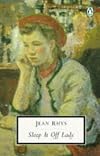
Sleep It Off Lady
by Jean Rhys
On This Page
Description
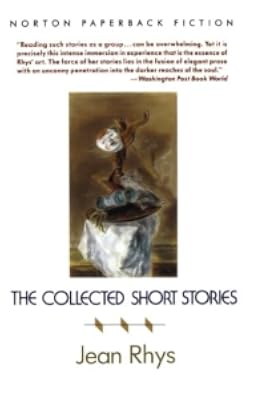
This work contains Jean Rhys' final collection of short stories. The sixteen stories are loosely chronological, often mirroring Rhys' own life. They stretch over an approximate 75-year period, starting from the end of the nineteenth century (November 1899) to circa 1975.Tags
Recommendations


























Member Reviews
Sharp, wry stories with a critical eye on acceptance and ostracism. It's not that they remind me of Shirley Jackson overall, but that they would understand each other. (Not horror SJ, but caustic suburban commentary SJ.) It is curious that the market copy talks about the loneliness of lives left behind, where I saw a lot of the strength and insight of the marginalized.
This collection of beautifully written short stories was mostly a pleasure to read, but generally lacked much of a point. There was no unifying perspective or story, which can sometimes really make a collection, though man's inhumanity to man is fairly well represented. A few of the stories are stone-cold classics which more than makes up for the odd one that goes astray. I probably liked best the unexpected ghost story, as much for the suprise as anything.
A great collection of stories, by turns mordant and poignant.
I found myself comparing the first-person stories (roughly 50%) in this collection to the stories and personal essays that annoy me in Tin House, n 1, Granta, etc. The difference is simply that Jean Rhys does it right: the stories are engaging, often not about the narrator at all, and establish their relevance by not over-emphasizing a trivial context at the outset ("I was on vacation", "I was in grad school", "I was at a bar"...). I suspect that the MFA and workshop writing courses are telling people that their diary scribblings are Writing, that everyone has a story worth telling (yawn), that Your View Matters. You know, the kind of writing that most people want to write, show more but few people want to read. It's hard work, doing it properly like Jean Rhys does. show less
I found myself comparing the first-person stories (roughly 50%) in this collection to the stories and personal essays that annoy me in Tin House, n 1, Granta, etc. The difference is simply that Jean Rhys does it right: the stories are engaging, often not about the narrator at all, and establish their relevance by not over-emphasizing a trivial context at the outset ("I was on vacation", "I was in grad school", "I was at a bar"...). I suspect that the MFA and workshop writing courses are telling people that their diary scribblings are Writing, that everyone has a story worth telling (yawn), that Your View Matters. You know, the kind of writing that most people want to write, show more but few people want to read. It's hard work, doing it properly like Jean Rhys does. show less
Sleep it off lady by Jean Rhys was published in 1976, three years before her death in 1979, at the age of 88. Most people are aware that Wide Sargasso Sea is a fairly modern work, as indeed it waas published in 1966. So it is a bit surprising to realize that Jean Rhys was born in 1890.
Jean Rhys had an eventful life. She was born in the West Indies, grew up in Britain and had her hey day as a writer in Paris in the 1920s - 30s, when she was in her 40s. She then disappeared from the public eye, living in seclusion in Devon for more than 20 years, and return to writing and publishing at the age of 76!
The 16 stories in Sleep it off lady have a modern feel. They could have been written in the late 1960s, but information on Wikipedia, they show more were written over a period of 75 years. Perhaps they were. However, they do describe different time periods and places, London during the Blitz, a tropical island, a Parisian night club. show less
Jean Rhys had an eventful life. She was born in the West Indies, grew up in Britain and had her hey day as a writer in Paris in the 1920s - 30s, when she was in her 40s. She then disappeared from the public eye, living in seclusion in Devon for more than 20 years, and return to writing and publishing at the age of 76!
The 16 stories in Sleep it off lady have a modern feel. They could have been written in the late 1960s, but information on Wikipedia, they show more were written over a period of 75 years. Perhaps they were. However, they do describe different time periods and places, London during the Blitz, a tropical island, a Parisian night club. show less
Some of these stories are said in the Caribbean island of Santo Domingo, and some are set in england. Only stories that I rated three stars or higher are included here.
Pioneers, Oh Pioneers 3 stars
Mr ramage comes to Barbados to buy a home and find peace. But because he marries a black woman, people living there won't leave him in peace. They end up killing him.
Goodbye Marcus, Goodbye Rose, 3 stars
The "Captain" comes to the island where a little girl lives, with his wife. They decide to stay awhile, and the captain invites her on walks.
The first time they go out for a walk, they sit down on a bench in a park, and he speaks to her about soon having boyfriends, Because she's 12 years old. Then he teaches in her shirt and fondles her.
The show more significance of the title is that she knows now she's not a good girl and she'll never have children, the ones she's named in advance Marcus and rose.
I had an Uncle Norman who was something like this.
They should cut off their penises when they're born.
The Chevalier of the Place Blanche, 4 stars
A delightful story of a petty, pissy, tightwad little French man. He thinks he's going to get money out of an English woman, but can't stand it when she acts like men do: telling him she doesn't want him to make love to her, not being impressed by him. show less
Pioneers, Oh Pioneers 3 stars
Mr ramage comes to Barbados to buy a home and find peace. But because he marries a black woman, people living there won't leave him in peace. They end up killing him.
Goodbye Marcus, Goodbye Rose, 3 stars
The "Captain" comes to the island where a little girl lives, with his wife. They decide to stay awhile, and the captain invites her on walks.
The first time they go out for a walk, they sit down on a bench in a park, and he speaks to her about soon having boyfriends, Because she's 12 years old. Then he teaches in her shirt and fondles her.
The show more significance of the title is that she knows now she's not a good girl and she'll never have children, the ones she's named in advance Marcus and rose.
I had an Uncle Norman who was something like this.
They should cut off their penises when they're born.
The Chevalier of the Place Blanche, 4 stars
A delightful story of a petty, pissy, tightwad little French man. He thinks he's going to get money out of an English woman, but can't stand it when she acts like men do: telling him she doesn't want him to make love to her, not being impressed by him. show less
Ratings
Members
- Recently Added By
Lists

Top Five Books of 2015
811 works; 241 members

Books Read in 2015
3,299 works; 129 members
Author Information

36+ Works 16,424 Members
Jean Rhys, 1890 - 1979 Writer Jean Rhys was born in Roseau, Dominica, West Indies. Her father was a Welsh doctor and her mother was a Dominican Creole. Her heritage deeply influenced her life as well as her writing. At seventeen, her father sent her to England to attend the Perse School, Cambridge and the Royal Academy of Dramatic Art in London. show more Unfortunately, she was forced to abandon her studies when her father died. Rhys worked as a chorus girl and ghostwrote a book on furniture. During World War I, she volunteered in a soldier canteen and, in 1918, worked in a pension office. In 1919, she went to Holland and married the French-Dutch journalist and songwriter Jean Langlet. They had two children, a daughter and a son who died as an infant. She began writing under the patronage of Ford Madox Ford. Her husband was sentenced to prison for illegal financial transactions. Her affair ended badly with Ford, and her marriage ended in divorce. In 1934, she married Leslie Tilden Smith who died in 1945. Two years later, she married Max Hamer who died in 1966. Rhys lived many years in the West Country, most often in great poverty. In 1927, Rhys' first collection of stories, "The Left Bank and Other Stories," was published. Her first novel, "Quartet" (1928), is considered to be an account of her affair with Ford Madox Ford told through Marya, a young English woman. In "Voyage in the Dark" (1934), the character is a young chorus girl involved with an older lover. She has also written "Good Morning, Midnight" (1939) and "Sleep It Off Lady" (1976) and the internationally acclaimed "Wide Sargasso Sea" (1960). Rhys was made a CBE in 1978 and received the W.H. Smith Award, the Royal Society of Literature Award and an Arts Council Bursart. Rhys died on May 14, 1979 in Exeter. In the same year, her unfinished autobiography "Smile Please" appeared. (Bowker Author Biography) show less
Some Editions
Series
Belongs to Publisher Series
Common Knowledge
- Canonical title
- Sleep It Off Lady
- Original publication date
- 1976
- First words
- As the two girls were walking up yellow-hot Market Street, Irene nudged her sister and said: 'Look at her!'
- Last words
- (Click to show. Warning: May contain spoilers.)That was the first time she knew.
Classifications
Statistics
- Members
- 251
- Popularity
- 129,227
- Reviews
- 5
- Rating
- (4.07)
- Languages
- 6 — Dutch, English, French, Spanish, Swedish, Turkish
- Media
- Paper, Audiobook
- ISBNs
- 13
- ASINs
- 3