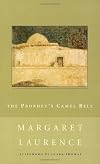
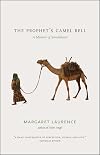
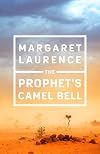
The Prophet's Camel Bell
by Margaret Laurence
On This Page
Description
When Margaret Laurence set out for Somaliland with her engineer husband in 1950, she confronted the difficulty of communication between peoples of vastly different cultures. Yet she came to know the skilled orators, poets and craftsmen of the country, and to share the vision of a people's struggle for survival in a barren land. The Prophet's Camel Bell is part travelogue, part autobiography, part celebration of human nature, and essential reading for anyone who has ever been a stranger in a show more strange land. show lessTags
Recommendations



















Member Reviews
Seventy years ago Margaret Laurence and her engineer husband worked in Somaliland which was then a British protectorate. Most of the population were still nomadic and their wealth was calculated in camels. So it's appropriate that Laurence took the title of this book from a poem by James Elroy Flecker that is quoted in the front of the book.
Jack Laurence was commissioned by the British government to build a series of dugouts (called Ballehs) along the border with Ethiopia. The area was desert but did receive periodic rains that ran off the land through river courses that were dry for the majority of the year. The thought was that if the dugouts could be filled with water it would stay for up to 3 months. The Laurences lived in camp with show more the Somali workers until near the end of the contract when Margaret became pregnant. Margaret busied herself learning the Somali language and collecting Somali poems and stories. The English translation of these which she did was published after she had left the country. Margaret was quite taken with the poetry of the people. She said Somaliland was a nation of poets and bards.
The conditions for the Somali people who lived out on the desert were horrendous. Their lives revolved around finding water for themselves and their livestock. It was very common for people, especially children, to die while on the move and be buried beside the trail. Female genital mutilation was also the norm. Margaret mentions this but didn't seem concerned by it. As devout Muslims, the Somalis had a fatalistic view of life. If Allah determined it was time for them to die then they accepted that; similarly, if Allah felt it wasn't their time then they would live. It was out of their hands.
Despite the harsh conditions, it seems that the Laurences enjoyed their time in Somaliland and found their time there one of the best times of their marriage. I wonder what happened to Jack Laurence's Ballehs. show less
Jack Laurence was commissioned by the British government to build a series of dugouts (called Ballehs) along the border with Ethiopia. The area was desert but did receive periodic rains that ran off the land through river courses that were dry for the majority of the year. The thought was that if the dugouts could be filled with water it would stay for up to 3 months. The Laurences lived in camp with show more the Somali workers until near the end of the contract when Margaret became pregnant. Margaret busied herself learning the Somali language and collecting Somali poems and stories. The English translation of these which she did was published after she had left the country. Margaret was quite taken with the poetry of the people. She said Somaliland was a nation of poets and bards.
The conditions for the Somali people who lived out on the desert were horrendous. Their lives revolved around finding water for themselves and their livestock. It was very common for people, especially children, to die while on the move and be buried beside the trail. Female genital mutilation was also the norm. Margaret mentions this but didn't seem concerned by it. As devout Muslims, the Somalis had a fatalistic view of life. If Allah determined it was time for them to die then they accepted that; similarly, if Allah felt it wasn't their time then they would live. It was out of their hands.
Despite the harsh conditions, it seems that the Laurences enjoyed their time in Somaliland and found their time there one of the best times of their marriage. I wonder what happened to Jack Laurence's Ballehs. show less
I had previously entered this book on LT under the title "New Wind in a Dry Land," under which it was published in the US. Only two other people have it under that name! Either way, this is a sensitively written description of Somalia -- British Somaliland, as it then was -- just after WWII, where the author lived with her husband, an engineer who was constructing reservoirs intended to help the Somalis survive the recurring droughts which regularly decimated the population. When I found this book in a thrift shop, I had never heard of Margaret Laurence, but she went on to be a distinguished Canadian poet and short story writer.
Ratings
Members
- Recently Added By
Lists

New Canadian Library
191 works; 7 members
Author Information

25+ Works 5,775 Members
Canadian author Margaret Laurence was born Jean Margaret Wemyss in Neepawa, Manitoba, Canada, on July 18, 1926. She attended United College (now the University of Winnipeg), receiving her B.A. in 1947. Shortly after graduation, she married Jack Laurence, a hydraulic engineer whose job would often take them overseas; the Laurences lived in England show more for a year, moved to British Somaliland in 1950, and then to Ghana in 1952. It was in Africa that Laurence wrote her first book, A Tree for Poverty, which was a translation of Somali poetry and stories. She also wrote about her experiences in Somaliland in a travel memoir, The Prophet's Camel Bell, and used Africa as a setting for her first fictional work, a novel called This Side Jordan, and a collection of short stories, The Tomorrow Tamers. This Side Jordan received the 1961 Beta Sigma Phi Award for the best first novel by a Canadian. Laurence is best known, however, for her Manawaka books, which are set in Canada. They include The Stone Angel, The Fire Dwellers House, A Bird in the House, A Jest of God, and The Diviners. The latter two books both received the Governor General's Award, in 1967 and 1975, respectively. After living in Africa, England, and several other countries for many years, Laurence returned to Canada in 1974, settling in Lakefield, Ontario, where she remained until her death in 1987. The Energy Probe Research Foundation, an environmental organization for which she served as one of the directors, now sponsors the Margaret Laurence Fund for projects related to the environment and peace, areas in which Laurence was very active during the last decade of her life. (Bowker Author Biography) show less
Some Editions
Awards and Honors
Series
Belongs to Publisher Series
Common Knowledge
- Original title
- The Prophet's Camel Bell
- Alternate titles
- New Wind in a Dry Land
- Original publication date
- 1963
- Important places
- Somalia
- Dedication
- For Jack
who shares these memories - First words
- May they not just possibly be true, the tales of creatures as splendidly strange as minotaurs or mermaids?
- Quotations
- God be thy guide from camp to camp,
God be thy shade from well to well.
God grant beneath the desert stars
Thou hearest the Prophet's camel bell.
JAMES ELROY FLECKER
'The Gates of Damascus' - Last words
- (Click to show. Warning: May contain spoilers.)Nabad gelyo - May you enter peace.
- Disambiguation notice
- Note, despite tags, the Prophet's Camel Bell is non fiction.
Classifications
- Genres
- Biography & Memoir, Nonfiction
- DDC/MDS
- 967.73 — History & geography History of Africa Central Africa: Congo, Angola, Chad Somalia & Djibouti Somalia
- LCC
- DT406 .L3 — History of Europe, Asia, Africa and Oceania Africa History of Africa Eastern Africa Somalia. Somaliland and adjacent territory History
- BISAC
Statistics
- Members
- 112
- Popularity
- 290,039
- Reviews
- 2
- Rating
- (3.58)
- Languages
- English
- Media
- Paper, Audiobook, Ebook
- ISBNs
- 8
- ASINs
- 4