
Dominique Fortier
Author of On the Proper Use of Stars
About the Author
Image credit: Dominique Fortier photographed photographed in Montréal , Québec, Canada at the Salon du livre de Montréal 2018. By Bull-Doser - Own work., Public Domain, https://commons.wikimedia.org/w/index.php?curid=75315419
Works by Dominique Fortier
ISHULLI I LIBRAVE 1 copy
Associated Works
Spoken Here: Travels Among Threatened Languages (2003) — Translator, some editions — 670 copies, 9 reviews
Wisdom in Nonsense: Invaluable Lessons from My Father (2018) — Translator, some editions — 26 copies, 4 reviews
Tagged
Common Knowledge
- Canonical name
- Fortier, Dominique
- Gender
- female
- Nationality
- Canada
- Associated Place (for map)
- Canada
Members
Reviews

In 1845 Sir John Franklin commanded an expedition to find the Northwest Passage. Two ships, Erebus, captained by Francis Crozier, and Terror, led by Franklin, with 129 crew, were stuck in the ice for three years. None returned. The search for them has become legendary.
Although filled with accurate details, maps, and reproduced documents, The Proper Use of Stars is a fictionalized story of the Franklin Expedition. While Franklin's primary purpose was to find the Arctic sea route, the show more explorers also conducted research in magnetism, studied oceanographic and cartographic data and collected botanical specimens. The study of stars was essential in the 19th century. Celestial bodies were navigation guides and therefore linked with the science of magnetism, which was still in its infancy. Some still believed that Earth was itself magnetic, or that the pole star, Polaris, attracted the compass needle. In a romantic moment before setting sail, Francis Crozier pointed out a constellation in the shape of an S to Sophia, Franklin's niece. To Crozier, her magnetism was assuredly powerful.
Much has been written about the doomed Franklin Expedition but Dominique Fortier has precisely captured the excitement, bravado and energy of the expedition, which gradually slides into a sombre realization that circumstances were deteriorating. The story is about adventure, love, heroism, and tenacity - especially that of Lady Franklin. Crozier's thoughts and diary entries are interspersed with the experiences of Lady Franklin. Her enthusiasm and pride gradually declined into anxiety and trepidation that fueled a resolve to have rescue ships dispatched. She used her considerable influence to sway the British Admiralty, including hosting a splendid Christmas dinner with as many powerful guests as possible. Fortier has obligingly included the recipe for the plum pudding - a lengthy achievement in itself.
This innovative story is told so convincingly that one might forget some conversations and events must, by necessity, be fiction. Researchers have puzzled over how strange the later messages became, and why they took such unwieldy, seemingly useless, items when they abandoned the ships. We now know that their water and canned food was heavily laced with lead and they were in an advanced stage of lead poisoning. Fortier wrote that Crozier wondered why an officer wrote a new message "in a garland" around an older message instead of using the other side of the paper that was blank. A reproduction of this document is a bleak reminder of how far lead poisoning had driven them. Fortier's story is more intimate than any other account of the expedition. The reader will remember it forever, often returning to thoughts of what Franklin's men endured.
The Proper Use of Stars is an exceptional work. In very beautiful prose it is interesting, passionate, and combines the grand aura of the golden age of exploration with ordinary human frailties. It is charged with an emotion that inspires empathy without resorting to sentimentality. Highly recommended. show less
Although filled with accurate details, maps, and reproduced documents, The Proper Use of Stars is a fictionalized story of the Franklin Expedition. While Franklin's primary purpose was to find the Arctic sea route, the show more explorers also conducted research in magnetism, studied oceanographic and cartographic data and collected botanical specimens. The study of stars was essential in the 19th century. Celestial bodies were navigation guides and therefore linked with the science of magnetism, which was still in its infancy. Some still believed that Earth was itself magnetic, or that the pole star, Polaris, attracted the compass needle. In a romantic moment before setting sail, Francis Crozier pointed out a constellation in the shape of an S to Sophia, Franklin's niece. To Crozier, her magnetism was assuredly powerful.
Much has been written about the doomed Franklin Expedition but Dominique Fortier has precisely captured the excitement, bravado and energy of the expedition, which gradually slides into a sombre realization that circumstances were deteriorating. The story is about adventure, love, heroism, and tenacity - especially that of Lady Franklin. Crozier's thoughts and diary entries are interspersed with the experiences of Lady Franklin. Her enthusiasm and pride gradually declined into anxiety and trepidation that fueled a resolve to have rescue ships dispatched. She used her considerable influence to sway the British Admiralty, including hosting a splendid Christmas dinner with as many powerful guests as possible. Fortier has obligingly included the recipe for the plum pudding - a lengthy achievement in itself.
This innovative story is told so convincingly that one might forget some conversations and events must, by necessity, be fiction. Researchers have puzzled over how strange the later messages became, and why they took such unwieldy, seemingly useless, items when they abandoned the ships. We now know that their water and canned food was heavily laced with lead and they were in an advanced stage of lead poisoning. Fortier wrote that Crozier wondered why an officer wrote a new message "in a garland" around an older message instead of using the other side of the paper that was blank. A reproduction of this document is a bleak reminder of how far lead poisoning had driven them. Fortier's story is more intimate than any other account of the expedition. The reader will remember it forever, often returning to thoughts of what Franklin's men endured.
The Proper Use of Stars is an exceptional work. In very beautiful prose it is interesting, passionate, and combines the grand aura of the golden age of exploration with ordinary human frailties. It is charged with an emotion that inspires empathy without resorting to sentimentality. Highly recommended. show less
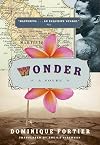
The appeal of reading a book like Dominique Fortier’s Wonder swells and radiates as pages turn.
The story begins (like Dennison Smith’s The Eye of the Day, another of my favourite books in this reading year) with a proverbial bang.
But despite the eruption of Mount Pelée in Martinique dramatically launching the novel, the reading experience is more of a slow burn.
It is less about an immediacy and more about a lasting sensation; even after the story has ended, layers and interconnections show more are revealed.
(Quite literally, for me, as I used the book flaps to mark the novel’s three parts and only then realized that C.S. Richardson’s design quietly identifies them as well, as shown in the photograph below.)
It is the sort of book which elicits a series of soft “oohh” and “hmmm” sounds as the story unfolds, the sort of book which deserves such a simple but powerful title.
It is also the sort of book which will frustrate readers looking for ribbon-adorned tidy endings and predictable arcs and a page-turning plot; it is rich with sensory detail, crenellated with interconnection, and it is as much about marvelling as unearthing.
Often marvels are multi-faceted; what is essential can shift and alter, transmute and transform.
The prose is consistently measured and crafted, but sometimes has a more lyrical and amorphous aspect and other times more ordinary and concrete.
“The wind floats above the woods, coming from all sides at once as if it were the breathing of the thousand trees that sway, stiff, in the gusts, with a hiss like what one hears when pressing an ear against a shell that still holds a memory of the sea.”
The earth in Wonder has a heart, which beats throughout the story’s events and characters, the elements ever-present but unpredictable. This simmers beneath, but there is enough of the specific for readers to take hold of a more sharply defined plot which plays out against (and amongst) this elemental scene.
“’Did you see her with that tureen?’ sniffed the cook. ‘She looked like she was carrying a chamber pot.’”
The cook’s world is turned upside-down; it is carnival time, and the lady of the house carries a tureen as though it were a chamber pot. But existence for the residents of Saint-Pierre, Martinique is about to be more topsy-turvy than any carnival.
And perhaps an eruption is something of a carnival for the earth. If so, by default the sole survivor becomes the ring-master; but in this upside-down world, the sole-survivor becomes the spectacle, though other characters cluster about him, and the story blooms and boils.
Even the vocabulary is lush (I paused to look up words like Béké, ciborium, and kilims) and undoubtedly translator Sheila Fischman contributes to that aspect of the novel’s rich presentation. But the level of sensory detail is consistently impressive throughout the work, even when expressed in very simple language.
“’Those clouds are from Mount Pelée,’ Edward announced. ‘They’ve travelled across half the planet and are now over Europe.’ Then, more pragmatically: ‘It’s sulphur that gives them those colours.’”
This is not ostentation (though the imagery does deserve appreciation); the image of the colourful clouds is not only a remarkable vision however, but it is an overt reminder of the many links between characters, events and themes in Wonder.
For the three narratives are linked, and the common threads are recognizable and visible throughout; the story is not tied as tightly as some readers might like, but there is enough to satisfy readers who like to leave a little room to wonder. (The level of ambiguity works for me; it adds to credibility without resolving and explaining every detail.)
Some of the connections are subtle. Take, for instance, the recurrence of the image of lace in the story, whether coral or leaves, collars or sleeves. Or the number of times that characters are compared in metaphors and similes to other inhabitants of this earth (winged, furred, foliaged). Or the recurring importance of the significance of names/naming.
Triad in Fortier Wonder
Often connections are inexplicable, paradoxical. And even simple alignments provoke questions that can take lifetimes to explore (even then, remaining unanswered).
“On the walls between the platforms where the candles are burning hang dozens of wooden crutches and canes, no doubt left by lame pilgrims cured by the Frère André’s salutary attentions or the restorative action of Saint Joseph, to whom the sanctuary is consecrated. He shivers at the sight of this collection, unable to stop himself from imagining the mountains of eye-glasses and shoes that inevitably evoke Auschwitz.”
Wonder is simultaneously an intricate and sweeping story, a magnificent exploration of the fine line between being saved and being destroyed. (I’m looking forward to seeing Dominique Fortier’s name on this reading year’s prizelists.)
This review originally appeared here on Buried.In.Print. show less
The story begins (like Dennison Smith’s The Eye of the Day, another of my favourite books in this reading year) with a proverbial bang.
But despite the eruption of Mount Pelée in Martinique dramatically launching the novel, the reading experience is more of a slow burn.
It is less about an immediacy and more about a lasting sensation; even after the story has ended, layers and interconnections show more are revealed.
(Quite literally, for me, as I used the book flaps to mark the novel’s three parts and only then realized that C.S. Richardson’s design quietly identifies them as well, as shown in the photograph below.)
It is the sort of book which elicits a series of soft “oohh” and “hmmm” sounds as the story unfolds, the sort of book which deserves such a simple but powerful title.
It is also the sort of book which will frustrate readers looking for ribbon-adorned tidy endings and predictable arcs and a page-turning plot; it is rich with sensory detail, crenellated with interconnection, and it is as much about marvelling as unearthing.
Often marvels are multi-faceted; what is essential can shift and alter, transmute and transform.
The prose is consistently measured and crafted, but sometimes has a more lyrical and amorphous aspect and other times more ordinary and concrete.
“The wind floats above the woods, coming from all sides at once as if it were the breathing of the thousand trees that sway, stiff, in the gusts, with a hiss like what one hears when pressing an ear against a shell that still holds a memory of the sea.”
The earth in Wonder has a heart, which beats throughout the story’s events and characters, the elements ever-present but unpredictable. This simmers beneath, but there is enough of the specific for readers to take hold of a more sharply defined plot which plays out against (and amongst) this elemental scene.
“’Did you see her with that tureen?’ sniffed the cook. ‘She looked like she was carrying a chamber pot.’”
The cook’s world is turned upside-down; it is carnival time, and the lady of the house carries a tureen as though it were a chamber pot. But existence for the residents of Saint-Pierre, Martinique is about to be more topsy-turvy than any carnival.
And perhaps an eruption is something of a carnival for the earth. If so, by default the sole survivor becomes the ring-master; but in this upside-down world, the sole-survivor becomes the spectacle, though other characters cluster about him, and the story blooms and boils.
Even the vocabulary is lush (I paused to look up words like Béké, ciborium, and kilims) and undoubtedly translator Sheila Fischman contributes to that aspect of the novel’s rich presentation. But the level of sensory detail is consistently impressive throughout the work, even when expressed in very simple language.
“’Those clouds are from Mount Pelée,’ Edward announced. ‘They’ve travelled across half the planet and are now over Europe.’ Then, more pragmatically: ‘It’s sulphur that gives them those colours.’”
This is not ostentation (though the imagery does deserve appreciation); the image of the colourful clouds is not only a remarkable vision however, but it is an overt reminder of the many links between characters, events and themes in Wonder.
For the three narratives are linked, and the common threads are recognizable and visible throughout; the story is not tied as tightly as some readers might like, but there is enough to satisfy readers who like to leave a little room to wonder. (The level of ambiguity works for me; it adds to credibility without resolving and explaining every detail.)
Some of the connections are subtle. Take, for instance, the recurrence of the image of lace in the story, whether coral or leaves, collars or sleeves. Or the number of times that characters are compared in metaphors and similes to other inhabitants of this earth (winged, furred, foliaged). Or the recurring importance of the significance of names/naming.
Triad in Fortier Wonder
Often connections are inexplicable, paradoxical. And even simple alignments provoke questions that can take lifetimes to explore (even then, remaining unanswered).
“On the walls between the platforms where the candles are burning hang dozens of wooden crutches and canes, no doubt left by lame pilgrims cured by the Frère André’s salutary attentions or the restorative action of Saint Joseph, to whom the sanctuary is consecrated. He shivers at the sight of this collection, unable to stop himself from imagining the mountains of eye-glasses and shoes that inevitably evoke Auschwitz.”
Wonder is simultaneously an intricate and sweeping story, a magnificent exploration of the fine line between being saved and being destroyed. (I’m looking forward to seeing Dominique Fortier’s name on this reading year’s prizelists.)
This review originally appeared here on Buried.In.Print. show less
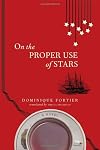
Fortier does not just offer up some fictionalized recounting of the Franklin expedition, but elevates the history higher to art. On The Proper Use of Stars is very well researched, but Fortier keeps history tightly reigned in to serve its literary ambitions. This is more historical fiction than literary history, the history serves the prose and not the other way around. And the prose and story so graceful and absorbing that it was rare that I could ever be fussed or picky about the few show more historical anomalies (I don’t even want to call them errors and risk diminishing the novel; besides, only someone immersed in Franklin lore would notice). Fortier won the Governor General's Medal for French Literature in 2008 and was elegantly translated into English by Sheila Fischman. show less
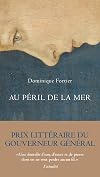
This is a split timeline spanning five centuries. In the past, a portrait painter seeks refuge at Mont Saint Michel, escaping from his grief after the death of his lover. In the present, a novelist is adjusting to the demands of parenthood and figuring out how to balance the responsibility she now has with the drive to write. It is a contemplative, meandering sort of novel, and it’s not always clear when the timeline has shifted—or it wasn’t at first, which was disorienting. So the show more combination of not much happening, plus changes in when it was happening, plus the fact that apparently I find it hard to get into books about monks combined to make this a “meh” read for me. show less
Lists
Awards


You May Also Like


Associated Authors
Statistics
- Works
- 15
- Also by
- 8
- Members
- 298
- Popularity
- #78,714
- Rating
- 3.8
- Reviews
- 15
- ISBNs
- 58
- Languages
- 3
- Favorited
- 1
