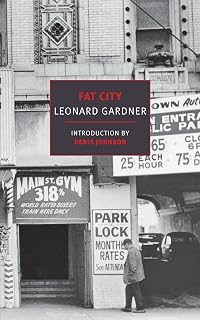
Fat City
by Leonard Gardner
On This Page
Description
Fat City is a vivid novel of defiance and struggle, of the potent promise of the good life and the desperation and drink that waylay those whom it eludes. Stockton, California, is the novel's setting: the Lido Gym, the Hotel Coma, Main Street's lunchrooms and dark bars offer a temporary respite to the men and women whose backbreaking work in the fields barely allows them to make a living. When two men meet in the gym-the ex-boxer Billy Tully and the novice Ernie Munger-their brief sparring show more session sets into motion their hidden fates, initiating young Munger into the "company of men" and luring Tully back into training. Fat City tells of their anxieties and hopes, their loves and losses, and the stubborn determination of their manager, Ruben Luna, who knows that even the most promising kid is likely to fall prey to some weakness. Then again, "There was always someone who wanted to fight.". show lessTags
Recommendations


















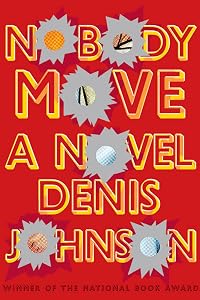

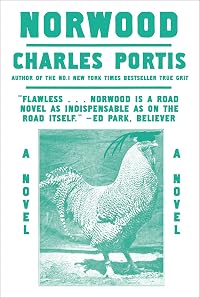



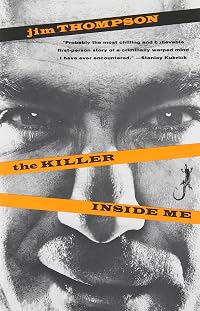


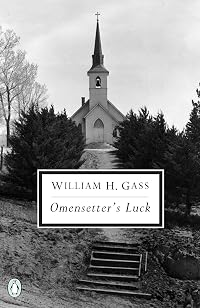






Member Recommendations

Member Reviews
Some of the most stunning prose I have ever read. Some of it is truly stunning, like being punched in the head repeatedly, and hard. This tale of the boxer's life is really a story about masculinity and race, and about the desperate search for ways to feel special when simply being White and male are no longer enough. The threats of pain and harm and even death are insufficient to keep these men on the margins from the one thing that makes them feel powerful for a moment. There is a forward by Denis Johnson where he says basically that everything he has written is him trying to write something as good as this. I can see the link to Johnson's work quite clearly, though Johnson's voice is still his own. I won't read a better book this show more year. The perfect iteration of what this set out to be.
ETA a few quotes
After his first sexual experience: “Still he was uncertain. He wondered if everything had gone as it should. Was that all there was to it? Perhaps it had been celebrated out of proportion because there was nothing else to live for.”
About that same woman whom he ends up with: “Profoundly moved, he kissed the lax waiting mouth with exquisite unhappiness.”
From a sad alcoholic Tully hooks up with talking about her history with men of different races: “The white race is in its decline. We started downhill in 1492 when Columbus discovered syphilis."
The best quotes for me are those about Stockton and about being in the ring. I will leave everyone to find those on their own. show less
ETA a few quotes
After his first sexual experience: “Still he was uncertain. He wondered if everything had gone as it should. Was that all there was to it? Perhaps it had been celebrated out of proportion because there was nothing else to live for.”
About that same woman whom he ends up with: “Profoundly moved, he kissed the lax waiting mouth with exquisite unhappiness.”
From a sad alcoholic Tully hooks up with talking about her history with men of different races: “The white race is in its decline. We started downhill in 1492 when Columbus discovered syphilis."
The best quotes for me are those about Stockton and about being in the ring. I will leave everyone to find those on their own. show less
Billy Tully, 29, divorced, "afraid of a crisis beyond his capacity" which is basically his life, feels washed up as a boxer. He works as a fry cook until fired and has to resort to field labor. Billy lives in flophouse hotels, where "his neighbors all seemed to have lung trouble."
Ernie Munger is a younger boxer with potential, newly married with a child on the way. Both men are trained and managed by Ruben Luna. Early on you get the sense that none of the three are ever going to have success, in boxing or life. But it doesn't bring the story down. Leonard Gardner elevates it with his writing. He's one of those select writers that you read very carefully because every word counts. Tully at one point dresses in "a red sport shirt and show more vivid blue slacks the color of burning gas." Gardner even makes onion harvesting poetic.
"Occasionally there was a gust of wind and he was engulfed by sudden rustlings and flickering shadows as a high spiral of onion skins fluttered about him like a swarm of butterflies."
Apparently an influential work, and rightfully so. show less
Ernie Munger is a younger boxer with potential, newly married with a child on the way. Both men are trained and managed by Ruben Luna. Early on you get the sense that none of the three are ever going to have success, in boxing or life. But it doesn't bring the story down. Leonard Gardner elevates it with his writing. He's one of those select writers that you read very carefully because every word counts. Tully at one point dresses in "a red sport shirt and show more vivid blue slacks the color of burning gas." Gardner even makes onion harvesting poetic.
"Occasionally there was a gust of wind and he was engulfed by sudden rustlings and flickering shadows as a high spiral of onion skins fluttered about him like a swarm of butterflies."
Apparently an influential work, and rightfully so. show less
Rock meets bottom in this visceral tale of boxers, young and old, making it or failing to at the edge of possibility. Billy Tully is washed up at 29. Divorced and reduced to day crop work in the California heat, he dreams of one last chance but knows in his heart that one chance was always more than he ever had. Ernie Munger is 18, still a kid without a professional bout, but Billy thinks he has potential and introduces him to his old manager. They travel different paths, both looking for some kind of meaning in the ring, or out of it, both filled with hope but drowning in despair. And both finding, in the end, what they think of as their due.
It is easy to see why, in an introduction by Denis Johnson, this work is held out as a model of show more gritty realism. Johnson claims that everything he’s ever written has been an attempt to match the effortless realism that Gardner attains here. High praise indeed. I might not see the truth that Johnson does at the sharp end of a 16-oz glove. But I recognize that Gardner stands in line with Steinbeck as a master of descriptions of work, both in the fields of California and in the ring. These men are workers in a heavy trade no worse than others and no better. And so inevitably the gritty realism melds seamlessly into elegy and romance.
Well worth reading. show less
It is easy to see why, in an introduction by Denis Johnson, this work is held out as a model of show more gritty realism. Johnson claims that everything he’s ever written has been an attempt to match the effortless realism that Gardner attains here. High praise indeed. I might not see the truth that Johnson does at the sharp end of a 16-oz glove. But I recognize that Gardner stands in line with Steinbeck as a master of descriptions of work, both in the fields of California and in the ring. These men are workers in a heavy trade no worse than others and no better. And so inevitably the gritty realism melds seamlessly into elegy and romance.
Well worth reading. show less
A beautiful book. Gardner uses the noir aesthetic to great effect, but goes much deeper into the individuality and motivations of each character than the typical book in this genre does.
Well written and pretty depressing, this story of two men, one a washed up boxer with woman problems and the second, a young boxer at the start of his career, is filled with little details and passages that are very well done. It's no wonder Denis Johnson admired Gardner (and wrote the introduction here, which to Johnson's immense credit, contains no spoilers). The book has the great virtue of being short. We're in another world, one we don't want to live in, but our visit is brief enough to save us from despair but lengthly enough to feel the pain. There is one argument scene between the older boxer and a woman that is just too painful to endure more than once. The audiobook is very well read, and I recommend it.
Fat City? Fat chance, in Leonard Gardner’s grim, sometimes funny, novel of dreams chased and dreams lost in the streets, fighter’s gyms, fields, bars, and residential hotels of Stockton, California.
The two main characters, boxers both, stumble from one burden to one hope and back to others again. It is a novel where what’s at hand—fist fights, drinks raised, short hoes wielded, lovers groped—doesn’t put a tight grip on the reality that’s desired, and the desire itself isn’t sure to persist into the next situation that always comes round, whether in the ring or the compass of one’s days. Resolution and ambition, when they arise, are subject to chance alterations in circumstances not known to the individual, with show more influences alien to their realization.
That’s not to say the women and men of the novel lack all insight or responsibility. But when a self-audit discloses an abhorrence of one’s own “unfathomable stupidity,” the possibilities narrow. Also, one hopes, the delusions.
Midway through the story, city workers cut down the shade trees of a park so that the derelict won’t find in it comfort for their rest. Such actions intensify the sense of impasse, the sense of standing outside a building where the work of life could become productive, where one might enter if only the entryway were not so perpetually guarded. It is in the working through of these situations and days that the novel resides. In telling it, Gardner conveys a reality that hits hard. show less
The two main characters, boxers both, stumble from one burden to one hope and back to others again. It is a novel where what’s at hand—fist fights, drinks raised, short hoes wielded, lovers groped—doesn’t put a tight grip on the reality that’s desired, and the desire itself isn’t sure to persist into the next situation that always comes round, whether in the ring or the compass of one’s days. Resolution and ambition, when they arise, are subject to chance alterations in circumstances not known to the individual, with show more influences alien to their realization.
That’s not to say the women and men of the novel lack all insight or responsibility. But when a self-audit discloses an abhorrence of one’s own “unfathomable stupidity,” the possibilities narrow. Also, one hopes, the delusions.
Midway through the story, city workers cut down the shade trees of a park so that the derelict won’t find in it comfort for their rest. Such actions intensify the sense of impasse, the sense of standing outside a building where the work of life could become productive, where one might enter if only the entryway were not so perpetually guarded. It is in the working through of these situations and days that the novel resides. In telling it, Gardner conveys a reality that hits hard. show less
Fat City is an impressive, well-wrought exploration of the struggles of two boxers in Stockton. I found Gardner's understanding of the psychology of masculinity, particularly around rites of passage, to be insightful and provocative. I'd be curious how the circumstances of poverty and mobility of living on the fringes of society would look like in today's milieu and whether or not there'd be such opportunities to squander as Billy Tully does in the story.
Members
- Recently Added By
Published Reviews
“This is a California where ‘catastrophes seemed to whisper just beyond hearing.’ ”
added by Lemeritus
Lists

Lithub: 50 Great Classic Novels Under 200 pages
50 works; 10 members

National Book Award Finalists - Fiction
377 works; 12 members

Sports Illustrated's The Top 100 Sports Books of All Time
51 works; 7 members

1960s
281 works; 16 members

Books about sports
65 works; 3 members

Books Read in 2013
1,630 works; 51 members

Noirvember: Potential Reads
23 works; 1 member
Talk Discussions
Past Discussions
144. Fat City by Leonard Gardner in Backlisted Book Club (March 2022)
Author Information
4 Works 640 Members
Some Editions
Awards and Honors
Series
Belongs to Publisher Series
Work Relationships
Has the adaptation
Common Knowledge
- Canonical title
- Fat City
- Original publication date
- 1969
- Important places
- California, USA
- Related movies
- Fat City (1972 | IMDb)
- First words
- Exactly which year of the 1960s the book came out, I can't remember, but I remember well which year of my lifetime it was - I was discovering that it wasn't a hoke anymore, I was actually going to have to become a writer, I w... (show all)as too emotionally crippled for real work, there wasn't anything else I could do - I was eighteen or nineteen. -Introduction, Denis Johnson
He lived in the Hotel Coma - named perhaps for some founder of the town, some California explorer or pioneer, or for some long-deceased Italian immigrant who founded only the hotel itself. Whoever it commemorated, the hotel w... (show all)as a poor monument, and Billy Tully had no intention of staying on. His clear laundry he continued to put back in his suitcase on the dresser, ready to be hurried away to better lodgings. He had lived in five hotels in the year and a half since his wife had left him. From his window he looked out on the stunted skyline of Stockton - a city of eighty thousand surrounded by the sloughs, rivers and fertile fields of the San Joaquin river delta - a view of business buildings, church spires, chimneys, water towers, gas tanks and the low roofs of residences rising among the leafless trees between absolutely flat streets. Along the sidewalk under his window, men passed between bars and liquor stores, cafes, secondhand stores and walk-up hotels. Pigeons the color of the street pecked in the futters, flew between buildings, marched along ledges and cooed on Tully's sill. His room was high and harrow. Smudges from oily heads darkened the wallpaper between the metal rods of his bed. His shade was tattered, his light bulb dim, and his neighbors all seemed to have lung trouble. -Chapter 1 - Blurbers
- Oates, Joyce Carol; Huston, John; Didion, Joan; Dyer, Geoff
- Original language
- English
- Canonical DDC/MDS
- 813.54
- Canonical LCC
- PS3557.A713 F3
Classifications
Statistics
- Members
- 632
- Popularity
- 46,263
- Reviews
- 23
- Rating
- (4.12)
- Languages
- 8 — Danish, Dutch, English, French, German, Italian, Polish, Spanish
- Media
- Paper, Audiobook, Ebook
- ISBNs
- 25
- ASINs
- 10