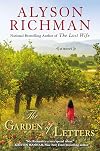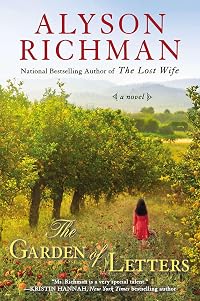
The Garden of Letters
by Alyson Richman
On This Page
Description
THE NEW NOVEL FROM THE AUTHOR OF THE LOST WIFESet against the rich backdrop of World War II Italy, Garden of Letters captures the hope, suspense, and romance of an uncertain era, in an epic intertwining story of first love, great tragedy, and spectacular bravery.
Portofino, Italy, 1943. A young woman steps off a boat in a scenic coastal village. Although she knows how to disappear in a crowd, Elodie is too terrified to slip by the German officers while carrying her poorly forged show more identity papers. She is frozen until a man she’s never met before claims to know her. In desperate need of shelter, Elodie follows him back to his home on the cliffs of Portofino.
Only months before, Elodie Bertolotti was a cello prodigy in Verona, unconcerned with world events. But when Mussolini’s Fascist regime strikes her family, Elodie is drawn into the burgeoning resistance movement by Luca, a young and impassioned bookseller. As the occupation looms, she discovers that her unique musical talents, and her courage, have the power to save lives.
In Portofino, young doctor Angelo Rosselli gives the frightened and exhausted girl sanctuary. He is a man with painful secrets of his own, haunted by guilt and remorse. But Elodie’s arrival has the power to awaken a sense of hope and joy that Angelo thought was lost to him forever.
. show less
Tags
Recommendations



Member Reviews
This is a beautiful story, slowly revealed with each page turn - and richly enhanced by Allison Richman's exceptional use with language.
During a period of just six months, in 1943 in Italy, you have the opportunity to observe a handful of characters whose small acts of bravery demonstrate the power love has to outweigh the terrors of war. More than that, Richman shows how we humans are able to nurture love, even when the threat of death is always present.
The drama begins on page one with a terrified girl, holding forged identification papers, facing a Nazi officer. Suddenly, a complete stranger appears out of the crowd, claims the girl as a cousin, and thereby rescues her from further scrutiny. This is how we first meet Elodie, a show more brilliant cellist, and Alfredo, a young doctor whose deep-rooted compassion leads him to treat patients from both sides of the conflict. Both of these two main characters have powerful back stories that brought them to this chance encounter. And it's a real treat to move back and forth in time, slowly uncovering their stories.
As each story unfolds, you also get to meet an interesting collection of secondary characters who together illustrate different aspects of war and its consequences. Like a music teacher who suffers brutal payback after a minor anti-Nazi infraction, a bookseller secretly using a room in his store to support the Resistance, and a young woman fighter determined to treat injuries, even with no medical training.
As I became deeply emotionally involved with Richman's characters, and grew to care for them, the book became increasingly suspenseful. And I wasn't able to put it down until I found out what happened to each one. This is a great read! And leaves you feeling good about people. Be sure NOT to skip the author's afterword, where she reveals which of the characters are based on actual historical figures. show less
During a period of just six months, in 1943 in Italy, you have the opportunity to observe a handful of characters whose small acts of bravery demonstrate the power love has to outweigh the terrors of war. More than that, Richman shows how we humans are able to nurture love, even when the threat of death is always present.
The drama begins on page one with a terrified girl, holding forged identification papers, facing a Nazi officer. Suddenly, a complete stranger appears out of the crowd, claims the girl as a cousin, and thereby rescues her from further scrutiny. This is how we first meet Elodie, a show more brilliant cellist, and Alfredo, a young doctor whose deep-rooted compassion leads him to treat patients from both sides of the conflict. Both of these two main characters have powerful back stories that brought them to this chance encounter. And it's a real treat to move back and forth in time, slowly uncovering their stories.
As each story unfolds, you also get to meet an interesting collection of secondary characters who together illustrate different aspects of war and its consequences. Like a music teacher who suffers brutal payback after a minor anti-Nazi infraction, a bookseller secretly using a room in his store to support the Resistance, and a young woman fighter determined to treat injuries, even with no medical training.
As I became deeply emotionally involved with Richman's characters, and grew to care for them, the book became increasingly suspenseful. And I wasn't able to put it down until I found out what happened to each one. This is a great read! And leaves you feeling good about people. Be sure NOT to skip the author's afterword, where she reveals which of the characters are based on actual historical figures. show less
This is a beautiful story, slowly revealed with each page turn - and richly enhanced by Allison Richman's exceptional use with language.
During a period of just six months, in 1943 in Italy, you have the opportunity to observe a handful of characters whose small acts of bravery demonstrate the power love has to outweigh the terrors of war. More than that, Richman shows how we humans are able to nurture love, even when the threat of death is always present.
The drama begins on page one with a terrified girl, holding forged identification papers, facing a Nazi officer. Suddenly, a complete stranger appears out of the crowd, claims the girl as a cousin, and thereby rescues her from further scrutiny. This is how we first meet Elodie, a show more brilliant cellist, and Alfredo, a young doctor whose deep-rooted compassion leads him to treat patients from both sides of the conflict. Both of these two main characters have powerful back stories that brought them to this chance encounter. And it's a real treat to move back and forth in time, slowly uncovering their stories.
As each story unfolds, you also get to meet an interesting collection of secondary characters who together illustrate different aspects of war and its consequences. Like a music teacher who suffers brutal payback after a minor anti-Nazi infraction, a bookseller secretly using a room in his store to support the Resistance, and a young woman fighter determined to treat injuries, even with no medical training.
As I became deeply emotionally involved with Richman's characters, and grew to care for them, the book became increasingly suspenseful. And I wasn't able to put it down until I found out what happened to each one. This is a great read! And leaves you feeling good about people. Be sure NOT to skip the author's afterword, where she reveals which of the characters are based on actual historical figures. show less
During a period of just six months, in 1943 in Italy, you have the opportunity to observe a handful of characters whose small acts of bravery demonstrate the power love has to outweigh the terrors of war. More than that, Richman shows how we humans are able to nurture love, even when the threat of death is always present.
The drama begins on page one with a terrified girl, holding forged identification papers, facing a Nazi officer. Suddenly, a complete stranger appears out of the crowd, claims the girl as a cousin, and thereby rescues her from further scrutiny. This is how we first meet Elodie, a show more brilliant cellist, and Alfredo, a young doctor whose deep-rooted compassion leads him to treat patients from both sides of the conflict. Both of these two main characters have powerful back stories that brought them to this chance encounter. And it's a real treat to move back and forth in time, slowly uncovering their stories.
As each story unfolds, you also get to meet an interesting collection of secondary characters who together illustrate different aspects of war and its consequences. Like a music teacher who suffers brutal payback after a minor anti-Nazi infraction, a bookseller secretly using a room in his store to support the Resistance, and a young woman fighter determined to treat injuries, even with no medical training.
As I became deeply emotionally involved with Richman's characters, and grew to care for them, the book became increasingly suspenseful. And I wasn't able to put it down until I found out what happened to each one. This is a great read! And leaves you feeling good about people. Be sure NOT to skip the author's afterword, where she reveals which of the characters are based on actual historical figures. show less
I have read many books about the Resistance in France during WWII but this is the first book that I have read about the Resistance movement in Italy during the war. The main character Elodie is an innocent young music prodigy when the war starts in Italy. As she sees the changes going on in her world and in her home, she quickly grows up and becomes part of the resistance movement. The story is beautifully told both through the author's words and through the music that Elodie plays. Its a story that is both ugly and beautiful, sad yet hopeful for the future. I think its a fantastic book!
First of all, I received a free copy of Garden of Letters through goodreads. Thank you!
Elodie, protagonist of Garden of Letters, is put in one of the most fascinating situations I've ever seen in a book. In WWII-era Italy, she works with the Italian Resistance to deliver coded messages via cello music. The logistics of the code itself, combined with the threat of being discovered, made for an intense, beautifully-described book.
Here's the thing. This was also somehow the book's downfall for me, too.
See, the whole coded cello music aspect is amazing. I wanted more of that -- more practising, more details, more performances, more stress. How could I not? It's so engaging.
But this meant that there were some aspects of the story -- like the show more romantic aspects, for example -- that I just didn't care about as much as I should have. I was always impatient to get back to Elodie and her cello.
But, overall, beautifully written, fascinating concept. This book is going to stick with me, I can tell already. show less
Elodie, protagonist of Garden of Letters, is put in one of the most fascinating situations I've ever seen in a book. In WWII-era Italy, she works with the Italian Resistance to deliver coded messages via cello music. The logistics of the code itself, combined with the threat of being discovered, made for an intense, beautifully-described book.
Here's the thing. This was also somehow the book's downfall for me, too.
See, the whole coded cello music aspect is amazing. I wanted more of that -- more practising, more details, more performances, more stress. How could I not? It's so engaging.
But this meant that there were some aspects of the story -- like the show more romantic aspects, for example -- that I just didn't care about as much as I should have. I was always impatient to get back to Elodie and her cello.
But, overall, beautifully written, fascinating concept. This book is going to stick with me, I can tell already. show less
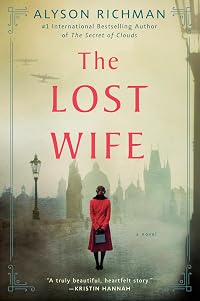
An intriguing tale of resistance against the invading Germans and one young lady’s growth in her music and as a woman, this book cements my love for this author. I adored her previous novel, The Lost Wife, with its richness and historical details. So I went into this book with high expectations; they were all met.
The author’s writing style needs a special mention. It’s rich with phrase choice and symbolism; the whole garden of letters and imagery on the walls made tears come to my eyes from how beautiful it sounded emotionally. Her writing is almost lyrical in its presentation; she makes that work where others would be too wordy or esoteric.
I loved this exploration of WWII in Italy and that country’s role in the struggle. Seeing show more the Resistance start to build only to be cut down so soon was heart-wrenching. I also found myself intrigued by the different ways that they passed messages around; the idea of hiding a message in a musical score performance boggles the mind. These people put so much passion into fighting against their invaders that the reader can’t help but be sucked into the story, heart and soul.
I adored Elodie. She’s such a rich character to explore the story through. A musical prodigy that showed so much promise, it surprises to see where she ends up in the end after so much struggle and strife. She grows so much and learns what truly matters in life, suffering tragedy after tragedy to find true happiness after it all.
Another winner from Richman. She meets the grades again on historical details, great writing style, and characters that engage you. I found myself engrossed by this look at WWII in Italy and Elodie’s growth as a woman. Highly, highly recommended for lovers of WWII historical fiction. show less
The author’s writing style needs a special mention. It’s rich with phrase choice and symbolism; the whole garden of letters and imagery on the walls made tears come to my eyes from how beautiful it sounded emotionally. Her writing is almost lyrical in its presentation; she makes that work where others would be too wordy or esoteric.
I loved this exploration of WWII in Italy and that country’s role in the struggle. Seeing show more the Resistance start to build only to be cut down so soon was heart-wrenching. I also found myself intrigued by the different ways that they passed messages around; the idea of hiding a message in a musical score performance boggles the mind. These people put so much passion into fighting against their invaders that the reader can’t help but be sucked into the story, heart and soul.
I adored Elodie. She’s such a rich character to explore the story through. A musical prodigy that showed so much promise, it surprises to see where she ends up in the end after so much struggle and strife. She grows so much and learns what truly matters in life, suffering tragedy after tragedy to find true happiness after it all.
Another winner from Richman. She meets the grades again on historical details, great writing style, and characters that engage you. I found myself engrossed by this look at WWII in Italy and Elodie’s growth as a woman. Highly, highly recommended for lovers of WWII historical fiction. show less
The author’s previous book, The Lost Wife (a must-read!), took us into the World War II Nazi concentrations camps in Czechoslovakia and Germany with skill, compassion, and exceptional faithfulness to the historical record. Here the author returns to that time period, but in this book she shows us what it was like for the people in Italy.
This story is told from two points of view, that of Elodie Bertolotti, a young cello prodigy aged 20 in Verona, and Angelo Roselli, a 38-year-old doctor in Portofino. As the story begins in October, 1943, Elodie has just arrived in Portofino, where Angelo rescues Elodie from possible apprehension by the Germans checking papers at the dock.
The narrative then goes back in time - eight years prior for show more Angelo and six months earlier for Elodie, to show us how the two got to where they were in the beginning of the book.
Angelo had been part of the military deployment to Ethiopia. Shortly before, he had married the beautiful girl Dahlia whom he met in his final year in medical school.
Elodie and her best friend Lena joined the partisans in Verona after Elodie’s father had been brutalized by the Blackshirts. Elodie acts as a messenger, using her facility with memory as well as music to aid the resistance.
When Elodie and Angelo meet in Portofino, they both have lived through what seemed like a lifetime of fear, pain, shock, and sorrow. The light that was so bright in their lives has surrendered to darkness. They come to realize that they have each been given the key to figure out how to honor the love of those they lost, and still carry on with their lives.
Discussion: There are so many wonderful parts to this story that I don’t want to spoil, so you will have to discover them on your own. But I would be remiss not to point out the many lovely ways in which Elodie’s immersion into music informs her perspective of the world. Books also play a central role in this story. In particular, one of my favorite books in the whole world is the one that teaches Elodie and Angelo something very important about the nature of love.
Evaluation: This author is so good. She combines historical integrity with the ability to tell a wonderful story. In an afterword, she explains the true stories that became the bases for this novel, and I encourage readers to explore this touching coda to the book. show less
This story is told from two points of view, that of Elodie Bertolotti, a young cello prodigy aged 20 in Verona, and Angelo Roselli, a 38-year-old doctor in Portofino. As the story begins in October, 1943, Elodie has just arrived in Portofino, where Angelo rescues Elodie from possible apprehension by the Germans checking papers at the dock.
The narrative then goes back in time - eight years prior for show more Angelo and six months earlier for Elodie, to show us how the two got to where they were in the beginning of the book.
Angelo had been part of the military deployment to Ethiopia. Shortly before, he had married the beautiful girl Dahlia whom he met in his final year in medical school.
Elodie and her best friend Lena joined the partisans in Verona after Elodie’s father had been brutalized by the Blackshirts. Elodie acts as a messenger, using her facility with memory as well as music to aid the resistance.
When Elodie and Angelo meet in Portofino, they both have lived through what seemed like a lifetime of fear, pain, shock, and sorrow. The light that was so bright in their lives has surrendered to darkness. They come to realize that they have each been given the key to figure out how to honor the love of those they lost, and still carry on with their lives.
Discussion: There are so many wonderful parts to this story that I don’t want to spoil, so you will have to discover them on your own. But I would be remiss not to point out the many lovely ways in which Elodie’s immersion into music informs her perspective of the world. Books also play a central role in this story. In particular, one of my favorite books in the whole world is the one that teaches Elodie and Angelo something very important about the nature of love.
Evaluation: This author is so good. She combines historical integrity with the ability to tell a wonderful story. In an afterword, she explains the true stories that became the bases for this novel, and I encourage readers to explore this touching coda to the book. show less
The Garden of Letters is one of the most well written, character driven novels I've read in a long time. The setting flows from Portofino to Verona, Italy and back again during the lead up to the Nazi invasion of Italy.
Elodie was a child prodigy on the cello before the deadly beating of her Father by the local Blackshirts. From that moment she is drawn into the early Italian resistance movement. She carries messages in her music which remain undetected.
Angelo is a widowed doctor in Portofino who recognizes the fear in Elodie, now called Anna, as she lands at the town dock under Nazi scrutiny. Every few months he chooses someone to save and shelter from the occupation troops.
Elodie was a child prodigy on the cello before the deadly beating of her Father by the local Blackshirts. From that moment she is drawn into the early Italian resistance movement. She carries messages in her music which remain undetected.
Angelo is a widowed doctor in Portofino who recognizes the fear in Elodie, now called Anna, as she lands at the town dock under Nazi scrutiny. Every few months he chooses someone to save and shelter from the occupation troops.
Members
- Recently Added By
Lists

Mooie titels
80 works; 1 member
Author Information

26+ Works 2,619 Members
Alysin Richman was born on May 19, 1972. She graduated from Wellesley College in 1994 and received a Thomas J. Watson Fellowship. She is best known for her novel The Lost Wife, which is a story about a husband and wife who are separated in a concentration camp during World War II and met up years later at their grandchildren's wedding. Her other show more title's include The Mask Carver's Son, The Ryhthm of Memory, The Last Van Gogh, and The Garden of Letters. (Bowker Author Biography) show less
Common Knowledge
- People/Characters
- Angelo Rosselli; Luca Bianchi; Elodie Bertolotti; Lena Galvetto
- Important places
- Portofino, Liguria, Italy; Verona, Veneto, Italy; Venice, Veneto, Italy
- Important events
- World War II (1939 | 1945)
Classifications
- Genres
- Fiction and Literature, General Fiction, Historical Fiction, Romance
- DDC/MDS
- 813.54 — Literature & rhetoric American literature in English American fiction in English 1900-1999 1945-1999
- LCC
- PS3568 .I3447 .G37 — Language and Literature American literature American literature Individual authors 1961-
- BISAC
Statistics
- Members
- 229
- Popularity
- 142,393
- Reviews
- 23
- Rating
- (3.95)
- Languages
- 5 — Dutch, English, Italian, Norwegian (Bokmål), Spanish
- Media
- Paper, Audiobook, Ebook
- ISBNs
- 13
- ASINs
- 4