On This Page
Description
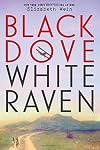
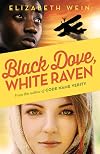
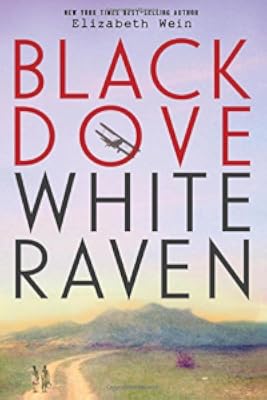
Having moved to Ethiopia to avoid the prejudices of 1930s America, Emilia Menotti, her black adoptive brother Teo, and their mother Rhoda, a stunt pilot, are devoted to their new country even after war with Italy looms, drawing the teens into the conflict.Tags
Recommendations


Member Reviews
Emilia and Teo live as though they were brother and sister. Teo’s mother Delia died when a bird hits the plane is flying, but Emilia’s mother, Rhoda, the wing-walker survived. Devastated by the death of her best friend Rhoda returns to her parents farm and retreats to her bed while she mourns. Eventually, though, she begins to live again and decides that the family should go to Ethiopia. That is where Teo’s father was from. He died in WWI but Delia always wanted to go there, a place where Teo’s skin wouldn’t make him stand out. A country that was never colonised by Europeans.
And so Em, Teo, and their Momma head for the continent of Africa. But this is the 1930s, and war is coming. Mussolini is moving his forces in Africa and show more he has his eye on Ethiopia.
The story is told through a series of essays and flight logs that Em and Teo keep as they grow up. It details their life with Delia and Rhoda, and after, in America and in Ethiopia. But it begins almost at the end, with an introduction by Em, address to the Haile Selassie I, Emperor of Ethiopia, so you have some idea of where the story is going.
And as it is told by both our narrators it has alternating first person narration. If this is something you don’t like then you are missing out a great book.
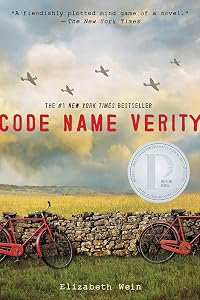
I first read Wein when I read her Code Name Verity which is a book that you should read.((actually I should reread it because it was just plain great)) . This book isn’t as emotionally hard hitting, it is a much more complex book in some ways. It covers racism and prejudice as well as war and love and death and tragedy. And, as expected from Wein, characters that are just so real and alive you wonder how she managed to create them at all.
This is very different in some ways from Code Name Verity and Rose Under Fire but it really does highlight the fact that I would read just about anything that Wein writes. I do still have to get back to her Arthurian/Ethiopian series, but I enjoyed the two books in that series that I’ve read so far. And I love that she has set so many of her stories there. It is a place that I am only familiar with in terms of marathon runners and famines, so it is great to see it depicted in such a positive manner. Not always positive of course, every where has its problems and flaws, but in a realistic manner, it is great to see books set in African countries, with actual African characters. I know, both Rhoda and Em are white Americans, and Em, in my mind, is the more dominant of the two narrators, but Teo certainly has a voice all of his own, and his own perspective on things. show less
And so Em, Teo, and their Momma head for the continent of Africa. But this is the 1930s, and war is coming. Mussolini is moving his forces in Africa and show more he has his eye on Ethiopia.
The story is told through a series of essays and flight logs that Em and Teo keep as they grow up. It details their life with Delia and Rhoda, and after, in America and in Ethiopia. But it begins almost at the end, with an introduction by Em, address to the Haile Selassie I, Emperor of Ethiopia, so you have some idea of where the story is going.
And as it is told by both our narrators it has alternating first person narration. If this is something you don’t like then you are missing out a great book.
I first read Wein when I read her Code Name Verity which is a book that you should read.((actually I should reread it because it was just plain great)) . This book isn’t as emotionally hard hitting, it is a much more complex book in some ways. It covers racism and prejudice as well as war and love and death and tragedy. And, as expected from Wein, characters that are just so real and alive you wonder how she managed to create them at all.
This is very different in some ways from Code Name Verity and Rose Under Fire but it really does highlight the fact that I would read just about anything that Wein writes. I do still have to get back to her Arthurian/Ethiopian series, but I enjoyed the two books in that series that I’ve read so far. And I love that she has set so many of her stories there. It is a place that I am only familiar with in terms of marathon runners and famines, so it is great to see it depicted in such a positive manner. Not always positive of course, every where has its problems and flaws, but in a realistic manner, it is great to see books set in African countries, with actual African characters. I know, both Rhoda and Em are white Americans, and Em, in my mind, is the more dominant of the two narrators, but Teo certainly has a voice all of his own, and his own perspective on things. show less
I was desperate to read Black Dove, White Raven because Elizabeth Wein wrote it, rather than because the plot intrigued me. I had some misgivings about it all - or I would have if I didn't trust Wein to tell a compelling and tightly-researched story. Why Ethiopia? And why that title?
But it all made sense, as I hoped it would, once I read the book.
It did take me nearly a fortnight to read, but that was because I was listening to the audiobook and also because the story takes a before some of the pieces begin to fall into place and events become super I-can't-stop-listening tense
(It’s obvious from the beginning that things go wrong, but it isn’t clear exactly what has happened, and because I didn’t know Em or Teo yet, I wasn't show more really worried. And then it jumps back to their childhood, and I was lulled into feeling like everything would be okay. Ha.)
Em and Teo’s voices are so lively and distinct and real. I love that they rely on each other and create stories together about their fictional alter-egos, Black Dove and White Raven. I loved the way those stories provide a space in which Em and Teo can process real-life anxieties, and their alter-egos provide them with strategies that they draw upon in real-life situations.
The back cover says the book is about "the bonds of friendship" but friendship isn't the right word for these two, who have been brought up together like twins. I like the way they write about their experiences - and the way their experiences of Ethiopia and of learning to fly differ.
I was fascinated by the insight into Ethopia in the 1930s, especially seeing how events in Africa were influenced by politics and tensions in Europe that eventually led to WWII. (Well, some of that was more horrifying that fascinating...)
Black Dove, White Raven a powerful and moving story about family and growing up, and the difficulties of making dreams into reality, and learning to fly.
I loved that word: soulmate. We asked Grandma what it meant and she said, "Two people who understand each other without talking about it. Two halves of a whole."
"Like being married?" I asked.
"No," Grandma said. "It could be anybody. Father or mother or sister or friend. A teacher or someone you work with. Anybody. Any two people who understand each other so well that one of them can fly blindfolded and the other will stand unafraid on the wing of the plane." show less
But it all made sense, as I hoped it would, once I read the book.
It did take me nearly a fortnight to read, but that was because I was listening to the audiobook and also because the story takes a before some of the pieces begin to fall into place and events become super I-can't-stop-listening tense
(It’s obvious from the beginning that things go wrong, but it isn’t clear exactly what has happened, and because I didn’t know Em or Teo yet, I wasn't show more really worried. And then it jumps back to their childhood, and I was lulled into feeling like everything would be okay. Ha.)
Em and Teo’s voices are so lively and distinct and real. I love that they rely on each other and create stories together about their fictional alter-egos, Black Dove and White Raven. I loved the way those stories provide a space in which Em and Teo can process real-life anxieties, and their alter-egos provide them with strategies that they draw upon in real-life situations.
The back cover says the book is about "the bonds of friendship" but friendship isn't the right word for these two, who have been brought up together like twins. I like the way they write about their experiences - and the way their experiences of Ethiopia and of learning to fly differ.
I was fascinated by the insight into Ethopia in the 1930s, especially seeing how events in Africa were influenced by politics and tensions in Europe that eventually led to WWII. (Well, some of that was more horrifying that fascinating...)
Black Dove, White Raven a powerful and moving story about family and growing up, and the difficulties of making dreams into reality, and learning to fly.
I loved that word: soulmate. We asked Grandma what it meant and she said, "Two people who understand each other without talking about it. Two halves of a whole."
"Like being married?" I asked.
"No," Grandma said. "It could be anybody. Father or mother or sister or friend. A teacher or someone you work with. Anybody. Any two people who understand each other so well that one of them can fly blindfolded and the other will stand unafraid on the wing of the plane." show less
Black Dove, White Raven by Elizabeth Wein is the third book by the author set, loosely speaking, during World War II. The other two, in order of being written are Code Name Verity and Rose Under Fire. Black Dove, White Raven is set in Ethiopia before and during the start of the Italian invasion of Ethiopia in 1936.
Emilia and Teo's lives changed in a fiery, terrifying instant when a bird strike brought down the plane their stunt pilot mothers were flying. Teo's mother died immediately, but Em's survived, determined to raise Teo according to his late mother's wishes—in a place where he won't be discriminated against because of the color of his skin. But in 1930s America, a white woman raising a black adoptive son alongside a white show more daughter is too often seen as a threat.
Seeking a home where her children won't be held back by ethnicity or gender, Rhoda brings Em and Teo to Ethiopia, and all three fall in love with the beautiful, peaceful country. But that peace is shattered by the threat of war with Italy, and teenage Em and Teo are drawn into the conflict. Will their devotion to their country, its culture and people, and each other be their downfall or their salvation?
Black Dove, White Raven had a lot less war in it than the other two books I mentioned above. I was expecting more, really, but the war didn’t actually start until something like two thirds of the way through and didn’t really have a strong impact on the main characters until the last quarter or so. It was compelling when it came, I just wasn’t expecting to have to wait so long.
On the other hand, if you’ve been reading Wein’s books for the early aircraft and piloting elements, then this is the book for you. The two main characters are the son and daughter of two female stunt pilots that start off making their living doing daredevil air shows. The women are also best friends (I read them as lovers, but this wasn’t explicitly stated in the text) and closer to each other than to the fathers of their children. Delia is African American and her son’s (Teo’s) father was Ethiopian. After a tragic accident kills her, the other woman, Rhoda, continues to look after both children as her own and relocates the family to Ethiopia.
The story recounts a lot of Teo and Em’s childhood and their lives in Ethiopia before war started. There’s a lot of flying around in the family plane (and eventually when the kids are old enough Rhoda teaches them to fly) and fitting in with the locals after they all learn Amharic. The kids also make up stories to tell each other in which they play Black Dove and White Raven, spies. When things get more serious, we have Teo learning about his father's background and wresting with the issue of seeming to fit in while not fitting in (he always sounds American, whereas Em, the white girl, can speak Amharic like a native). The book deals with the issue of Em's father being Italian while she feels her own allegiance is to Ethiopia (but looks obviously foreign).
I found it a gentler story than the other books of Wein's I read, mostly because the horrible war-related things were confined to the last portion of the book. Not that nothing else bad happened; there were certainly sad and confronting moments. I also ended up reading it over a longer period of time. It wasn't boring but it was much easier to put down than Wein's other books. And some of the times I put it down because there was something else I had to read, but I didn't necessarily pick it straight up again either. I enjoyed the Ethiopian bits, but found the earlier childhood bits slower going. Your mileage may vary. I suspect I also would have enjoyed the book more if I'd known going into it that there wouldn't be much war and that it was mainly about the family's life in Ethiopia. But if you've enjoyed Wein's other books or if the subject matter sounds interesting, I definitely recommend reading Black Dove, White Raven.
4 / 5 stars
Read more reviews on my blog. show less
Emilia and Teo's lives changed in a fiery, terrifying instant when a bird strike brought down the plane their stunt pilot mothers were flying. Teo's mother died immediately, but Em's survived, determined to raise Teo according to his late mother's wishes—in a place where he won't be discriminated against because of the color of his skin. But in 1930s America, a white woman raising a black adoptive son alongside a white show more daughter is too often seen as a threat.
Seeking a home where her children won't be held back by ethnicity or gender, Rhoda brings Em and Teo to Ethiopia, and all three fall in love with the beautiful, peaceful country. But that peace is shattered by the threat of war with Italy, and teenage Em and Teo are drawn into the conflict. Will their devotion to their country, its culture and people, and each other be their downfall or their salvation?
Black Dove, White Raven had a lot less war in it than the other two books I mentioned above. I was expecting more, really, but the war didn’t actually start until something like two thirds of the way through and didn’t really have a strong impact on the main characters until the last quarter or so. It was compelling when it came, I just wasn’t expecting to have to wait so long.
On the other hand, if you’ve been reading Wein’s books for the early aircraft and piloting elements, then this is the book for you. The two main characters are the son and daughter of two female stunt pilots that start off making their living doing daredevil air shows. The women are also best friends (I read them as lovers, but this wasn’t explicitly stated in the text) and closer to each other than to the fathers of their children. Delia is African American and her son’s (Teo’s) father was Ethiopian. After a tragic accident kills her, the other woman, Rhoda, continues to look after both children as her own and relocates the family to Ethiopia.
The story recounts a lot of Teo and Em’s childhood and their lives in Ethiopia before war started. There’s a lot of flying around in the family plane (and eventually when the kids are old enough Rhoda teaches them to fly) and fitting in with the locals after they all learn Amharic. The kids also make up stories to tell each other in which they play Black Dove and White Raven, spies. When things get more serious, we have Teo learning about his father's background and wresting with the issue of seeming to fit in while not fitting in (he always sounds American, whereas Em, the white girl, can speak Amharic like a native). The book deals with the issue of Em's father being Italian while she feels her own allegiance is to Ethiopia (but looks obviously foreign).
I found it a gentler story than the other books of Wein's I read, mostly because the horrible war-related things were confined to the last portion of the book. Not that nothing else bad happened; there were certainly sad and confronting moments. I also ended up reading it over a longer period of time. It wasn't boring but it was much easier to put down than Wein's other books. And some of the times I put it down because there was something else I had to read, but I didn't necessarily pick it straight up again either. I enjoyed the Ethiopian bits, but found the earlier childhood bits slower going. Your mileage may vary. I suspect I also would have enjoyed the book more if I'd known going into it that there wouldn't be much war and that it was mainly about the family's life in Ethiopia. But if you've enjoyed Wein's other books or if the subject matter sounds interesting, I definitely recommend reading Black Dove, White Raven.
4 / 5 stars
Read more reviews on my blog. show less
Pages read: 68
I can scarcely believe I'm DNFing a book by Elizabeth Wein, since I have such respect for her as an author. Black Dove, White Raven has Wein's characteristic sophisticated writing, intensity, historical setting made solid by research, and unique mode of story telling. It's a good book on most every level.
The thing is, though, that I don't believe in the characters, so I really can't continue. Black Dove, White Raven is told through school essays and snippets of stories, ostensibly sent to the emperor in a bid to get him to help Em and Teo get out of Ethiopia. The story that opens up is a very powerful one. Their mothers, Rhoda and Delia, are fascinating. I do like the story. However, I just can't get past this storytelling show more device.
The problem is how artificial it is and how much it doesn't fit with Em and Teo. One of the chapters was supposedly an assignment which prompted the kids to write about their fathers. Teo's essay then covers a chunk of their history, with detailed conversations and complex vocabulary. This is the sort of assignment you don't get outside of elementary school, and there's nothing of the child about the voice. Only in the snippets of the black dove and white raven tales is there anything youthful. The writings of Em and Teo also are impossible for me to distinguish. Not to mention that there's no way that kid's class assignments would be so detailed about their history to cover everything the plot requires. This really just doesn't work for me.
Elizabeth Wein's books will always automatically go on my to-read list, but Black Dove, White Raven was not for me. show less
I can scarcely believe I'm DNFing a book by Elizabeth Wein, since I have such respect for her as an author. Black Dove, White Raven has Wein's characteristic sophisticated writing, intensity, historical setting made solid by research, and unique mode of story telling. It's a good book on most every level.
The thing is, though, that I don't believe in the characters, so I really can't continue. Black Dove, White Raven is told through school essays and snippets of stories, ostensibly sent to the emperor in a bid to get him to help Em and Teo get out of Ethiopia. The story that opens up is a very powerful one. Their mothers, Rhoda and Delia, are fascinating. I do like the story. However, I just can't get past this storytelling show more device.
The problem is how artificial it is and how much it doesn't fit with Em and Teo. One of the chapters was supposedly an assignment which prompted the kids to write about their fathers. Teo's essay then covers a chunk of their history, with detailed conversations and complex vocabulary. This is the sort of assignment you don't get outside of elementary school, and there's nothing of the child about the voice. Only in the snippets of the black dove and white raven tales is there anything youthful. The writings of Em and Teo also are impossible for me to distinguish. Not to mention that there's no way that kid's class assignments would be so detailed about their history to cover everything the plot requires. This really just doesn't work for me.
Elizabeth Wein's books will always automatically go on my to-read list, but Black Dove, White Raven was not for me. show less
4.5 stars
Advance copy provided by Netgalley
Wow. I loved this. I adored [b:Code Name Verity|11925514|Code Name Verity (Code Name Verity, #1)|Elizabeth Wein|https://d.gr-assets.com/books/1388161911s/11925514.jpg|16885788], but this was really good too. It's hard to compare the two, except the obvious similarity of having main characters who are pilots.
The Ethiopian setting was fascinating, and before reading it, I knew nothing about the piece of history depicted—the Italo-Ethiopian war of 1935-1936, and the years leading up to it.
The story poked along for a while before picking up speed, but I was interested enough in the setting and descriptions that I didn't mind. I liked how it was told, as a series of flight logs, homework show more assignments, stories and letters. The voices of Teo and Em became more distinct as the story unfolded. These characters cope with the harder aspects of their lives by telling stories and identifying with the stories' heroes. I liked this quote toward the end of the book as they were starting to draw on their own strengths
The author's notes at the end shouldn't be missed—lots of good info about who the characters were based on (if anyone) and which parts of the story were based on actual events. Really interesting. show less
Advance copy provided by Netgalley
Wow. I loved this. I adored [b:Code Name Verity|11925514|Code Name Verity (Code Name Verity, #1)|Elizabeth Wein|https://d.gr-assets.com/books/1388161911s/11925514.jpg|16885788], but this was really good too. It's hard to compare the two, except the obvious similarity of having main characters who are pilots.
The Ethiopian setting was fascinating, and before reading it, I knew nothing about the piece of history depicted—the Italo-Ethiopian war of 1935-1936, and the years leading up to it.
The story poked along for a while before picking up speed, but I was interested enough in the setting and descriptions that I didn't mind. I liked how it was told, as a series of flight logs, homework show more assignments, stories and letters. The voices of Teo and Em became more distinct as the story unfolded. These characters cope with the harder aspects of their lives by telling stories and identifying with the stories' heroes. I liked this quote toward the end of the book as they were starting to draw on their own strengths
I'm not going to stop making up stories. But I'm thinking they are not always a maze to get lost in so you can run away from real life. They can just as well be maps to help you navigate.
The author's notes at the end shouldn't be missed—lots of good info about who the characters were based on (if anyone) and which parts of the story were based on actual events. Really interesting. show less
Even though I read this in April and am just now adding it here, I still remember an amazing amount of detail about this book. It didn't hit me right between the eyes like Verity did, this is more of a slow burn. It works its way under your skin and into your brain and takes up residence there. I learned a lot, reading this book. The only thing I feel I need to say is that I wish Em and Teo's relationship had as much fire as their mother's did. I would read a whole book written about Rhoda and Delia and their adventures. Em and Teo clearly had a deep, loving family bond, but I felt that it just missed the mark a bit. They were both amazing characters, just together, they...lacked something. I still heartily endorse and recommend this show more book loudly to anyone who comes near me, like it or not! show less
The previous books I've read by Elizabeth Wein featured a fascinating mix of Arthurian legend and Ethiopian history, with a level of complexity and maturity unusual for the YA marketing label they were stuck with.
Therefore, I was immediately interested in her newest, 'Black Dove, White Raven,' which also has an Ethiopian setting, but takes place over the years following 1930 (the time of Haile Selassie's coronation.)
The book is in the format of an assemblage of writings by our two young protagonists, Emilia and Teodros, which we immediately learn is to be sent to Haile Selassie by Emilia as an appeal on behalf of Teo. Why is this appeal necessary and what is at stake? That's why we have to read the book...
The story starts with not Em show more and Teo, but Rhoda and Delia, their mothers. The two women, each with a young child, had a notorious daredevil barnstorming act; flying a biplane around the United States and doing daring feats of wingwalking. However, life as a 'mixed-race' performing act is tough in 1920's America. The two women form a dream of taking their show further afield - to Ethiopia, where the father of Delia's child hailed from.
When Delia is killed in a tragic accident, Rhoda adopts her son, and raises Teo and Em as siblings. After an interlude at her Quaker parents' farm, in the hope of escaping racism for Teo, she decides to follow Delia's dream and relocate to Ethiopia.
However, once there, not all is as dreamlike as hoped. A combination of a social and legal system 'out of the sixteenth century' and the threatened invasion by Italian forces mean the family's troubles have only started.
The book, although fictionalized, is a great look at a part of WWII (or, technically, the lead-up to WWII) that is often neglected (Mussolini's invasion of Ethiopia). It's also full of amazing details about the early days of flight and the strong and eccentric characters that many of the pilots of that time were.
As a matter of fact, I loved the barnstorming details so much that I left this book really wanting to read an 'adult' novel about the original 'Black Dove, White Raven' - Rhoda and Delia, their relationship, and how they formed their act and took it on the road. A prequel would be more than welcome!
Instead, this book focuses on the children. It's really well done. The book succeeds marvelously at depicting true familial love which endures even through suffering, and even though each person in the book is truly their own character, each with a different perspective on life and different goals and dreams.
Many thanks to NetGalley for the opportunity to read this book - as always, my opinions are solely my own. show less
Therefore, I was immediately interested in her newest, 'Black Dove, White Raven,' which also has an Ethiopian setting, but takes place over the years following 1930 (the time of Haile Selassie's coronation.)
The book is in the format of an assemblage of writings by our two young protagonists, Emilia and Teodros, which we immediately learn is to be sent to Haile Selassie by Emilia as an appeal on behalf of Teo. Why is this appeal necessary and what is at stake? That's why we have to read the book...
The story starts with not Em show more and Teo, but Rhoda and Delia, their mothers. The two women, each with a young child, had a notorious daredevil barnstorming act; flying a biplane around the United States and doing daring feats of wingwalking. However, life as a 'mixed-race' performing act is tough in 1920's America. The two women form a dream of taking their show further afield - to Ethiopia, where the father of Delia's child hailed from.
When Delia is killed in a tragic accident, Rhoda adopts her son, and raises Teo and Em as siblings. After an interlude at her Quaker parents' farm, in the hope of escaping racism for Teo, she decides to follow Delia's dream and relocate to Ethiopia.
However, once there, not all is as dreamlike as hoped. A combination of a social and legal system 'out of the sixteenth century' and the threatened invasion by Italian forces mean the family's troubles have only started.
The book, although fictionalized, is a great look at a part of WWII (or, technically, the lead-up to WWII) that is often neglected (Mussolini's invasion of Ethiopia). It's also full of amazing details about the early days of flight and the strong and eccentric characters that many of the pilots of that time were.
As a matter of fact, I loved the barnstorming details so much that I left this book really wanting to read an 'adult' novel about the original 'Black Dove, White Raven' - Rhoda and Delia, their relationship, and how they formed their act and took it on the road. A prequel would be more than welcome!
Instead, this book focuses on the children. It's really well done. The book succeeds marvelously at depicting true familial love which endures even through suffering, and even though each person in the book is truly their own character, each with a different perspective on life and different goals and dreams.
Many thanks to NetGalley for the opportunity to read this book - as always, my opinions are solely my own. show less
Members
- Recently Added By
Lists

Adventure and Intrigue
76 works; 2 members

Bibliotherapy: Family and Personal Social Issues
174 works; 5 members

1900s: America
31 works; 2 members

Historical Fiction Books
99 works; 5 members
Author Information

25+ Works 9,919 Members
Elizabeth Wein was born in New York City in 1964. She went to the University of Pennsylvania in Philadelphia where she earned a PhD in Folklore and held a Javits Fellowship. Elizabeth Wein first five books for young adults are set in Arthurian Britain and sixth century Ethiopia. The Mark of Solomon, was published in two parts as The Lion Hunter show more (2007) and The Empty Kingdom (2008). The Lion Hunter was short-listed for the Andre Norton Award for Best Young Adult Fantasy and Science Fiction in 2008. Elizabeth's novel for teens, Code Name Verity, published by Egmont UK, Disney-Hyperion and Doubleday Canada in 2012, is a World War II thriller in which two young girls, one a Resistance spy and the other a transport pilot, become unlikely best friends. Code Name Verity has received widespread critical acclaim including being shortlisted for the CILIP Carnegie Medal, it is a Michael Printz Award Honor Book, a Boston Globe/Horn Book Awards Honor Book, and an SCBWI Golden Kite Honor Book. It is also a New York Times Bestseller in young adult fiction. She is also the author of Black Dove, White Raven. (Bowker Author Biography) show less

Elizabeth Wein is a LibraryThing Author, an author who lists their personal library on LibraryThing.
Some Editions
Awards and Honors
Awards
Series

Common Knowledge
- Original publication date
- 2015-03
- People/Characters
- Emilia Drummond Menotti; Rhoda Drummond Menotti; Teodros Gedeyon
- Important places
- Addis Ababa, Ethiopia; Axum, Ethiopia
- Important events
- Second Italo-Abyssinian War
- Dedication
- For Susan
- First words
- Sinidu told me I should aim for the sun.
- Original language
- English
Classifications
Statistics
- Members
- 417
- Popularity
- 73,892
- Reviews
- 25
- Rating
- (3.59)
- Languages
- English
- Media
- Paper, Audiobook, Ebook
- ISBNs
- 22
- ASINs
- 3