
Elizabeth Wein
Author of Code Name Verity
About the Author
Elizabeth Wein was born in New York City in 1964. She went to the University of Pennsylvania in Philadelphia where she earned a PhD in Folklore and held a Javits Fellowship. Elizabeth Wein first five books for young adults are set in Arthurian Britain and sixth century Ethiopia. The Mark of show more Solomon, was published in two parts as The Lion Hunter (2007) and The Empty Kingdom (2008). The Lion Hunter was short-listed for the Andre Norton Award for Best Young Adult Fantasy and Science Fiction in 2008. Elizabeth's novel for teens, Code Name Verity, published by Egmont UK, Disney-Hyperion and Doubleday Canada in 2012, is a World War II thriller in which two young girls, one a Resistance spy and the other a transport pilot, become unlikely best friends. Code Name Verity has received widespread critical acclaim including being shortlisted for the CILIP Carnegie Medal, it is a Michael Printz Award Honor Book, a Boston Globe/Horn Book Awards Honor Book, and an SCBWI Golden Kite Honor Book. It is also a New York Times Bestseller in young adult fiction. She is also the author of Black Dove, White Raven. (Bowker Author Biography) show less
Series
Works by Elizabeth Wein
A Thousand Sisters: The Heroic Airwomen of the Soviet Union in World War II (2019) 154 copies, 6 reviews
American Wings: Chicago's Pioneering Black Aviators and the Race for Equality in the Sky (2024) 49 copies, 1 review
Associated Works
From a Certain Point of View: 40 Stories Celebrating 40 Years of Star Wars (2017) — Contributor — 1,066 copies, 41 reviews
Firebirds: An Anthology of Original Fantasy and Science Fiction (2003) — Contributor — 851 copies, 24 reviews
A Tyranny of Petticoats: 15 Stories of Belles, Bank Robbers, and Other Badass Girls (2016) — Contributor — 439 copies, 11 reviews
Queen Victoria's Book of Spells: An Anthology of Gaslamp Fantasy (2013) — Contributor — 399 copies, 18 reviews
Sirens and Other Daemon Lovers: Magical Tales of Love and Seduction (1998) — Contributor — 375 copies, 7 reviews
Firebirds Soaring: An Anthology of Original Speculative Fiction (2009) — Contributor — 232 copies, 9 reviews
The World of the Golden Compass: The Otherworldly Ride Continues (2007) — Contributor — 71 copies, 2 reviews
Through the Wardrobe: Your Favorite Authors on C. S. Lewis's Chronicles of Narnia (2008) — Contributor — 61 copies, 3 reviews
Divergent Thinking: YA Authors on Veronica Roth's Divergent Trilogy (2014) — Contributor — 53 copies, 1 review
Tagged
Common Knowledge
- Other names
- Wein, Elizabeth E.
- Birthdate
- 1964-10-02
- Gender
- female
- Education
- Yale University
University of Pennsylvania (Ph.D.) (folklore) - Occupations
- short story writer
novelist
essayist
amateur pilot - Agent
- Ginger Clark
- Nationality
- USA
UK - Birthplace
- New York, New York, USA
- Places of residence
- New York, New York, USA (birth)
England, UK
Jamaica
Harrisburg, Pennsylvania, USA
Scotland, UK - Associated Place (for map)
- USA
Members
Reviews

Like The Pearl Thief, this is a prequel/companion novel to Code Name Verity. It begins in late 1940.
Nineteen year old Flight Lieutenant James G. Beaufort-Stuart is flying Blenheims in northern Scotland and trying to keep the lads in the (multinational, multicultural) 648 Squadron B-Flight in line and alive. His friend, Volunteer Ellen McEwen is a driver assigned to an RAF aerodrome and is keeping quiet about being a Traveller. Meanwhile fifteen year old Louisa Adair, newly-orphaned, isn’t show more able to hide her Jamaican heritage so easily, but a telephone interview gets her a job no one else wants, caring for an elderly German woman, Jane Warner. The four of them discover a way that Jamie can keep his squadron ahead of the Germans.
I loved this. The way Wein explores themes of identity, secrets and the problems of prejudice with each of her protagonists gives the story greater nuance -- her protagonists have a range of experiences, and the people they meet have a range of attitudes. One of the most powerful aspects of this story was its portrayal of characters forming bonds because of their differences, because they understand what it’s like to be an outsider or to be discriminated against.
Wein gives her main characters really strong, understandable reasons for making their decisions -- decisions which might obviously, in hindsight or from a more objective perspective, not always be the wisest.1 She writes about smart people who make mistakes sometimes and I like how she allows them to realise this about themselves.
I was delighted (and also devastated) by how this story fits in with Code Name Verity. I knew some broad details about what would happen to Jamie, but that foreknowledge absolutely did not lessen the emotional impact.
However, because of the Code Name Verity connection, there were moments I was expecting, or hoping, to see -- and when I reached the end of the book, I was disappointed because I realised that, no, some of those things were not to be found here. And that coloured my feelings about the ending as a whole. (I should reread this, now that I know what to expect. I think that would help me to sort out some of my thoughts and feelings about it.)
Some final comments: This is a first-person novel, not an epistolary one. I like clever reasons for epistolary but if you don’t have a strong reason for explaining why characters are telling their story (in breach of the Official Secrets Act, no less!) it’s probably better to just go with plain, unexplained, first person.
The bits about flying are lovely.
There wasn’t any point worrying about anything for the next few hours, and the beauty of the sea and sky in the silver moonlight and blue clouds was like a fairy world, a dream world. I was amazed by the cold night sky, the clouds filled with luminous light and shadow as we rose through them, the full moon dipping in and out of view, stars frozen still overhead. I wasn’t afraid of anything. show less
Nineteen year old Flight Lieutenant James G. Beaufort-Stuart is flying Blenheims in northern Scotland and trying to keep the lads in the (multinational, multicultural) 648 Squadron B-Flight in line and alive. His friend, Volunteer Ellen McEwen is a driver assigned to an RAF aerodrome and is keeping quiet about being a Traveller. Meanwhile fifteen year old Louisa Adair, newly-orphaned, isn’t show more able to hide her Jamaican heritage so easily, but a telephone interview gets her a job no one else wants, caring for an elderly German woman, Jane Warner. The four of them discover a way that Jamie can keep his squadron ahead of the Germans.
I loved this. The way Wein explores themes of identity, secrets and the problems of prejudice with each of her protagonists gives the story greater nuance -- her protagonists have a range of experiences, and the people they meet have a range of attitudes. One of the most powerful aspects of this story was its portrayal of characters forming bonds because of their differences, because they understand what it’s like to be an outsider or to be discriminated against.
Wein gives her main characters really strong, understandable reasons for making their decisions -- decisions which might obviously, in hindsight or from a more objective perspective, not always be the wisest.1 She writes about smart people who make mistakes sometimes and I like how she allows them to realise this about themselves.
I was delighted (and also devastated) by how this story fits in with Code Name Verity. I knew some broad details about what would happen to Jamie, but that foreknowledge absolutely did not lessen the emotional impact.
However, because of the Code Name Verity connection, there were moments I was expecting, or hoping, to see -- and when I reached the end of the book, I was disappointed because I realised that, no, some of those things were not to be found here. And that coloured my feelings about the ending as a whole. (I should reread this, now that I know what to expect. I think that would help me to sort out some of my thoughts and feelings about it.)
Some final comments: This is a first-person novel, not an epistolary one. I like clever reasons for epistolary but if you don’t have a strong reason for explaining why characters are telling their story (in breach of the Official Secrets Act, no less!) it’s probably better to just go with plain, unexplained, first person.
The bits about flying are lovely.
There wasn’t any point worrying about anything for the next few hours, and the beauty of the sea and sky in the silver moonlight and blue clouds was like a fairy world, a dream world. I was amazed by the cold night sky, the clouds filled with luminous light and shadow as we rose through them, the full moon dipping in and out of view, stars frozen still overhead. I wasn’t afraid of anything. show less
"Medraut, look at me." You cupped my face in your hands. "You are the true prince of this land," you said softly. "If you could see yourself! Dangerous, yet of curious grace and beauty; such chaos in your eyes. If it were in my power you would be heir to all—"
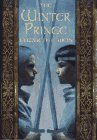
Mordred lingers like a shadow on the fringes of Arthurian legend, coming front and center only when the tale calls for him to rend Arthur's kingdom. There have been several modern retellings that focus on the perspective of this show more fascinating character, and Elizabeth Wein's re-imagining tells his story in an interesting blend of first- and second-person narration. Medraut (for so he is called here) addresses his words to his mother Morgause as a justification, an explanation for what he finally resolves to do. It is a deceptively simple tale, with so much left unstated but heavily present in the undercurrents of the characters' relationships.
Medraut has always known that because of his shameful birth he will never be High King after his father Artos, but this knowledge becomes fraught with confusion and pain from the day of his half-brother Lleu's birth. Medraut feels a pull toward his beautiful, sickly brother but struggles with a complex jealousy, not just of Lleu's kingdom but of "your birthright without shame, your clean lineage." And Lleu's casual cruelty, vulnerability (due to ill health), and occasional trust and affection only further complicate the relationship.
The linchpin of the story is the relationship between Medraut and his mother Morgause. There is a horror there that is all the stronger for being hinted at rather than explicit. There is still some ambiguity (at least in my mind) about the extent of the relationship and what it all means. Medraut keeps everyone at arms' length — the reader included, which is interesting because within the frame of the story, Morgause is the reader. (In a way, we the actual readers are conflated with Medraut's wicked mother, reading her mail, so to speak... interesting.) Though being born of incest is certainly shameful, I get the impression that there is something else, something even uglier and more shameful underneath. Wein artfully describes Medraut's hatred of himself and Morgause as a passion that can turn in on itself at any moment, and it's terrifying.
This is only loosely Arthurian, as there is no Lancelot, and the characters are unconstrained by their archetypes. Those in focus are very well written: Medraut, Goewin, Lleu, Morgause. We see very little of Ginevra or Artos; the lens is very tight. This is a much grittier Britain than the shining world of Camelot, the Round Table, chivalry and quests. The people work hard to survive, and Medraut works in the mines. Artos is an engineer as well as a king.
Though she is dealing with very ugly subjects, Wein picks her way among them gracefully, never reveling in their sordidness. Much is left unsaid of the incest and rape and physical/emotional abuse, but their effects give the story its shape. One thing I found fascinating is how certain characters wield their sexuality as a weapon to humiliate and shame — and how this cruelty is perpetuated by characters who had previously been victims themselves. The cycle never ends on its own, does it?
Reading this story felt like watching light reflected on the surface of a pond, with little insights dropped in like stones to create confused ripples of light and darkness. I understand why Wein has been compared to Megan Whalen Turner; though their stories and characters are very different, they share an elliptical style of prose that uses its brevity to say so much. Both create a very real narrative tension through their unpredictable and yet entirely believable characters.
The Winter Prince is an outstanding addition to the Arthurian tradition, and I'm glad to have discovered Wein's books. I will certainly be continuing the series. show less
Mordred lingers like a shadow on the fringes of Arthurian legend, coming front and center only when the tale calls for him to rend Arthur's kingdom. There have been several modern retellings that focus on the perspective of this show more fascinating character, and Elizabeth Wein's re-imagining tells his story in an interesting blend of first- and second-person narration. Medraut (for so he is called here) addresses his words to his mother Morgause as a justification, an explanation for what he finally resolves to do. It is a deceptively simple tale, with so much left unstated but heavily present in the undercurrents of the characters' relationships.
Medraut has always known that because of his shameful birth he will never be High King after his father Artos, but this knowledge becomes fraught with confusion and pain from the day of his half-brother Lleu's birth. Medraut feels a pull toward his beautiful, sickly brother but struggles with a complex jealousy, not just of Lleu's kingdom but of "your birthright without shame, your clean lineage." And Lleu's casual cruelty, vulnerability (due to ill health), and occasional trust and affection only further complicate the relationship.
The linchpin of the story is the relationship between Medraut and his mother Morgause. There is a horror there that is all the stronger for being hinted at rather than explicit. There is still some ambiguity (at least in my mind) about the extent of the relationship and what it all means. Medraut keeps everyone at arms' length — the reader included, which is interesting because within the frame of the story, Morgause is the reader. (In a way, we the actual readers are conflated with Medraut's wicked mother, reading her mail, so to speak... interesting.) Though being born of incest is certainly shameful, I get the impression that there is something else, something even uglier and more shameful underneath. Wein artfully describes Medraut's hatred of himself and Morgause as a passion that can turn in on itself at any moment, and it's terrifying.
This is only loosely Arthurian, as there is no Lancelot, and the characters are unconstrained by their archetypes. Those in focus are very well written: Medraut, Goewin, Lleu, Morgause. We see very little of Ginevra or Artos; the lens is very tight. This is a much grittier Britain than the shining world of Camelot, the Round Table, chivalry and quests. The people work hard to survive, and Medraut works in the mines. Artos is an engineer as well as a king.
Though she is dealing with very ugly subjects, Wein picks her way among them gracefully, never reveling in their sordidness. Much is left unsaid of the incest and rape and physical/emotional abuse, but their effects give the story its shape. One thing I found fascinating is how certain characters wield their sexuality as a weapon to humiliate and shame — and how this cruelty is perpetuated by characters who had previously been victims themselves. The cycle never ends on its own, does it?
Reading this story felt like watching light reflected on the surface of a pond, with little insights dropped in like stones to create confused ripples of light and darkness. I understand why Wein has been compared to Megan Whalen Turner; though their stories and characters are very different, they share an elliptical style of prose that uses its brevity to say so much. Both create a very real narrative tension through their unpredictable and yet entirely believable characters.
The Winter Prince is an outstanding addition to the Arthurian tradition, and I'm glad to have discovered Wein's books. I will certainly be continuing the series. show less
Is Code Name Verity a Young Adult book? a Book for children? Be honest, now.
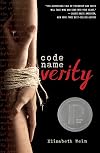
Maddie and Queenie meet as the war in England is just getting on the boil. She is a ferry pilot in the civilian Auxiliary; she is a German speaking intelligence officer and interrogator (and once and always , a Scot!)
We see them in training, we see them doing the work, bravely and uncomplainingly, and at last we see them make a run into occupied France, and through one misstep after the other, we see one a captive show more and one on the run. Young women - girls really - fighting against the Nazis for patriotism and for their homes (and for themselves)
It speaks frankly and clearly about sex and pain and torture and being a woman in a man's world and being a woman and a girl (and a soldier) in the middle of the "night and fog" of World War II.
The book is Queenie's "Confession" in captivity and a bit more besides. Her fierce intelligence and stoicism is awe inspiring.
And the book is Maddie (FLY THE PLANE, MADDIE!) learning to endure and learning to fight and learning, in the end what a friend is and what bravery is.
I loved every page of this book. Lots of great details of flying airplanes from a woman writer who knows her stuff, and a lot of real details about the war and about how sometimes women and girls fought in it too.
And a wonderful gotcha at the end that will have you tearing back through the book again to pick up everything that you missed that the author put out in plain sight for you.
Branding this a book for YA only is to deprive us in the over 16 set a rare treat and a rare experience.
VERY Highly recommended. show less
Maddie and Queenie meet as the war in England is just getting on the boil. She is a ferry pilot in the civilian Auxiliary; she is a German speaking intelligence officer and interrogator (and once and always , a Scot!)
We see them in training, we see them doing the work, bravely and uncomplainingly, and at last we see them make a run into occupied France, and through one misstep after the other, we see one a captive show more and one on the run. Young women - girls really - fighting against the Nazis for patriotism and for their homes (and for themselves)
It speaks frankly and clearly about sex and pain and torture and being a woman in a man's world and being a woman and a girl (and a soldier) in the middle of the "night and fog" of World War II.
The book is Queenie's "Confession" in captivity and a bit more besides. Her fierce intelligence and stoicism is awe inspiring.
And the book is Maddie (FLY THE PLANE, MADDIE!) learning to endure and learning to fight and learning, in the end what a friend is and what bravery is.
I loved every page of this book. Lots of great details of flying airplanes from a woman writer who knows her stuff, and a lot of real details about the war and about how sometimes women and girls fought in it too.
And a wonderful gotcha at the end that will have you tearing back through the book again to pick up everything that you missed that the author put out in plain sight for you.
Branding this a book for YA only is to deprive us in the over 16 set a rare treat and a rare experience.
VERY Highly recommended. show less
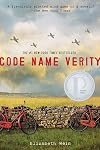
Elizabeth Wein has created a remarkable book - the tale of two girls, "Verity" and Maddie, with "Verity" telling the story of Maddie as the Gestapo interrogates her. The entire book is filled with twists and turns and clever side steps, many of which the reader is completely oblivious to until the second half of the book. And to be perfectly honest, this is so well done that I simply do not want to ruin a single surprise by giving an in depth plot review, aside from to say it is superb, the show more likes of which I have not read in a very long time.
"Verity's" story is written on scraps of paper, anything her interrogators can scrounge up for her, and when she is finished writing, she is to be terminated, regardless of what she puts on paper. She might as well tell the truth and that truth is open to interpretation, but nevertheless, true. Instead of telling her story, she tells that of her best friend, Maddie, the pilot of the plane and the one who's papers she's carrying when she's picked up for looking the wrong way when crossing the street. As such, her writing is flowing freely from the top of her head, if "Verity" was any less of a writer, it might be a complete incomprehensible mess. It is punctuated by outbursts she felt while writing and the situation she is in always presents itself as a very real and present danger. When her time limit is up and she asks for more, you fear turning the page and finding her story ended. "Verity" is brilliant and her story told with a deft and extremely capable hand. Don't be fooled by the young adult label, this is a poignant tale, worthy of even the most discerning adult readers. show less
"Verity's" story is written on scraps of paper, anything her interrogators can scrounge up for her, and when she is finished writing, she is to be terminated, regardless of what she puts on paper. She might as well tell the truth and that truth is open to interpretation, but nevertheless, true. Instead of telling her story, she tells that of her best friend, Maddie, the pilot of the plane and the one who's papers she's carrying when she's picked up for looking the wrong way when crossing the street. As such, her writing is flowing freely from the top of her head, if "Verity" was any less of a writer, it might be a complete incomprehensible mess. It is punctuated by outbursts she felt while writing and the situation she is in always presents itself as a very real and present danger. When her time limit is up and she asks for more, you fear turning the page and finding her story ended. "Verity" is brilliant and her story told with a deft and extremely capable hand. Don't be fooled by the young adult label, this is a poignant tale, worthy of even the most discerning adult readers. show less
Lists
READ in 2023 (1)
THE WAR ROOM (1)
Edgar Award (1)
Best Audiobooks (1)
1900s: America (1)
Elevenses (1)
Secrets Books (1)
quigui wishlish (1)
Best Spy Fiction (1)
Series (2)
Women in War (2)
Youth: BLM (1)
Female spies (1)
Best Young Adult (2)
Female Author (2)
Five star books (1)
Absolute Power (1)
First Novels (1)
Holocaust (1)
Awards


You May Also Like


Associated Authors
Statistics
- Works
- 25
- Also by
- 19
- Members
- 9,913
- Popularity
- #2,400
- Rating
- 4.1
- Reviews
- 700
- ISBNs
- 228
- Languages
- 9
- Favorited
- 22

