On This Page
Description
Medraut, the bitter, illegitimate son of King Artos, is tempted into joining Morgause, the king's treacherous sister, in a plot against Lleu, the legitimate Prince of Britain.Tags
Recommendations

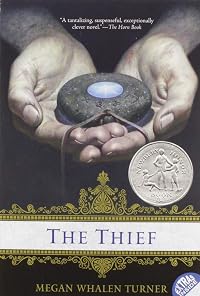
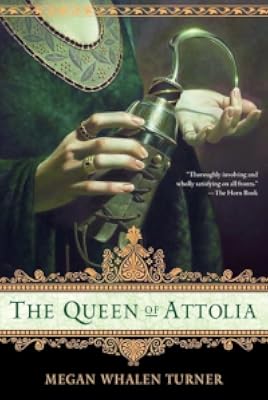
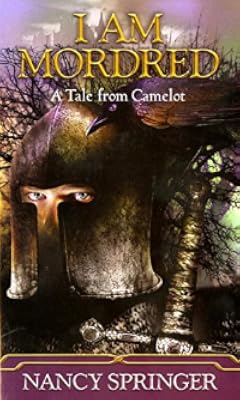









Member Recommendations
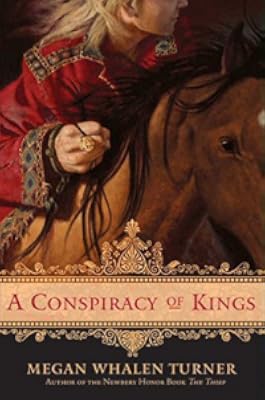
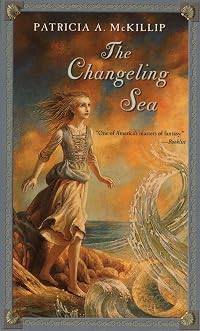
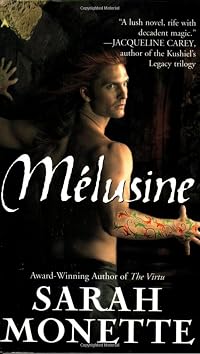
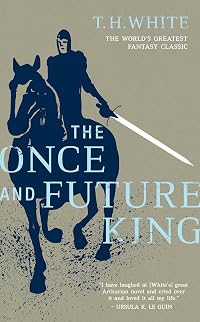
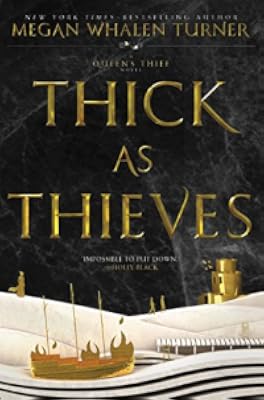
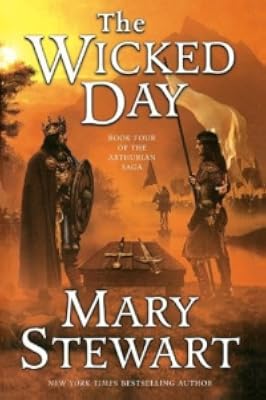
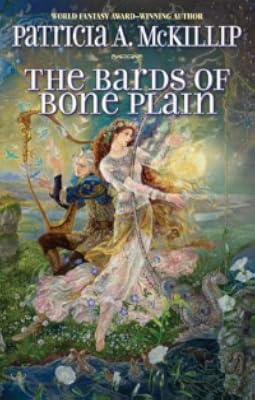
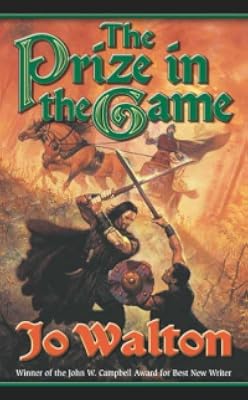
Tharupama_Gunasekara Nick and Medraut have much in common same voice and darkness in them,also the deep fraternal love hidden behind debris, a ruthless parental figure etc
Member Reviews
"Medraut, look at me." You cupped my face in your hands. "You are the true prince of this land," you said softly. "If you could see yourself! Dangerous, yet of curious grace and beauty; such chaos in your eyes. If it were in my power you would be heir to all—"
Mordred lingers like a shadow on the fringes of Arthurian legend, coming front and center only when the tale calls for him to rend Arthur's kingdom. There have been several modern retellings that focus on the perspective of this fascinating character, and Elizabeth Wein's re-imagining tells his story in an interesting blend of first- and second-person narration. Medraut (for so he is called here) addresses his words to his mother Morgause as a justification, an explanation for show more what he finally resolves to do. It is a deceptively simple tale, with so much left unstated but heavily present in the undercurrents of the characters' relationships.
Medraut has always known that because of his shameful birth he will never be High King after his father Artos, but this knowledge becomes fraught with confusion and pain from the day of his half-brother Lleu's birth. Medraut feels a pull toward his beautiful, sickly brother but struggles with a complex jealousy, not just of Lleu's kingdom but of "your birthright without shame, your clean lineage." And Lleu's casual cruelty, vulnerability (due to ill health), and occasional trust and affection only further complicate the relationship.
The linchpin of the story is the relationship between Medraut and his mother Morgause. There is a horror there that is all the stronger for being hinted at rather than explicit. There is still some ambiguity (at least in my mind) about the extent of the relationship and what it all means. Medraut keeps everyone at arms' length — the reader included, which is interesting because within the frame of the story, Morgause is the reader. (In a way, we the actual readers are conflated with Medraut's wicked mother, reading her mail, so to speak... interesting.) Though being born of incest is certainly shameful, I get the impression that there is something else, something even uglier and more shameful underneath. Wein artfully describes Medraut's hatred of himself and Morgause as a passion that can turn in on itself at any moment, and it's terrifying.
This is only loosely Arthurian, as there is no Lancelot, and the characters are unconstrained by their archetypes. Those in focus are very well written: Medraut, Goewin, Lleu, Morgause. We see very little of Ginevra or Artos; the lens is very tight. This is a much grittier Britain than the shining world of Camelot, the Round Table, chivalry and quests. The people work hard to survive, and Medraut works in the mines. Artos is an engineer as well as a king.
Though she is dealing with very ugly subjects, Wein picks her way among them gracefully, never reveling in their sordidness. Much is left unsaid of the incest and rape and physical/emotional abuse, but their effects give the story its shape. One thing I found fascinating is how certain characters wield their sexuality as a weapon to humiliate and shame — and how this cruelty is perpetuated by characters who had previously been victims themselves. The cycle never ends on its own, does it?
Reading this story felt like watching light reflected on the surface of a pond, with little insights dropped in like stones to create confused ripples of light and darkness. I understand why Wein has been compared to Megan Whalen Turner; though their stories and characters are very different, they share an elliptical style of prose that uses its brevity to say so much. Both create a very real narrative tension through their unpredictable and yet entirely believable characters.
The Winter Prince is an outstanding addition to the Arthurian tradition, and I'm glad to have discovered Wein's books. I will certainly be continuing the series. show less
Mordred lingers like a shadow on the fringes of Arthurian legend, coming front and center only when the tale calls for him to rend Arthur's kingdom. There have been several modern retellings that focus on the perspective of this fascinating character, and Elizabeth Wein's re-imagining tells his story in an interesting blend of first- and second-person narration. Medraut (for so he is called here) addresses his words to his mother Morgause as a justification, an explanation for show more what he finally resolves to do. It is a deceptively simple tale, with so much left unstated but heavily present in the undercurrents of the characters' relationships.
Medraut has always known that because of his shameful birth he will never be High King after his father Artos, but this knowledge becomes fraught with confusion and pain from the day of his half-brother Lleu's birth. Medraut feels a pull toward his beautiful, sickly brother but struggles with a complex jealousy, not just of Lleu's kingdom but of "your birthright without shame, your clean lineage." And Lleu's casual cruelty, vulnerability (due to ill health), and occasional trust and affection only further complicate the relationship.
The linchpin of the story is the relationship between Medraut and his mother Morgause. There is a horror there that is all the stronger for being hinted at rather than explicit. There is still some ambiguity (at least in my mind) about the extent of the relationship and what it all means. Medraut keeps everyone at arms' length — the reader included, which is interesting because within the frame of the story, Morgause is the reader. (In a way, we the actual readers are conflated with Medraut's wicked mother, reading her mail, so to speak... interesting.) Though being born of incest is certainly shameful, I get the impression that there is something else, something even uglier and more shameful underneath. Wein artfully describes Medraut's hatred of himself and Morgause as a passion that can turn in on itself at any moment, and it's terrifying.
This is only loosely Arthurian, as there is no Lancelot, and the characters are unconstrained by their archetypes. Those in focus are very well written: Medraut, Goewin, Lleu, Morgause. We see very little of Ginevra or Artos; the lens is very tight. This is a much grittier Britain than the shining world of Camelot, the Round Table, chivalry and quests. The people work hard to survive, and Medraut works in the mines. Artos is an engineer as well as a king.
Though she is dealing with very ugly subjects, Wein picks her way among them gracefully, never reveling in their sordidness. Much is left unsaid of the incest and rape and physical/emotional abuse, but their effects give the story its shape. One thing I found fascinating is how certain characters wield their sexuality as a weapon to humiliate and shame — and how this cruelty is perpetuated by characters who had previously been victims themselves. The cycle never ends on its own, does it?
Reading this story felt like watching light reflected on the surface of a pond, with little insights dropped in like stones to create confused ripples of light and darkness. I understand why Wein has been compared to Megan Whalen Turner; though their stories and characters are very different, they share an elliptical style of prose that uses its brevity to say so much. Both create a very real narrative tension through their unpredictable and yet entirely believable characters.
The Winter Prince is an outstanding addition to the Arthurian tradition, and I'm glad to have discovered Wein's books. I will certainly be continuing the series. show less
This whole book is like a case study on the fallout from two terrible parenting styles. One child beaten, sexually abused, and informed that no matter what good and loyal things he does, he will never be allowed to earn any mark of true approbation, even from the "good" parent. The other child spoiled, encouraged in his dictatorial arrogance, but restricted from exploring the world or his interests in any way that might shape him into a mature and compassionate man. The end result of which is a mélange of envy, carelessness, and schadenfreude worthy of the most aggravating Greek (or Shakespearean) tragedy. But! I did learn lots about how not to raise children...and discovered a retelling of Arthurian folklore that I don't want to toss show more on a roaring fire. Surprising, that. Considering. show less
I took a chance on this one and I'm so glad I did. It's beautifully written, and deals with very dark and mature topics in quite a delicate way. There's a lot going on here that is never stated overtly, which might be why this book is considered YA. The main characters are the children of Artos (King Arthur): Medraut (Mordred), Lleu, and Goewin, and the story is told by Medraut. Typically, Mordred is the villain in Arthurian legend, and while Medraut is no saint, he is much more a tortured soul and victim himself than is usually portrayed. He still does bad things, and feels completely justified in doing so, but seeing his perspective makes him a much more intriguing character. His mother, Morgause, is utterly terrifying, and readers show more will probably be quite disturbed by her. Overall, this is a heart-wrenching read, driven almost entirely by character (and family) dynamics. I love it. show less
It is probably for the best that I didn't realise this book was written by the same author as a book that recently disappointed me - [b:Code Name Verity|11925514|Code Name Verity|Elizabeth Wein|http://photo.goodreads.com/books/1315382376s/11925514.jpg|16885788] - because, although everyong else seemed to enjoy this WW2 story of friendship, I found myself bored. [b:The Winter Prince|962821|The Winter Prince (The Lion Hunters, #1)|Elizabeth Wein|http://photo.goodreads.com/books/1309201908s/962821.jpg|87868], on the other hand, never lost my attention for a second. This is exactly the kind of fantasy I love and, though I know this is a very bold statement to make, I'd almost go so far as to favourably compare this book to such as [b:The show more Thief|448873|The Thief (The Queen's Thief, #1)|Megan Whalen Turner|http://photo.goodreads.com/books/1298543325s/448873.jpg|1069505] and [b:Finnikin of the Rock|4932435|Finnikin of the Rock (Lumatere Chronicles #1)|Melina Marchetta|http://photo.goodreads.com/books/1227961623s/4932435.jpg|4998084]. Perhaps not quite as flawless, but very good.
Do you like historical fantasies based around ancient legends with kings, queens, jealousies, backstabbing and scandals all perfectly executed with a cast of colourful and exciting characters? Yeah, me too. This is that kind of book, a wonderful mix of action and multi-layered characters. But be warned, there are not so many likeable characters, they are complex individuals. The protagonist and narrator directs the story at the mother who abused him - a woman who is truly one of the most despicable characters I've ever come across - he is a confused man, torn between the possibilities of vengeance and of love and acceptance.
If you can't stand the kind of book where there are no heroes or heroines, then this isn't the right choice for you. It's an interesting story that makes you think, that makes it impossible to choose sides, you will probably find yourself despising every character at some point or other. But it's also very powerful and it's about the choices people make and whether it's more important to be someone or to be loved by someone. Most of all, I see this as a novel about looking for the wrong things in the wrong places, when what you needed all along was right there with you. And no, this is not a romance.
I think this is a great book. But I can tell you now what a lot of people won't like and I admit I thought it was too much - the copious amount of incest. It is not romanticised, it is not seen as okay, but it happens an awful lot. Nearly every character in this book has either been raped by a relative or had an attempted rape by a relative. Some of the abuse was an important part of the plot and a way of understanding the characters, but a lot felt unnecessary. I really, really don't want to turn anyone off this book, but I see no point in not being honest. I hope readers can overlook it and enjoy this wonderful, well-written fantasy. show less
I loved this. It was a bit different from what I expected (much shorter than I thought, for one thing), but I loved it all the same. Other reviewers have mentioned that neither Medraut nor Lleu are particularly sympathetic characters; but I sympathized with both, and unexpectedly with Artos. There really isn't much action to speak of, but I found the relationship dynamics to be riveting; for me that was reason enough to keep turning the pages--I'm such a sucker for father-son/brother relationships in fiction. And this book is gorgeously written, the prose obviously reminiscent of Rosemary Sutcliff's--in fact, I found this a much more readable book than Sutcliff's Sword at Sunset. I look forward very much to continuing the series.
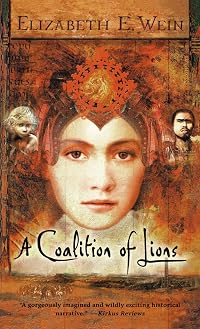
This is a companion novel to “A Coalition of Lions". Sequentially, it comes before ‘Coalition,’ but both are fully stand-alone novels – where ‘Coalition’ tells a story from the perspective of the princess Goewin, ‘Winter Prince’ is her brother Medraut’s story. But more than his story, it is an exploration of love and jealousy.
The milieu and characters of the book (very) roughly correspond to the classic Arthurian tales – Medraut is Mordred, bastard child of incest between Artos and his sister Morgause, and for that shame, denied the princehood that he sees as his right. His younger half-sibling, Lleu, is the heir – which not only causes emotional conflicts with his brother, but with Lleu’s twin sister, Goewin, show more who is, ironically, the one probably most suited to rule.
Not only is Medraut resentful toward his brother, but he is caught is a welter of difficult emotions concerning his cruel, politically conniving and perverse mother, Morgause, who has more of a hold over him than anyone may realize…
I said it about ‘Coalition,’ and I have to say it even more strongly about this book – I really don’t understand why someone made the decision to market this as a YA book. The theme of incest and its emotional consequences in this book is rather ‘mature,’ and the language, while evocative and beautiful, is not juvenile.
From reading these two books, I have to say that Wein is, (at least so far in her career), an extremely underrated writer – I hadn’t heard of her before I picked up one of these, admittedly only because I liked the cover! But her writing has impressed me quite a lot… I’m not surprised to discover on the web, she has her PhD in folklore… (a particular interest of mine). I expect good things from this author in the future! show less
The milieu and characters of the book (very) roughly correspond to the classic Arthurian tales – Medraut is Mordred, bastard child of incest between Artos and his sister Morgause, and for that shame, denied the princehood that he sees as his right. His younger half-sibling, Lleu, is the heir – which not only causes emotional conflicts with his brother, but with Lleu’s twin sister, Goewin, show more who is, ironically, the one probably most suited to rule.
Not only is Medraut resentful toward his brother, but he is caught is a welter of difficult emotions concerning his cruel, politically conniving and perverse mother, Morgause, who has more of a hold over him than anyone may realize…
I said it about ‘Coalition,’ and I have to say it even more strongly about this book – I really don’t understand why someone made the decision to market this as a YA book. The theme of incest and its emotional consequences in this book is rather ‘mature,’ and the language, while evocative and beautiful, is not juvenile.
From reading these two books, I have to say that Wein is, (at least so far in her career), an extremely underrated writer – I hadn’t heard of her before I picked up one of these, admittedly only because I liked the cover! But her writing has impressed me quite a lot… I’m not surprised to discover on the web, she has her PhD in folklore… (a particular interest of mine). I expect good things from this author in the future! show less
I think fans of Megan Whalen Turner might love this one.
It is an amazingly original Arthurian retelling, from the point of view of Medraut (Mordred), who is -- and struggles to be-- an awesome character, despite the way his circumstances, and particularly his mother, have twisted him.
The conflicted relationship between Medraut and his half brother, Lleu, is fascinating. It struck me -- particularly when I was reading the ending -- that they are both rather like Megan Whalen Turner's Eugenides. Lleu is the bright, wild, indomitable spirit, and Medraut is the deliberate one, with hidden skills and flashes of unexpected emotion.
That said, this is a much darker book that "The Thief," or even than "The Queen of Attolia."
It is an amazingly original Arthurian retelling, from the point of view of Medraut (Mordred), who is -- and struggles to be-- an awesome character, despite the way his circumstances, and particularly his mother, have twisted him.
The conflicted relationship between Medraut and his half brother, Lleu, is fascinating. It struck me -- particularly when I was reading the ending -- that they are both rather like Megan Whalen Turner's Eugenides. Lleu is the bright, wild, indomitable spirit, and Medraut is the deliberate one, with hidden skills and flashes of unexpected emotion.
That said, this is a much darker book that "The Thief," or even than "The Queen of Attolia."
Members
- Recently Added By
Published Reviews
ThingScore 100
[...] The Winter Prince is subtle, complicated, and emotionally dense—strikingly so, in a novel originally published for younger readers [...]
added by Nevov
Lists

Best Arthurian Fiction
104 works; 31 members

Best Fantasy Novels
821 works; 361 members

Best Young Adult
413 works; 102 members

20th Century Literature
1,161 works; 55 members

Female Author
1,234 works; 66 members

Elevenses
316 works; 87 members

quigui wishlish
11 works; 1 member

LGBTQ+ Speculative Fiction
821 works; 51 members

Historical Fantasy
93 works; 14 members

things to read next
23 works; 1 member
Speculative Fiction to Read
706 works; 32 members
Modern Arthurian Fiction
237 works; 16 members

Good LGBT fiction for LGBT folk and friends
553 works; 55 members

Five star books
1,767 works; 110 members

First Novels
373 works; 17 members
Author Information

25+ Works 9,955 Members
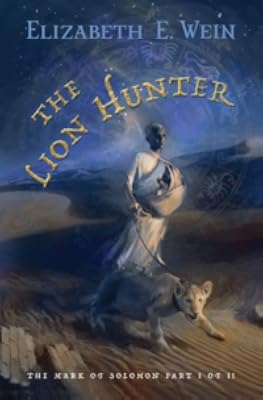
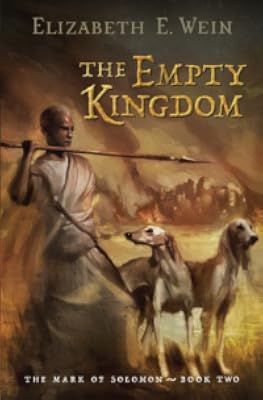
Elizabeth Wein was born in New York City in 1964. She went to the University of Pennsylvania in Philadelphia where she earned a PhD in Folklore and held a Javits Fellowship. Elizabeth Wein first five books for young adults are set in Arthurian Britain and sixth century Ethiopia. The Mark of Solomon, was published in two parts as The Lion Hunter show more (2007) and The Empty Kingdom (2008). The Lion Hunter was short-listed for the Andre Norton Award for Best Young Adult Fantasy and Science Fiction in 2008. Elizabeth's novel for teens, Code Name Verity, published by Egmont UK, Disney-Hyperion and Doubleday Canada in 2012, is a World War II thriller in which two young girls, one a Resistance spy and the other a transport pilot, become unlikely best friends. Code Name Verity has received widespread critical acclaim including being shortlisted for the CILIP Carnegie Medal, it is a Michael Printz Award Honor Book, a Boston Globe/Horn Book Awards Honor Book, and an SCBWI Golden Kite Honor Book. It is also a New York Times Bestseller in young adult fiction. She is also the author of Black Dove, White Raven. (Bowker Author Biography) show less

Elizabeth Wein is a LibraryThing Author, an author who lists their personal library on LibraryThing.
Some Editions
Awards and Honors
Awards
Series

Work Relationships
Is contained in
Has as a commentary on the text
Common Knowledge
- Original publication date
- 1993
- People/Characters
- Artos; Medraut; Lleu; Ginevra; Goewin; Morgause (show all 10); Gwalchmei; Agravain; Gareth; Gaheris
- Important places
- Camlan
- Epigraph
- Thou, Nature, art my goddess; to thy law my services are bound.
--King Lear act I, scene 2 - Dedication
- For Betty Saylor Flocken, with love
- First words
- He sat on the floor before the hearth with his knees against his chin, the flames at his back, and warily watched his father's face.
- Last words
- (Click to show. Warning: May contain spoilers.)So the new year began.
- Blurbers
- Windling, Terri
Classifications
- Genres
- Fiction and Literature, Fantasy, Teen, Young Adult
- DDC/MDS
- 813.54 — Literature & rhetoric American literature in English American fiction in English 1900-1999 1945-1999
- LCC
- PZ7 .W4358 .W — Language and Literature Fiction and juvenile belles lettres Fiction and juvenile belles lettres Juvenile belles lettres
- BISAC
Statistics
- Members
- 454
- Popularity
- 67,644
- Reviews
- 24
- Rating
- (4.07)
- Languages
- Dutch, English, German
- Media
- Paper, Ebook
- ISBNs
- 10
- ASINs
- 1