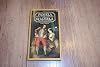
Pamela/Shamela
by Samuel Richardson, Henry Fielding
56 Members (3.88)
On This Page
Tags
Recommendations











Member Reviews
Members
- Recently Added By
Lists

Epistolary Books
105 works; 27 members
Author Information

96+ Works 5,625 Members
A printer and bookseller who wrote love letters for servant girls as an apprentice, studied nights to improve himself, and married the boss's daughter, Samuel Richardson undertook at age 50 to write a book of sample courtesy notes, marriage proposals, job applications, and business letters for young people. While imagining situations for this show more book, he recalled an old scandal and developed it into Pamela, or Virtue Rewarded (1740--44), a novel about a servant girl whose firmness, vitality, literacy, and superior intelligence turn her master's lust into a decorous love that leads to their marriage. All of Pamela's virtues of fresh characterization, immediacy (what Richardson called "writing to the moment" of the character's consciousness), and the involvement of the reader in the character's intense and fluctuating fantasies, together with a much more focused seriousness, a more varied and differentiated cast of letter writers, and a more fundamental examination of moral and social issues, make his second novel, Clarissa Hawlowe (1747--48), a masterpiece. Although anyone who reads this huge novel for its plot may hang himself (as Richardson's friend Samuel Johnson said), readers have been fascinated by the complex conflict between Clarissa Harlowe and Robert Lovelace, two of the most fully realized characters, psychologically and socially, in all of literature. Like such great successors as Rousseau (see Vol. 3), an acknowledged follower of Richardson, Dostoevsky (see Vol. 2), and D. H. Lawrence, Richardson understands and shows us, in Diderot's (see Vols. 2 and 4) appreciative image, the black recesses of the cave of the mind. Although Richardson's last novel, Sir Charles Grandison (1753--54), like Pamela Part II , mainly undertakes comic delineation of manners, it also examines the serious issues of love between a Protestant and a Catholic, and experiments technically with flashbacks, with stenographic reports, and most assertively with a pure hero, a male Clarissa of irresistible charm and power. At its best, Richardson's work fuses the epistolary technique, the use of dramatic scenes, the traditions of religious biography, and the elements of current romantic fiction to achieve precise analysis, an air of total verisimilitude, and a vision of a world of primal psychological forces in conflict. (Bowker Author Biography) show less

260+ Works 15,884 Members
Henry Fielding, 1707 - 1754 A succcessful playwright in his twenties, Henry Fielding turned to the study of law and then to journalism, fiction, and a judgeship after his Historical Register, a political satire on the Walpole government, contributed to the censorship of plays that put him out of business. As an impoverished member of the upper show more classes, he knew the country squires and the town nobility; as a successful young playwright, the London jet set; as a judge at the center of London, the city's thieves, swindlers, petty officials, shopkeepers, and vagabonds. As a political journalist (editor-author of The Champion, 1739-1741; The True Patriot, 1745-1746; The Jacobite's Journal, 1747-1748; The Covent-Garden Journal, 1752), he participated in argument and intrigue over everything from London elections to national policy. He knowledgeably attacked and defended a range of politicians, from ward heelers to the Prince of Wales. When Fielding undertook writing prose fiction to ridicule the simple morality of Pamela by Samuel Richardson, he first wrote the hilarious burlesque Shamela (1741). However, he soon found himself considering all the forces working on humans, and in Joseph Andrews (1742) (centering on his invented brother of Pamela), he played with the patterns of Homer, the Bible, and Cervantes to create what he called "a comic epic poem in prose." His preface describing this new art form is one of the major documents in literary criticism of the novel. Jonathan Wild, a fictional rogue biography of a year later, plays heavily with ironic techniques that leave unsettled Fielding's great and recurring theme: the difficulty of uniting goodness, or an outflowing love of others, with prudence in a world where corrupted institutions support divisive pride rather than harmony and self-fulfillment. In his masterpiece Tom Jones (1749), Fielding not only faces this issue persuasively but also shows for the first time the possibility of bringing a whole world into an artistic unity, as his model Homer had done in verse. Fielding develops a coherent and centered sequence of events-something Congreve had done casually on a small scale in Incognita 60 years before. In addition he also relates the plot organically to character and theme, by which he gives us a vision of the archetypal good person (Tom) on a journey toward understanding. Every act by every character in the book reflects the special and typical psychology of that character and the proper moral response. In Tom Jones, Fielding affirms the existence of an order under the surface of chaos. In his last novel, Amelia (1751), which realistically examines the misery of London, he can find nothing reliable except the prudent good heart, and that only if its possessor escapes into the country. Fielding based the title character on his second wife, with whom he was deeply in love. However, ill himself, still saddened by the deaths of his intensely loved first wife and daughter, and depressed by a London magistrate's endless toil against corruption, Fielding saw little hope for goodness in that novel or in his informal Journal of a Voyage to Lisbon (1755). Shortly after traveling to Lisbon for his health, Fielding died at the age of 47, having proved to his contemporaries and successors that the lowly novel was capable of the richest achievements of art. (Bowker Author Biography) show less
Some Editions
Work Relationships
Contains
Common Knowledge
- Canonical title*
- Pamela ; Shamela
*Some information comes from Common Knowledge in other languages. Click "Edit" for more information.
Classifications
Statistics
- Members
- 56
- Popularity
- 546,659
- Rating
- (3.88)
- Languages
- English, Finnish
- Media
- Paper
- ISBNs
- 2
- ASINs
- 1