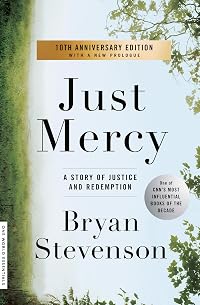
Just Mercy: A Story of Justice and Redemption
by Bryan Stevenson
On This Page
Description
#1 NEW YORK TIMES BESTSELLER • NOW A MAJOR MOTION PICTURE STARRING MICHAEL B. JORDAN AND JAMIE FOXX • A powerful true story about the potential for mercy to redeem us, and a clarion call to fix our broken system of justice—from one of the most brilliant and influential lawyers of our time.“[Bryan Stevenson’s] dedication to fighting for justice and equality has inspired me and many others and made a lasting impact on our country.”—John Legend
NAMED ONE OF THE MOST show more INFLUENTIAL BOOKS OF THE DECADE BY CNN • Named One of the Best Books of the Year by The New York Times • The Washington Post • The Boston Globe • The Seattle Times • Esquire • Time
Bryan Stevenson was a young lawyer when he founded the Equal Justice Initiative, a legal practice dedicated to defending those most desperate and in need: the poor, the wrongly condemned, and women and children trapped in the farthest reaches of our criminal justice system. One of his first cases was that of Walter McMillian, a young man who was sentenced to die for a notorious murder he insisted he didn’t commit. The case drew Bryan into a tangle of conspiracy, political machination, and legal brinksmanship—and transformed his understanding of mercy and justice forever.
Just Mercy is at once an unforgettable account of an idealistic, gifted young lawyer’s coming of age, a moving window into the lives of those he has defended, and an inspiring argument for compassion in the pursuit of true justice.
Winner of the Carnegie Medal for Excellence in Nonfiction • Winner of the NAACP Image Award for Nonfiction • Winner of a Books for a Better Life Award • Finalist for the Los Angeles Times Book Prize • Finalist for the Kirkus Reviews Prize • An American Library Association Notable Book
“Every bit as moving as To Kill a Mockingbird, and in some ways more so . . . a searing indictment of American criminal justice and a stirring testament to the salvation that fighting for the vulnerable sometimes yields.”—David Cole, The New York Review of Books
“Searing, moving . . . Bryan Stevenson may, indeed, be America’s Mandela.”—Nicholas Kristof, The New York Times
“You don’t have to read too long to start cheering for this man. . . . The message of this book . . . is that evil can be overcome, a difference can be made. Just Mercy will make you upset and it will make you hopeful.”—Ted Conover, The New York Times Book Review
“Inspiring . . . a work of style, substance and clarity . . . Stevenson is not only a great lawyer, he’s also a gifted writer and storyteller.”—The Washington Post
“As deeply moving, poignant and powerful a book as has been, and maybe ever can be, written about the death penalty.”—The Financial Times
“Brilliant.”—The Philadelphia Inquirer. show less
Tags
Recommendations


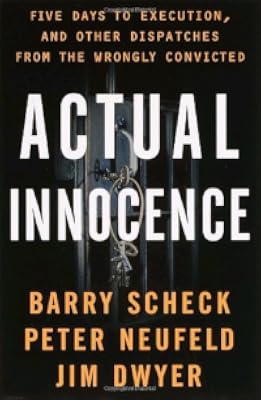
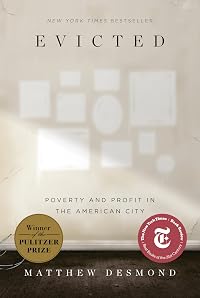
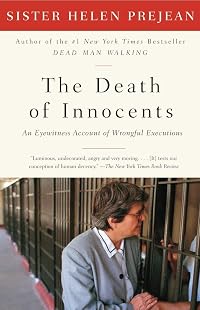


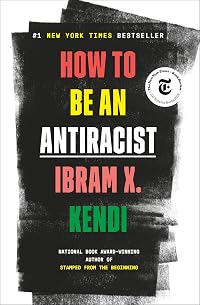

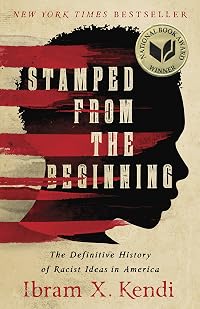


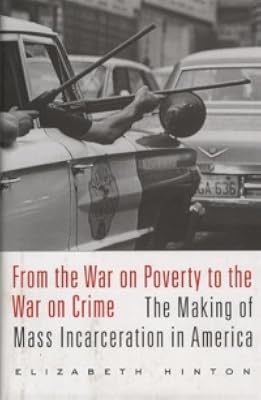
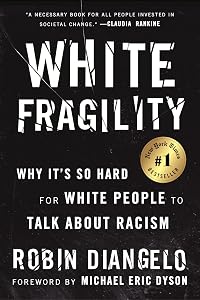
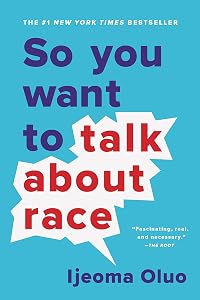
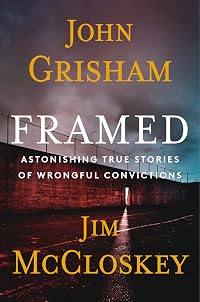
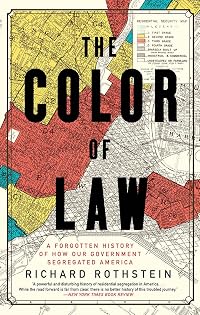

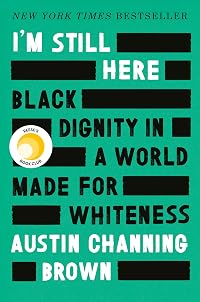
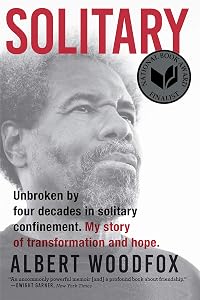





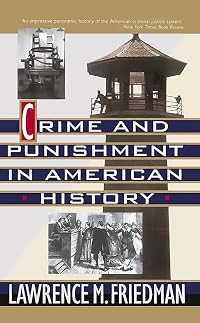


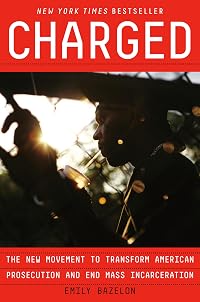
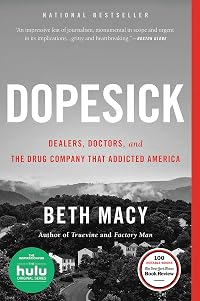
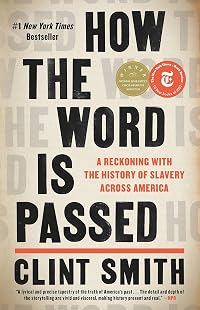
Member Recommendations
Member Reviews
(31) This was a moving and well-written account of the author's journey from disillusioned law student to the founder of the Equal Justice Initiative in Alabama providing counsel and hope to death row inmates in the Deep South and beyond. While the book contains many sad stories about men and women who were convicted unfairly and/or as children, the signature case is Walter McMillan. A black man who owned his own business and had an affair with a younger white married woman who was ultimately railroaded onto death row in the most racist and unjust way imaginable. Totally fabricated testimony. Injustice on top of injustice as the real murderer was never identified or caught. And all this in the county where 'To Kill a Mockingbird' was show more set and written. And the county prides itself on the novel...
There are so many things to be be said that have likely been said much more eloquently by other reviewers. This is yet another time when I am reminded of how awful the deep south is. How truly awful the legacy of slavery and the notion of white supremacy. How these things are still alive and well especially in some of the red states: "The past is never dead. It is not even past." These words of Faulkner's ring even more true each year that goes by that I live here in the American South.
Stevenson writes well - accessible yet with some subtle artistry. I especially was struck by his narration of having a gun drawn on him outside of his own apartment listening to music in his car. The author writes about this many years before recent police shootings of unarmed black citizens and before it was trendy to be a 'social justice warrior.' Kudos. He also is careful to avoid painting those who champion speedy executions and harsh sentencing as simply racist and evil - but instead broken, angry, fearful. He points to mercy - even for those who may not deserve it - as the only possible solution to heal what ails us. And he is very persuasive.
Avoids a perfect rating from me as it trended towards a bit bloated and repetitive at times and a small quibble in that the author did not keep me grounded in time. Dates were often missing or randomly mentioned and I struggled to put in perspective when things were happening vis a vis current events, and the age of the author, or age of the prisoner. But overall - a worthy read that will change hearts and minds. show less
There are so many things to be be said that have likely been said much more eloquently by other reviewers. This is yet another time when I am reminded of how awful the deep south is. How truly awful the legacy of slavery and the notion of white supremacy. How these things are still alive and well especially in some of the red states: "The past is never dead. It is not even past." These words of Faulkner's ring even more true each year that goes by that I live here in the American South.
Stevenson writes well - accessible yet with some subtle artistry. I especially was struck by his narration of having a gun drawn on him outside of his own apartment listening to music in his car. The author writes about this many years before recent police shootings of unarmed black citizens and before it was trendy to be a 'social justice warrior.' Kudos. He also is careful to avoid painting those who champion speedy executions and harsh sentencing as simply racist and evil - but instead broken, angry, fearful. He points to mercy - even for those who may not deserve it - as the only possible solution to heal what ails us. And he is very persuasive.
Avoids a perfect rating from me as it trended towards a bit bloated and repetitive at times and a small quibble in that the author did not keep me grounded in time. Dates were often missing or randomly mentioned and I struggled to put in perspective when things were happening vis a vis current events, and the age of the author, or age of the prisoner. But overall - a worthy read that will change hearts and minds. show less
This book tells the story of our country's greatest shame, a homicidally racist "justice" system, and some of our greatest citizens, the lawyers who work tirelessly to extend real justice to every last American. I'm sorry if that sounds too grand, but that's what's in here. That, and humor. Bryan Stevenson has seen so much, he can find humor in the darkest places.
This book broke my heart.
One of the (few) encouraging things that seems to be coming out of our current deeply dysfunctional political process is growing bipartisan agreement that the United States is in desperate need of criminal justice reform. Politicians from both major parties are realizing that "mandatory minimum" sentencing laws, harsh solitary confinement practices, overly punitive punishment for juveniles who commit crimes, racial disparities in sentencing, overzealous prosecutions that ignore exculpatory evidence in order to secure conviction — all of these are having a profoundly negative effect on our society. (A cynic might note that the recent Republican interest in providing treatment instead of prison for drug users show more only came once the heroin epidemic struck middle-class whites, but I digress).
So many of us have become afraid and angry. We’ve become so fearful and vengeful that we’ve thrown away children, discarded the disabled, and sanctioned the imprisonment of the sick and the weak — not because they are a threat to public safety or beyond rehabilitation but because we think it makes us seem tough, less broken.
All of these issues are explored by Bryan Stevenson in Just Mercy, subtitled “A Story of Justice and Redemption”. And it’s true, some of the people Stevenson and his organization, the Equal Justice Initiative, try to help do receive justice and some form of redemption, eventually. But it’s hard to feel triumphant about the outcomes when you read about how thoroughly their lives have been shattered before that justice is finally served.
Stevenson’s main focus is on Walter McMillian, a black man who has lived a largely blameless life in Alabama until he is arrested, tried, convicted and sentenced to death for the murder of a white teenager despite having been continuously in the company of more than 20 people at the time the murder was committed. The ways in which justice was mauled in his initial trial is shocking and infuriating, the sort of tale that would get rejected as completely unbelievable if someone wrote it as fiction. And yes, racism was absolutely a factor in his case, and in many aspects of EJI’s work. More than once, Stevenson himself is spoken to harshly by judges, bailiffs, law enforcement officers who don’t realize they are speaking to a black graduate of Harvard Law School and not just another black defendant. They are unable to see past the color of his skin, even when he is wearing a suit and sitting in a courtroom.
Of course innocent mistakes occur, but the accumulated insults and indignations caused by racial presumptions are destructive in ways that are hard to measure. Constantly being suspected, accused, watched, doubted, distrusted, presumed guilty, and even feared is a burden borne by people of color that can’t be understood or confronted without a deeper conversation about our history of racial injustice.
Interspersed with chapters about Stevenson’s attempts to win Walter a stay of execution, a new trial, or exoneration are explorations of other aspects of the ways in which the criminal justice system has failed. The EJI successfully argued before the Supreme Court that sentencing juveniles to death row or life in prison without parole is unconstitutional, first for non-homicide crimes and eventually for all crimes. They also advocated for the mentally ill or developmentally disabled, many of whom are sentenced to death or life in prison without even understanding what they have done.
Walter’s case is a clear-cut case of wrongful conviction, but not every case that Stevenson and EJI took involved saving the innocent. Many times, the question wasn’t whether the defendant had committed the crime, but whether the sentence received was proportional to the crime, or whether the defendant had received the adequate legal counsel that they are entitled to under the Constitution.
Presenting a mix of cases and circumstances gave the book even more power for me. It’s easy to feel indignant about innocent people being executed or left to rot in jail. It’s harder to feel sympathy — and yes, mercy — for the guilty, but Stevenson’s powerful rhetoric made me understand the need for such compassion in a very personal way.
The power of just mercy is that it belongs to the undeserving. It’s when mercy is least expected that it’s most potent — strong enough to break the cycle of victimization and victimhood, retribution and the psychic harm and injuries that lead to aggression and violence, abuse of power, mass incarceration. I drove home broken and brokenhearted about Jimmy Dill. But I knew I would come back the next day. There was more work to do. show less
One of the (few) encouraging things that seems to be coming out of our current deeply dysfunctional political process is growing bipartisan agreement that the United States is in desperate need of criminal justice reform. Politicians from both major parties are realizing that "mandatory minimum" sentencing laws, harsh solitary confinement practices, overly punitive punishment for juveniles who commit crimes, racial disparities in sentencing, overzealous prosecutions that ignore exculpatory evidence in order to secure conviction — all of these are having a profoundly negative effect on our society. (A cynic might note that the recent Republican interest in providing treatment instead of prison for drug users show more only came once the heroin epidemic struck middle-class whites, but I digress).
So many of us have become afraid and angry. We’ve become so fearful and vengeful that we’ve thrown away children, discarded the disabled, and sanctioned the imprisonment of the sick and the weak — not because they are a threat to public safety or beyond rehabilitation but because we think it makes us seem tough, less broken.
All of these issues are explored by Bryan Stevenson in Just Mercy, subtitled “A Story of Justice and Redemption”. And it’s true, some of the people Stevenson and his organization, the Equal Justice Initiative, try to help do receive justice and some form of redemption, eventually. But it’s hard to feel triumphant about the outcomes when you read about how thoroughly their lives have been shattered before that justice is finally served.
Stevenson’s main focus is on Walter McMillian, a black man who has lived a largely blameless life in Alabama until he is arrested, tried, convicted and sentenced to death for the murder of a white teenager despite having been continuously in the company of more than 20 people at the time the murder was committed. The ways in which justice was mauled in his initial trial is shocking and infuriating, the sort of tale that would get rejected as completely unbelievable if someone wrote it as fiction. And yes, racism was absolutely a factor in his case, and in many aspects of EJI’s work. More than once, Stevenson himself is spoken to harshly by judges, bailiffs, law enforcement officers who don’t realize they are speaking to a black graduate of Harvard Law School and not just another black defendant. They are unable to see past the color of his skin, even when he is wearing a suit and sitting in a courtroom.
Of course innocent mistakes occur, but the accumulated insults and indignations caused by racial presumptions are destructive in ways that are hard to measure. Constantly being suspected, accused, watched, doubted, distrusted, presumed guilty, and even feared is a burden borne by people of color that can’t be understood or confronted without a deeper conversation about our history of racial injustice.
Interspersed with chapters about Stevenson’s attempts to win Walter a stay of execution, a new trial, or exoneration are explorations of other aspects of the ways in which the criminal justice system has failed. The EJI successfully argued before the Supreme Court that sentencing juveniles to death row or life in prison without parole is unconstitutional, first for non-homicide crimes and eventually for all crimes. They also advocated for the mentally ill or developmentally disabled, many of whom are sentenced to death or life in prison without even understanding what they have done.
Walter’s case is a clear-cut case of wrongful conviction, but not every case that Stevenson and EJI took involved saving the innocent. Many times, the question wasn’t whether the defendant had committed the crime, but whether the sentence received was proportional to the crime, or whether the defendant had received the adequate legal counsel that they are entitled to under the Constitution.
Presenting a mix of cases and circumstances gave the book even more power for me. It’s easy to feel indignant about innocent people being executed or left to rot in jail. It’s harder to feel sympathy — and yes, mercy — for the guilty, but Stevenson’s powerful rhetoric made me understand the need for such compassion in a very personal way.
The power of just mercy is that it belongs to the undeserving. It’s when mercy is least expected that it’s most potent — strong enough to break the cycle of victimization and victimhood, retribution and the psychic harm and injuries that lead to aggression and violence, abuse of power, mass incarceration. I drove home broken and brokenhearted about Jimmy Dill. But I knew I would come back the next day. There was more work to do. show less
Oh man! I started this book and after just a chapter or so, put it down and said "I'm not going to be able to finish this...it's just too painful. I'll just have to admit defeat and for the first time, not review an Early Reviewer book."
Then after a week or so I picked it back up and vowed to give it another try. As horrifying as Bryan's experiences are, this book ended up grabbing me and refusing to let go. His experiences are mainly in the South (Alabama) but seriously...if you think this is the only place where there is RAMPANT corruption in the legal system, you just haven't been paying attention (Chicago. NY. DC. Detroit. New Orleans. Need I go on?)
While I don't agree with EVERYthing Bryan Stevenson believes in, there can hardly show more be any argument that when it comes to the death penalty (and I live in Texas...where we're serious about our capital punishment) there are some major issues with indigent defendants being railroaded onto death row simply because they cannot afford anything close to competent defense attorneys. There have been too many prisoners released due to DNA evidence to argue that point with much power.
Where the jury is still out in my mind, is his assertion that young teens (like 14 or 15) deserve special treatment because of their youth.
I'm still not inclined to give special consideration to young offenders who kill. Period, end of story. For every youthful offender who claims an abusive or poverty-stricken childhood is responsible for his murderous behavior, there are countless people who lived through equally painful years and yet "somehow" managed to avoid killing innocent people. But for kids convicted of non-homicide crimes, life without the possibility of parole (essentially a sentence to die in prison, even if it takes 50 or 60 years) could be a little excessive. When a person is incarcerated as a child, and told that no matter how well he behaves, there is absolutely no possibility that it will improve his situation...well...it's probably unrealistic to expect a positive result.
Kudos to Bryan Stevenson and his team for fighting on behalf of the innocent and destitute. They have undertaken a task that is rife with danger (aka: bomb threats, etc) and scant tangible reward. But the rewards received from the families, friends and acquaintances of his clients, as well as total strangers, although intangible, more than compensate for endless hours of work that are frequently rewarded only with deep disappointment.
I would highly recommend this book, even though it is admittedly painful to come face-to-face with the naked corruption of our court system, and the utter powerlessness of the average joe to combat it. "Just Mercy" reads like a novel and never sinks into "legalese" or self-aggrandizement. Read it and find yourself simultaneously depressed and uplifted...what more can you ask? show less
Then after a week or so I picked it back up and vowed to give it another try. As horrifying as Bryan's experiences are, this book ended up grabbing me and refusing to let go. His experiences are mainly in the South (Alabama) but seriously...if you think this is the only place where there is RAMPANT corruption in the legal system, you just haven't been paying attention (Chicago. NY. DC. Detroit. New Orleans. Need I go on?)
While I don't agree with EVERYthing Bryan Stevenson believes in, there can hardly show more be any argument that when it comes to the death penalty (and I live in Texas...where we're serious about our capital punishment) there are some major issues with indigent defendants being railroaded onto death row simply because they cannot afford anything close to competent defense attorneys. There have been too many prisoners released due to DNA evidence to argue that point with much power.
Where the jury is still out in my mind, is his assertion that young teens (like 14 or 15) deserve special treatment because of their youth.
I'm still not inclined to give special consideration to young offenders who kill. Period, end of story. For every youthful offender who claims an abusive or poverty-stricken childhood is responsible for his murderous behavior, there are countless people who lived through equally painful years and yet "somehow" managed to avoid killing innocent people. But for kids convicted of non-homicide crimes, life without the possibility of parole (essentially a sentence to die in prison, even if it takes 50 or 60 years) could be a little excessive. When a person is incarcerated as a child, and told that no matter how well he behaves, there is absolutely no possibility that it will improve his situation...well...it's probably unrealistic to expect a positive result.
Kudos to Bryan Stevenson and his team for fighting on behalf of the innocent and destitute. They have undertaken a task that is rife with danger (aka: bomb threats, etc) and scant tangible reward. But the rewards received from the families, friends and acquaintances of his clients, as well as total strangers, although intangible, more than compensate for endless hours of work that are frequently rewarded only with deep disappointment.
I would highly recommend this book, even though it is admittedly painful to come face-to-face with the naked corruption of our court system, and the utter powerlessness of the average joe to combat it. "Just Mercy" reads like a novel and never sinks into "legalese" or self-aggrandizement. Read it and find yourself simultaneously depressed and uplifted...what more can you ask? show less
 This review was written for LibraryThing Early Reviewers.
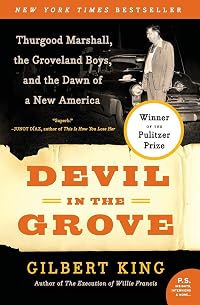
When I read Gilbert King’s Devil in the Grove, I thought I was reading of a shameful era that died a natural death at the advent of the American civil rights movement. And then I read Bryan Stevenson’s Just Mercy and learned that racially based brutality and injustice is alive and well in modern America.
When Stevenson, as a young law student, served an internship with a nonprofit legal firm that specialized in capital-punishment cases, he discovered his reason for being: to serve the underserved—the poor, the abused, the outcast. After receiving his law degree he returned to that same Atlanta law firm, where he worked for several years before founding Equal Justice Initiative, a pro bono law practice in Montgomery, Alabama.
Just as show more Thurgood Marshall, the champion for justice featured in King’s book, took aim at cases that would change the future of justice for black America, Stevenson has targeted cases that would change the justice system’s treatment of people who are incarcerated because they are poor or black or both. Beginning with death-row cases, where he often found himself racing to beat the executioner’s schedule, he also took up the cause of children who were tried as adults and sent to prison for life.
Stevenson has had one advantage that Marshall did not: his hope for the future is based on successes that have borne fruit in the present. Marshall took cases that he knew could never be won, but his strategy was to build a case law for a future beyond his lifetime: his hope was built on an essential belief in the structure of the American justice system. He anticipated that the work he had begun would be continued by great legal minds, such as Stevenson’s, that would be devoted to recalibrating Justice’s scales.
The only fault I find in Just Mercy is Stevenson’s device of alternating chapters about the story of Walter McMillian (a black man who received the death penalty for a murder that absolutely everyone knew he hadn’t committed) with chapters about an assortment of other cases. Though similar to King’s blending of the case of Walter Irvin (his focus in Devil in the Grove) with other of Marshall’s cases, Stevenson does not manage his transitions with the same smooth expertise that King accomplishes. The interruption of the primary story about the tribulations of Walter McMillian was always a jolt, and the introduction of new, unrelated material felt disjointed. I found myself rushing through these catch-all chapters to get to the next installment in the McMillian story. This flaw, nonetheless, does little to distract from the heart-wrenching truths about American justice that emerge.
Stevenson eventually succeeded in getting Walter McMillian off death row, then released from prison—something of a mirror of Marshall’s success with Walter Irvin, with one very important exception: after his release, Irvin was found in his car, dead “from natural causes,” an explanation that was never accepted by the community and never investigated by authorities. Stevenson is able to give a happy ending to Walter McMillian’s story:
"Walter genuinely forgave the people who unfairly accused him, the people who convicted him, and the people who had judged him unworthy of mercy. And in the end, it was just mercy toward others that allowed him to recover a life worth celebrating, a life that rediscovered the love and freedom that all humans desire, a life that overcame death and condemnation until it was time to die on God’s schedule." (p. 314 in the Advance Reader’s Edition)
As is so often the case, it is not the imperfect system that is at fault so much as the imperfect human beings who create it and work within it—sometimes corrupt, sometimes blind to the harm to their communities created by their own prejudices, and sometimes both. Reminding us of Jesus’s admonition, “Let he who is without sin cast the first stone,” Stevenson’s proposed solution is more compassion, more forgiveness, more mercy, more acceptance of our own “brokenness,” as he calls it.
When I’m reading, I sometimes copy phrases or sentences that catch my eye, that seem to deserve more attention, and I post them on the wall around my computer. As I finish this review, I’m looking at a sentence from Just Mercy: “... embracing our brokenness creates a need and desire for mercy, and perhaps a corresponding need to show mercy.” Except when I typed my notes, I omitted the “h” in “show.” I keep returning to that fortuitous and hopefully prophetic typo: “a corresponding need to sow mercy.” That’s what Stevenson has accomplished in his book and in his life: he has sown mercy in the minds of thousands of readers.
This is an important book. It offends, shocks, angers, and disturbs—yet as I turned the final page, I felt hope, the kind of hope that keeps people like Bryan Stevenson at their work of making us all better human beings. show less
When Stevenson, as a young law student, served an internship with a nonprofit legal firm that specialized in capital-punishment cases, he discovered his reason for being: to serve the underserved—the poor, the abused, the outcast. After receiving his law degree he returned to that same Atlanta law firm, where he worked for several years before founding Equal Justice Initiative, a pro bono law practice in Montgomery, Alabama.
Just as show more Thurgood Marshall, the champion for justice featured in King’s book, took aim at cases that would change the future of justice for black America, Stevenson has targeted cases that would change the justice system’s treatment of people who are incarcerated because they are poor or black or both. Beginning with death-row cases, where he often found himself racing to beat the executioner’s schedule, he also took up the cause of children who were tried as adults and sent to prison for life.
Stevenson has had one advantage that Marshall did not: his hope for the future is based on successes that have borne fruit in the present. Marshall took cases that he knew could never be won, but his strategy was to build a case law for a future beyond his lifetime: his hope was built on an essential belief in the structure of the American justice system. He anticipated that the work he had begun would be continued by great legal minds, such as Stevenson’s, that would be devoted to recalibrating Justice’s scales.
The only fault I find in Just Mercy is Stevenson’s device of alternating chapters about the story of Walter McMillian (a black man who received the death penalty for a murder that absolutely everyone knew he hadn’t committed) with chapters about an assortment of other cases. Though similar to King’s blending of the case of Walter Irvin (his focus in Devil in the Grove) with other of Marshall’s cases, Stevenson does not manage his transitions with the same smooth expertise that King accomplishes. The interruption of the primary story about the tribulations of Walter McMillian was always a jolt, and the introduction of new, unrelated material felt disjointed. I found myself rushing through these catch-all chapters to get to the next installment in the McMillian story. This flaw, nonetheless, does little to distract from the heart-wrenching truths about American justice that emerge.
Stevenson eventually succeeded in getting Walter McMillian off death row, then released from prison—something of a mirror of Marshall’s success with Walter Irvin, with one very important exception: after his release, Irvin was found in his car, dead “from natural causes,” an explanation that was never accepted by the community and never investigated by authorities. Stevenson is able to give a happy ending to Walter McMillian’s story:
"Walter genuinely forgave the people who unfairly accused him, the people who convicted him, and the people who had judged him unworthy of mercy. And in the end, it was just mercy toward others that allowed him to recover a life worth celebrating, a life that rediscovered the love and freedom that all humans desire, a life that overcame death and condemnation until it was time to die on God’s schedule." (p. 314 in the Advance Reader’s Edition)
As is so often the case, it is not the imperfect system that is at fault so much as the imperfect human beings who create it and work within it—sometimes corrupt, sometimes blind to the harm to their communities created by their own prejudices, and sometimes both. Reminding us of Jesus’s admonition, “Let he who is without sin cast the first stone,” Stevenson’s proposed solution is more compassion, more forgiveness, more mercy, more acceptance of our own “brokenness,” as he calls it.
When I’m reading, I sometimes copy phrases or sentences that catch my eye, that seem to deserve more attention, and I post them on the wall around my computer. As I finish this review, I’m looking at a sentence from Just Mercy: “... embracing our brokenness creates a need and desire for mercy, and perhaps a corresponding need to show mercy.” Except when I typed my notes, I omitted the “h” in “show.” I keep returning to that fortuitous and hopefully prophetic typo: “a corresponding need to sow mercy.” That’s what Stevenson has accomplished in his book and in his life: he has sown mercy in the minds of thousands of readers.
This is an important book. It offends, shocks, angers, and disturbs—yet as I turned the final page, I felt hope, the kind of hope that keeps people like Bryan Stevenson at their work of making us all better human beings. show less
This review was written for LibraryThing Early Reviewers.Incredible, necessary, heartbreaking stuff. Stevenson is a genuine hero, spending his life fighting for the forgotten and downtrodden crushed by the US' punitive justice system. His writing is clear and powerful, bringing home the awfulness of a system that is designed to punish the poor and the black. There are moments of real joy in here as well, but it's a sad, angry book that drives home issues that most of us already know exist with concrete, real-life examples. It's gut-wrenching and stunning - just read it.
My book club at the St. Vital Library picked this book to read for November 2016. Otherwise I don't think I would ever have picked this book. This is one of the reasons I like belonging to a book club. It brings to my attention books that are thought provoking and touching. I can tell that this will be one of the best books I read in 2016 and possibly one of the best books I have read this century.
Bryan Stevenson is a lawyer working for the non-profit agency Equal Justice Initiative (EJI) in Montgomery, Alabama. The EJI provides legal assistance to people on death row and people sentenced to life imprisonment without parole. Stevenson tells how he came to do this work and the struggles to represent some of the poorest and most show more vulnerable people in the USA. Although he talks about many of the cases that the EJI has handled one particular case is highlighted. That is the case of a black man, Walter McMillian, who was convicted of murder on some of the flimsiest evidence ever. The main evidence against McMillian was by a man accused in another murder who made up a story about driving McMillian to the location where the murder took place. There was exonerating evidence including a number of people who alibied McMillian as being miles away at the time of the murder working on the transmission of his truck that was supposed to have been seen at the murder scene. Nevertheless McMillian was convicted and spent six years on death row while the EJI made appeals and submissions on his behalf. When he was finally released McMillian couldn't even go home because of death threats against him. In an irony that wouldn't be believed if it was in a piece of fiction the murder of which McMillian was falsely accused took place in Monroeville, Alabama where the writer Harper Lee set her bestseller piece of fiction about the murder trial of a black man, To Kill a Mockingbird.
Not all of EJI's cases involve innocent clients but they all involve people who have been treated unjustly by the criminal courts. One of the most disturbing chapters deals with minors who were sentenced in adult court to death row or to life in prison without parole. It will come as no surprise that most of these children are from minority races.
The title of the book is explained in this passage from page 294:
"The power of just mercy is that it belongs to the undeserving. It's when mercy is least expected that it's most potent--strong enough to break the cycle of victimization and victimhood, retribution and suffering. It has the power to heal the psychic harm and injuries that lead to aggression and violence, abuse of power, mass incarceration."
It would be easy for us living outside of the US to say that we don't treat prisoners or accused the way Stevenson shows in this book. But the fact is that even in a country like Canada that has not had a death penalty since 1976 we have a disproportionate number of aboriginal people in prison. A 2016 article by Maclean's magazine calls Canada's prisons the new residential schools. Up to 36% of female prisoners and 25% of male prisoners in Canada's provincial and territorial prisons are aboriginal even though they only form four percent of the population. We all need to think about just mercy. show less
Bryan Stevenson is a lawyer working for the non-profit agency Equal Justice Initiative (EJI) in Montgomery, Alabama. The EJI provides legal assistance to people on death row and people sentenced to life imprisonment without parole. Stevenson tells how he came to do this work and the struggles to represent some of the poorest and most show more vulnerable people in the USA. Although he talks about many of the cases that the EJI has handled one particular case is highlighted. That is the case of a black man, Walter McMillian, who was convicted of murder on some of the flimsiest evidence ever. The main evidence against McMillian was by a man accused in another murder who made up a story about driving McMillian to the location where the murder took place. There was exonerating evidence including a number of people who alibied McMillian as being miles away at the time of the murder working on the transmission of his truck that was supposed to have been seen at the murder scene. Nevertheless McMillian was convicted and spent six years on death row while the EJI made appeals and submissions on his behalf. When he was finally released McMillian couldn't even go home because of death threats against him. In an irony that wouldn't be believed if it was in a piece of fiction the murder of which McMillian was falsely accused took place in Monroeville, Alabama where the writer Harper Lee set her bestseller piece of fiction about the murder trial of a black man, To Kill a Mockingbird.
Not all of EJI's cases involve innocent clients but they all involve people who have been treated unjustly by the criminal courts. One of the most disturbing chapters deals with minors who were sentenced in adult court to death row or to life in prison without parole. It will come as no surprise that most of these children are from minority races.
The title of the book is explained in this passage from page 294:
"The power of just mercy is that it belongs to the undeserving. It's when mercy is least expected that it's most potent--strong enough to break the cycle of victimization and victimhood, retribution and suffering. It has the power to heal the psychic harm and injuries that lead to aggression and violence, abuse of power, mass incarceration."
It would be easy for us living outside of the US to say that we don't treat prisoners or accused the way Stevenson shows in this book. But the fact is that even in a country like Canada that has not had a death penalty since 1976 we have a disproportionate number of aboriginal people in prison. A 2016 article by Maclean's magazine calls Canada's prisons the new residential schools. Up to 36% of female prisoners and 25% of male prisoners in Canada's provincial and territorial prisons are aboriginal even though they only form four percent of the population. We all need to think about just mercy. show less
Members
- Recently Added By
Lists

Best Biographies, Autobiographies and Memoirs
465 works; 160 members

Must-Read Books by Black Authors
114 works; 92 members

Top-Rated Books on LibraryThing
272 works; 117 members

Top Five Books of 2016
795 works; 229 members

Top Five Books of 2017
757 works; 231 members

Top Five Books of 2015
811 works; 240 members
Top Five Books of 2018
802 works; 265 members

Non-Fiction Worth Reading
1,015 works; 254 members

Top Five Books of 2020
982 works; 350 members

Top Five Books of 2022
736 works; 272 members

Black Authors
384 works; 32 members
Top Five Books of 2014
1,064 works; 397 members

True Crime
156 works; 1 member

2015 Notable Books for Adults
26 works; 4 members
Books That Changed Our Perspective
423 works; 168 members

Human Rights & Social Justice
20 works; 1 member

Books Read in 2025
4,091 works; 97 members

Governerds Insider
32 works; 1 member

.
184 works; 1 member

Books I Wrote Essays on
34 works; 1 member

NYT Readers best of 21st C
100 works; 8 members

Books recommended by Calgary Public Library staff
1,588 works; 4 members
Books I read in high school
52 works; 1 member

Recommendations
17 works; 1 member

Books Read in 2020
4,379 works; 124 members

Five star books
1,767 works; 110 members

Books Read in 2016
4,666 works; 197 members

Schomburg Centennial Reading List
100 works; 4 members
Author Information

5+ Works 6,619 Members
Some Editions
Awards and Honors
Awards
Distinctions
Notable Lists
Series
Belongs to Publisher Series
Work Relationships
Is contained in
Has the adaptation
Has as a study
Has as a supplement
Has as a student's study guide
Common Knowledge
- Canonical title
- Just Mercy: A Story of Justice and Redemption
- Original title
- Just Mercy. A Story of Justice and Redemption
- Original publication date
- 2014
- People/Characters
- Walter McMillan
- Important places
- Alabama, USA
- Related movies
- Just Mercy (2019 | IMDb)
- Epigraph
- Love is the motive, but justice is the instrument. -- Reinhold Niebuhr
- Dedication
- In memory of Alice Golden Stevenson, my mom
- First words
- [Introduction] I wasn't prepared to meet a condemned man.
The temporary receptionist was an elegant African American woman wearing a dark, expensive business suit--a well-dressed exception to the usual crowd at the Southern Prisoners Defense Committee (SPDC) in Atlanta, where I had ... (show all)returned after graduation to work full time.
[Postscript] On a warm Good Friday morning, I walked out of a Birimingham jail with an innocent man who had been condemned on Alabama's death row for nearly thirty years.
[Author's Note] With more than two million incarcerated people in the United States, an additional six million people on probation or paraole and an estimated sixty-eight million Americans with criminal records, there are en... (show all)dless opportunities for you to do something about criminal justice policy or help the incarcerated or formerly incarcerated. - Last words
- (Click to show. Warning: May contain spoilers.)[Introduction] The closer we get to mass incarceration adn extreme levels of punishment, the more I believe it's necessary to recognize that we all need mercy, we all need justice, and--perhaps--we all need some measure of unmerited grace.
(Click to show. Warning: May contain spoilers.)It wasn't likely that we could do much for many of the people who needed hep, bt it made the journey home less sad to hope that maybe we could.
(Click to show. Warning: May contain spoilers.)[Postscript] The work continues.
(Click to show. Warning: May contain spoilers.)[Author's Note] You can visit our website at www.eji.org or email us at contact_us@eji.org. - Canonical DDC/MDS
- 353.48092
- Canonical LCC
- KF373.S743
Classifications
- Genres
- Politics and Government, General Nonfiction, Biography & Memoir, Nonfiction
- DDC/MDS
- 353.48092 — Society, government, & culture Public administration & military science Specific fields of public administration Of Justice
- LCC
- KF373 .S743 — Law Law of the United States Law of the United States (Federal) History
- BISAC
Statistics
- Members
- 6,061
- Popularity
- 2,091
- Reviews
- 263
- Rating
- (4.58)
- Languages
- 6 — English, German, Italian, Polish, Spanish, Swedish
- Media
- Paper, Audiobook, Ebook
- ISBNs
- 41
- UPCs
- 2
- ASINs
- 15
