On This Page
Description
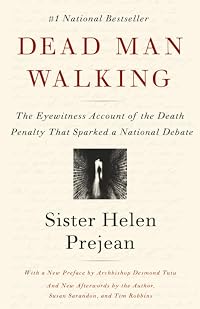
HTML:In 1982, Sister Helen Prejean became the spiritual advisor to Patrick Sonnier, the convicted killer of two teenagers who was sentenced to die in the electric chair of Louisiana’s Angola State Prison. In the months before Sonnier’s death, the Roman Catholic nun came to know a man who was as terrified as he had once been terrifying. She also came to know the families of the victims and the men whose job it was to execute—men who often harbored doubts about the rightness of what show more they were doing.Out of that dreadful intimacy comes a profoundly moving spiritual journey through our system of capital punishment. Here Sister Helen confronts both the plight of the condemned and the rage of the bereaved, the fears of a society shattered by violence and the Christian imperative of love. On its original publication in 1993, Dead Man Walking emerged as an unprecedented look at the human consequences of the death penalty. Now, some two decades later, this story—which has inspired a film, a stage play, an opera and a musical album—is more gut-wrenching than ever, stirring deep and life-changing reflection in all who encounter it.
Read by the author, Helen Prejean
Preface written by Archbishop Desmond Tutu and read by Dominic Hoffman
Afterwords written and read by Susan Sarandon and Tim Robbins. Biography & Autobiography. Nonfiction. Sociology. Law. show less
Tags
Recommendations


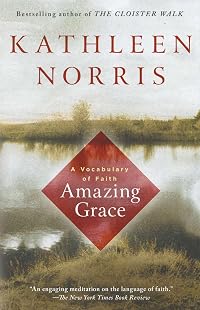
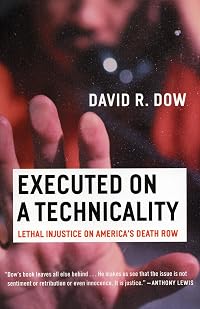


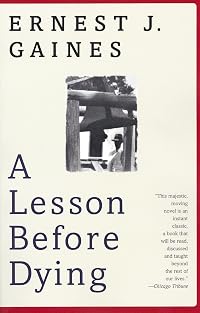
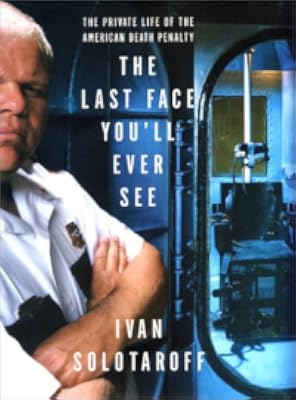
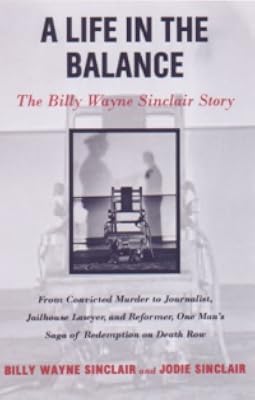

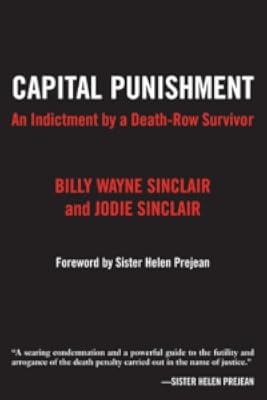


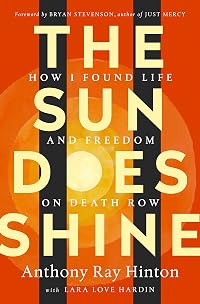
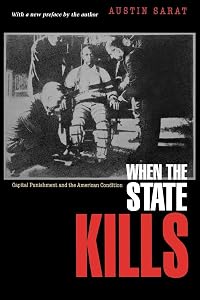



Member Recommendations
Member Reviews
I don’t really know how to describe my experience reading Dead Man Walking.
Draining? Sort of.
Stunning? Yes.
Informative? Certainly.
This book explains Sister Helen Prejean’s, a Catholic Nun, experiences with two different death row inmates in Louisiana. What begins as a simple pen pal exchange with one (Patrick Sonnier), turns into a life-altering experience for Prejean. Prejean, quite simply, learns not only about crime, but also the role that society has played in creating crime. She sees these prisoners not as violent offenders but as the people that they are. She grows to understand that the death penalty is not the best way to retaliate against their crimes, and that often justice in the name of religion isn’t justice at all. show more
I suppose Dead Man Walking managed to shock and horrify me. I read poverty and violence statistics that I had never seen before, and I was ashamed that a country like the United States could be that unjust. People need to know about this structural violence, and they need to take action. As Prejean proves, even small actions can create huge crescents of change.
While heavy on information, this book is a quick read. I suggest that anyone with interest in social activism, Christianity, or criminal justice take the time to check this out. show less
Draining? Sort of.
Stunning? Yes.
Informative? Certainly.
This book explains Sister Helen Prejean’s, a Catholic Nun, experiences with two different death row inmates in Louisiana. What begins as a simple pen pal exchange with one (Patrick Sonnier), turns into a life-altering experience for Prejean. Prejean, quite simply, learns not only about crime, but also the role that society has played in creating crime. She sees these prisoners not as violent offenders but as the people that they are. She grows to understand that the death penalty is not the best way to retaliate against their crimes, and that often justice in the name of religion isn’t justice at all. show more
I suppose Dead Man Walking managed to shock and horrify me. I read poverty and violence statistics that I had never seen before, and I was ashamed that a country like the United States could be that unjust. People need to know about this structural violence, and they need to take action. As Prejean proves, even small actions can create huge crescents of change.
While heavy on information, this book is a quick read. I suggest that anyone with interest in social activism, Christianity, or criminal justice take the time to check this out. show less
I missed this back in the 90s when it was a blockbuster film, but read it recently to prepare to see the opera version. I'm glad I'm in the loop now. Sr. Helen's personal account of spiritually advising men on death row in Louisiana was eye-opening and inspirational. For those who espouse the pro-life movement, this book challenges the dignity and worth of every life. It also exposes flaws in the judicial and prison system where death row inmates are disproportionately poor and of color. What I liked best though was how personal Prejean made this and how willing she was to enter into the darkest moments of another's life and try to lead them to light, not conversion per se, but to understanding and to right relationships. I know she has show more faced criticism for her role in this issue, but she is a much-needed voice of personal experience and humanity. What is most admirable was how she "fell" into this calling and didn't turn away from it, ultimately changing her life's course and focus. Her strength, faith and love are amazing. show less
Sometimes in life, a book comes along that hits you square between the eyes, and has a real impact. You know that book, that you can’t stop thinking about once you’ve finished it? That book that you just didn’t want to put down? That book which made you immediately want to find out more about the author and the subject? For me, this was one of those books.
It is Sister Helen Prejean’s true account of her work as a spiritual adviser to death row inmates in Louisiana, in the 1980s. The book concentrates on her friendship with two very different death row inmates – Elmo Patrick Sonnier and Robert Lee Willie. Sister Helen is completely against the death penalty, and in this book, as well as talking about Sonnier and Willie, she show more lays out her reasons for her feelings, such as how the death penalty is an instituionally racist system, which is biased against black offenders AND black victims. It is also unfairly biased against the poor, who often simply cannot afford a decent defence counsel. She describes how the death penalty is completely ineffective as a deterrent against crime, and how the cost of carrying out executions takes money away from other areas, such as putting more police on the streets. However, this is a review, not a recap of this book, and I do not intend to recount every point Sister Helen makes – although I strongly urge everyone to read it, whatever their views on the death penalty.
I found Sister Helen’s relationships with Sonnier and Willie to be very moving. She acknowledged the heinous crimes they committed - and although the reader knows from the outset that these men are violent and dangerous criminals, in this book, they are also depicted as human beings. Their crimes are in no way excused, but I found it impossible not to feel sorrow when she describes their executions – at the futility of their deaths, which accomplished nothing and did not bring their victims back.
Sister Helen understands the need for some people to see these prisoners “get what they deserve,” and she does not condemn those who disagree wtih her stance. She also was instrumental in setting up support groups for victims of violent crime, and that work is also described in the book. She also fully agrees that the people who commit such vile acts should pay fully for their crimes, but using such an arbitrary and unfair system, is not helping anyone, including the victims. At no time does she seek to trivialise the pain of the victims, or in any way suggest that there are needs are any less important than the cause which she believes in – and she actually forms an interesting friendship with the parents of a murder victim, who are in support of the death penalty.
I cried a number of times while reading this book. Despite the heavy subject matter, Sister Helen’s writing is eloquent and honest – sometimes painfully so – and she is not afraid to acknowledge when she herself has made a mistake in judgement. I found it a very difficult book to put down, and have no doubt that I will read it again in future.
Needless to say, I strongly recommend this book. show less
It is Sister Helen Prejean’s true account of her work as a spiritual adviser to death row inmates in Louisiana, in the 1980s. The book concentrates on her friendship with two very different death row inmates – Elmo Patrick Sonnier and Robert Lee Willie. Sister Helen is completely against the death penalty, and in this book, as well as talking about Sonnier and Willie, she show more lays out her reasons for her feelings, such as how the death penalty is an instituionally racist system, which is biased against black offenders AND black victims. It is also unfairly biased against the poor, who often simply cannot afford a decent defence counsel. She describes how the death penalty is completely ineffective as a deterrent against crime, and how the cost of carrying out executions takes money away from other areas, such as putting more police on the streets. However, this is a review, not a recap of this book, and I do not intend to recount every point Sister Helen makes – although I strongly urge everyone to read it, whatever their views on the death penalty.
I found Sister Helen’s relationships with Sonnier and Willie to be very moving. She acknowledged the heinous crimes they committed - and although the reader knows from the outset that these men are violent and dangerous criminals, in this book, they are also depicted as human beings. Their crimes are in no way excused, but I found it impossible not to feel sorrow when she describes their executions – at the futility of their deaths, which accomplished nothing and did not bring their victims back.
Sister Helen understands the need for some people to see these prisoners “get what they deserve,” and she does not condemn those who disagree wtih her stance. She also was instrumental in setting up support groups for victims of violent crime, and that work is also described in the book. She also fully agrees that the people who commit such vile acts should pay fully for their crimes, but using such an arbitrary and unfair system, is not helping anyone, including the victims. At no time does she seek to trivialise the pain of the victims, or in any way suggest that there are needs are any less important than the cause which she believes in – and she actually forms an interesting friendship with the parents of a murder victim, who are in support of the death penalty.
I cried a number of times while reading this book. Despite the heavy subject matter, Sister Helen’s writing is eloquent and honest – sometimes painfully so – and she is not afraid to acknowledge when she herself has made a mistake in judgement. I found it a very difficult book to put down, and have no doubt that I will read it again in future.
Needless to say, I strongly recommend this book. show less
i think this was probably really important at the time. maybe it's even still important, because i doubt that much has changed around the general statistics (even if executions are less common - although i really don't know if they are or not). certainly the issues of racial and economic inequality in capital punishment (and in the legal system in general) remain the same.
i really appreciate that she hasn't chosen as examples men on death row who are actually innocent (although how specifically guilty i suppose is in question). because her point isn't that innocent people are killed by the government (although it's true, they are), or that rehabilitation is possible (although it is). her point is simply that if it's wrong for these men show more to have killed (and of course it is), then it's also wrong for the state or the government to do the same (and of course it is). she shows the humanity of both sides, of the victims' families as well as the murderers and their families. she is also really honest about how she felt and the assumptions and mistakes she made along the way.
i wish the telling was a bit more polished. it's disjointed at times and inconsistent with tenses, but shows potential for a really compelling narrative. that said, the more i write about it, the more i think this was well done, even though it didn't feel particularly so as i was reading it.
"The mandate [for the Catholic Church] to practice social justice is unsettling because taking on the struggles of the poor invariably means challenging the wealthy and those who serve their [the Church's] interests."
"She pointed out that to claim to be apolitical or neutral in the face of such injustices would be, in actuality, to uphold the status quo - a very political position to take, and on the side of the oppressors." show less
i really appreciate that she hasn't chosen as examples men on death row who are actually innocent (although how specifically guilty i suppose is in question). because her point isn't that innocent people are killed by the government (although it's true, they are), or that rehabilitation is possible (although it is). her point is simply that if it's wrong for these men show more to have killed (and of course it is), then it's also wrong for the state or the government to do the same (and of course it is). she shows the humanity of both sides, of the victims' families as well as the murderers and their families. she is also really honest about how she felt and the assumptions and mistakes she made along the way.
i wish the telling was a bit more polished. it's disjointed at times and inconsistent with tenses, but shows potential for a really compelling narrative. that said, the more i write about it, the more i think this was well done, even though it didn't feel particularly so as i was reading it.
"The mandate [for the Catholic Church] to practice social justice is unsettling because taking on the struggles of the poor invariably means challenging the wealthy and those who serve their [the Church's] interests."
"She pointed out that to claim to be apolitical or neutral in the face of such injustices would be, in actuality, to uphold the status quo - a very political position to take, and on the side of the oppressors." show less
A worthwhile read about a nun (the author)'s friendship with two different death-row inmates, and about their last, short months leading up to their executions. It's a close-up look at something few Americans have an informed opinion on, though most DO have an opinion on it, nevertheless: capital punishment. Many support it, but few want to admit that the people GIVEN the death penalty are, indeed, people. We want to think that they're MONSTERS, that they DESERVE this, that they're evil and the only way to deal with them is to wipe them out. Obviously, Sister Helen's agenda is to convince her readers how primeval of an idea this is. I already agreed with her before I started the book, but she pounds it into you by the end: a show more pre-determined date with death is terrifying at worst, and, at best, mind-bogglingly ridiculous. Not to mention that its application in the courts is definitively "random and capricious". I didn't know this when I first researched the topic as a teenager, but I found out pretty quick. I started the project as an advocate for capital punishment, and wasn't even halfway through my research before I changed my mind. It doesn't take much--just the effort to educate oneself.
The two inmates Sister Helen befriends represent two opposite ends of the spectrum, in the way they approach their looming executions. Patrick Sonnier is scared shitless and does not want to go, while Robert Lee Willie lives incredibly detached and in the moment. He even winks at Sister Helen before they pull the mask over his face. She does a good job of telling their stories, of making them live on in the pages of this book. When they are killed, sympathetic readers WILL feel a twinge or more of sadness that they are gone. I mean, it's so bizarre. Death, in general, gives one that feeling: it's an unfathomable mystery, and here the government is, using it as a penalty for crime. I agree with the author: it's so *wrong*.
But I'm also glad Sister Helen pulls the victims' families' stories into this, and becomes *their* advocate by the end, too. She uniquely and successfully straddles a difficult divide: championing the cause of both victim and offender. I admire how she actively debates the issue of capital punishment with opponents, and manages to hear the other person out even while making herself heard. It's not just in one ear out the other, with her. She listens AND she walks the talk. In fact, she's so good at articulating what she believes and then acting, promptly and decisively, on it, that I wouldn't be surprised if she became a saint one day.
On the same token, the religious spin is the only part I wish I could take out, because I don't think it's central to these two inmates' life stories. However, it IS central to the author's identity, and so a few rabbit trails about the love of Jesus are somewhat inevitable. Hers is at least one brand of religion I wish were more common, as opposed to others.
All in all, a highly recommendable read. show less
The two inmates Sister Helen befriends represent two opposite ends of the spectrum, in the way they approach their looming executions. Patrick Sonnier is scared shitless and does not want to go, while Robert Lee Willie lives incredibly detached and in the moment. He even winks at Sister Helen before they pull the mask over his face. She does a good job of telling their stories, of making them live on in the pages of this book. When they are killed, sympathetic readers WILL feel a twinge or more of sadness that they are gone. I mean, it's so bizarre. Death, in general, gives one that feeling: it's an unfathomable mystery, and here the government is, using it as a penalty for crime. I agree with the author: it's so *wrong*.
But I'm also glad Sister Helen pulls the victims' families' stories into this, and becomes *their* advocate by the end, too. She uniquely and successfully straddles a difficult divide: championing the cause of both victim and offender. I admire how she actively debates the issue of capital punishment with opponents, and manages to hear the other person out even while making herself heard. It's not just in one ear out the other, with her. She listens AND she walks the talk. In fact, she's so good at articulating what she believes and then acting, promptly and decisively, on it, that I wouldn't be surprised if she became a saint one day.
On the same token, the religious spin is the only part I wish I could take out, because I don't think it's central to these two inmates' life stories. However, it IS central to the author's identity, and so a few rabbit trails about the love of Jesus are somewhat inevitable. Hers is at least one brand of religion I wish were more common, as opposed to others.
All in all, a highly recommendable read. show less
Read it so long ago but I remember its effect on me. Well and simply written, it's a powerful portrayal of several death row inmates by Sister Helen, who did not believe anyone was all bad. I don't either. With Helen, I don't believe a person should be remembered for the one worst thing he or she did in her or his life.
This book was a exhausting read. I mean that in a good way. I have watched the movie many times, but the book surpassed it. I felt plunged into Sister Prejean's world as she works with the people who are involved in the death penalty. I learned alot about the unsung heroes that work with her. Those people moved me just as much as her overall story. Their passion, for no publicity, no financial reward, just to right a wrong made this story uber special.
Members
- Recently Added By
Lists

Non-fiction
55 works; 1 member

Club Read's Recommended Nonfiction Written by Women
618 works; 30 members
Author Information

10+ Works 2,100 Members
Some Editions
Awards and Honors
Distinctions
Series

Work Relationships
Has the adaptation
Is replied to in
Common Knowledge
- Canonical title
- Dead Man Walking
- Alternate titles
- Dead Man Walking: An Eyewitness Account of the Death Penalty in the United States
- Original publication date
- 1993
- People/Characters
- Elmo Patrick Sonnier; Loretta Bourque; David LeBlanc
- Related movies
- Dead Man Walking (1995 | IMDb)
- Original language
- English
Classifications
- Genres
- Nonfiction, Biography & Memoir, General Nonfiction
- DDC/MDS
- 364.660973 — Society, government, & culture Social problems and social services Crime Punishment Death penalty
- LCC
- HV8699 .U5 .P74 — Social sciences Social pathology. Social and public welfare. Criminology Social pathology. Social and public welfare. Criminal justice administration Penology. Prisons. Corrections
- BISAC
Statistics
- Members
- 1,649
- Popularity
- 13,683
- Reviews
- 21
- Rating
- (4.13)
- Languages
- 7 — Danish, English, French, German, Italian, Spanish, Swedish
- Media
- Paper, Audiobook, Ebook
- ISBNs
- 21
- UPCs
- 1
- ASINs
- 15