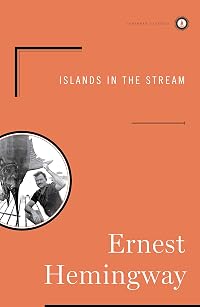
Islands in the Stream
by Ernest Hemingway 
On This Page
Description
First published in 1970, nine years after Ernest Hemingway's death, Islands in the Stream is the story of an artist and adventurer -- a man much like Hemingway himself. Rich with the uncanny sense of life and action characteristic of his writing -- from his earliest stories (In Our Time) to his last novella (The Old Man and the Sea) -- this compelling novel contains both the warmth of recollection that inspired A Moveable Feast and a rare glimpse of Hemingway's rich and relaxed sense of show more humor, which enlivens scene after scene. Beginning in the 1930s, Islands in the Stream follows the fortunes of Thomas Hudson from his experiences as a painter on the Gulf Stream island of Bimini, where his loneliness is broken by the vacation visit of his three young sons, to his antisubmarine activities off the coast of Cuba during World War II. The greater part of the story takes place in a Havana bar, where a wildly diverse cast of characters -- including an aging prostitute who stands out as one of Hemingway's most vivid creations -- engages in incomparably rich dialogue. A brilliant portrait of the inner life of a complex and endlessly intriguing man, Islands in the Stream is Hemingway at his mature best. show lessTags
Recommendations










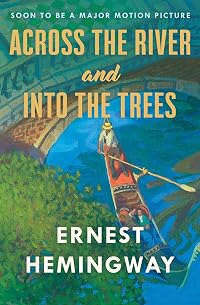




Member Recommendations
Member Reviews
"He thought that on the ship he could come to some terms with his sorrow, not knowing, yet, that there are no terms to be made with sorrow. It can be cured by death and it can be blunted or anaesthetized by various things. Time is supposed to cure it, too. But if it is cured by anything less than death, the chances are that it was not true sorrow." (pg. 193)
Having read almost everything Ernest Hemingway published in his lifetime, I am pleased that his finer qualities can also be found in his posthumously published manuscripts. Of course, I know these sorts of works often have a murky tint of commercial opportunism, but it is good for fans of a particular style to immerse themselves fully in everything a writer had to offer. I also know show more such partially-completed or unrevised manuscripts can – for some – taint a writer's legacy but I do not personally feel this way. Just as when I listen to a new Jimi Hendrix bootleg I don't expect to come across a song as immaculate and well-conceived as 'All Along the Watchtower' or 'Bold as Love', I don't approach Islands in the Stream expecting it to top For Whom the Bell Tolls or The Old Man and the Sea. It doesn't make what went before any less brilliant.
But you do have to provide your filters more thoroughly and if you do there's still a lot of gold-dust to be found. Split up into three loosely-connected acts (perhaps Hemingway would have provided more polish to these had he lived), Islands in the Stream, despite its lack of revision, has a consistent theme: that of a man looking back over the sadness of his life and the melancholy inherent in even the good memories he has had. Some of the despair is on a slow burn; at other times it is like a gut punch. Either way, it is an interesting continuation of Hemingway's late-period retrospection also seen in under-rated works like Across the River and Into the Trees and the posthumous A Moveable Feast. There's a lot of weary hopefulness, of finding contentment in small mercies ("If you always steered with the sun behind you and on a day like this, what a place the ocean would be." (pg. 358)) and the whole book reads as an effort of will: of a great and dying beast making one final, creaking rise in pursuit of something which it cannot articulate but knows to be true.
Actually, that makes it sound rather dour but that is not the case: all Hemingway's sharp qualities are on display, not least his skills of observation. Due to its largely unedited form, Islands in the Stream is more expansive and – yes – indulgent when it comes to descriptive writing. This can be a drawback, as I shall come onto presently, but it also means Hemingway goes into great depth about the sights and the smells and the feelings evoked by everything the characters witness. In this book, we experience Hemingway's already-high perception turned up to eleven.
But Islands in the Stream is still a posthumous work, and one cannot but help the feeling that Hemingway would have pared back some of the prose before agreeing to publication, had he been alive. At 450 pages, it is far longer than any of his other novels save For Whom the Bell Tolls, but at 490 pages that epic was permissible in breaking the mold as it was Hemingway's magnum opus. Islands in the Stream, in contrast, has a lot of excessive scene-setting and conversations that don't seem to serve any purpose, such as one on page 102 in which two characters talk about mustard and chutney and one asks whether the other has ever had it on a sandwich. (If you're gripped by that, the response from the other character is "No.") It is natural in posthumous works for editors to want to include as much of the available manuscript as possible – in the heartbreaking knowledge that there will be no further manuscripts delivered – but it ignores the fact that even great writers in their careers submit their work to editors and have entire sections cleaved or reworked. The posthumous publication denied Hemingway of two of his finest qualities: brevity and editorial ruthlessness. However, it needs to be stressed that the rest of his writing qualities are very much on display. Hemingway's adherence to perception and truth and cleanliness in prose is one of his greatest attractions to a reader, and it is a commitment that he carries right through to the final line of Islands in the Stream, which is as true a line as the man ever wrote.
"You never understand anybody that loves you." (pg. 450) show less
Having read almost everything Ernest Hemingway published in his lifetime, I am pleased that his finer qualities can also be found in his posthumously published manuscripts. Of course, I know these sorts of works often have a murky tint of commercial opportunism, but it is good for fans of a particular style to immerse themselves fully in everything a writer had to offer. I also know show more such partially-completed or unrevised manuscripts can – for some – taint a writer's legacy but I do not personally feel this way. Just as when I listen to a new Jimi Hendrix bootleg I don't expect to come across a song as immaculate and well-conceived as 'All Along the Watchtower' or 'Bold as Love', I don't approach Islands in the Stream expecting it to top For Whom the Bell Tolls or The Old Man and the Sea. It doesn't make what went before any less brilliant.
But you do have to provide your filters more thoroughly and if you do there's still a lot of gold-dust to be found. Split up into three loosely-connected acts (perhaps Hemingway would have provided more polish to these had he lived), Islands in the Stream, despite its lack of revision, has a consistent theme: that of a man looking back over the sadness of his life and the melancholy inherent in even the good memories he has had. Some of the despair is on a slow burn; at other times it is like a gut punch. Either way, it is an interesting continuation of Hemingway's late-period retrospection also seen in under-rated works like Across the River and Into the Trees and the posthumous A Moveable Feast. There's a lot of weary hopefulness, of finding contentment in small mercies ("If you always steered with the sun behind you and on a day like this, what a place the ocean would be." (pg. 358)) and the whole book reads as an effort of will: of a great and dying beast making one final, creaking rise in pursuit of something which it cannot articulate but knows to be true.
Actually, that makes it sound rather dour but that is not the case: all Hemingway's sharp qualities are on display, not least his skills of observation. Due to its largely unedited form, Islands in the Stream is more expansive and – yes – indulgent when it comes to descriptive writing. This can be a drawback, as I shall come onto presently, but it also means Hemingway goes into great depth about the sights and the smells and the feelings evoked by everything the characters witness. In this book, we experience Hemingway's already-high perception turned up to eleven.
But Islands in the Stream is still a posthumous work, and one cannot but help the feeling that Hemingway would have pared back some of the prose before agreeing to publication, had he been alive. At 450 pages, it is far longer than any of his other novels save For Whom the Bell Tolls, but at 490 pages that epic was permissible in breaking the mold as it was Hemingway's magnum opus. Islands in the Stream, in contrast, has a lot of excessive scene-setting and conversations that don't seem to serve any purpose, such as one on page 102 in which two characters talk about mustard and chutney and one asks whether the other has ever had it on a sandwich. (If you're gripped by that, the response from the other character is "No.") It is natural in posthumous works for editors to want to include as much of the available manuscript as possible – in the heartbreaking knowledge that there will be no further manuscripts delivered – but it ignores the fact that even great writers in their careers submit their work to editors and have entire sections cleaved or reworked. The posthumous publication denied Hemingway of two of his finest qualities: brevity and editorial ruthlessness. However, it needs to be stressed that the rest of his writing qualities are very much on display. Hemingway's adherence to perception and truth and cleanliness in prose is one of his greatest attractions to a reader, and it is a commitment that he carries right through to the final line of Islands in the Stream, which is as true a line as the man ever wrote.
"You never understand anybody that loves you." (pg. 450) show less
I've long been a fan of Old Man and the Sea - it was my all time favorite beach read a while back. So, when I learned that these stories constituted the foundation and origin of that story, I was eager to read it on vacation this year. Our vacation was interrupted, and reading wasn't an option, so I'm just now finishing it - far from the shore.
Islands in the Stream are three connected stories published together posthumously by Hemingway's wife and publisher. They had editing duties - giving 400 or so pages the ax - but informed sources say they were well acquainted with EH's editorial preferences, and they added nothing to the text.
The protagonist is a wealthy painter with a history of being an international celebrity who hobnobs with show more the greatest minds and creators of his time... this isn't a relatable circumstance, but probably what readers wanted most with their escapism reading. The wealth and privilege aren't very becoming when it comes to how his life of leisure, stable of servants, and variety of luxury living situations are concerned. This isn't to say he lives a life free of pain. Pain is something he has no shortage of, and as the story progresses - it becomes nearly all he has.
It was endearing and fascinating to read how "the other half" lives, and how that life relates to (and is in contrast with) my own experience. Especially when we have art in common. Thomas Hudson prides himself on a strong work ethic - probably to not lose his male audience who already has to swallow the story of a man who lives in luxury doing as he wishes, with occasional visits from (virtually abandoned) children and starlet ex-wives. Very little of his character's mindset is relatable to an artist. Rather - TH sounds a lot more like a writer posing as an artist (several factors make Stephen King's Duma Key look to be influenced by IitS).
The sections were of distinctly different tones and flavors. The protagonist at times only feels like the same character because he shares the same name, and sparse sentences of reference to an earlier phase of life. He certainly strives to erase his pain by both ignoring it, and drinking his brain into a state malleable enough to forget. The sources of his pain are felt and empathized with by this reader, at least, so that tenuous connection still holds.
It isn't 100% clear how Old Man and the Sea originated with this period of working - but if it was intended as follow-up to a struggle in the first act (Bimini), the result will always be a different staging when reading OMatS, and a powerful one.
Hemingway is forever analyzed for his portrayal of gendered issues - and those looking closely tend to give him more slack as the years go by. I don't personally get the sexist claims and demonized perspective others paint him with - I see genuine reflection, given honestly, by someone who loves women - but is not himself a woman or a man who would make an effort to put himself in a woman's shoes, not being one. There may be an empathy gap there - but his empathy gap is broad and showing at all times for other men, of other race, proclivity, social and financial means. He's true to himself (whatever we think of that self), and he proudly broadcasts that women are frequently at the center of all his happiest memories, relationships, and enriching life moments.
A man feeling a need to erase painful loses is at the heart of the stories. So much so, that a couple of those critical and pointed loses are never again referred to after book one. The absence hurt me. The lost lives were more pronounced for it. By not dealing with some things, he made those things much, much bigger - but the notion that a man must cry, but that seeing that crying is a chief disgust, has shackled him to a damaged and hobbled existence with dwindling meaning. And we (I) never stop relating and connecting with that life. At times uncomfortable, to say the least, I never stopped liking the story and wanting more of it.
The book reads like an album assembled by the family, and remaining band members, after the death of a band's lead vocalist. I can't see it as complete or as a pure product of its creator - however hard I try. That is what keeps it from achieving a 5th star, for me. But it is his work, and what's there of it is absolutely worth the time to share with him. show less
Islands in the Stream are three connected stories published together posthumously by Hemingway's wife and publisher. They had editing duties - giving 400 or so pages the ax - but informed sources say they were well acquainted with EH's editorial preferences, and they added nothing to the text.
The protagonist is a wealthy painter with a history of being an international celebrity who hobnobs with show more the greatest minds and creators of his time... this isn't a relatable circumstance, but probably what readers wanted most with their escapism reading. The wealth and privilege aren't very becoming when it comes to how his life of leisure, stable of servants, and variety of luxury living situations are concerned. This isn't to say he lives a life free of pain. Pain is something he has no shortage of, and as the story progresses - it becomes nearly all he has.
It was endearing and fascinating to read how "the other half" lives, and how that life relates to (and is in contrast with) my own experience. Especially when we have art in common. Thomas Hudson prides himself on a strong work ethic - probably to not lose his male audience who already has to swallow the story of a man who lives in luxury doing as he wishes, with occasional visits from (virtually abandoned) children and starlet ex-wives. Very little of his character's mindset is relatable to an artist. Rather - TH sounds a lot more like a writer posing as an artist (several factors make Stephen King's Duma Key look to be influenced by IitS).
The sections were of distinctly different tones and flavors. The protagonist at times only feels like the same character because he shares the same name, and sparse sentences of reference to an earlier phase of life. He certainly strives to erase his pain by both ignoring it, and drinking his brain into a state malleable enough to forget. The sources of his pain are felt and empathized with by this reader, at least, so that tenuous connection still holds.
It isn't 100% clear how Old Man and the Sea originated with this period of working - but if it was intended as follow-up to a struggle in the first act (Bimini), the result will always be a different staging when reading OMatS, and a powerful one.
Hemingway is forever analyzed for his portrayal of gendered issues - and those looking closely tend to give him more slack as the years go by. I don't personally get the sexist claims and demonized perspective others paint him with - I see genuine reflection, given honestly, by someone who loves women - but is not himself a woman or a man who would make an effort to put himself in a woman's shoes, not being one. There may be an empathy gap there - but his empathy gap is broad and showing at all times for other men, of other race, proclivity, social and financial means. He's true to himself (whatever we think of that self), and he proudly broadcasts that women are frequently at the center of all his happiest memories, relationships, and enriching life moments.
A man feeling a need to erase painful loses is at the heart of the stories. So much so, that a couple of those critical and pointed loses are never again referred to after book one. The absence hurt me. The lost lives were more pronounced for it. By not dealing with some things, he made those things much, much bigger - but the notion that a man must cry, but that seeing that crying is a chief disgust, has shackled him to a damaged and hobbled existence with dwindling meaning. And we (I) never stop relating and connecting with that life. At times uncomfortable, to say the least, I never stopped liking the story and wanting more of it.
The book reads like an album assembled by the family, and remaining band members, after the death of a band's lead vocalist. I can't see it as complete or as a pure product of its creator - however hard I try. That is what keeps it from achieving a 5th star, for me. But it is his work, and what's there of it is absolutely worth the time to share with him. show less
I’ve long been a fan of Hemingway. I even got to visit the house on Key West last summer. Yet I found this to be a meandering mess. True enough, this was posthumously published, but I suspect there was a reason why Papa never got around to finishing this before he died. It reminded me of Harper Lee, and the relationship of Go Set a Watchman to To Kill a Mockingbird. Disappointing.
A powerful read,, 17 January 2016
This review is from: Islands in the Stream (Paperback)
This work, like most of Hemingway's work, is extremely 'blokey' in style and subject matter. Fishing, fighting, drinking and war form the backdrop. And yet despite the fact that these are emphatically 'not my thing' I kept on reading. And although I somewhat lost the drift of the finer points of manoeuvres in the German occupied Cuban keys, (and did find my attention slightly wandering, if I'm honest), I have to give it a *4.
This is the story of Tom Hudson, a painter on the Bahaman island of Bimini in the 30s. Twice divorced, he looks forward to the visit of his three sons...
In the second part, it's a few years later, WWII is here, and we meet Tom on show more shore leave in Cuba .
And in the third section, Tom is leading a crew as they try to flush out a German boat in the mangrove swamps of the keys...
I knew this was a strong book when a certain something happens and you hadn't seen it coming and feel like you've been punched in the stomach. There's a lot of dialogue, through which you feel you're getting to know the characters. Also moments of real humour, which again bring the people more vvidly to life.
Re-read the first part when you know how the story pans out: it tears you apart. show less
This review is from: Islands in the Stream (Paperback)
This work, like most of Hemingway's work, is extremely 'blokey' in style and subject matter. Fishing, fighting, drinking and war form the backdrop. And yet despite the fact that these are emphatically 'not my thing' I kept on reading. And although I somewhat lost the drift of the finer points of manoeuvres in the German occupied Cuban keys, (and did find my attention slightly wandering, if I'm honest), I have to give it a *4.
This is the story of Tom Hudson, a painter on the Bahaman island of Bimini in the 30s. Twice divorced, he looks forward to the visit of his three sons...
In the second part, it's a few years later, WWII is here, and we meet Tom on show more shore leave in Cuba .
And in the third section, Tom is leading a crew as they try to flush out a German boat in the mangrove swamps of the keys...
I knew this was a strong book when a certain something happens and you hadn't seen it coming and feel like you've been punched in the stomach. There's a lot of dialogue, through which you feel you're getting to know the characters. Also moments of real humour, which again bring the people more vvidly to life.
Re-read the first part when you know how the story pans out: it tears you apart. show less
This is one of the last Hemingway books that I haven't read. Overall, it's a very interesting portrait of Thomas Hudson-- a painter, and the various locations that he travels to. A bunch of the book is set with his three children while another part of it goes to a bar in Havana. Finally, there are the exploits that he takes hunting U-boats in WW2 (an experience tightened up by Hemingway's own experiences doing the same.) It is an intimate self-portrait of Hudson that is highly revealing and stark with Hemingway's own experience.
Nonetheless, I felt that the prose faltered at many parts and that the story wandered and meandered through much of its duration. I did not feel that this was true Hemingway, rather than being a manuscript that show more was not realized in its full potential before Hemingway's death and was, likewise, published.
2 stars. show less
Nonetheless, I felt that the prose faltered at many parts and that the story wandered and meandered through much of its duration. I did not feel that this was true Hemingway, rather than being a manuscript that show more was not realized in its full potential before Hemingway's death and was, likewise, published.
2 stars. show less
I am convinced if you want to turn kids off from reading make them read most any of “the classics”
These books are for the most part are not something kids can relate to in the 21st century.
If you really want to discourage reading give them a book by Ernest Hemingway.
I hated his writing, in high school, college, and now in my 50’s.
Yes I know this book was released after he killed himself. It doesn’t matter. It has all of the pain of any Hemingway book.
Hemingway’s writing is great when it is describing scenery or situations. Where it is painfully awful is dialogue between characters.
Conversation usually involves one or more characters well on their way to being drunk. And like a drunk in a bar nothing they have to say is worth show more listening to.
In this book most of the section labeled Cuba is nearly unreadable.
Also women are always portrayed as emotional train wrecks. That is the case in this book as well.
In the section called Bimini the dialogue involving the main character Thomas Hudson and his children is so awful, no children speak like this.
The ultimate problem with Hemingway books is that the main character in every one of them is actually Ernest Hemingway himself. Then Hemingway writes the character as a combination of how Hemingway wants to believe he would speak, act,and behave, and the way he actually does.
No more Hemingway for me. show less
These books are for the most part are not something kids can relate to in the 21st century.
If you really want to discourage reading give them a book by Ernest Hemingway.
I hated his writing, in high school, college, and now in my 50’s.
Yes I know this book was released after he killed himself. It doesn’t matter. It has all of the pain of any Hemingway book.
Hemingway’s writing is great when it is describing scenery or situations. Where it is painfully awful is dialogue between characters.
Conversation usually involves one or more characters well on their way to being drunk. And like a drunk in a bar nothing they have to say is worth show more listening to.
In this book most of the section labeled Cuba is nearly unreadable.
Also women are always portrayed as emotional train wrecks. That is the case in this book as well.
In the section called Bimini the dialogue involving the main character Thomas Hudson and his children is so awful, no children speak like this.
The ultimate problem with Hemingway books is that the main character in every one of them is actually Ernest Hemingway himself. Then Hemingway writes the character as a combination of how Hemingway wants to believe he would speak, act,and behave, and the way he actually does.
No more Hemingway for me. show less
This is the most honest book I've ever read. It's based on his own experiences as a fisherman, sub hunter, and artist. But he seems to put a lot of his private melancholy into this one, more than his other works. I give it a five, though I think it was longer than needed. I suspect he would have edited it down even more than his heirs did. I also appreciate the rare book that can combine nature, romance, and adventure with equal depth in the same story.
Members
- Recently Added By
Published Reviews
ThingScore 25
". . . a complete, well-rounded novel, a contender with his very best. It has his characteristic blend of strong-running narrative and reflective mememto mori and it is 100-proof Old Ernest, most of it."
added by GYKM
This book does not make it. I wanted this book to make it. I have been pulling for Hemingway to hit one out of the lot for a long time now. I wanted another novel like The Sun Also Rises, A Farewell to Arms, or To Have and Have Not... So here, in Islands in the Stream, is his last at bat. From beyond the grave. What a chance for drama! But Mr. Hemingway took a called third strike, lying show more down...
All in all, Hemingway knows his men and his war and his food and his drinks and the wind and the sea and the birds, and how to boat, and he knows his crabs and his wild boars and his dogs and his insects, and he knows his death is coming. He’s weak on his women but most of us are, and his conversations aren’t quite real; they are Hemingway conversations, but once you realize this you can accept them. And there’s free knowledge in the book on all sorts of little things besides making good drinks. Although I don’t care too much for his peanut butter with raw onion sandwiches... No, the book doesn’t make it. Few do. I’d say buy it just to know which way things went. They went that way. And he’s gone now. show less
All in all, Hemingway knows his men and his war and his food and his drinks and the wind and the sea and the birds, and how to boat, and he knows his crabs and his wild boars and his dogs and his insects, and he knows his death is coming. He’s weak on his women but most of us are, and his conversations aren’t quite real; they are Hemingway conversations, but once you realize this you can accept them. And there’s free knowledge in the book on all sorts of little things besides making good drinks. Although I don’t care too much for his peanut butter with raw onion sandwiches... No, the book doesn’t make it. Few do. I’d say buy it just to know which way things went. They went that way. And he’s gone now. show less
added by SnootyBaronet
Lists

Books Set on Islands
190 works; 24 members

Publisher's Weekly Bestsellers - Part II - 1940 - 1979
355 works; 5 members

Published in 1970
58 works; 7 members

Literary Travel Fiction
6 works; 4 members

Books We Love to Reread
688 works; 296 members

1970 Club
85 works; 2 members
Author Information

661+ Works 173,922 Members
Ernest Miller Hemingway was born in the family home in Oak Park, Ill., on July 21, 1899. In high school, Hemingway enjoyed working on The Trapeze, his school newspaper, where he wrote his first articles. Upon graduation in the spring of 1917, Hemingway took a job as a cub reporter for the Kansas City Star. After a short stint in the U.S. Army as a show more volunteer Red Cross ambulance driver in Italy, Hemingway moved to Paris, and it was here that Hemingway began his well-documented career as a novelist. Hemingway's first collection of short stories and vignettes, entitled In Our Time, was published in 1925. His first major novel, The Sun Also Rises, the story of American and English expatriates in Paris and on excursion to Pamplona, immediately established him as one of the great prose stylists and preeminent writers of his time. In this book, Hemingway quotes Gertrude Stein, "You are all a lost generation," thereby labeling himself and other expatriate writers, including F. Scott Fitzgerald, T.S. Eliot, and Ford Madox Ford. Other novels written by Hemingway include: A Farewell To Arms, the story, based in part on Hemingway's life, of an American ambulance driver on the Italian front and his passion for a beautiful English nurse; For Whom the Bell Tolls, the story of an American who fought, loved, and died with the guerrillas in the mountains of Spain; and To Have and Have Not, about an honest man forced into running contraband between Cuba and Key West. Non-fiction includes Green Hills of Africa, Hemingway's lyrical journal of a month on safari in East Africa; and A Moveable Feast, his recollections of Paris in the Roaring 20s. In 1954, Hemingway won the Nobel Prize in Literature for his novella, The Old Man and the Sea. A year after being hospitalized for uncontrolled high blood pressure, liver disease, diabetes, and depression, Hemingway committed suicide on July 2, 1961, in Ketchum, Idaho. (Bowker Author Biography) show less
Ernest Hemingway has a Legacy Library. Legacy libraries are the personal libraries of famous readers, entered by LibraryThing members from the Legacy Libraries group.
Some Editions
Awards and Honors
Distinctions
Series
Belongs to Publisher Series
Work Relationships
Has the adaptation
Common Knowledge
- Canonical title
- Islands in the Stream
- Original title
- Islands in the Stream
- Original publication date
- 1970
- People/Characters
- Thomas Hudson; Roger; "Young" Tom Hudson; David Hudson; Andy Hudson; Tom's Mother (show all 7); Honest 'Lil
- Important places
- Bimini, Bahamas; Cuba; Bahamas
- Related movies
- Islands in the Stream (1977 | IMDb)
- First words
- The house was built on the highest part of the narrow tounge of land between the harbor and the open sea.
- Last words
- (Click to show. Warning: May contain spoilers.)"Oh shit," willie said. "You never stand anybody that loves you."
- Original language*
- Inglés
*Some information comes from Common Knowledge in other languages. Click "Edit" for more information.
Classifications
Statistics
- Members
- 3,159
- Popularity
- 5,500
- Reviews
- 32
- Rating
- (3.73)
- Languages
- 19 — Czech, Danish, Dutch, English, Finnish, French, German, Hebrew, Hungarian, Italian, Lithuanian, Polish, Portuguese, Romanian, Russian, Slovak, Spanish, Swedish, Turkish
- Media
- Paper, Audiobook, Ebook
- ISBNs
- 86
- UPCs
- 1
- ASINs
- 73