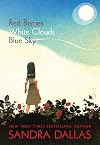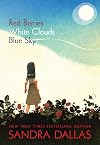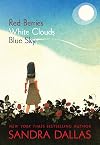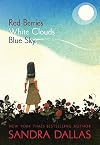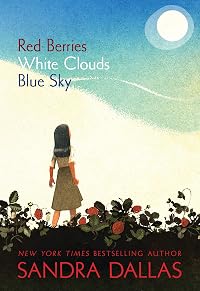
Red Berries, White Clouds, Blue Sky
by Sandra Dallas
On This Page
Description
It's 1942: Tomi Itano, 12, is a second-generation Japanese American who lives in California with her family on their strawberry farm. Although her parents came from Japan and her grandparents still live there, Tomi considers herself an American. She doesn't speak Japanese and has never been to Japan. But after the Japanese attack on Pearl Harbor, things change. No Japs Allowed signs hang in store windows and Tomi's family is ostracized. Things get much worse. Suspected as a spy, Tomi's show more father is taken away. The rest of the Itano family is sent to an internment camp in Colorado. Many other Japanese American families face a similar fate. Tomi becomes bitter, wondering how her country could treat her and her family like the enemy. What does she need to do to prove she is an honorable American? Sandra Dallas shines a light on a dark period of American history in this story of a young Japanese American girl caught up in the prejudices and World War II. show lessTags
Recommendations














Member Reviews
3.5***
Dallas returns to the issue of internment camps where US residents of Japanese heritage were interred during World War II. Her previous novel, Tallgrass was an adult book, told from the perspective of the townsfolk near where the camp is located. In this novel, suitable for middle-school children, she focuses on one Japanese-American family and their experiences inside the camp.
Tomi Itano is the middle child and only girl in her family. She’s a good student and has heard the news of Pearl Harbor. Still, when “No Japs allowed” signs begin appearing in local stores she’s taken aback. Then her family is forced to leave the strawberry farm they’ve worked so hard to make successful to be moved first to a horse barn at a show more race track and finally to the camp known as Tallgrass, near Ellis, Colorado.
Dallas deals well with this episode of USA’s history. She explores how the knee-jerk reactions of politicians and a scared populace resulted in the imprisonment of many completely innocent people of Japanese heritage. She shows how ill-equipped the camps were for the influx of residents, and details the efforts made by the Japanese-Americans to improve the conditions, and form their own governing groups within the camps. I liked how she showed the different attitudes and coping mechanisms that people employed. Some despaired, while others overcame their fears and uncertainties to become leaders. Some used humor, while others channeled their anger and outrage into positive action. Some held themselves apart, while others joined the community to make the best of a terrible situation. show less
Dallas returns to the issue of internment camps where US residents of Japanese heritage were interred during World War II. Her previous novel, Tallgrass was an adult book, told from the perspective of the townsfolk near where the camp is located. In this novel, suitable for middle-school children, she focuses on one Japanese-American family and their experiences inside the camp.
Tomi Itano is the middle child and only girl in her family. She’s a good student and has heard the news of Pearl Harbor. Still, when “No Japs allowed” signs begin appearing in local stores she’s taken aback. Then her family is forced to leave the strawberry farm they’ve worked so hard to make successful to be moved first to a horse barn at a show more race track and finally to the camp known as Tallgrass, near Ellis, Colorado.
Dallas deals well with this episode of USA’s history. She explores how the knee-jerk reactions of politicians and a scared populace resulted in the imprisonment of many completely innocent people of Japanese heritage. She shows how ill-equipped the camps were for the influx of residents, and details the efforts made by the Japanese-Americans to improve the conditions, and form their own governing groups within the camps. I liked how she showed the different attitudes and coping mechanisms that people employed. Some despaired, while others overcame their fears and uncertainties to become leaders. Some used humor, while others channeled their anger and outrage into positive action. Some held themselves apart, while others joined the community to make the best of a terrible situation. show less
I really like Sandra Dallas and was happy to see her writing for children. I enjoyed this. I was glad to see the positive outlook to such a sad situation. This optimism is what I have loved about reading children's books. That said I did have a concern about the ending. It was a happy one, but I did wonder how many internees could boast of such a homecoming. Any other ending might have opened us to a new book about how the family fares as they rebuild their lives. I wonder if Ms Dallas has thought of exploring this in her writing. She is so talented.
In 1942 twelve year old Tomi Itano and her family work on their strawberry farm in California. She loves the way the red berries look against the white clouds and blue sky because it reminds her of the flag. She is a second generation Japanese American and couldn’t be more proud to be an American. When Tomi walks to town with her younger brother she is surprised to see a sign in a window proclaiming that Japanese are not allowed. She and her brothers were born in America, and they don’t even speak Japanese. Her father is suspected of being a spy and is taken away in handcuffs, and the fear in her heart becomes very real. Soon Tomi’s mother is selling all their belongings except a few things they will take with them when the show more government relocates them. Where are they going? They aren’t sure, but they eventually end up in an internment camp with other Japanese families they don’t know in Colorado. Tomi works to have a good attitude and helps her mom make their new home feel a little better. As time stretches on and the family is forced to live in poor conditions apart from the rest of the country, it's harder to be positive. Tomi is confused by the way they're treated and becomes bitter. Will Tomi see her father again? How long with the Itanos and other families need to stay in the internment camp? Will things ever get better? You’ll have to read this book to find out how things turn out for Tomi and her family.
Red Berries, White Clouds, Blue Sky by Sandra Dallas is a wonderful historical fiction book about a family who will tug at your heart. I could relate to Tomi and I felt sad for her when her life changed. I can’t imagine having to go through something like that, and not knowing if her life would ever go back to normal must have been terrifying. I would recommend this book to kids in fourth grade and up who enjoy learning about history. I think a lot of people know about World War II, but so many kids, and I am sure some adults, do not know much about internment camps. We get to see what life was like for a typical family who was forced out of their home and had to live under government supervision. I found myself hoping that good things would come their way and was impressed with their perseverance. We can all learn a lot from history and it is a reminder not to judge people or treat them differently because of their background. I look forward to reading more books about this time in history. show less
Red Berries, White Clouds, Blue Sky by Sandra Dallas is a wonderful historical fiction book about a family who will tug at your heart. I could relate to Tomi and I felt sad for her when her life changed. I can’t imagine having to go through something like that, and not knowing if her life would ever go back to normal must have been terrifying. I would recommend this book to kids in fourth grade and up who enjoy learning about history. I think a lot of people know about World War II, but so many kids, and I am sure some adults, do not know much about internment camps. We get to see what life was like for a typical family who was forced out of their home and had to live under government supervision. I found myself hoping that good things would come their way and was impressed with their perseverance. We can all learn a lot from history and it is a reminder not to judge people or treat them differently because of their background. I look forward to reading more books about this time in history. show less
I really enjoyed the characters in this book because they had spirits that could not be broken. This author writes beautiful juvenile fiction and adult fiction. This author did a good job of presenting America in its true form. I thought this quote did a summary of an under theme in this book; "I thought America was pretty good country, until the war came along. Then I learned America isn't for a Japanese man or a Japanese woman. It isn't for Japanese children who are born in America either." Good did come about in the end, but the hardship was present also.
Everything changes for Tomi, a Japanese American once the attack of Pearl Harbor takes place. Tomi's father is taken from the family and the family is relocated to an internment camp in Colorado. This story follows Tomi's life in camp and how the families worked together to make the best of their relocation. This is a story of love, family, devotion, and war. Wonderful story to teach about history and how life can change in an instant.
Recommended for Middle School.
Recommended for Middle School.
After the attack on Pearl Harbor, Tomi and her family are sent to an interment camp in Colorado. Her father is arrested as a spy. The family must draw on the strength of their beliefs as they suffer prejudice based on their culture. Tomi considers what being an American truly means as she faces day to day struggles.
Colorado Book Awards Finalist (Juvenile Literature, 2015)
"After Pearl Harbor is bombed by the Japanese, twelve-year-old Tomi and her Japanese-American family are split up and forced to leave their California home to live in internment camps in New Mexico and Colorado"--
"After Pearl Harbor is bombed by the Japanese, twelve-year-old Tomi and her Japanese-American family are split up and forced to leave their California home to live in internment camps in New Mexico and Colorado"--
Members
- Recently Added By
Author Information

36+ Works 8,702 Members
Sandra Dallas graduated from the University of Denver with a degree in journalism and began her writing career as a reporter with Business Week. While a reporter, she began writing nonfiction which include Sacred Paint, which won the National Cowboy Hall of Fame Western Heritage Wrangler Award, and The Quilt That Walked to Golden, recipient of the show more Independent Publishers Association Benjamin Franklin Award. Turning to fiction in 1990, Sandra has published a number of novels including Buster Midnight's Cafe, Alice's Tulips, and Prayers For Sale. She is the recipient of the Women Writing the West Willa Award for New Mercies, and two-time winner of the Western Writers of America Spur Award, for The Chili Queen and Tallgrass. In addition, she was a finalist for the Colorado Book Award, the Mountain and Plains Booksellers Association Award, and a four-time finalist for the Women Writing the West Willa Award. (Bowker Author Biography) show less
Some Editions
Awards and Honors
Awards
Common Knowledge
- Important places
- New Mexico, USA; Colorado, USA
- Important events
- World War II (1939 ∙ 1945); Japanese-American Internment
- Dedication
- For Forrest and his cousins—Bodi, Alex, and Nicholas
- First words
- Tomi stopped just outside the grocery store where her mother always shopped and peered thought the glass in the door's window.
- Last words
- (Click to show. Warning: May contain spoilers.)I thought Janice should wear the uniform because she's a one-hundred-percent American, just like the rest of the Itanos.
Classifications
- Genres
- Kids, Fiction and Literature
- DDC/MDS
- 741.5973 — Arts & recreation Drawing & decorative arts Drawing Comic books, graphic novels, fotonovelas, cartoons, caricatures, comic strips History, geographic treatment, biography North American United States (General)
- LCC
- PZ7 .R — Language and Literature Fiction and juvenile belles lettres Fiction and juvenile belles lettres Juvenile belles lettres
- BISAC
Statistics
- Members
- 155
- Popularity
- 211,273
- Reviews
- 7
- Rating
- (4.08)
- Languages
- English
- Media
- Paper, Audiobook, Ebook
- ISBNs
- 14
- ASINs
- 2