
Jesse Stuart (1) (1906–1984)
Author of The Thread That Runs So True
For other authors named Jesse Stuart, see the disambiguation page.
Works by Jesse Stuart
American Short Stories 1 copy
Associated Works
Out of the Best Books: An Anthology of Literature, Vol. 5: Community Responsibility (1969) — Contributor — 30 copies
The Best Short Stories of 1941 and the Yearbook of the American Short Story (1941) — Contributor — 11 copies
The Best Short Stories of 1939 and the Yearbook of the American Short Story (1939) — Contributor — 8 copies
The Best Short Stories of 1937 and the Yearbook of the American Short Story (1937) — Contributor — 8 copies
The Best Short Stories of 1940 and the Yearbook of the American Short Story (1940) — Contributor — 8 copies
Furrow's End: An Anthology of Great Farm Stories — Contributor — 2 copies
The Teaching Experience: An Introduction to Education Through Literature (1976) — Contributor — 1 copy
My Friend Flicka, The Apprentice, Old Ben — Contributor — 1 copy
Tagged
Common Knowledge
- Legal name
- Stuart, Jesse Hilton
- Birthdate
- 1906-08-08
- Date of death
- 1984-02-17
- Gender
- male
- Education
- Lincoln Memorial University (AB|1929)
Vanderbilt University (1931-32)
Peabody College - Occupations
- poet
novelist
short story writer
professor
lecturer
teacher (show all 12)
superintendent
principal
lieutenant
children's book author
essayist
farmer - Organizations
- United States Naval Reserve (lieutenant)
Cane Creek Elementary School (teacher)
Warnock High School (teacher)
McKell High School (principal)
Greenup County Schools (superintendent)
U.S. Information Service for Bureau of Educational and Cultural Affairs, serving Egypt, Iran, Greece, Lebanon, Pakistan, the Philippines, Formosa, and Korea (lecturer) - Awards and honors
- Guggenheim fellowship (1937)
Poet Laureate of Kentucky (1954)
Berea College Centennial Award (1955)
Academy of American Poets Award (1955)
Fellowship of the Academy of American Poets (1960)
Jesse Stuart State Nature Preserve - Relationships
- Mims, Edwin (teacher)
- Nationality
- USA
- Birthplace
- Riverton, Greenup County, Kentucky, USA
- Places of residence
- W-Hollow, Kentucky, USA
Greenup, Kentucky, USA - Place of death
- Ironton, Ohio, USA
- Map Location
- USA
Members
Reviews

I first read Jesse Stuart's “Taps for Private Tussie” (1943) when I was in high school. I just finished reading it for the third time, each reading from the original edition with those wonderful Thomas Hart Benton illustrations. The novel doesn't get old.
Narrated by a boy named Sid, whose parentage remains a mystery until the end, the story tells of what happens to a hill family after Kim Tussie's widow, Aunt Vittie, receives a check from the government along with Kim's remains following show more a World War II battle.
Members of the Tussie family, especially the men, are allergic to work. They prefer to drink, dance, sleep and subsist on relief checks. As the story opens they are living in a schoolhouse that bas been left vacant for the summer.
Vittie proves generous with her money, however, and soon the family is living in a 16-room mansion with more food than they can imagine. Tussies from miles around hear about their good fortune and move in with them. One of these is Uncle George, Grandpa's brother, whose slick words and lively fiddle music steal Vittie's heart, angering Uncle Mott, Kim's brother, who wants Vittie for himself.
Soon enough the money runs out and the bad feelings that had been kept below the surface boil to the top.
Meanwhile, Sid has belatedly started attending school and discovers that he is a good student with what is perhaps a different world view than others in his family, however much he love them all.
Stuart is all but ignored by readers today, but in his day he was an important American writer, and “Taps for Private Tussie” is his masterpiece. show less
Narrated by a boy named Sid, whose parentage remains a mystery until the end, the story tells of what happens to a hill family after Kim Tussie's widow, Aunt Vittie, receives a check from the government along with Kim's remains following show more a World War II battle.
Members of the Tussie family, especially the men, are allergic to work. They prefer to drink, dance, sleep and subsist on relief checks. As the story opens they are living in a schoolhouse that bas been left vacant for the summer.
Vittie proves generous with her money, however, and soon the family is living in a 16-room mansion with more food than they can imagine. Tussies from miles around hear about their good fortune and move in with them. One of these is Uncle George, Grandpa's brother, whose slick words and lively fiddle music steal Vittie's heart, angering Uncle Mott, Kim's brother, who wants Vittie for himself.
Soon enough the money runs out and the bad feelings that had been kept below the surface boil to the top.
Meanwhile, Sid has belatedly started attending school and discovers that he is a good student with what is perhaps a different world view than others in his family, however much he love them all.
Stuart is all but ignored by readers today, but in his day he was an important American writer, and “Taps for Private Tussie” is his masterpiece. show less
Are you working hard or hardly working?
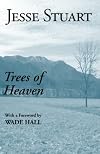
To most of us, that is just a lame joke, but to Jesse Stuart (1906-1984), once the poet laureate of Kentucky, it was a literary theme that ran through his novels, from his first, “Trees of Heaven” (1940), to his last, “The Land Beyond the River” (1973), including his classic “Taps for Private Tussie” (1943).
Some folks struggle every day to scrape a living in those Kentucky hills, while others do just enough to get by. We find both kinds in show more “Trees of Heaven.”
Anse Bushman, although 70 years old, still prides himself on working harder than any other man in Greenwood County (stand-in for Stuart's Greenup County, where I bought this book). He lives humbly, forcing his family to do the same, so he can save money to buy even more land. Trouble comes, however, when he buys land occupied by squatters, the Tussies, known for their laziness, beautiful women and love of moonshine.
The trees of heaven of the title are among the few trees left in this part of Kentucky, the rest having fallen either to loggers or farmers like Anse. Under these trees is where generations of Tussies are buried, and Boliver Tussie, head of the clan, isn't about to leave, never mind who owns the land and pays taxes on it.
Boliver is capable of hard work, and Anse even marvels that Boliver's tobacco crop looks better than his own, but he would much rather make moonshine and then enjoy the fruits of his labor. Anse knows that any moonshine still found on his property could lead to the loss of his land. So we have a conflict that could easily turn violent.
All of Anse's many children have fled the endless work required on the farm except for Tarvin, the youngest, who works hard while admiring the carefree lifestyle of the Tussies. He is also hopelessly in love with Subrinea, Boliver's daughter and the hardest working member of the clan. Theirs may be a match made in the trees of heaven and the hope for a new tomorrow.
Jesse Stuart already had a literary reputation before “Trees of Heaven,” thanks to his poetry and his memoir “Beyond Dark Hills.” But with his first novel, written in just 72 days, he expanded his audience and became a significant American writer in the middle of the 20th century. Like Tarvin, Stuart worked hard but seemed to prefer the Tussies. show less
To most of us, that is just a lame joke, but to Jesse Stuart (1906-1984), once the poet laureate of Kentucky, it was a literary theme that ran through his novels, from his first, “Trees of Heaven” (1940), to his last, “The Land Beyond the River” (1973), including his classic “Taps for Private Tussie” (1943).
Some folks struggle every day to scrape a living in those Kentucky hills, while others do just enough to get by. We find both kinds in show more “Trees of Heaven.”
Anse Bushman, although 70 years old, still prides himself on working harder than any other man in Greenwood County (stand-in for Stuart's Greenup County, where I bought this book). He lives humbly, forcing his family to do the same, so he can save money to buy even more land. Trouble comes, however, when he buys land occupied by squatters, the Tussies, known for their laziness, beautiful women and love of moonshine.
The trees of heaven of the title are among the few trees left in this part of Kentucky, the rest having fallen either to loggers or farmers like Anse. Under these trees is where generations of Tussies are buried, and Boliver Tussie, head of the clan, isn't about to leave, never mind who owns the land and pays taxes on it.
Boliver is capable of hard work, and Anse even marvels that Boliver's tobacco crop looks better than his own, but he would much rather make moonshine and then enjoy the fruits of his labor. Anse knows that any moonshine still found on his property could lead to the loss of his land. So we have a conflict that could easily turn violent.
All of Anse's many children have fled the endless work required on the farm except for Tarvin, the youngest, who works hard while admiring the carefree lifestyle of the Tussies. He is also hopelessly in love with Subrinea, Boliver's daughter and the hardest working member of the clan. Theirs may be a match made in the trees of heaven and the hope for a new tomorrow.
Jesse Stuart already had a literary reputation before “Trees of Heaven,” thanks to his poetry and his memoir “Beyond Dark Hills.” But with his first novel, written in just 72 days, he expanded his audience and became a significant American writer in the middle of the 20th century. Like Tarvin, Stuart worked hard but seemed to prefer the Tussies. show less
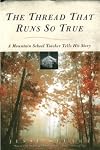
This book is nuts. When it opens, Jesse Stuart has just finished his junior year of high school when he takes a year off to teach at a rural one-room school in Kentucky. He ends up in physical altercations with students nearly his age, is shot at by community members, and has to deal with students who have been in the first grade four or five times. Then, done with the education profession, he completes high school and goes to college. At that point he's hired to teach a small rural high show more school single-handedly. His school does so well his students beat the local city high school in a competition. So the next year he's hired to be the principal of that high school! Underpaid, he only does that for a year and goes off to graduate school. After not finishing because the building containing a draft of his master's thesis burns down, he returns home... where he's hired to be superintendent of the school district! Which of course turns out to be his craziest year yet. If this wasn't a memoir, I wouldn't believe. I kinda still don't. But it's endlessly fascinating. Stuart's passion for education oozes from every page, which makes the end of the book (where he gives it up) weird and underexplained. It's hard to be inspired by it, though, as it all seems so effortless for Stuart-- indeed, he often claims he was simply blessed with highly intelligent students. But if that's all, he seems to have ended up with a hugely disproportionate number. Thankfully, the book isn't aiming for feel-good, but (aside from the occasional preachy moment) entertainment, and it succeeds nicely at that. show less
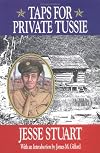
As fine a coming-of-age story as I've ever read, set in the Kentucky mountains in the early 20th century. Young Sid, the narrator, spends much more time in sober reflection than his huge, comic clan of Tussies, short-sighted hedonists who live on the dole awaiting the next "big time" of dancing and drinking. The magician among the Tussie family is Uncle George, a virtuoso on the fiddle. The first two thirds of the book are fairly predictable, with the Tussies all chasing "easy livin" as hard show more as they can, but as Sid grows, he starts using his long-term perspective to make some real changes in the final third of the novel as he morphs from mere observer to mover and shaker. The ending was a complete--and delightful--surprise. show less
Lists
Awards


You May Also Like
Associated Authors
Statistics
- Works
- 61
- Also by
- 43
- Members
- 1,892
- Popularity
- #13,595
- Rating
- 4.0
- Reviews
- 20
- ISBNs
- 125