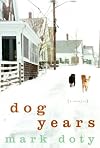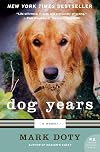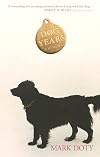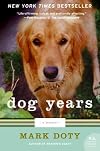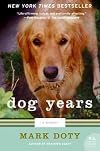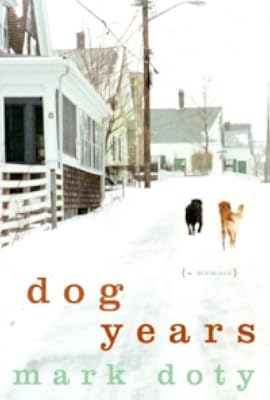
Dog Years: A Memoir
by Mark Doty
On This Page
Description
Why do dogs speak so profoundly to our inner lives? When poet Doty decides to adopt a dog as a companion for his dying partner, he finds himself bringing home Beau, a large golden retriever, malnourished and in need of loving care. Beau joins Arden, the black retriever, to complete their family. As Beau bounds back into life, the two dogs become Doty's intimate companions, his solace, and eventually the very life force that keeps him from abandoning all hope during the darkest days. Their show more tenacity, loyalty, and love inspire him when all else fails. This is a moving and intimate memoir interwoven with profound reflections on our feelings for animals and the lessons they teach us about life, love, and loss. Doty writes about the heart-wrenching vulnerability of dogs, the positive energy and joy they bring, and the gift they bear us of unconditional love.--From publisher description. show lessTags
Recommendations








Member Reviews
An amazing account that articulated in the language of a poet the emotional responses our dogs create. The sense of loss, the moments of despair, all things I wished I had words for while grappling with the loss of my dog. Despite crying profusely throughout the entire book, I loved it for a reminder of the power of a bond between human and canine.
Portia was the one that broke my heart. She had long golden-red hair, huge brown eyes, an easy smile and ears far too big for her delicate features. But her real assets were a sense of humor and the patience to match my moodiness. And even as I was breaking my bankbook to keep her alive and delivering her weekly for chemo sessions that left her sick and listless, she loved me.
She was a collie-golden retriever mix rescued from a shelter. But before judging the wisdom of a struggling graduate student who would max out credit cards and spend student-loan money to treat a dog's cancer, best to read and appreciate Mark Doty's narrative of the dogs he loved--and that loved him--Arden and Beau.
Dog Years: A Memoir, is prize-winning poet Doty's show more third entry into autobiographical prose. It retreads some of the ground covered in Heaven's Coast, his moving tale of the death of his partner, Wally, from AIDS. Arden and Beau had much to contribute to that part of his life story, as well, but Dog Years focuses on how Doty came to be a dog person, and the changes in his life--particularly his willingness to continue to live and love in the face of unimaginable loss--that a pair of retrievers brought him.
(Full disclosure: Doty and I knew each other almost three decades ago in Iowa, back when he was straight and I was thin. In those days, he was strictly a cat person.)
Dog Years deals early on with those people who don't understand the relationship between a dog and a person. Doty notes--as many animal lovers have long held--that those who say they don't understand how we devote energy and resources to companion animals that could be spent on other humans are often the same people who devote little or no energy to anyone other than themselves.
But he quickly turns to what it is about the love of a dog that makes us want to be better people, for our dogs always assume that we are better people than we might be at any given moment. When, in the depth of grief and despair after Wally's death, Doty walks Arden and Beau on the beach, he writes, "It isn't that one wants to live for the sake of a dog, exactly, but that dogs show you why you might want to."
And they do. His tales of life with Arden and Beau are, by turns, comic, heartwarming, sentimental (in the very best way) and ultimately heartbreaking.
For it is the nature of dogs to live much shorter lives than we humans do. More than anything else, our companion animals teach us our own mortality. If we're both fortunate and willing, they teach us to appreciate it. Doty uses all his skills as a poet to present for us the blessed gift animals have of remaining fully present in the world--one that all too many of us mere humans lack.
More than anything else, Doty (who often has been described as a poet of loss) is pointing out to us that grief of any kind is the tangible--and often physical--reminder of our capacity to love. If his greatest gift as a poet is the ability to describe the world fully in a single moment (and I would argue that it is), then Doty surely owes a great deal of that gift to the dogs who demonstrated that way of seeing for him.
Dog Years is, then, his gift to Arden and Beau--but, being dogs, they'd want us to have it, too.
(From the Sacramento News & Review, 4/12/07, http://www.newsreview.com/sacramento/Content?oid=309141) show less
She was a collie-golden retriever mix rescued from a shelter. But before judging the wisdom of a struggling graduate student who would max out credit cards and spend student-loan money to treat a dog's cancer, best to read and appreciate Mark Doty's narrative of the dogs he loved--and that loved him--Arden and Beau.
Dog Years: A Memoir, is prize-winning poet Doty's show more third entry into autobiographical prose. It retreads some of the ground covered in Heaven's Coast, his moving tale of the death of his partner, Wally, from AIDS. Arden and Beau had much to contribute to that part of his life story, as well, but Dog Years focuses on how Doty came to be a dog person, and the changes in his life--particularly his willingness to continue to live and love in the face of unimaginable loss--that a pair of retrievers brought him.
(Full disclosure: Doty and I knew each other almost three decades ago in Iowa, back when he was straight and I was thin. In those days, he was strictly a cat person.)
Dog Years deals early on with those people who don't understand the relationship between a dog and a person. Doty notes--as many animal lovers have long held--that those who say they don't understand how we devote energy and resources to companion animals that could be spent on other humans are often the same people who devote little or no energy to anyone other than themselves.
But he quickly turns to what it is about the love of a dog that makes us want to be better people, for our dogs always assume that we are better people than we might be at any given moment. When, in the depth of grief and despair after Wally's death, Doty walks Arden and Beau on the beach, he writes, "It isn't that one wants to live for the sake of a dog, exactly, but that dogs show you why you might want to."
And they do. His tales of life with Arden and Beau are, by turns, comic, heartwarming, sentimental (in the very best way) and ultimately heartbreaking.
For it is the nature of dogs to live much shorter lives than we humans do. More than anything else, our companion animals teach us our own mortality. If we're both fortunate and willing, they teach us to appreciate it. Doty uses all his skills as a poet to present for us the blessed gift animals have of remaining fully present in the world--one that all too many of us mere humans lack.
More than anything else, Doty (who often has been described as a poet of loss) is pointing out to us that grief of any kind is the tangible--and often physical--reminder of our capacity to love. If his greatest gift as a poet is the ability to describe the world fully in a single moment (and I would argue that it is), then Doty surely owes a great deal of that gift to the dogs who demonstrated that way of seeing for him.
Dog Years is, then, his gift to Arden and Beau--but, being dogs, they'd want us to have it, too.
(From the Sacramento News & Review, 4/12/07, http://www.newsreview.com/sacramento/Content?oid=309141) show less
This is an amazing book. It is sad throughout. If the book were a painting, and you can imagine sadness as a color, the entire background would be that color.
However, the purpose of the book (in my opinion anyway) is to point out that sadness is just the background, while life is the foreground, the real object of the painting. Sadness just provides context that makes the reality of life even more vibrant.
We will all experience loss in varying degrees throughout our lives. It doesn't really matter what we believe happens after someone dies, there is still a hole they once occupied. One measure of our connection to others and our humanity is how willing we are to make room for more holes. After all, what could be more humane than to show more accept someone into our lives who we know will eventually leave a hole?
show less
However, the purpose of the book (in my opinion anyway) is to point out that sadness is just the background, while life is the foreground, the real object of the painting. Sadness just provides context that makes the reality of life even more vibrant.
We will all experience loss in varying degrees throughout our lives. It doesn't really matter what we believe happens after someone dies, there is still a hole they once occupied. One measure of our connection to others and our humanity is how willing we are to make room for more holes. After all, what could be more humane than to show more accept someone into our lives who we know will eventually leave a hole?
show less
I borrowed this ebook from my local library and pretty much read it in a single sitting. As Mark Doty shared his story I laughed, I teared up, and having recently lost my own dog, I related to it.
Mark and his partner Wally, are dads to Arden, a black Retriever. Wally has AIDS and is bedridden and dying. He was the one closest to Arden and the dog now sleeps in his bed, rarely leaving his side.
Although some thought it was not a good idea to bring a new dog into the house while his partner is terminally ill, Mark winds up going to the shelter and adopting Beau, an underweight, yet rambunctious Golden Retriever. Not too long after, Wally passes away leaving Mark and the dogs behind.
During a time of devastating grief over the loss of his show more partner, Mark says his dogs gave him the will to live. They needed him to care for them just as much as he needed them. Mark gives glimpses of his daily life with his dogs and with the new man in his life, Paul, whom he starts dating a year later.
As the years pass, dogs Arden and Beau both start to become ill. When Arden was sick and Mark described the visits to the vet and how he was trying to save him but deep down knew the end was near, I truly teared up. Then there were moments I laughed out loud, like when one woman took one look at Arden, who was obviously an older dog and getting towards the end of his life, and she makes a comment about how it's all part of the cycle of life. Mark shares the colorful reply that popped in his head but that would be too rude to say aloud.
I'm not surprised to see the author has published poetry as there is a distinct poetic flair within this candid memoir. I also enjoyed the Emily Dickinson snippets and references throughout.
Overall, I found Dog Years to be an interesting, heartfelt memoir and a lovely tribute to Mark's dogs.
"Somehow, memory, seems to slight a word, too evanescent; this is almost a physical sensation, the sound of those paws, and it comes allied to the color and heat of him, the smell of warm fur, the kinetic life of a being hardly ever still; what lives in me."
-at 79.8% e-copy, Dog Years: A Memoir by Mark Doty
disclaimer:
This review is my honest opinion. I did not receive any type of compensation for reading and reviewing this book. While I receive free books from publishers and authors I am under no obligation to write a positive review. I borrowed my copy of this book from the local library. show less
Mark and his partner Wally, are dads to Arden, a black Retriever. Wally has AIDS and is bedridden and dying. He was the one closest to Arden and the dog now sleeps in his bed, rarely leaving his side.
Although some thought it was not a good idea to bring a new dog into the house while his partner is terminally ill, Mark winds up going to the shelter and adopting Beau, an underweight, yet rambunctious Golden Retriever. Not too long after, Wally passes away leaving Mark and the dogs behind.
During a time of devastating grief over the loss of his show more partner, Mark says his dogs gave him the will to live. They needed him to care for them just as much as he needed them. Mark gives glimpses of his daily life with his dogs and with the new man in his life, Paul, whom he starts dating a year later.
As the years pass, dogs Arden and Beau both start to become ill. When Arden was sick and Mark described the visits to the vet and how he was trying to save him but deep down knew the end was near, I truly teared up. Then there were moments I laughed out loud, like when one woman took one look at Arden, who was obviously an older dog and getting towards the end of his life, and she makes a comment about how it's all part of the cycle of life. Mark shares the colorful reply that popped in his head but that would be too rude to say aloud.
I'm not surprised to see the author has published poetry as there is a distinct poetic flair within this candid memoir. I also enjoyed the Emily Dickinson snippets and references throughout.
Overall, I found Dog Years to be an interesting, heartfelt memoir and a lovely tribute to Mark's dogs.
"Somehow, memory, seems to slight a word, too evanescent; this is almost a physical sensation, the sound of those paws, and it comes allied to the color and heat of him, the smell of warm fur, the kinetic life of a being hardly ever still; what lives in me."
-at 79.8% e-copy, Dog Years: A Memoir by Mark Doty
disclaimer:
This review is my honest opinion. I did not receive any type of compensation for reading and reviewing this book. While I receive free books from publishers and authors I am under no obligation to write a positive review. I borrowed my copy of this book from the local library. show less
Memory of Sam, our golden, who looked very much like the cover, led me to grab this book. Seeking support for my memories got in the way of the rich language and personal loss of a partner in the beginning. Once it dawned on me that this is a book about presence and passing, not only did memory and emotion return, they became enlightened by new facets of meaning.
dog years offers some compelling reading,
but the author lost me when he refused to ignore his partner's words and so left a small, starving female dog
on the street of San Miguel de Allende, Mexico. She had chosen him. He rejected her.
As he wrote, he could fairly easily have taken her, but decided not to show the compassion for which
he readily faults others throughout his book. If she would not have worked well with Arden, he could
have advocated for another good home in New York City or beyond.
but the author lost me when he refused to ignore his partner's words and so left a small, starving female dog
on the street of San Miguel de Allende, Mexico. She had chosen him. He rejected her.
As he wrote, he could fairly easily have taken her, but decided not to show the compassion for which
he readily faults others throughout his book. If she would not have worked well with Arden, he could
have advocated for another good home in New York City or beyond.
When I picked this book up, I expected it to be a memoir about Doty's life with his two beloved dogs. I certainly didn't expect it to be a rumination about life and loss and the ways that grief pushes into your life and holds on. But that is indeed, in many ways, what this is. Arden and Beau, the dogs of the title, just offer a central focus for the philosophical musings put forth here by Doty, a poet and memoirist. His relationship with his dogs is the scrim through which he recalls the slow decline and death of his partner from AIDS. And the dogs weave in and around his eventual relationship with his new partner as well.
But there's an interrupted feel to the writing here with chapters dodging and weaving about with no clear sense of show more timeline. Of course, starting the narrative with Doty's philosophical conception of dogs and language followed swiftly by the death of Beau, it is clear that this will not follow a conventional timeline or a conventional memoir's path. His writing tries a little too hard to capture poetry in prose and in the end ended up alienating me. I am a sucker for animal stories and yet this one elicited very little response, perhaps because it was more about Doty's cumulative losses and his grief than about the dogs. His dogs clearly meant the world to him but the sometimes overly florid writing and the intrusion of so much else detracted from their stories.
Although Doty claims that his dogs helped to lift him from depression and grief, there was very little uplift here, overwhelmed as it was by depressing outpourings on the ephemerality of life and the certitude of loss. As a reader, I needed a more focused narrative, a smoother integration of his life as a gay man both facing the loss of a beloved partner and finding a new love as well as showing more of the concrete, never-wavering love of his animals. Some animal lovers have praised this book highly while others have panned it so I seem to be fairly alone in thinking it was just an okay read. I did struggle a bit with the style and the disjointedness of the narrative but underneath it all, there was some good bone structure. I had just hoped for more out of it than I found. show less
But there's an interrupted feel to the writing here with chapters dodging and weaving about with no clear sense of show more timeline. Of course, starting the narrative with Doty's philosophical conception of dogs and language followed swiftly by the death of Beau, it is clear that this will not follow a conventional timeline or a conventional memoir's path. His writing tries a little too hard to capture poetry in prose and in the end ended up alienating me. I am a sucker for animal stories and yet this one elicited very little response, perhaps because it was more about Doty's cumulative losses and his grief than about the dogs. His dogs clearly meant the world to him but the sometimes overly florid writing and the intrusion of so much else detracted from their stories.
Although Doty claims that his dogs helped to lift him from depression and grief, there was very little uplift here, overwhelmed as it was by depressing outpourings on the ephemerality of life and the certitude of loss. As a reader, I needed a more focused narrative, a smoother integration of his life as a gay man both facing the loss of a beloved partner and finding a new love as well as showing more of the concrete, never-wavering love of his animals. Some animal lovers have praised this book highly while others have panned it so I seem to be fairly alone in thinking it was just an okay read. I did struggle a bit with the style and the disjointedness of the narrative but underneath it all, there was some good bone structure. I had just hoped for more out of it than I found. show less
Members
- Recently Added By
Lists

thinking of reading in 2016
99 works; 1 member

Retriever dogs -- Children's/YA/adult fiction+auto/biography
267 works; 3 members
Author Information

Some Editions
Awards and Honors
Common Knowledge
- Canonical title
- Dog Years: A Memoir
- Original title
- Dog Years: A Memoir
- Original publication date
- 2007
- People/Characters
- Mark Doty; Arden; Beau
- Epigraph
- . . . How could God have created the world if He were alreaady everywhere? One cabbalistic response is to assume that He did so by abandoning a region of Himself.
—Darian Leader,
Stealing the Mona Lisa
If your Nerve, deny you—
Go above your Nerve—
—Emily Dickinson
I am not lonely. I am not afraid. I am still yours.
—Robinson Jeffers,
"The Housedog's Grave" - First words
- No dog has ever said a word, but that doesn't mean they live outside the world of speech.
- Last words
- (Click to show. Warning: May contain spoilers.)But now and then, one of us will go into the bedroom for something, and then the other will be startled by that funny little cry.
- Blurbers
- Hempel, Amy; Patchett, Ann; Erdrich, Louise; Chapman, Danielle; Freeman, John
- Original language
- American English
Classifications
Statistics
- Members
- 688
- Popularity
- 41,472
- Reviews
- 19
- Rating
- (3.92)
- Languages
- English, Portuguese (Portugal)
- Media
- Paper, Audiobook, Ebook
- ISBNs
- 17
- ASINs
- 8