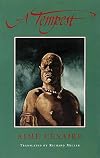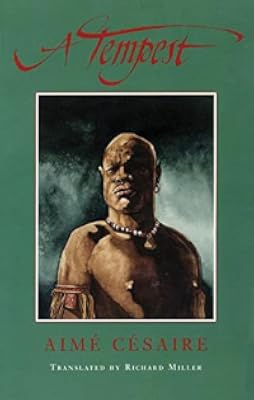
A Tempest
by Aimé Césaire
On This Page
Description
A troupe of black actors perform their own Tempest. This adaptation draws on contemporary Caribbean society, the African-American experience and African mythology to raise questions about colonialism, racism and their lasting effects.Tags
Recommendations













Member Reviews
A retelling of Shakespeare's play The Tempest, set on an island where the European colonial Prospero enforces slavery on a mulatto Ariel and a Black/indigenous Caliban. The text pushes beyond critiquing colonialism and into decolonisation. I read Richard Miller's 1985/1992 anglophone translation but wished I'd also had the original French for side by side comparison.
There are some interesting linguistic choices that aren't from Shakespeare, such as Prospero being "marooned" on the island, and the first scene very pointedly has people participating as players literally choosing their own characters: "You want Caliban? Well, that's revealing." "And there's no problem about the villains either: you, Antonio; you Alonso, perfect!" Caliban's show more first word is "Uhuru!" (Freedom!). Caliban rejects the slave name foisted on him by Prospero, and wants to be called "X" (like Malcolm, clearly). There's intertextual Baudelaire: "Des hommes dont le corps est mince et vigoureux,/ Et des femmes dont l'oeil par sa franchise étonne." And the play's intellectual coup de grâce is Prospero's choice of taunt at Caliban for not murdering him: "See, you're nothing but an animal... you don't know how to kill." Unlike Prospero and his fellow Europeans, Antonio and Sebastian, who have shown they know how to murder motivated by personal ambition.
In the end we find that Caliban has always been free in his own mind while Prospero continues to enslave himself to his desire for power over others. show less
There are some interesting linguistic choices that aren't from Shakespeare, such as Prospero being "marooned" on the island, and the first scene very pointedly has people participating as players literally choosing their own characters: "You want Caliban? Well, that's revealing." "And there's no problem about the villains either: you, Antonio; you Alonso, perfect!" Caliban's show more first word is "Uhuru!" (Freedom!). Caliban rejects the slave name foisted on him by Prospero, and wants to be called "X" (like Malcolm, clearly). There's intertextual Baudelaire: "Des hommes dont le corps est mince et vigoureux,/ Et des femmes dont l'oeil par sa franchise étonne." And the play's intellectual coup de grâce is Prospero's choice of taunt at Caliban for not murdering him: "See, you're nothing but an animal... you don't know how to kill." Unlike Prospero and his fellow Europeans, Antonio and Sebastian, who have shown they know how to murder motivated by personal ambition.
In the end we find that Caliban has always been free in his own mind while Prospero continues to enslave himself to his desire for power over others. show less
Aimé Césaire's take on 'The Tempest' from Shakespeare is quite a surprise - written from the point of view of Caliban, this new play will shift the narrative towards a postcolonial sensitivity. Caliban ends up taking a strong stance against Prospero's domination, discussing issues like slavery, island ownership and finishing with a rather surpising ending. However, if Prospero has all the faults of his enslaving kind (white colonials), Caliban is only shown as the one who has no agenda but to regain a sense of humanity - a sort of black/white, good/bad divide, which is a very catholic mindset. Rather, I would have loved to see more grey areas, more depth to the characters. This is a good play nonetheless and I would recommend it to show more anyone wanting to have more postcolonial readings or with postcolonial literary criticism in mind (undergraduate students). show less
It's supposed to be based on The Tempest, I can't say anything about that, I didn't have the chance to read it so far.
After a shipwreck, the crew and the passengers end up on an island. The island is inhabited by a men, his daughter and two slaves. This men has been wronged by some of the passengers and be exiled on this island.
This is a tale about freedom, of doing the wrong thing for the right reason and doing the right thing even for the wrong reason.
Beautifully written, make me want to read another play by him.
After a shipwreck, the crew and the passengers end up on an island. The island is inhabited by a men, his daughter and two slaves. This men has been wronged by some of the passengers and be exiled on this island.
This is a tale about freedom, of doing the wrong thing for the right reason and doing the right thing even for the wrong reason.
Beautifully written, make me want to read another play by him.
I understand that this play has great political meaning, and I appreciate it. I appreciate it in the same way that I appreciate Uncle Tom's Cabin. I appreciate it, but I don't particularly like it.
There were times when I enjoyed reading this play, but then it kind of got old and I just didn't really enjoy it anymore. I honestly don't understand this (though perhaps after a lengthy in class discussion I will) and have no great desire to understand it. Perhaps the main reason I find it distasteful is because I just read the actual Tempest, and it's just hard to like A Tempest when compared to The Tempest.
There were times when I enjoyed reading this play, but then it kind of got old and I just didn't really enjoy it anymore. I honestly don't understand this (though perhaps after a lengthy in class discussion I will) and have no great desire to understand it. Perhaps the main reason I find it distasteful is because I just read the actual Tempest, and it's just hard to like A Tempest when compared to The Tempest.
This is an adaption of Shakespeare's play being told from the perspective of the Black slave. In this version the father is cruel and treats everyone horribly. The father and daughter live on the island and the father causes a shipwreck to gain back his authority and power stolen by his brother. This book is meant for middle or high school students. Students should compare A Tempest to The Tempest and see how the change in perspective changes the story. Students could look at popular novels and see how a change in the narrator's perspective could change those stories as well.
Well. This was a total waste of my time. I get it, it's making a point to the reader. But what a way to pervert an old play and make it something nothing like the original! I get it. It's emphasizing the theme of colonization. But REALLY. *Facepalms* I found nothing amusing about this re-interpretation of Shakespeare's The Tempest at all. As far as I'm concerned, Cesaire is another one of those jackass political-message driven guys who decided that his greatest gift to the world would be to write crap like this to prove a point.
Point made. I'm about ready to toss this book in the trash. It's not worth a scratch or even an itch.
First off, the man has some grand lines--and they're all given to Caliban. Every other character is so show more stereotypically one-sided that it's clear he was using them only as representations of what he saw in colonizers, white men, and so on. Again: got it, Cesaire. Also: don't really give a rip! The writing was plain, the poetry was rot, the man has no sense of continuity--if you hadn't read Shakespeare's original, The Tempest, you'd be more than a little lost with the transitions (or should I say, lack thereof) he makes. It was just a mess. An ugly piece of writing in quality, not even based on the subject. But God, the stereotyping, the concentration on nothing but getting a single flippin' point across! GAH! This is why I don't enjoy most English programs! Whatever you read has always got a MESSAGE. And I'm sick of it.
If Cesaire had written something well, without this speedy and careless tone and manner of piecing words together throughout the "play," then perhaps it would have carried its point better! But even if it had been written "well," the entire POINT was to write the play BADLY so that every single crude stereotype showed up harshly and blatantly apparent. GEEZ it's annoying reading works like this! Making fun of The Tempest? Fine. I can live with that. Writing badly to prove a political point? Just shorts out whatever patience I have.
This book, quite frankly, can be burned and I wouldn't bat an eyelash. I'd probably scowl and walk away after watching it disintegrate. It's so short, and so easy to read, but really. Why bother? If you want to read something more complex, go to Shakespeare's actual play. It's much more fun to analyze and pick apart the characters there.
OH. And speaking of the CHARACTERS! I don't appreciate how Cesaire played with their personalities. You want to emphasize how stupid Stephano and Trinculo are even more? Fine, go ahead. They were like that before. You want to make Gonzalo seem like a dolt because he's the sole optimist in the bunch? I can live with that. But where do you come off taking Prospero--who in the original Tempest, didn't even take Caliban seriously when he narrowly escaped being caught and killed by him--and making him into this blatant wuss of a character, more weak than Trinculo and Stephano are greedy, bumbling idiots? And on top of that! Okay, play up Caliban's character! Make him the hero of this story! That's fine! It's usually really amazing when you get to read the same story from a completely different character's point of view! I love stories like that! And you did a GREAT job of making Caliban regal and noble, tough and strong. He was a GOOD hero character. ...but he had too many holes. He contradicted himself a couple of times. He refused to take into consideration any other path but his own. And, what the heck, really? Do we have to bring in being a "black slave" into this? *Rolls eyes* Come on. Drop it. It's over. If people stopped constantly talking about it, then we wouldn't be having PROBLEMS with this stuff! Sheesh. Also: Ariel. ...what... did you do... to my FAVORITE character?! Why is Ariel so "Let's all be FRIENDS, guys! 8D" and crap?! In the original, he was a character that was distant from everyone, with a conscience and a brain; he did what he had to do for himself, and he was mysterious, cool, collected! He's just another wishful (and the reader is made to think: pathetic) "slave" who obeys his "master," hoping (apparently uselessly) to be someday rewarded with his freedom. ...COME ON! In the original he was more an ALLY to Prospero, standing on the same ground as him, than a slave! GAH. Sure he obeyed Prospero because of his indebtedness to him! But the magical Ariel also stood on the same ground, with powers on the same level as Prospero's! They were EQUALS and Ariel was far more capable and competent in the original! DX
So I ranted there for a bit. But it's just ticked me off. I don't mind parodies. And I certainly don't mind getting a different view of things on the same subject. But my biggest peeve was that I couldn't enjoy the story, or the characters, because all I kept getting out of it was the POLITICS. And as much as I might know a thing or two about politics, I don't want to have it shoved down my throat! D8writing-wise it's poor work. You want to give it a go? Sure. Take a whirl. But I'll be surprised if you enjoy it. There's very little in it to be either entertained by, learn from, or care about. It's just there, wasting my time and bookshelf space! And on that note, review is finished! On to something better (I hope)! show less
Point made. I'm about ready to toss this book in the trash. It's not worth a scratch or even an itch.
First off, the man has some grand lines--and they're all given to Caliban. Every other character is so show more stereotypically one-sided that it's clear he was using them only as representations of what he saw in colonizers, white men, and so on. Again: got it, Cesaire. Also: don't really give a rip! The writing was plain, the poetry was rot, the man has no sense of continuity--if you hadn't read Shakespeare's original, The Tempest, you'd be more than a little lost with the transitions (or should I say, lack thereof) he makes. It was just a mess. An ugly piece of writing in quality, not even based on the subject. But God, the stereotyping, the concentration on nothing but getting a single flippin' point across! GAH! This is why I don't enjoy most English programs! Whatever you read has always got a MESSAGE. And I'm sick of it.
If Cesaire had written something well, without this speedy and careless tone and manner of piecing words together throughout the "play," then perhaps it would have carried its point better! But even if it had been written "well," the entire POINT was to write the play BADLY so that every single crude stereotype showed up harshly and blatantly apparent. GEEZ it's annoying reading works like this! Making fun of The Tempest? Fine. I can live with that. Writing badly to prove a political point? Just shorts out whatever patience I have.
This book, quite frankly, can be burned and I wouldn't bat an eyelash. I'd probably scowl and walk away after watching it disintegrate. It's so short, and so easy to read, but really. Why bother? If you want to read something more complex, go to Shakespeare's actual play. It's much more fun to analyze and pick apart the characters there.
OH. And speaking of the CHARACTERS! I don't appreciate how Cesaire played with their personalities. You want to emphasize how stupid Stephano and Trinculo are even more? Fine, go ahead. They were like that before. You want to make Gonzalo seem like a dolt because he's the sole optimist in the bunch? I can live with that. But where do you come off taking Prospero--who in the original Tempest, didn't even take Caliban seriously when he narrowly escaped being caught and killed by him--and making him into this blatant wuss of a character, more weak than Trinculo and Stephano are greedy, bumbling idiots? And on top of that! Okay, play up Caliban's character! Make him the hero of this story! That's fine! It's usually really amazing when you get to read the same story from a completely different character's point of view! I love stories like that! And you did a GREAT job of making Caliban regal and noble, tough and strong. He was a GOOD hero character. ...but he had too many holes. He contradicted himself a couple of times. He refused to take into consideration any other path but his own. And, what the heck, really? Do we have to bring in being a "black slave" into this? *Rolls eyes* Come on. Drop it. It's over. If people stopped constantly talking about it, then we wouldn't be having PROBLEMS with this stuff! Sheesh. Also: Ariel. ...what... did you do... to my FAVORITE character?! Why is Ariel so "Let's all be FRIENDS, guys! 8D" and crap?! In the original, he was a character that was distant from everyone, with a conscience and a brain; he did what he had to do for himself, and he was mysterious, cool, collected! He's just another wishful (and the reader is made to think: pathetic) "slave" who obeys his "master," hoping (apparently uselessly) to be someday rewarded with his freedom. ...COME ON! In the original he was more an ALLY to Prospero, standing on the same ground as him, than a slave! GAH. Sure he obeyed Prospero because of his indebtedness to him! But the magical Ariel also stood on the same ground, with powers on the same level as Prospero's! They were EQUALS and Ariel was far more capable and competent in the original! DX
So I ranted there for a bit. But it's just ticked me off. I don't mind parodies. And I certainly don't mind getting a different view of things on the same subject. But my biggest peeve was that I couldn't enjoy the story, or the characters, because all I kept getting out of it was the POLITICS. And as much as I might know a thing or two about politics, I don't want to have it shoved down my throat! D8writing-wise it's poor work. You want to give it a go? Sure. Take a whirl. But I'll be surprised if you enjoy it. There's very little in it to be either entertained by, learn from, or care about. It's just there, wasting my time and bookshelf space! And on that note, review is finished! On to something better (I hope)! show less
Ratings
Members
- Recently Added By
Lists

Books and authors mentioned by Le Clézio in his Nobel Prize speech
87 works; 3 members
Author Information

63+ Works 3,029 Members
Poet and politician Aimé Césaire was born in Basse-Pointe, Martinique on June 26, 1913. He attended high school and college in France. While in Paris, he helped found the journal Black Student in the 1930s. During World War II, he returned to Martinique and was mayor of Fort-de-France from 1945 to 2001, except for a break from 1983 to 1984. He show more also served in France's National Assembly from 1946 to 1956 and from 1958 to 1993. In 1946, he helped Martinique shed its colonial status and become an overseas department of France. Some of his best known works include the book Discourse on Colonialism, the essay Negro I Am, Negro I Will Remain, and the poem Notes from a Return to the Native Land. He was being treated for heart problems and other ailments when he died on April 17, 2008. (Bowker Author Biography) show less
Some Editions
Work Relationships
Is an adaptation of
Has as a student's study guide
Common Knowledge
- Canonical title
- A Tempest
- Original title
- Une Tempête
- Original publication date
- 1969
- Original language
- French
- Canonical DDC/MDS
- 848.99729822
Classifications
- Genres
- Poetry, Fiction and Literature
- DDC/MDS
- 848.99729822 — Literature & rhetoric French Literature French miscellaneous writings 1900- French-language literature outside of France (Francophone) North America Mexico, Central America, West Indies, Bermuda West Indies (Antilles) and Bermuda; Caribbean Windward Islands and other southern islands Martinique Drama
- LCC
- PQ3949 .C44 .T413 — Language and Literature French, Italian, Spanish and Portuguese literatures French literature Provincial, local, colonial, etc.
- BISAC
Statistics
- Members
- 441
- Popularity
- 69,620
- Reviews
- 6
- Rating
- (3.53)
- Languages
- English, French, Spanish
- Media
- Paper
- ISBNs
- 10
- ASINs
- 1