
On This Page
Description
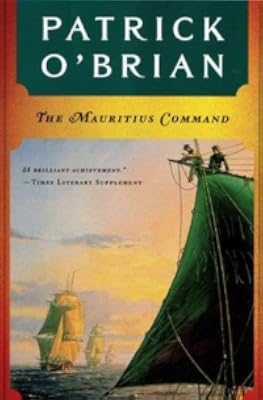
Captain Jack Aubrey is ashore on half pay without a command - until Stephen Maturin arrives with secret orders for Aubrey to take a frigate to the Cape of Good Hope under a commodore's pennant, there to mount an expedition against the French-held islands of Mauritius and La Reunion. But the difficulties of carrying out his orders are compounded by two of his own captains - Lord Clonfert, a pleasure-seeking dilettante, and Captain Corbett, whose severity pushes his crew to the verge of mutiny.Tags
Recommendations










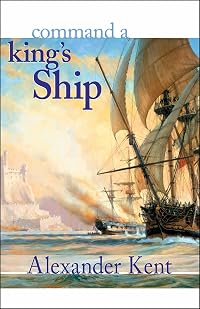
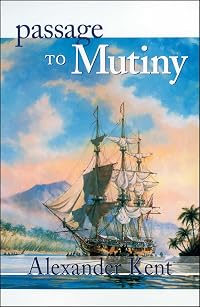


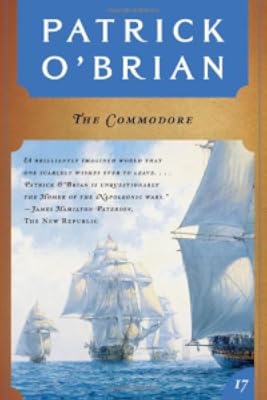

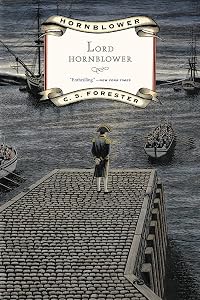







Member Recommendations
Member Reviews
A solid entry into the Aubrey-Maturin series, but I confess to becoming a bit nervous that this lauded series does not appear to be the adored favourite I hoped it would be. I do occasionally find myself in the mood for a Patrick O'Brian story – its unique mix of nautical jargon, erudite dialogue, slow pace and rich characterisation – and such is the weight of sail that the author lays down that, even when I am not in the mood, I can be made so.
Such was the case with The Mauritius Command, the least of the four Aubrey-Maturin books I have read so far. It dragged heavily in parts, particularly (and almost fatally) in its first half, and did not make up for it with any apparent purpose in its plot. Hewing strongly to the coastline of show more historical fact is part of O'Brian's appeal, but Mauritius took as its bill a real nautical campaign and stayed very close to it, with all the obvious problems that causes for the pace of the story and the space for the characters to breathe in.
That O'Brian does still entertain within these parameters, particularly towards the end, is to his credit, but there's so much warm-up for so little race. A sense of jeopardy is missing, even when the British squadron Captain Aubrey is commanding is fighting against the odds, and the book's battles on both sea and land fail to truly excite. They have their moments, and the book is very well-written, but The Mauritius Command occasionally seems to be struggling under the weight of itself. I've grown fond enough of the Aubrey-Maturin series to not only persevere, but to savour the books when I do find myself in the mood for them, but I wouldn't recommend this instalment for those more casual readers who just want a taste of salt and spray. show less
Such was the case with The Mauritius Command, the least of the four Aubrey-Maturin books I have read so far. It dragged heavily in parts, particularly (and almost fatally) in its first half, and did not make up for it with any apparent purpose in its plot. Hewing strongly to the coastline of show more historical fact is part of O'Brian's appeal, but Mauritius took as its bill a real nautical campaign and stayed very close to it, with all the obvious problems that causes for the pace of the story and the space for the characters to breathe in.
That O'Brian does still entertain within these parameters, particularly towards the end, is to his credit, but there's so much warm-up for so little race. A sense of jeopardy is missing, even when the British squadron Captain Aubrey is commanding is fighting against the odds, and the book's battles on both sea and land fail to truly excite. They have their moments, and the book is very well-written, but The Mauritius Command occasionally seems to be struggling under the weight of itself. I've grown fond enough of the Aubrey-Maturin series to not only persevere, but to savour the books when I do find myself in the mood for them, but I wouldn't recommend this instalment for those more casual readers who just want a taste of salt and spray. show less
The Mauritius Command changes up the Aubrey-Maturin formula by giving Captain Aubrey more than a frigate, though he does have the obligatory slow-sailing frigate to restore. This time, Aubrey is promoted to commodore, one of his greatest wishes, and has to deal with issues that cannot be solved by seamanship and personal presence.
The beginning of the book starts with the usual unhappy domestic scene. Jack is on half-pay which is not enough to support his newly expanded family, with wife, twin daughters, mother-in-law, and servants crammed into the small and damp Ashgrove cottage. He spends most of his time in his observatory, pretending to observe the moons of Jupiter for navigational purposes while really gazing at passing ships. show more Maturin arrives with secret orders to save the day, a mission to take the French colonies of Mauritius and La Reuniuon, where French privateers are playing havoc with the India trade.
The first problem is one of balance of forces. Aubrey's fleet is slow, undergunned, and with one ship in such bad condition that a hurricane or firing its own broadside would reduce it to splinters. The French have four newly built heavy frigates, each with 40 24 pounder cannons. British seamanship can even the odds, but those are long odds. The other problem is his subordinates. Lord Clonfert is ambitious, but desires the approval of his men more than anything else, and stretches the truth and naval discipline to fulfill his psychological needs. Captain Corbett is a flogging captain who retaliates against minor lapses with harsh physical discipline.
The campaign seesaws back and forth, the odds constantly shifting as Aubrey captures ships and loses them. One of the better segments is a losing battle, where Maturin accompanies Lord Clonfert on a raid that turns sour, and sees what dash untempered by good strategic consideration leads to. Aubrey would never make such a mistake, or have the bad luck to wind up there.
This is also the first time I've done the series on audiobook (thanks, local library) and everything said about narrator Simon Vance is true. That guy is fantastic! show less
The beginning of the book starts with the usual unhappy domestic scene. Jack is on half-pay which is not enough to support his newly expanded family, with wife, twin daughters, mother-in-law, and servants crammed into the small and damp Ashgrove cottage. He spends most of his time in his observatory, pretending to observe the moons of Jupiter for navigational purposes while really gazing at passing ships. show more Maturin arrives with secret orders to save the day, a mission to take the French colonies of Mauritius and La Reuniuon, where French privateers are playing havoc with the India trade.
The first problem is one of balance of forces. Aubrey's fleet is slow, undergunned, and with one ship in such bad condition that a hurricane or firing its own broadside would reduce it to splinters. The French have four newly built heavy frigates, each with 40 24 pounder cannons. British seamanship can even the odds, but those are long odds. The other problem is his subordinates. Lord Clonfert is ambitious, but desires the approval of his men more than anything else, and stretches the truth and naval discipline to fulfill his psychological needs. Captain Corbett is a flogging captain who retaliates against minor lapses with harsh physical discipline.
The campaign seesaws back and forth, the odds constantly shifting as Aubrey captures ships and loses them. One of the better segments is a losing battle, where Maturin accompanies Lord Clonfert on a raid that turns sour, and sees what dash untempered by good strategic consideration leads to. Aubrey would never make such a mistake, or have the bad luck to wind up there.
This is also the first time I've done the series on audiobook (thanks, local library) and everything said about narrator Simon Vance is true. That guy is fantastic! show less
Moving onward to volume four of the Aubrey-Maturin series. According to O’Brian’s preface, The Mauritius Command is based on an actual campaign, and this shows in various ways. Most notably in how focused it is (at least for a novel by O’Brian) – it follows the course of the campaign closely, barely straying from its tightly defined path – no amorous entanglements, no naturalist expeditions, none (or at least, very few) of the leisurely ambling that characterized Post Captain and HMS Surprise and which, for me at least, tend to be the main source of delight in this series.
As can be infered from this, I liked Mauritius Command rather less than the two novels before, and it most reminds me of Master & Commander with its show more emphasis placed firmly on naval matters and warfare at sea. And O’Brian is as good with those as always, giving us detailed descriptions of sea-battles that make the strategy involved transparent even to a not particularly nautically inclined reader while at the same time giving a very vivid impression of the messiness, the confusing motion, deafening sounds, overpowering smells of naval fighting. It is all very exciting, but just not what I enjoy most about the series, which are the characters of Aubrey and Maturin, and their constant wonder at each other and at the world around them. That element is not completely absent from The Mauritius Command but it is in relatively short supply.
O’Brian to some degree makes up for that with the new characters he introduces, most notably another captain / ship’s doctor pairing we encounter here in Lord Clonfert and William McAdam, that is very different from the relationship between Jack and Stephen and yet mirrors in very interesting ways. This doubled pairing, Aubrey and Maturin set in relation to what could be considered their dark twins, a deeply conflicted captain and his alcoholic ship’s doctor are what made this novel for me. But your mileage may of course vary, and it’s not like I had been bored during the more strictly nautical parts of the novel – everything considered, The Mauritius Command is another highly enjoyable installment in the series. It’s also where I had to break off my first reading for unrelated reasons, so from the next volume I shall be sailing uncharted waters. show less
As can be infered from this, I liked Mauritius Command rather less than the two novels before, and it most reminds me of Master & Commander with its show more emphasis placed firmly on naval matters and warfare at sea. And O’Brian is as good with those as always, giving us detailed descriptions of sea-battles that make the strategy involved transparent even to a not particularly nautically inclined reader while at the same time giving a very vivid impression of the messiness, the confusing motion, deafening sounds, overpowering smells of naval fighting. It is all very exciting, but just not what I enjoy most about the series, which are the characters of Aubrey and Maturin, and their constant wonder at each other and at the world around them. That element is not completely absent from The Mauritius Command but it is in relatively short supply.
O’Brian to some degree makes up for that with the new characters he introduces, most notably another captain / ship’s doctor pairing we encounter here in Lord Clonfert and William McAdam, that is very different from the relationship between Jack and Stephen and yet mirrors in very interesting ways. This doubled pairing, Aubrey and Maturin set in relation to what could be considered their dark twins, a deeply conflicted captain and his alcoholic ship’s doctor are what made this novel for me. But your mileage may of course vary, and it’s not like I had been bored during the more strictly nautical parts of the novel – everything considered, The Mauritius Command is another highly enjoyable installment in the series. It’s also where I had to break off my first reading for unrelated reasons, so from the next volume I shall be sailing uncharted waters. show less
I'm realizing anew, this read-through of the Aubrey-Maturin novels, how much this series really depends on its fascinating array of guest stars, of which there are two in The Mauritius Command, both of great and sad importance: Captain Corbett, a vicious "flogging captain" whose idea of discipline is severe even by the standards of Nelson's navy, and Lord Clonfert, with whom Jack once served as a youngster but who hasn't done quite as well as Jack since. So, um, uh oh. We see trouble before we even meet the gentlemen in question.
We meet them on Jack and Stephen's latest mission, to take charge of a frigate, hang a commodore's broad pendant on it (thus signifying that Jack is, at long last, to command a squadron!) and head out to the show more African islands of Mauritius and La Reunion, there to take these potentially highly strategic islands away from the French, who are doing rather a half-assed job of using them as a base for action in the Indian Ocean. Consult a quality atlas if this confuses.
The action in The Mauritius Command highlights better than any we've seen so far just how much military vessels of this time period and since served as vast mobile artillery batteries. How else can ships take on an island? Float around and around in that effortless-looking way and unleash hell with the big guns on anything that looks like it might contain Frenchmen. Boom! And if the French are so bold and impetuous as to send out ships of their own to put a stop to this harassment, well, Commodore Lucky Jack Aubrey knows how to take care of those. This all goes off tolerably well, but for a couple problems, problems intimately tied in with the personalities of the two guest star captains I mentioned above. The trouble with Corbett is pretty straightforward; his crew are tired of getting fifty lashes every time a bit of tar plops down to mar the perfection of Corbett's decks and thus grow mutinous. The trouble with Clonfert....
Ah, Clonfert. Lord Clonfert is one of the most fascinatingly tragic characters O'Brian has written. A son of the Irish aristocracy -- who are not considered Irish by the Irish and are not considered real aristocrats by the rest of their class in the U.K. -- he's already got a chip on his shoulder before Jack shows up on the scene. Once Jack does, Clonfert pretty much loses it (and he's bi-polar to boot, I should mention; his crew are used to his mood swings and tolerate them because sailors "dearly love a Lord", but Stephen and Clonfert's own surgeon spend a lot of the novel shaking their heads over Clonfert's case) and mounts an all-out campaign to prove that he's just as good as his old shipmate, with disastrous results.
Fortunately, even as Jack is dealing with the consequences of having Corbett and Clonfert under his command, he is also working closely with an army colonel that is an infantry version of Jack himself, the capable and vaguely Sharpe-like Colonel Keating. Together they manage to overcome most of the obstacles created by the fractious captains. Most of them.
For of course, no officer, however capable, has any control over what his superiors say or do, or where they show up, just in time to steal his thunder. Feeling outraged on Jack's behalf is, however, all part of the fun of reading these novels.
And fun they most certainly are! show less
We meet them on Jack and Stephen's latest mission, to take charge of a frigate, hang a commodore's broad pendant on it (thus signifying that Jack is, at long last, to command a squadron!) and head out to the show more African islands of Mauritius and La Reunion, there to take these potentially highly strategic islands away from the French, who are doing rather a half-assed job of using them as a base for action in the Indian Ocean. Consult a quality atlas if this confuses.
The action in The Mauritius Command highlights better than any we've seen so far just how much military vessels of this time period and since served as vast mobile artillery batteries. How else can ships take on an island? Float around and around in that effortless-looking way and unleash hell with the big guns on anything that looks like it might contain Frenchmen. Boom! And if the French are so bold and impetuous as to send out ships of their own to put a stop to this harassment, well, Commodore Lucky Jack Aubrey knows how to take care of those. This all goes off tolerably well, but for a couple problems, problems intimately tied in with the personalities of the two guest star captains I mentioned above. The trouble with Corbett is pretty straightforward; his crew are tired of getting fifty lashes every time a bit of tar plops down to mar the perfection of Corbett's decks and thus grow mutinous. The trouble with Clonfert....
Ah, Clonfert. Lord Clonfert is one of the most fascinatingly tragic characters O'Brian has written. A son of the Irish aristocracy -- who are not considered Irish by the Irish and are not considered real aristocrats by the rest of their class in the U.K. -- he's already got a chip on his shoulder before Jack shows up on the scene. Once Jack does, Clonfert pretty much loses it (and he's bi-polar to boot, I should mention; his crew are used to his mood swings and tolerate them because sailors "dearly love a Lord", but Stephen and Clonfert's own surgeon spend a lot of the novel shaking their heads over Clonfert's case) and mounts an all-out campaign to prove that he's just as good as his old shipmate, with disastrous results.
Fortunately, even as Jack is dealing with the consequences of having Corbett and Clonfert under his command, he is also working closely with an army colonel that is an infantry version of Jack himself, the capable and vaguely Sharpe-like Colonel Keating. Together they manage to overcome most of the obstacles created by the fractious captains. Most of them.
For of course, no officer, however capable, has any control over what his superiors say or do, or where they show up, just in time to steal his thunder. Feeling outraged on Jack's behalf is, however, all part of the fun of reading these novels.
And fun they most certainly are! show less
At the end of the [b:H.M.S. 'Surprise'|77427|H.M.S. 'Surprise' (Aubrey/Maturin Book 3)|Patrick O'Brian|http://photo.goodreads.com/books/1255923714s/77427.jpg|1200332], Captain Jack Aubrey finally had the chance to marry his beloved and settle down into a little country cottage. [b:The Muaritius Command|77431|The Mauritius Command (Aubrey & Maturin, #4)|Patrick O'Brian|http://photo.goodreads.com/books/1266467194s/77431.jpg|2393986] begins with his bff Doctor Stephen Maturin visiting him and offering Jack an opportunity to go back to sea. Jack leaps at the chance, both to return to the profession he loves and to get away from his hectoring mother-in-law and lumpish twin infants. And even better than he'd expected--when Jack makes it to La show more Reunon, he finds that he will be commanding the naval action. If he succeeds at the nearly impossible task of snatching Mauritius from the French, he might very well become an Admiral--but if he fails, his career will be over.
Jack is outgunned and outmanned, and several of the captains under his command are almost worse than useless. But through his own determined hard work and strategy, and Stephen's sly propaganda on land, success appears almost within reach...
I missed Sophie and Diana, and there was less interaction between Stephen and Jack than previously. But I was so glad to read about Stephen's depressed, almost viciously insightful thoughts on the people around him (and his deeply mistaken ideas of what was going on with the navy) and Jack's own terrible jokes and tireless, fearless action. What surprised me the most were Jack's own tact and tactical skills--all too often I fall back into the assumption that Stephen is the smart one, but truly the difference between them is the arenas in which they are gifted. I love these books for being full of nail-biting adventure and suspense--and also brimming with psychological insight. In fact, I love these books so much that I'm starting the next book as soon as I finish this review! show less
Jack is outgunned and outmanned, and several of the captains under his command are almost worse than useless. But through his own determined hard work and strategy, and Stephen's sly propaganda on land, success appears almost within reach...
I missed Sophie and Diana, and there was less interaction between Stephen and Jack than previously. But I was so glad to read about Stephen's depressed, almost viciously insightful thoughts on the people around him (and his deeply mistaken ideas of what was going on with the navy) and Jack's own terrible jokes and tireless, fearless action. What surprised me the most were Jack's own tact and tactical skills--all too often I fall back into the assumption that Stephen is the smart one, but truly the difference between them is the arenas in which they are gifted. I love these books for being full of nail-biting adventure and suspense--and also brimming with psychological insight. In fact, I love these books so much that I'm starting the next book as soon as I finish this review! show less
I know some criticize the opening of this novel as being drably written, but that is exactly how Jack himself feels, and O'Brian deftly weaves Jack's ennui into the reader's emotions. While the half of the premise regarding Capt. Clonfert's vanity was concluded in perfect, witty O'Brian fashion, I don't think Capt. Corbett's experience was depicted with enough tension to justify the rising action. Another 40 pages would have been welcome thereon. Still, O'Brian's work entertained and demonstrated great skill at the writing-desk.
If you could read but one Aubrey/Maturin novel, choose this one if and only if you seek a masterful dramatization of a true historical event.
If you could read but one Aubrey/Maturin novel, choose this one if and only if you seek a masterful dramatization of a true historical event.
“...for very strangely his officers looked upon Jack Aubrey as a moral figure, in spite of all proofs of the contrary...”
In many respects this book marks a sea change in the characters of Stephen Maturin and in particular Jack Aubrey. They are older and less energetic than in previous books and Jack in particular seems less gung-ho. In fact the book opens with Aubrey as a fairly ineffective home-owner, husband and father. Both he and his wife wishes to see him back soon in his true element, at sea.
Jack gets his wish, he is to take charge of a frigate, hang a commodore's pendant on it signifying that Jack is to command a squadron, and head out to the Indian Ocean islands of Mauritius and La Reunion. These strategic islands are being show more used by the French as bases to attack and seize British vessels en-route home from the India. This fight is over wealth rather than true military value. Jack is given the task of overseeing the capture of these islands. As usual Stephen sails with his friend.
However, in truth it is probably two minor characters that are more significant. Captain Corbett, a vicious "flogging captain" whose idea of discipline is so severe that the men under his command are threatening to turn mutinous, and Lord Clonfert, a son of an Irish aristocrat with whom Jack once served as a youngster but despite being a favourite of his betters has failed to match Jack's military success since much to Clonfert's chagrin. The difficulties with Corbett are fairly straight forward but Clonfert is a different case altogether. Clonfert in contrast is loved by his men but in truth is fairly ineffective as a real leader. He mounts an all-out campaign to prove that he's just as good as his old shipmate, with disastrous results. Fortunately for Jack, he is also working closely with an army officer Colonel Keating whom is almost an army shadow as Jack and together they manage to overcome most of the obstacles in front of them placed their by their enemies on both sides.
There is a certain humour in O'Brian's books that is perhaps less evident in other authors in the genre which is admirable. However, on the down side I find that the actual military action is fairly sparse and over far too quickly for my taste . So although this is a good read, too much time and effort has gone into getting the background information correct IMHO to make it a truly great read. show less
In many respects this book marks a sea change in the characters of Stephen Maturin and in particular Jack Aubrey. They are older and less energetic than in previous books and Jack in particular seems less gung-ho. In fact the book opens with Aubrey as a fairly ineffective home-owner, husband and father. Both he and his wife wishes to see him back soon in his true element, at sea.
Jack gets his wish, he is to take charge of a frigate, hang a commodore's pendant on it signifying that Jack is to command a squadron, and head out to the Indian Ocean islands of Mauritius and La Reunion. These strategic islands are being show more used by the French as bases to attack and seize British vessels en-route home from the India. This fight is over wealth rather than true military value. Jack is given the task of overseeing the capture of these islands. As usual Stephen sails with his friend.
However, in truth it is probably two minor characters that are more significant. Captain Corbett, a vicious "flogging captain" whose idea of discipline is so severe that the men under his command are threatening to turn mutinous, and Lord Clonfert, a son of an Irish aristocrat with whom Jack once served as a youngster but despite being a favourite of his betters has failed to match Jack's military success since much to Clonfert's chagrin. The difficulties with Corbett are fairly straight forward but Clonfert is a different case altogether. Clonfert in contrast is loved by his men but in truth is fairly ineffective as a real leader. He mounts an all-out campaign to prove that he's just as good as his old shipmate, with disastrous results. Fortunately for Jack, he is also working closely with an army officer Colonel Keating whom is almost an army shadow as Jack and together they manage to overcome most of the obstacles in front of them placed their by their enemies on both sides.
There is a certain humour in O'Brian's books that is perhaps less evident in other authors in the genre which is admirable. However, on the down side I find that the actual military action is fairly sparse and over far too quickly for my taste . So although this is a good read, too much time and effort has gone into getting the background information correct IMHO to make it a truly great read. show less
Members
- Recently Added By
Lists

Best Historical Fiction
620 works; 261 members

Folio Society
831 works; 48 members

Form line of battle - Best historical naval fiction
15 works; 2 members

Books Read in 2016
4,666 works; 197 members

Huxley's reading log 2017
45 works; 1 member

Books Read in 2018
4,360 works; 110 members
Author Information

153+ Works 76,936 Members
Patrick O'Brian is the author of twenty volumes in the highly respected Aubrey/Maturin series of novels. (Publisher Provided) Patrick O'Brien was born in Ireland in 1914. His education included the Sorbonne. O'Brian has produced a variety of works, including biographies of Picasso and Sir Joseph Banks and translations of the novels and memoirs of show more Simone de Beauvoir, but he is best known for the creation of an unlikely pair of Napoleonic War-era heroes in the Aubrey-Maturin Series. British naval officer Jack Aubrey and Irish scholar and physician Stephen Maturin have been featured in more than a novels published in Great Britain (five of which have also appeared in America). He died on January 2, 2000. (Bowker Author Biography) show less
Some Editions
Series

Work Relationships
Common Knowledge
- Canonical title*
- Met vlag en wimpel
- Original title
- The Mauritius Command
- Original publication date
- 1977
- People/Characters
- Jack Aubrey (Captain and Commodore); Stephen Maturin; Sophia Williams (later Aubrey); Pym (Captain); Lord Clonfert (Captain); Corbett (Captain) (show all 20); Eliot (Captain); Lambert (Captain); Curtis (Captain); William McAdams (Surgeon); Charlotte Aubrey; Fanny Aubrey; Richardson; Bertie (Admiral); William Farquhar, Esq. (Governor); Keating (Lieutenant Colonel); Abercrombie (General); Barrett Bonden; Preserved Killick; Thomas Pullings
- Important places
- Réunion, France; Mauritius; Indian Ocean; Rodrigues, Mauritius; Ashgrove Cottage; Boadicea (38) (show all 10); Raisonable (64); Sirius (36); Nereide (36); Cape Town, Western Cape, South Africa
- Important events
- Age of Sail; Napoleonic Wars
- Epigraph
- [None]
- Dedication
- To Mary Renault, glauk' eis Athenas. [Note: the Greek phrase means 'owls to Athens', the Greek equivalent of 'coals to Newcastle'.]
- First words
- Sometimes the reader of a novel, particularly a novel set in another age, likes to know whether the events have any existence outside the author's mind, or whether, like the characters, they are quite imaginary.
Aut... (show all)hor's note.
Captain Aubrey of the Royal Navy lived in a part of Hampshire well supplied with sea-officers, some of whom had reached flag-rank in Rodney's day while others were still waiting for their first command.
Chapter one<... (show all)/b>.
Patrick O'Brian, unlike other writers of naval fiction, often uses real ships as the basis for his plots.
Jack Aubrey's ships, by Brian Lavery. - Quotations
- A conquering race, in the place of that conquest, is rarely amiable; the conquerors pay less obviously than the conquered, but perhaps in time they pay even more heavily, in the loss of the humane qualities. Hard, arrogant, p... (show all)rofit-seeking adventurers flock to the spoil, and the natives, though outwardly civil, contemplate them with a resentment mingled with contempt, while at the same time respecting the face of conquest -- acknowledging their greater strength. And to be divided between the two must lead to a strange confusion of sentiment. [139: Maturin, in his journal]
Once below and free of good mornings right and left, he went straight to sleep, with barely a pause between laying his long wet hair on the pillow and unconsciousness; and fast asleep he remained, in spite of the rumbling boo... (show all)ts of a regiment of soldiers and the din inseparable from working the ship, until the faint tinkle of a teaspoon told some layer of his mind that coffee was ready. He sprang up, looked at the barometer, shook his head, dipped his face into a kid of tepid water, shaved, ate a hearty breakfast, and appeared on deck, fresh, pink, and ten years younger. [187: of Aubrey on the eve of battle] - Last words
- (Click to show. Warning: May contain spoilers.)'...And to this, gentlemen,' – raising his glass – 'I will append a toast: let us all fill up to the brim, gunwhales under, and drink to England, home and beauty, and may Lucky Jack Aubrey reach 'em with fair winds and flowing sheets every mile of the way.'
- Publisher's editor
- Lawrence, Starling
- Blurbers
- Binyon, T.J.
- Original language
- English
*Some information comes from Common Knowledge in other languages. Click "Edit" for more information.
Classifications
Statistics
- Members
- 3,992
- Popularity
- 3,906
- Reviews
- 53
- Rating
- (4.10)
- Languages
- 15 — Czech, Danish, Dutch, English, Finnish, French, German, Italian, Norwegian (Bokmål), Norwegian, Polish, Russian, Spanish, Swedish, Portuguese (Portugal)
- Media
- Paper, Audiobook, Ebook
- ISBNs
- 86
- ASINs
- 34