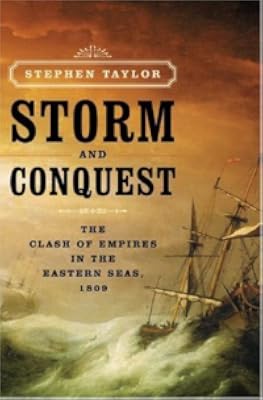
Storm and Conquest: The Battle for the Indian Ocean, 1809
by Stephen Taylor
On This Page
Description
The Indian Ocean was the final battleground for Nelson's navy and France. At stake was Britain's lifeline to India and its strategic capacity to wage war in Europe. In one fatal season, the natural order of maritime power since Trafalgar was destroyed, when Britain lost fourteen of her great Indiamen, either sunk or taken by enemy frigates. Many hundreds of lives were lost, and the East India Company was shaken to its foundations. The focus of these disasters, military and meteorological, show more was a tiny French outpost in mid-ocean, the island known as Mauritius. This is the story of that season and the terrifying ordeal of men, women, and children caught at sea in hurricanes and those who survived to take up the battle to drive the French from the Eastern seas. Mauritius must be taken at any cost! show lessTags
Recommendations



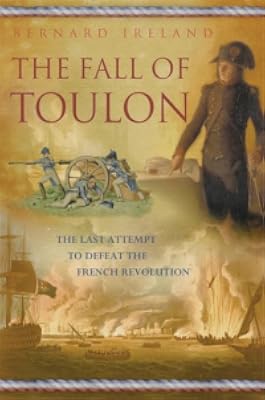
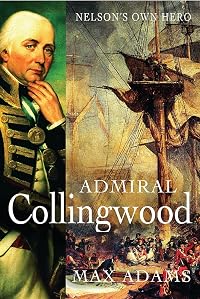
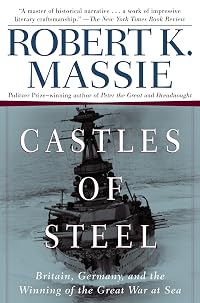
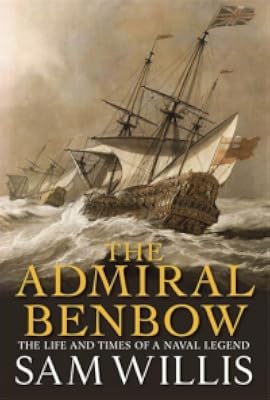


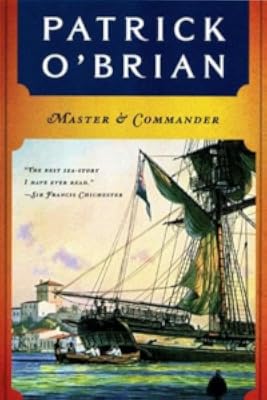


Member Recommendations
Member Reviews
Napoleonic history is not my normal beat, nor am I a devotee of Patrick O'Brien's novels, but I was curious as to what "Mauritius" meant apart from being an obscure battle honor of the Royal Navy and that was sufficient reason to make me pick up this history.
What you get for your time and money is a roundabout chronicle of how the British finally reduced one of the last redoubts of French naval force projection, in spite of cheapness on the part of the India Company, inter-service strife, hurricanes, failures of command, and, yes, more hurricanes. If you want proof that God is an Englishman you'll find it in this book.
While the chronicle of events is interesting enough in and of itself, Taylor's heart is in depicting the characters that show more populate his tale. There is the esteemed Adm. Pellew, with his somewhat spoiled sons. There's the put-upon India Company high official George Barlow, who while being cuckolded by his wife is at the same time trying to bring a recalcitrant Company army establishment to heel. There are RN captains such as Robert Corbet and Nesbit Willoughby, in hot pursuit of honor to the point of being unbalanced and as much a menace to their men as to the French. Amidst all the others there are the real heroes of this book, the captains of the ships of the East India Company who, in the face of lack of respect from the gentlemen of The Royal Navy, have to cope with terrible weather and the lack of naval support to try and bring their ships, crews, and passengers home. show less
What you get for your time and money is a roundabout chronicle of how the British finally reduced one of the last redoubts of French naval force projection, in spite of cheapness on the part of the India Company, inter-service strife, hurricanes, failures of command, and, yes, more hurricanes. If you want proof that God is an Englishman you'll find it in this book.
While the chronicle of events is interesting enough in and of itself, Taylor's heart is in depicting the characters that show more populate his tale. There is the esteemed Adm. Pellew, with his somewhat spoiled sons. There's the put-upon India Company high official George Barlow, who while being cuckolded by his wife is at the same time trying to bring a recalcitrant Company army establishment to heel. There are RN captains such as Robert Corbet and Nesbit Willoughby, in hot pursuit of honor to the point of being unbalanced and as much a menace to their men as to the French. Amidst all the others there are the real heroes of this book, the captains of the ships of the East India Company who, in the face of lack of respect from the gentlemen of The Royal Navy, have to cope with terrible weather and the lack of naval support to try and bring their ships, crews, and passengers home. show less
Storm and Conquest is a popular history book as gripping as many novels. It details the triumphs and tragedies of the East India Company over a couple of years in the early 19th century. The main players in India, South Africa, and sailing the Indian Ocean are brought to life through a fantastic summary based primarily on the letters, notes, analysis, and reports of those who were there.
The British Empire was in the ascendency post-Trafalgar and it was naval prowess that had brought glory to Britain. The navy was far from unrivalled though and the French fleet and the elements still brought many ships down. Taylor's book explores the people who were on board, how they related to each other, and what became of them when disaster show more struck.
What surprised me the most about this book is that it is first and foremost a description of the people involved. From the politicking over the governorship in India, the bitter recriminations between rivals for honour, and the love, romance, and illicit affairs that sparked, this is a tale of real human beings.
Taylor's analysis of those people is rarely of a fence-sitting variety. The exploits of Captain Corbet for instance are a remarkable read with Taylor firmly backing the sources that show Corbet to have been a monster despite the occasional success he wrought. Corbet's tale on the Nereide is probably the most heartbreaking of all and the cruelty of the life among the Indiamen and HM Navy is brought home vividly.
While the title of this book suggest an equal weight between Storm and Conquest, the former is much more of a presence. This is not really a book of battles and military action, more a tale of survival and intrigue. In the honour-bound society of early 19th century Britain, the aspirtions againt character weigh far more heavily than any physical injury so captains such as Willoughby plough on into extreme danger motivated solely by the chase of glory.
As an exposition of the now easily forgotten people of the East India Company, Storm and Conquest is superb. These people effectively ran an Empire larger than any other in history and to read them revealed so insightfully was a real pleasure. show less
The British Empire was in the ascendency post-Trafalgar and it was naval prowess that had brought glory to Britain. The navy was far from unrivalled though and the French fleet and the elements still brought many ships down. Taylor's book explores the people who were on board, how they related to each other, and what became of them when disaster show more struck.
What surprised me the most about this book is that it is first and foremost a description of the people involved. From the politicking over the governorship in India, the bitter recriminations between rivals for honour, and the love, romance, and illicit affairs that sparked, this is a tale of real human beings.
Taylor's analysis of those people is rarely of a fence-sitting variety. The exploits of Captain Corbet for instance are a remarkable read with Taylor firmly backing the sources that show Corbet to have been a monster despite the occasional success he wrought. Corbet's tale on the Nereide is probably the most heartbreaking of all and the cruelty of the life among the Indiamen and HM Navy is brought home vividly.
While the title of this book suggest an equal weight between Storm and Conquest, the former is much more of a presence. This is not really a book of battles and military action, more a tale of survival and intrigue. In the honour-bound society of early 19th century Britain, the aspirtions againt character weigh far more heavily than any physical injury so captains such as Willoughby plough on into extreme danger motivated solely by the chase of glory.
As an exposition of the now easily forgotten people of the East India Company, Storm and Conquest is superb. These people effectively ran an Empire larger than any other in history and to read them revealed so insightfully was a real pleasure. show less
'Storm & Conquest' is essentially two books in one: Part 1 is an astonishing tale of trial and tribulation as two successive homebound convoys of Indiamen meet their doom in ferocious tropical storms across the Indian Ocean; Part 2 is the story of Britain's annexing of the Mauritius island chain from the French to clear a way for total dominance in the area.
The setting for these events is the world of tall ships and 'Nelson's Navy', but it is written with seafaring novices in mind. Indeed, author Stephen Taylor freely admits to being one himself and thus consciously steers clear of most nautical terminology except where absolutely necessary. While those who are familiar with such things may regret this omission, and might enjoy a show more knowing smile at some of his over-simplified explanations, others will find nothing intimidating.
In any case, Taylor's concern is the human story of the many people caught in these events. Ships are merely vehicles that provide a dramatic setting in which lives are lived and lost, and many reputations made or broken. His descriptions are sometimes lurid and perhaps a little over-sensationalised, but he tells a good tale that never loses its fascination to the end.
Several names bestride both parts to provide continuity, including an infamous frigate captain Robert Corbet, feared equally by his enemies and his own crew, a name familiar to readers of Patrick O'Brian's novel 'Mauritius Command' which was based on the naval exploits described in Part 2. If anything, in real-life the enigmatic and complex Corbet is more interesting than even O'Brian allows.
Overall, a terrific read. show less
The setting for these events is the world of tall ships and 'Nelson's Navy', but it is written with seafaring novices in mind. Indeed, author Stephen Taylor freely admits to being one himself and thus consciously steers clear of most nautical terminology except where absolutely necessary. While those who are familiar with such things may regret this omission, and might enjoy a show more knowing smile at some of his over-simplified explanations, others will find nothing intimidating.
In any case, Taylor's concern is the human story of the many people caught in these events. Ships are merely vehicles that provide a dramatic setting in which lives are lived and lost, and many reputations made or broken. His descriptions are sometimes lurid and perhaps a little over-sensationalised, but he tells a good tale that never loses its fascination to the end.
Several names bestride both parts to provide continuity, including an infamous frigate captain Robert Corbet, feared equally by his enemies and his own crew, a name familiar to readers of Patrick O'Brian's novel 'Mauritius Command' which was based on the naval exploits described in Part 2. If anything, in real-life the enigmatic and complex Corbet is more interesting than even O'Brian allows.
Overall, a terrific read. show less
At the height of Britain’s maritime power, the French managed to commit an unbelievable amount of damage to the Brits traveling the Indian Ocean to reach British Indian colonies from the French base of Mauritious. Unfortunately the “clash” didn’t occur until well into the second half. There wasn’t enough material it seems so the author gave an inordinate amount of background about Brits in India—in a very gossipy way. The French were almost completely missing from the first half making me wonder if I were only reading about storms (hurricanes did in many ships) and not clashes. The gossipy nature of the book tracked so many people it was a very difficult audiobook to follow. Once I accepted I couldn’t follow on every show more person’s story, I focused on the highlights. Now that it’s called Mauritius instead of Isle de France, I’ll bet you can guess who won! show less
It is regrettable that so many naval histories of the Napoleonic Wars end with Trafalgar. While its true Trafalgar was the last major sea battle of the era, the French remained a force at sea through command of strategic outposts like Mauritius, which threatened Britain's routes to India. There were also numerous powerful French vessels still at seaoperating on their own initiative that posed a threat to British shipping. This book is a commendable addition to the history of the great war at sea by detailing the contnuing struggle between Britain and France post-Trafalgar. Highly readable, its a gripping account of a campaign that remains little known today, and will enthrall all those interested in the history of war at sea.
East India Company vs. Napoleon
Members
- Recently Added By
Author Information

10 Works 882 Members
Stephen Taylor grew up in South Africa and now works for The Times of London
Common Knowledge
- Canonical title
- Storm and Conquest: The Battle for the Indian Ocean, 1809
- Original publication date
- 2008
- Important places
- Mauritius
- Important events
- Disaster: Storm at Sea
- Dedication
- To Wil, my son and shipmate
- First words
- The first sail tips were sighted across an empty sea just beore noon.
- Last words
- (Click to show. Warning: May contain spoilers.)"The greatest Sea Officer of his time" was how John Croker, First Secretary of the Admiralty for more than twenty years described him, and, in tht time and at that place, that was a fine an epitaph as any.
- Original language
- English UK
Classifications
- Genres
- History, Nonfiction, General Nonfiction
- DDC/MDS
- 940.2 — History & geography History of Europe History of Europe Europe: Renaissance, Reformation, Enlightenment, Napolean
- LCC
- DC202.3 .T39 — History of Europe, Asia, Africa and Oceania France – Andorra – Monaco History of France Modern, 1515- Revolutionary and Napoleonic period, 1789-1815
- BISAC
Statistics
- Members
- 182
- Popularity
- 179,769
- Reviews
- 7
- Rating
- (4.06)
- Languages
- English
- Media
- Paper, Audiobook, Ebook
- ISBNs
- 11
- UPCs
- 2
- ASINs
- 6