
Tim Clayton
Author of Finest Hour
About the Author
Works by Tim Clayton
Associated Works
Female Printmakers, Printsellers, and Print Publishers in the Eighteenth Century (2025) — Contributor — 2 copies
Tagged
Common Knowledge
- Birthdate
- ukjent
- Gender
- male
- Awards and honors
- Mountbatten Maritime Award (2008)
Members
Reviews
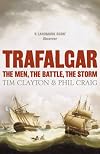
An outstanding account of the battle of Trafalgar concentrating, as the subtitle says, on the men, the battle and the storm. What is missing, compared to the usual account is the campaign, the cat-and-mouse game that led to the two fleets being stationed at Cadiz. The authors more than make it up by producing an immersion account of life on board of British and French warships, explaining and describing how the tasks are performed, presenting the men and their background as well as their show more commanders. The hands-on account of the ship against ship battles show that in the actual encounter the two sides were close to balance. The British won because the French van did not want or manage to turn around in time and engage in battle. The French commander should have chosen a more compact formation, otherwise he isn't really to blame for the defeat.
When the battle is finished, the suffering doesn't stop. In view of an approaching storm that threatens to drive the surviving ships against the coast, the crews frantically try to rescue their ships and prizes. Many of the Spanish and French ships that had survived the battle were destroyed by the storm. Many British prize crews went down too or were taken captive. This aspect of the famous battle deserves to be better known. Highly recommended. show less
When the battle is finished, the suffering doesn't stop. In view of an approaching storm that threatens to drive the surviving ships against the coast, the crews frantically try to rescue their ships and prizes. Many of the Spanish and French ships that had survived the battle were destroyed by the storm. Many British prize crews went down too or were taken captive. This aspect of the famous battle deserves to be better known. Highly recommended. show less
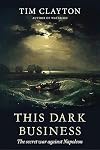
When I picked this book up I was expecting to read about British (and possibly other allied forces) so-called 'black ops' against Napoleon and the French during the Napoleonic Wars at the start of the 19th Century. In fact, this book has a much narrower remit than that which, in all fairness, is laid out in the dusk jacket blurb. The book discusses two attempts on Napoleon's life, in 1800 and 1804, the British official support for those attempts and the British propaganda campaign against show more Napoleon during this period. As is required of all published history today, the British are portrayed as evil, war-mongering devils, and Napoleon as an innocent saintly figure who wants nothing more than to be left alone to promulgate peace and good will across Europe.
The breadth and depth of Clayton's research is enormous, as evidenced by a Cast of Characters at the front of the book with more than 200 entries. But this research works against the flow of the book. Every page seems to have references to a dozen different characters and I quickly and frequently lost track of who was who and who was important our not. The two assassination attempts should be exciting thriller-ish episodes, but all the dramatic brio is drained by the relentless listing of names and places, with no real characters shining through.
This seems to me a very one-sided analysis of some very exciting events that looses all momentum in the nooks and crannies of details we do not really need.
An interesting premise and potentially an exciting story, but ultimately a failure. show less
The breadth and depth of Clayton's research is enormous, as evidenced by a Cast of Characters at the front of the book with more than 200 entries. But this research works against the flow of the book. Every page seems to have references to a dozen different characters and I quickly and frequently lost track of who was who and who was important our not. The two assassination attempts should be exciting thriller-ish episodes, but all the dramatic brio is drained by the relentless listing of names and places, with no real characters shining through.
This seems to me a very one-sided analysis of some very exciting events that looses all momentum in the nooks and crannies of details we do not really need.
An interesting premise and potentially an exciting story, but ultimately a failure. show less
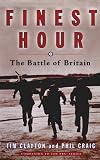
While subtitled "The Battle of Britain", this is more than another study of the fighting in the sky over the UK. In fact the book starts with British Expeditionary Force in Belgium waiting for the shooting war to start. Using interviews, diaries and memoirs the authors describe what those British soldiers went through as the German armor and masses of men pushed them back to the English Channel.
The authors flip from ground forces to the English pilots who are fighting in France a one sided show more battle with obsolete planes and constant changing air fields. Fuel & parts were always in short supply. Once the Allied forces reach the Channel, we are given first hand accounts of what it was like to be caught on an open beach by Stukas and other enemy aircraft or finally getting aboard a ship heading for safety only to have to sunk and putting you back in the water.
Once the book moves to England and the more commonly accepted version of the Battle of Britain, we do end up on the fighter bases and follow pilots into the air into battle. We also follow several women who joined the air force and became the controllers who directed the pilots to the enemy bombers. They also formed romantic relationships with the young men and we read about the trauma of listening to them burning alive in their damaged aircraft.
We also read about the memories of the people who live and worked where the German bombs were falling. We also read about the terror of being under falling bombs and having your home destroyed or seeing your friends and neighbours blown to pieces.
Some other sections of the book look at the change of government from Chamberlain to Churchill and the behind the scenes maneuvering in the Conservative Party, the creation of the Lend-Lease Program, the sinking of the SS City of Benares with hundreds of children being evacuated to Canada aboard and the memories of American reporters who served in London during the Blitz.
The research for this book was done for the PBS TV series with the same title. show less
The authors flip from ground forces to the English pilots who are fighting in France a one sided show more battle with obsolete planes and constant changing air fields. Fuel & parts were always in short supply. Once the Allied forces reach the Channel, we are given first hand accounts of what it was like to be caught on an open beach by Stukas and other enemy aircraft or finally getting aboard a ship heading for safety only to have to sunk and putting you back in the water.
Once the book moves to England and the more commonly accepted version of the Battle of Britain, we do end up on the fighter bases and follow pilots into the air into battle. We also follow several women who joined the air force and became the controllers who directed the pilots to the enemy bombers. They also formed romantic relationships with the young men and we read about the trauma of listening to them burning alive in their damaged aircraft.
We also read about the memories of the people who live and worked where the German bombs were falling. We also read about the terror of being under falling bombs and having your home destroyed or seeing your friends and neighbours blown to pieces.
Some other sections of the book look at the change of government from Chamberlain to Churchill and the behind the scenes maneuvering in the Conservative Party, the creation of the Lend-Lease Program, the sinking of the SS City of Benares with hundreds of children being evacuated to Canada aboard and the memories of American reporters who served in London during the Blitz.
The research for this book was done for the PBS TV series with the same title. show less
An interesting look into the state of the intelligence community during the Napoleonic wars. Clayton carefully lays out the steps whereby the British government found itself engaging with Bourbon Royalists, Breton independence fighters, and British popular opinion, to attempt to unite their country to resist the rvolutionary ideas of the French revolution entering English popular opinion. It covers the direct attempt on Napoleon's life on Christmas Eve 1800. The attempt failed, possibly by a show more failure to correvtly calculate the correct fuse length on the bomb, and set the British on a course of systematic defamation to firm up British opinion in favour of a French war, and, to try to remove the French leader by several other assassinaion attermpts. None of them came as close as the first one. But, the British were forced by circumstance, to sign onto the Peace of Amiens. and a precarious cessation of hostilities lasted for two years. The coronation of Napoleon as emperor of the French, during May of 1804, while it was the opening of the second set of wars, did seem to have halted that chapter in claudestine operations. The maps are useful, and there is a pocket guide to prominent figures in the opening phase of the Napoleonic wars. show less
Lists
Awards

You May Also Like


Associated Authors
Statistics
- Works
- 16
- Also by
- 1
- Members
- 980
- Popularity
- #26,286
- Rating
- 3.8
- Reviews
- 12
- ISBNs
- 50
- Languages
- 3