
David Armine Howarth (1912–1991)
Author of 1066
About the Author
Works by David Armine Howarth
Fodspor i sneen 4 copies
The British Empire 2 copies
The Frigates 1 copy
One Night in Styria 1 copy
Group Flashing Two 1 copy
L'invincibile Armada 1 copy
Associated Works
Tagged
Common Knowledge
- Legal name
- Howarth, David Armine
- Birthdate
- 1912-07-18
- Date of death
- 1991-07-02
- Gender
- male
- Education
- University of Cambridge
- Occupations
- historian
writer
war correspondent
boatbuilder - Organizations
- BBC
British Navy
The Shetland Bus
Special Operations Executive - Awards and honors
- King Haakon VII's Freedom Cross
Order Of St Olav (Chevalier) - Relationships
- Howarth, Stephen (son)
- Nationality
- UK
- Birthplace
- London, England, UK
- Places of residence
- Lunna Voe, Shetland Islands, Scotland, UK
- Place of death
- Lunna Voe, Shetland Islands, Scotland, UK
- Burial location
- ashes scattered at sea, Lunna Voe, Shetland Islands, Scotland, UK
- Map Location
- England, UK
Members
Reviews

This is not a comprehensive history of the Battle of Hastings, and it is not meant to be. It is a great storyteller's version of events as he understands them.
Howarth uses mostly contemporaneous writings (17 of his 20 sources are within 100 years of the Battle of Hastings) to decipher and tell the history of the battle between King Harold of England and William the Conqueror of Normandy. He infuses the book with his own point of view, which at times can be borderline Francophobic. "[William] show more was a more barbarous primitive man than either Edward or Harold, but he is not to be blamed: he came from a more barbarous primitive country."
But it is this point of view, and this conversational tone that makes this book so enjoyable. You might not agree with his point of view, but it sure is fun to listen to. "Obviously, nobody could really make a speech to an army, and the chaplain rather gave the game away. He wrote: 'Nobody has reported to us in detail the short harangue with which on this occasion the Duke increased the courage of his troops...' - and he went straight on to quote the speech at great length word for word."
I'll definitely be looking out for Howarth's other books. show less
Howarth uses mostly contemporaneous writings (17 of his 20 sources are within 100 years of the Battle of Hastings) to decipher and tell the history of the battle between King Harold of England and William the Conqueror of Normandy. He infuses the book with his own point of view, which at times can be borderline Francophobic. "[William] show more was a more barbarous primitive man than either Edward or Harold, but he is not to be blamed: he came from a more barbarous primitive country."
But it is this point of view, and this conversational tone that makes this book so enjoyable. You might not agree with his point of view, but it sure is fun to listen to. "Obviously, nobody could really make a speech to an army, and the chaplain rather gave the game away. He wrote: 'Nobody has reported to us in detail the short harangue with which on this occasion the Duke increased the courage of his troops...' - and he went straight on to quote the speech at great length word for word."
I'll definitely be looking out for Howarth's other books. show less
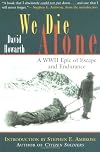
I first read of Jan Baalsrud's amazing World War II adventure in a March 2016 NY Times Magazine article. Haunted by the description of a failed attempt by 12 Norwegians sailing from Scotland to land in Nazi occupied Norway in order to sabotage German installations, I had to find the book that chronicled the lone survivor, Jan Baalsrud and his perilous journey to freedom. By turns horrifying, awe-inspiring, and suspenseful David Howarth meticulously introduces the reader to "ordinary" show more Norwegians, who despite certain death if discovered by the Nazis, aided Baalsrud over a nine week period and ultimately enabled him to escape to Sweden.
Baalsrud's physical and mental stamina despite overwhelming odds, and the stories of the many villagers who bravely assisted him, make for a spellbinding true story that displays the very best of human nature. This is a story I cannot forget. show less
Baalsrud's physical and mental stamina despite overwhelming odds, and the stories of the many villagers who bravely assisted him, make for a spellbinding true story that displays the very best of human nature. This is a story I cannot forget. show less

I read this excellent memoir on a transcontinental flight and couldn't put it down. The night I arrived at my destination, I stayed up to the wee hours finishing it. The author David Howarth ran a spy ring during WWII called the Shetland Bus, which ran spies from the Shetland Islands into occupied Norway. This book is derived from the story of one of those spies. Jan Baalstrud was a Norwegian, who had escaped the Germans and received special forces training in England. He and a few others show more were sent to the Norwegian coast by fishing vessel; their mission was to infiltrate inland, hook up with native resistance groups, and support them as much as possible. Unfortunately the group is betrayed shortly after their arrival and only Jan makes it off the beach alive. The story of his escape through the Norwegian Arctic is spellbinding. He faces hunger, unbearable cold, isolation, avalanches, snow blindness, frostbite, you name it. But thanks to the bravery and generosity of some individuals he meets along the way, he survives. His story is so incredible that the author takes pains to assure the reader of the verification process he went through in checking Jan's story. Sometimes truth is stranger than fiction. Highly recommended. show less
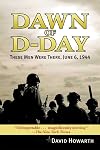
The D-Day invasion 80 years ago was a success despite being a failure, as David Howarth describes in “Dawn of D-Day: These Men Were There, June 6, 1944” (2008).
The invasion was planned with minute-by-minute precision. This was supposed to happen, then five minutes later this was supposed, and 10 minutes after that something else. Yet almost nothing happened on schedule or as planned. The bombing and shelling before the invasion was mostly ineffective. Paratroopers were dropped in the show more wrong places. Winds caused boats to go off course, so that troops didn't land where they were supposed to or when they were supposed to. Troops assigned to break through defensive barriers didn't arrive until after the troops who were supposed to charge through those openings. And so forth.
And yet, somehow, it worked. And this success had less to do with the generals who planned the invasion down to the minute than with the men who overcame all those obstacles on their own. And of course, it helped that the German army was surprised, not believing the Allies would invade in poor weather. And fewer lives were lost than the generals had expected if everything went as planned.
Howarth breaks the invasion into parts — the air drops, Utah Beach, Omaha Beach, etc. — and then examines those parts through the stories of some of the men who survived to tell about their experiences. Thus you won't learn about everything that happened on the French coast that day, but you will experience a little of what it was like through the stories of individual soldiers, including some from the German side. The result is an exciting, you-are-there feeling as you read this relatively short book.
Along the way, the author tells us things even experts on the invasion may have never considered. For example, until the invasion most of the British soldiers involved had less experience with war than residents of the city of London, who had experienced almost nightly bombing for a long period. Meanwhile the soldiers were training elsewhere in relative safety, and some of them, Howarth tells us, felt guilty about it and were glad to finally be able to demonstrate as much courage as ordinary British citizens had already shown. show less
The invasion was planned with minute-by-minute precision. This was supposed to happen, then five minutes later this was supposed, and 10 minutes after that something else. Yet almost nothing happened on schedule or as planned. The bombing and shelling before the invasion was mostly ineffective. Paratroopers were dropped in the show more wrong places. Winds caused boats to go off course, so that troops didn't land where they were supposed to or when they were supposed to. Troops assigned to break through defensive barriers didn't arrive until after the troops who were supposed to charge through those openings. And so forth.
And yet, somehow, it worked. And this success had less to do with the generals who planned the invasion down to the minute than with the men who overcame all those obstacles on their own. And of course, it helped that the German army was surprised, not believing the Allies would invade in poor weather. And fewer lives were lost than the generals had expected if everything went as planned.
Howarth breaks the invasion into parts — the air drops, Utah Beach, Omaha Beach, etc. — and then examines those parts through the stories of some of the men who survived to tell about their experiences. Thus you won't learn about everything that happened on the French coast that day, but you will experience a little of what it was like through the stories of individual soldiers, including some from the German side. The result is an exciting, you-are-there feeling as you read this relatively short book.
Along the way, the author tells us things even experts on the invasion may have never considered. For example, until the invasion most of the British soldiers involved had less experience with war than residents of the city of London, who had experienced almost nightly bombing for a long period. Meanwhile the soldiers were training elsewhere in relative safety, and some of them, Howarth tells us, felt guilty about it and were glad to finally be able to demonstrate as much courage as ordinary British citizens had already shown. show less
Lists
Awards


You May Also Like


Associated Authors
Statistics
- Works
- 36
- Also by
- 5
- Members
- 5,688
- Popularity
- #4,342
- Rating
- 3.9
- Reviews
- 109
- ISBNs
- 175
- Languages
- 11