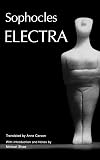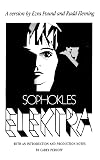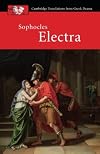
Electra
by Sophocles
On This Page
Description
This text tells the story of the revenge Orestes and Electra take on their mother, Clytemnestra, for the murder of their father Agamemnon. This edition of the play is preceded by a critical introduction and is accompanied by explanatory notes.Tags
Recommendations










Member Reviews
Third time read, and I couldn’t resist after reading Anne Carson’s translation of Iphigeneia Among the Taurians. The story is shocking in how a daughter wants to murder her mother, she is righting a wrong; the mother and her lover, now her step-father, murdered her father and got away with it. Electra is appalled that she is crying out for justice, here it will be her brother who will be the vengeance that she has waiting and waiting for.
What unravels is shocking, the fiery exchange between mother and daughter shows that there is no love between these two, their anger and resentment towards each other have erased their connection. Here, they behave like bitter enemies, giving as good as they can get, and both believing each are show more right.
This will also be a scene that Electra replays again with her sister, but a milder version. Electra, in wanting justice has alienated herself from her family. The way this play speak to us me is how far does a person go to show they are right? show less
What unravels is shocking, the fiery exchange between mother and daughter shows that there is no love between these two, their anger and resentment towards each other have erased their connection. Here, they behave like bitter enemies, giving as good as they can get, and both believing each are show more right.
This will also be a scene that Electra replays again with her sister, but a milder version. Electra, in wanting justice has alienated herself from her family. The way this play speak to us me is how far does a person go to show they are right? show less
"I ask this one thing: let me go mad in my own way."
Electra
Queen Clytemnestra and her lover Aegisthus murdered her husband, Agamemnon, on his return from the Trojan War. The murder was a revenge killing. Agamemnon sacrificed their daughter Iphigenia in exchange for his armies' passage to Troy. Their remaining children, Electra and Orestes, sought revenge for their father's death by killing their mother and her lover.
Sophocles' Electra is one of three dramatic interpretations of this myth. It is a character study that focuses on Electra's obsessive desire for revenge that consumes her into middle age. The play follows her brother Orestes' return from exile and her unambiguous goading that ended in the double murder.
I am taking a course show more in Greek tragedy and became intrigued by a lecture comparing the three great Greek tragedians' interpretations of this myth. I read Aeychelus' Libation Bearers before reading Sophocles' interpretation.
In Aeychelus, Electra is a secondary character. Sophocles' shift of focus forces the reader to examine Electra's inability to feel compassion for her mother or understand her brother's reluctance to kill her. The course professor, Elizabeth Vandiver, stated that Freud based the Electra complex upon Sophocles' rendition of the myth.
Thanks to OliverTaplin's excellent translation, Electra was an accessible and engaging read. I recommend it to anyone interested in the Classics or mythology in general. show less
Electra
Queen Clytemnestra and her lover Aegisthus murdered her husband, Agamemnon, on his return from the Trojan War. The murder was a revenge killing. Agamemnon sacrificed their daughter Iphigenia in exchange for his armies' passage to Troy. Their remaining children, Electra and Orestes, sought revenge for their father's death by killing their mother and her lover.
Sophocles' Electra is one of three dramatic interpretations of this myth. It is a character study that focuses on Electra's obsessive desire for revenge that consumes her into middle age. The play follows her brother Orestes' return from exile and her unambiguous goading that ended in the double murder.
I am taking a course show more in Greek tragedy and became intrigued by a lecture comparing the three great Greek tragedians' interpretations of this myth. I read Aeychelus' Libation Bearers before reading Sophocles' interpretation.
In Aeychelus, Electra is a secondary character. Sophocles' shift of focus forces the reader to examine Electra's inability to feel compassion for her mother or understand her brother's reluctance to kill her. The course professor, Elizabeth Vandiver, stated that Freud based the Electra complex upon Sophocles' rendition of the myth.
Thanks to OliverTaplin's excellent translation, Electra was an accessible and engaging read. I recommend it to anyone interested in the Classics or mythology in general. show less
While I loved the dialogue, the pacing of this Hamlet and Antigone caper was a bit rushed. The chorus was particularly effective, the atmosphere resonates with revenge. Electra pines but does not waste. Her timid sister cringes in comparison to this inferno of vengeance. Then suddenly she has a cohort and the circumstances of his arrival afford their nemesis interlopers opportunity to even further impugn their deeds—or do they?
Aegisthus, what were you thinking? There is a nobility in the Divine. There’s also Icarian agency. Think Cobain, “Come back as Fire/Burn all the liars/Leave a blanket of ash on the ground. The plot was the only one pursued by three of the Greek masters (Euripides and Aeschylus being the other two) which show more invites comparisons, though apparently the chronology is regrettably unclear. show less
Aegisthus, what were you thinking? There is a nobility in the Divine. There’s also Icarian agency. Think Cobain, “Come back as Fire/Burn all the liars/Leave a blanket of ash on the ground. The plot was the only one pursued by three of the Greek masters (Euripides and Aeschylus being the other two) which show more invites comparisons, though apparently the chronology is regrettably unclear. show less
Hmm. Well. Pound has shifted the play into some kind of 1950s American idiom, which is distracting and anachronistic, but he’s also left a heap of the original ancient Greek in, for dramatic effect. The overall feel is of watching a subtitled film, where the actors have also been badly dubbed into English. Nothing matches, nothing scans, and the whole thing is an unwatchable mess.
Ratings
Members
- Recently Added By
Author Information

823+ Works 45,957 Members
Sophocles was born around 496 B.C. in Colonus (near Athens), Greece. In 480, he was selected to lead the paean (choral chant to a god) celebrating the decisive Greek sea victory over the Persians at the Battle of Salamis. He served as a treasurer and general for Athens when it was expanding its empire and influence. He wrote approximately 123 show more plays including Ajax, Antigone, Oedipus Tyrannus, Trachiniae, Electra, Philoctetes, and Oedipus at Colonus. His last recorded act was to lead a chorus in public mourning for Euripides. He died in 406 B. C. (Bowker Author Biography) show less
Some Editions
Awards and Honors
Series
Belongs to Publisher Series
Work Relationships
Is contained in
Has as a student's study guide
Common Knowledge
- Canonical title
- Electra
- Original title
- Ἠλέκτρα
- People/Characters
- Orestes; Electra; Chrysothemis; Clytemnestra; Aegisthus
- Important places
- Mycenae
- Related movies
- Ilektra (1962/I | IMDb)
- Last words
- (Click to show. Warning: May contain spoilers.)[CHORUS]:
Delivered, delivered
swift end
so soon
te nun teleoothen. - Disambiguation notice
- This is Sophocles play Electra in translation. Editions which contain the ancient Greek text should be separated under Electra [Greek text].
Classifications
- Genres
- Fiction and Literature, Poetry
- DDC/MDS
- 882.01 — Literature & rhetoric Classical & modern Greek literatures Classical Greek dramatic poetry and drama standard subdivisions; collections; history, description, critical appraisal; Specific periods Ancient period to ca. 499
- LCC
- PA4414 .E5 — Language and Literature Greek language and literature. Latin language and literature Greek literature Individual authors Sophocles
- BISAC
Statistics
- Members
- 211
- Popularity
- 155,008
- Reviews
- 4
- Rating
- (3.61)
- Languages
- 13 — Catalan, Danish, Dutch, English, French, German, Greek, Polish, Portuguese, Russian, Spanish, Swedish, Welsh
- Media
- Paper, Ebook
- ISBNs
- 33
- ASINs
- 4