On This Page
Description
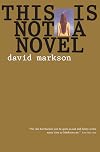
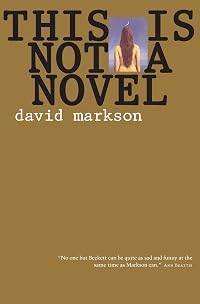
This Is Not a Novel is a highly inventive work which drifts "genre-less," somewhere in between fiction, nonfiction, and psychological memoir. In the opening pages of the "novel," a narrator, called only "Writer," announces that he is tired of inventing characters, contemplating plot, setting, theme, and conflict. Yet the writer is determined to seduce the reader into turning pages-and to "get somewhere," nonetheless. What follows are pages crammed with short lines of astonishingly show more fascinating literary and artistic anecdotes, quotations, and cultural curiosities. This Is Not a Novel is leavened with Markson's deliciously ironic wit and laughter, so that when the writer does indeed finally get us "somewhere" it's the journey will have mattered as much as the arrival. show lessTags
Recommendations

Member Recommendations

Member Reviews
"Thought-provoking" is one of those words I use as sparingly as "breath-taking," but well, here we are. This book definitely isn't for anyone: it rewards minimum four years in higher education and includes all notable literary/artistic deaths by dropsy. It's a weird, rhythmic meditation on genius: latent, tormented and other. The formatting here kind of presages the weird Wikipedia effect of knowing a little about quite a lot, but beneath all the trivia is a story about someone working in earnest to make something meaningful, made all the better by the author's photo: "Hey, thanks for reading! Means a lot to me!"
For nearly forty years Markson has been writing brilliant novels. His new “novel” (if that’s what it is) is disquietingly similar to his 1996 Reader’s Block, which itself followed the 1988 publication of Wittgenstein’s Mistress, Markson’s best known work. I say “disquietingly” similar, because, as Markson informs us in This Is Not a Novel, Reader’s Block was “a flop.” Indeed, where Mistress won the hearts of many a reviewer and critic, and found it’s way onto many of that year’s “best books” lists, Reader was almost universally ignored: “Wittgenstein, it is you who are creating all the confusion!” Markson writes (141).
For that reason, I suspect, Markson produced another novel written in the same—but show more here vocabulary is going to fail me, because what Markson has done in these two books is the impossible: he’s written novels with no characters and no stories. In This Is Not a Novel, Markson warns us straight up and first thing what he’s doing: “I am now trying an Experiment very frequent among modern Authors; which is, to write upon Nothing” as the epigram from Swift informs us. In case you’re unclear on the concept of “Nothing,” Markson spells it out for us in the first couple of “stanzas” (which term I might as well use since, after all, this is not a novel):
Writer is pretty much tempted to quit writing.
Writer is weary unto death of making up stories.
Writer is equally tired of inventing characters. (1)
And, honestly, that’s pretty much it. The occasional declaration from Writer, and they’re aren’t many of those, is intercut with facts about other artists—writers, yes, but the kind who work with visual images as well. So, duh, this isn’t a novel—in fact, from this description, it isn’t much of anything. Why should I bother?
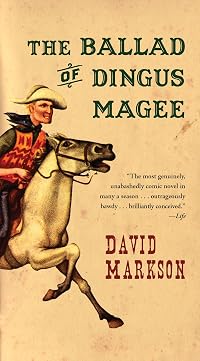
You should bother because if you don’t, you’ll miss one of the greatest meditations on what it means to be creative ever composed. There’s an old saw about the person who “knows everything, has experienced nothing,” and is therefore pretty much useless. Markson has read everything, and, as far as I can tell from old interviews with him, had experienced darn near everything before he finally (in his mid-thirties) wrote his first novel, The Ballad of Dingus McGee.
We are and we are not.
Said Heraclitus.
Knowledge is not intelligence.
Heraclitus additionally said. (82)
Wittgenstein’s Mistress was a masterpiece of melancholy, and Reader’s Block was brilliantly depressing. In contrast, Novel is funny and defiant. Yes, Reader was “a flop,” so Markson tells us what Novel could be, “if Writer says so.” Markson gives us a catalog of possibilities, but consider this one. This Is Not a Novel is a spare (some would say “minimalist,” but they’d be fooled by mere appearances) and delightfully complex myth of The Creative in any time:
Fray Luis de Léon, returning to his Salamanca classroom after five years of imprisonment by the Inquisition:
As I was saying… (83)
As a myth, The Creative is a drunkard, a womanizer, a lunatic, a jumper off cliffs both metaphorical and not. As a myth, Novel provides its own variant tellings and cross-cultural comparisons, as so Novel becomes all the things that Markson says it is: epic poem, catalog, learned treatise, “polyphonic opera” (73)…
Nonlinear. Discontinuous. Collage-like. An assemblage.
Self-evident enough to scarcely need Writer’s say-so.
The key to understanding This Is Not a Novel is the same one we use to read the Surrealists, or Burroughs, or Acker: the only real “character” for any of these writers is the relationship. There are no characters in Novel because we are the cast, and thus Novel is a kind of day book, a record of witnessing, be it on the streets of New York (where Markson lives) or the musty pages of some old book: it’s all a passion play.
Although Markson never moralizes, there is a cogent moral to his latest novel. And that is a respect for the relationship, between things, between people, between people and things, that makes The Creative create:
The friendship of Paula Becker and Clara Westhoff. (113)
This isn’t name-dropping; what’s important here is the subject of this verbless fragment: friendship. Markson is especially keen on the relationship between student and teacher:
Eleven of Ernest Rutherford’s students became winners of the Nobel Prize. (140)
The preceding two quotes are just single examples of themes that bloom again and again, like mythic variations, like etudes followed by fugues, throughout the book. But creative relationships have their, if not dark, then annoying, side: the critics, who take a beating here:
Half-cracked. Thomas Wentworth Higginson’s earliest evaluation of Emily Dickinson. (70)
The reception of the creative production, be it novel, poem, musical or visual composition, is a source of much of the book’s humor. The following example illustrates not only Markson’s funny bone, but the inner workings of his method as well:
The poetical fame of Ausonius condemns the taste of his age, Gibbon said. (113)
Ausonius once composed a poem to his writing paper.
The literary fame of The Bonfire of the Vanities condemns the taste of its age. (115)
Fractured and fragmented, Markson fills Novel, as he did Reader, with a catalog of deaths. One of the reasons Reader’s Block was so depressing is that the deaths were mostly suicides. Not so in This Is Not a Novel: disease is the man in the black coat here. In the phenomenological reduction of all life to the relationship between Reader and Writer, death gives us all the characters we could ever want. From all those musty pages, from the reflections in the familiar windows that catch and remind us of some long-ago parting, death is the source, the turning point, the verse (“a turning”) of the creative’s life and work:
But go, and if you listen she will call. show less
For that reason, I suspect, Markson produced another novel written in the same—but show more here vocabulary is going to fail me, because what Markson has done in these two books is the impossible: he’s written novels with no characters and no stories. In This Is Not a Novel, Markson warns us straight up and first thing what he’s doing: “I am now trying an Experiment very frequent among modern Authors; which is, to write upon Nothing” as the epigram from Swift informs us. In case you’re unclear on the concept of “Nothing,” Markson spells it out for us in the first couple of “stanzas” (which term I might as well use since, after all, this is not a novel):
Writer is pretty much tempted to quit writing.
Writer is weary unto death of making up stories.
Writer is equally tired of inventing characters. (1)
And, honestly, that’s pretty much it. The occasional declaration from Writer, and they’re aren’t many of those, is intercut with facts about other artists—writers, yes, but the kind who work with visual images as well. So, duh, this isn’t a novel—in fact, from this description, it isn’t much of anything. Why should I bother?
You should bother because if you don’t, you’ll miss one of the greatest meditations on what it means to be creative ever composed. There’s an old saw about the person who “knows everything, has experienced nothing,” and is therefore pretty much useless. Markson has read everything, and, as far as I can tell from old interviews with him, had experienced darn near everything before he finally (in his mid-thirties) wrote his first novel, The Ballad of Dingus McGee.
We are and we are not.
Said Heraclitus.
Knowledge is not intelligence.
Heraclitus additionally said. (82)
Wittgenstein’s Mistress was a masterpiece of melancholy, and Reader’s Block was brilliantly depressing. In contrast, Novel is funny and defiant. Yes, Reader was “a flop,” so Markson tells us what Novel could be, “if Writer says so.” Markson gives us a catalog of possibilities, but consider this one. This Is Not a Novel is a spare (some would say “minimalist,” but they’d be fooled by mere appearances) and delightfully complex myth of The Creative in any time:
Fray Luis de Léon, returning to his Salamanca classroom after five years of imprisonment by the Inquisition:
As I was saying… (83)
As a myth, The Creative is a drunkard, a womanizer, a lunatic, a jumper off cliffs both metaphorical and not. As a myth, Novel provides its own variant tellings and cross-cultural comparisons, as so Novel becomes all the things that Markson says it is: epic poem, catalog, learned treatise, “polyphonic opera” (73)…
Nonlinear. Discontinuous. Collage-like. An assemblage.
Self-evident enough to scarcely need Writer’s say-so.
The key to understanding This Is Not a Novel is the same one we use to read the Surrealists, or Burroughs, or Acker: the only real “character” for any of these writers is the relationship. There are no characters in Novel because we are the cast, and thus Novel is a kind of day book, a record of witnessing, be it on the streets of New York (where Markson lives) or the musty pages of some old book: it’s all a passion play.
Although Markson never moralizes, there is a cogent moral to his latest novel. And that is a respect for the relationship, between things, between people, between people and things, that makes The Creative create:
The friendship of Paula Becker and Clara Westhoff. (113)
This isn’t name-dropping; what’s important here is the subject of this verbless fragment: friendship. Markson is especially keen on the relationship between student and teacher:
Eleven of Ernest Rutherford’s students became winners of the Nobel Prize. (140)
The preceding two quotes are just single examples of themes that bloom again and again, like mythic variations, like etudes followed by fugues, throughout the book. But creative relationships have their, if not dark, then annoying, side: the critics, who take a beating here:
Half-cracked. Thomas Wentworth Higginson’s earliest evaluation of Emily Dickinson. (70)
The reception of the creative production, be it novel, poem, musical or visual composition, is a source of much of the book’s humor. The following example illustrates not only Markson’s funny bone, but the inner workings of his method as well:
The poetical fame of Ausonius condemns the taste of his age, Gibbon said. (113)
Ausonius once composed a poem to his writing paper.
The literary fame of The Bonfire of the Vanities condemns the taste of its age. (115)
Fractured and fragmented, Markson fills Novel, as he did Reader, with a catalog of deaths. One of the reasons Reader’s Block was so depressing is that the deaths were mostly suicides. Not so in This Is Not a Novel: disease is the man in the black coat here. In the phenomenological reduction of all life to the relationship between Reader and Writer, death gives us all the characters we could ever want. From all those musty pages, from the reflections in the familiar windows that catch and remind us of some long-ago parting, death is the source, the turning point, the verse (“a turning”) of the creative’s life and work:
But go, and if you listen she will call. show less
The onlyostensibly fictional character in this novel is Writer. 'Writer is pretty much tempted to quit writing,' the book begins, and scattered throughout it are Writer's thoughts on novels and writing, which eventually give way to personal information about Writer, information that the reader may already have gathered from the rest of the book.
And the rest of the book is a collection of baldly-stated facts, most of them about writers and particularly about their deaths, brief quotations, and mere phrases. None of these is random nor are they irrelevant to each other and to Writer's situation--in fact, the book is a marvel of organisation, despite appearances:
'Virtually every inadequacy in recent French literature is due to absinthe, show more Daudet said in the late 1800's.
Annals 165. Where Tacitus actually does, does, call a spade "an implement for digging earth and cutting turf".
Paul Klee died of cardiac arrest after years of enduring scleroderma.
Sarah Orne Jewett died of a cerebral hemmorhage.
Thomas of Celano.
I have wasted all my youth chained to this tomb.
Michelangelo protested to Julius II.
Why hasn't Writer ever known? What is the black liquid that spills out of the dead Emma Bovary's mouth?'
That's most of the page I chanced to open the book to and ought to give a perfect idea of what the writing is like. You could, I suppose, use it as a bedside book of trivia, you Philistine you, but in doing so you'd be losing the novel itself: There is a story here, though it's told in an untraditional way. And it's left me more keen than ever to read all that Markson wrote. show less
And the rest of the book is a collection of baldly-stated facts, most of them about writers and particularly about their deaths, brief quotations, and mere phrases. None of these is random nor are they irrelevant to each other and to Writer's situation--in fact, the book is a marvel of organisation, despite appearances:
'Virtually every inadequacy in recent French literature is due to absinthe, show more Daudet said in the late 1800's.
Annals 165. Where Tacitus actually does, does, call a spade "an implement for digging earth and cutting turf".
Paul Klee died of cardiac arrest after years of enduring scleroderma.
Sarah Orne Jewett died of a cerebral hemmorhage.
Thomas of Celano.
I have wasted all my youth chained to this tomb.
Michelangelo protested to Julius II.
Why hasn't Writer ever known? What is the black liquid that spills out of the dead Emma Bovary's mouth?'
That's most of the page I chanced to open the book to and ought to give a perfect idea of what the writing is like. You could, I suppose, use it as a bedside book of trivia, you Philistine you, but in doing so you'd be losing the novel itself: There is a story here, though it's told in an untraditional way. And it's left me more keen than ever to read all that Markson wrote. show less
This is not a novel. I'm not sure quite what it is, because I'm not sure how much of it is fiction. Maybe none of it. A collage-style memoir, maybe.
But I liked it. As promised, it kept me turning the pages.
And Markson's style is infectious.
But I liked it. As promised, it kept me turning the pages.
And Markson's style is infectious.
Lines, phrases, couplets, words. Evidence again that literature is less about the form than the effect. Markson’s presentation is plotless, pithy. No characters, only names. No action, but the accumulating bits suggest a kind of onward momentum. Imprecisely does he convey his intent, the text evocative but evasive. Towards the end the reader is given a few hints of what the writer is getting at, but a sense of meaning is not at all necessary.
A series of statements on the causes of death of writers, artists, etc...
As well as quotes and anecdotes.
Names and series of names.
Epithets.
Seeming disjointed and random.
Meaningless?
No, not meaningless. With three words towards the end, Markson ties it all together. And all of a sudden the book explodes in your hand, and you understand what it was all about. No, it is not a novel. Few novels could affect me as strongly as this book did. I will not soon forget it.
If ever.
As well as quotes and anecdotes.
Names and series of names.
Epithets.
Seeming disjointed and random.
Meaningless?
No, not meaningless. With three words towards the end, Markson ties it all together. And all of a sudden the book explodes in your hand, and you understand what it was all about. No, it is not a novel. Few novels could affect me as strongly as this book did. I will not soon forget it.
If ever.
What this is: a list of short (1-3 line) anecdotes about artists. How they died, where they died, ways they insulted people, with occasional bits from Writer, who seems preoccupied with getting older, as well as the failure of his last book. Despite being devoid of plot and characters, there's quite a nice story here - mostly sad, but kind of funny. It's a quick read, and a good one.
Members
- Recently Added By
Published Reviews
ThingScore 63
True to its title, the book doesn't, at first glance, appear to be a novel at all. As in his 1996 book "Reader's Block," Markson assembles a series of notebook-like entries that relate historical facts, philosophical observations and nasty gossip about the lives of great writers and artists throughout history. A typical item: "Trollope, as remembered by a schoolmate at Harrow: Without show more exception the most slovenly and dirty boy I have ever met." show less
added by davidcla
Writer mopes around, feeling ''weary unto death of making up stories'' and ''equally tired of inventing characters.'' In an apparent bid to make his readers just as miserable, he wishes to ''contrive'' a ''novel'' without either.
added by davidcla
Lists

Five star books
1,767 works; 110 members
Author Information

20+ Works 4,312 Members
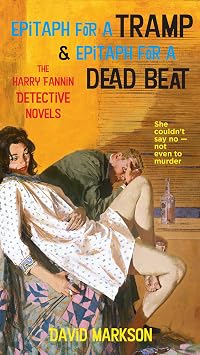
David Markson was born in Albany, New York on December 20, 1927. He received an undergraduate degree from Union College and a master's degree from Columbia University. Besides being a writer, he also worked as a journalist, book editor, and periodically as a college professor at Columbia University, Long Island University, and The New School. His show more works include Epitaph for a Tramp; Epitaph for a Dead Beat; This Is Not a Novel; Springer's Progress; Wittgenstein's Mistress; and The Last Novel. His novel, The Ballad of Dingus Magee, was made into a film starring Frank Sinatra entitled Dirty Dingus Magee. He was found dead on June 4, 2010 at the age of 82. (Bowker Author Biography) show less
Series

Common Knowledge
- Canonical title
- This Is Not a Novel
- Original title
- This is not a novel
- Original publication date
- 2001
- People/Characters
- Writer
- Epigraph*
- Je fais à présent une expérience très répandue chez les auteurs modernes ; à savoir, écrire sur Rien.
Swift - Dedication*
- Pour Toby et Duncan Freeman
et Sydney Markson - First words*
- Ecrivain est très tenté d'arrêter d'écrire.
Ecrivain est plus que las d'inventer des histoires. - Last words*
- (Click to show. Warning: May contain spoilers.)Adieu et soyez sages.
*Some information comes from Common Knowledge in other languages. Click "Edit" for more information.
Classifications
Statistics
- Members
- 450
- Popularity
- 68,275
- Reviews
- 16
- Rating
- (3.95)
- Languages
- English, French
- Media
- Paper
- ISBNs
- 4
- ASINs
- 1