
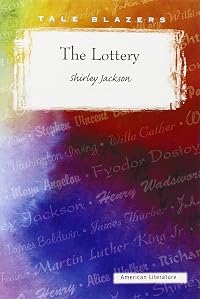
The Lottery [short story]
by Shirley Jackson
On This Page
Description
The people of a village perform their annual lottery, with startling consequences for the recipient of the one paper with the black spot.Tags
Recommendations










Member Reviews
Easily the most recognizable, widely read work of folk horror in literature, Jackson’s story (published in 1948) begins in the folksy tone of any other quick pastoral sketch, with a group of recognizable characters getting ready for their annual town ritual involving an old box, a three-legged stool, and a random drawing of slips of paper. But the beauty of the tale lies in what isn’t explained, and all the unanswered questions that are continually raised by the whole affair, soon revealed to be quite sordid indeed. The Lottery's display of violence and inhumanity shocks us because the prose is so outwardly pleasant. The characters seem innocent and to be upstanding citizens. What makes this so terrifying is that they give into an show more ancient ritual of sacrifice and murder due to mimetic desire. Shirley's story suggests that the desires of the collective whole (however irrational those desires may be) trump those of the individual.
A terrifying exercise in group think and a classic example of a perfect short story. show less
A short story with a nasty sting that leaves you questioning human nature. I also note now that this is my review #666 (or was before I rewrote it in 2023).
It opens idyllically:
“The morning of June 27th was clear and sunny, with the fresh warmth of a full-summer day; the flowers were blossoming profusely and the grass was richly green. The people of the village began to gather in the village square…”.
It’s the annual public lottery in a small farming community, but there is vague foreshadowing of some darker taboo: the boys are boisterous, the girls reserved, and the men tell jokes without laughing. Further unease comes from the setting being both familiar and non-specific: past or future, USA or elsewhere, and are religion or show more political regime factors?
It's a lottery no one wants to win. What made this especially unsettling is that there is no reason for the lottery beyond that of tradition, and a vague link to hopes of a good harvest.
“There's always been a lottery.”
“Much of the ritual had been forgotten or discarded.”
The participants don’t know much about the origins, nor seem to care. It’s universally known, but reluctantly accepted: they’re inured to it. What little challenge there is, is quickly quashed. The power of crowds, consensus, community, or mob?
Image: A hand, brandishing a stone (Source)
What would you do?
We like to think we’re good people, who would only do cruel things in extremis, when there is no alternative. Jackson’s story suggests the threshold may be much lower if the right/wrong environment is set up. This was published shortly after WW2. Perhaps she was wondering how previously ordinary people came to commit atrocities.
Quotes
• “The original paraphernalia for the lottery had been lost long ago… There was a story that the present box had been made with some pieces of the box that had preceded it.”
• “‘They do say,’ Mr Adams said to Old Man Warner, who stood next to him, ‘that over in the north village they're talking of giving up the lottery.’
Old Man Warner snorted. ‘Pack of crazy fools,’ he said. ‘Listening to the young folks, nothing's good enough for them. Next thing you know, they'll be wanting to go back to living in caves, nobody work any more, live that way for a while.’”
• “All of us took the same chance.” [But random ≠ fair]
See also
• Ursula Le Guin’s The Ones Who Walked Away from Omelas, which I reviewed HERE, also starts idyllically, before revealing something dark. However, their tradition is explicitly faith-based, not mindless application of tradition.
• Kafka's short story, In the Penal Colony, which I reviewed HERE, is told by outsider, observing a strange and disturbing local custom. There is at least a reason, albeit a horribly twisted one.
• I read Ralph Ellison’s A Party Down at the Square just last week, and reviewed it HERE. That also has a murderous mob in a town square, but is otherwise very different. That is horrifically targeted (race) whereas this is horrific for its randomness. Ellison was good friends of Jackson and her husband and was godfather to their youngest child. See Harvard Review, HERE.
• Susanne Collins’ The Hunger Games has a deadly lottery. I’ve read only the first book and not seen the films, but my 2011 review, HERE, remains the one with the most comments and most vigorous debate.
• The box, that probably has no original components, is like Stan Holloway’s “real old original axe” in the poem, Beefeater, HERE.
• Rather different, but a scene from Life of Brian, HERE.
• Jackson penned an essay about how she wrote the story (all at once, with minimal planning and editing, apparently), submitted it to the New Yorker (the only change they wanted was for the lottery date to match publication date), and how she was inundated with letters, mostly very critical, and often abusive. See HERE.
Short story club
I reread this as one of the stories in The Art of the Short Story, by Dana Gioia, from which I'm aiming to read one story a week with The Short Story Club, starting 2 May 2022.
You can read this story here.
You can join the group here. show less
It opens idyllically:
“The morning of June 27th was clear and sunny, with the fresh warmth of a full-summer day; the flowers were blossoming profusely and the grass was richly green. The people of the village began to gather in the village square…”.
It’s the annual public lottery in a small farming community, but there is vague foreshadowing of some darker taboo: the boys are boisterous, the girls reserved, and the men tell jokes without laughing. Further unease comes from the setting being both familiar and non-specific: past or future, USA or elsewhere, and are religion or show more political regime factors?
It's a lottery no one wants to win. What made this especially unsettling is that there is no reason for the lottery beyond that of tradition, and a vague link to hopes of a good harvest.
“There's always been a lottery.”
“Much of the ritual had been forgotten or discarded.”
The participants don’t know much about the origins, nor seem to care. It’s universally known, but reluctantly accepted: they’re inured to it. What little challenge there is, is quickly quashed. The power of crowds, consensus, community, or mob?
Image: A hand, brandishing a stone (Source)
What would you do?
We like to think we’re good people, who would only do cruel things in extremis, when there is no alternative. Jackson’s story suggests the threshold may be much lower if the right/wrong environment is set up. This was published shortly after WW2. Perhaps she was wondering how previously ordinary people came to commit atrocities.
Quotes
• “The original paraphernalia for the lottery had been lost long ago… There was a story that the present box had been made with some pieces of the box that had preceded it.”
• “‘They do say,’ Mr Adams said to Old Man Warner, who stood next to him, ‘that over in the north village they're talking of giving up the lottery.’
Old Man Warner snorted. ‘Pack of crazy fools,’ he said. ‘Listening to the young folks, nothing's good enough for them. Next thing you know, they'll be wanting to go back to living in caves, nobody work any more, live that way for a while.’”
• “All of us took the same chance.” [But random ≠ fair]
See also
• Ursula Le Guin’s The Ones Who Walked Away from Omelas, which I reviewed HERE, also starts idyllically, before revealing something dark. However, their tradition is explicitly faith-based, not mindless application of tradition.
• Kafka's short story, In the Penal Colony, which I reviewed HERE, is told by outsider, observing a strange and disturbing local custom. There is at least a reason, albeit a horribly twisted one.
• I read Ralph Ellison’s A Party Down at the Square just last week, and reviewed it HERE. That also has a murderous mob in a town square, but is otherwise very different. That is horrifically targeted (race) whereas this is horrific for its randomness. Ellison was good friends of Jackson and her husband and was godfather to their youngest child. See Harvard Review, HERE.
• Susanne Collins’ The Hunger Games has a deadly lottery. I’ve read only the first book and not seen the films, but my 2011 review, HERE, remains the one with the most comments and most vigorous debate.
• The box, that probably has no original components, is like Stan Holloway’s “real old original axe” in the poem, Beefeater, HERE.
• Rather different, but a scene from Life of Brian, HERE.
• Jackson penned an essay about how she wrote the story (all at once, with minimal planning and editing, apparently), submitted it to the New Yorker (the only change they wanted was for the lottery date to match publication date), and how she was inundated with letters, mostly very critical, and often abusive. See HERE.
Short story club
I reread this as one of the stories in The Art of the Short Story, by Dana Gioia, from which I'm aiming to read one story a week with The Short Story Club, starting 2 May 2022.
You can read this story here.
You can join the group here. show less
A grim piece of Americana, a folk horror minor masterpiece that channels Kafka and the American intellectual's fear of the boondocks. You keep asking yourself (her aim) 'why do they do this?' and the only answer seems to be 'because it has always been done this way'.
The lottery, of course, is not for something good and there are biblical echoes in what that thing is as well as hints that some people in other villages are thinking for themselves even though this particular village seems not to realise that this is a reasonable possibility.
The work scores not in the underlying idea (which is not remarkable) but in the way Jackson builds up the story through a picture of normalcy that may be conformity but is also the way of otherwise good show more people. We are directed to observe what sophisticated 'we' must call ignorance, even stupidity. show less
The lottery, of course, is not for something good and there are biblical echoes in what that thing is as well as hints that some people in other villages are thinking for themselves even though this particular village seems not to realise that this is a reasonable possibility.
The work scores not in the underlying idea (which is not remarkable) but in the way Jackson builds up the story through a picture of normalcy that may be conformity but is also the way of otherwise good show more people. We are directed to observe what sophisticated 'we' must call ignorance, even stupidity. show less
This story is brilliant. I came to reading it expecting a mediocre plot, and I was gladly surprised. Although I knew Shirley Jackson and her The Haunting of Hill House, and I knew her ability in writing a powerful story, yet for reasons unknown to me, I didn’t expect much from this one.
I gotta say it shocked me, I haven’t read a short story so good in so long. From the very first paragraph, you can feel the tension of the village growing on you. You can feel the cult-like atmosphere, the creepiness of it all. I also liked how she showed the struggle between the people wanting to abandon the old traditions and how their strong beliefs about it being good for them wouldn’t let them.
“The black box grew shabbier each year: by now it show more was no longer completely black but splintered badly along one side to show the original wood color, and in some places faded or stained.”
You can see in this excerpt the black box is a metaphor for their tradition of doing the lottery. And even with their strong beliefs about it, this tradition is slowly fading, whether they want that or not, it’s only a matter of time.
You won’t know until the very last lines of the story what the lottery really is about, but it is shown by the sense of uneasiness between the people that it is gonna be something dark, yet you’ll still be shocked when you get to the end of the story. I really liked the ending, the horror that how seemingly normal people, people who even show kindness to each other here, are capable of doing something so terrible just because of the tradition which bounds them to do so. Very reflective and brilliantly done! show less
I gotta say it shocked me, I haven’t read a short story so good in so long. From the very first paragraph, you can feel the tension of the village growing on you. You can feel the cult-like atmosphere, the creepiness of it all. I also liked how she showed the struggle between the people wanting to abandon the old traditions and how their strong beliefs about it being good for them wouldn’t let them.
“The black box grew shabbier each year: by now it show more was no longer completely black but splintered badly along one side to show the original wood color, and in some places faded or stained.”
You can see in this excerpt the black box is a metaphor for their tradition of doing the lottery. And even with their strong beliefs about it, this tradition is slowly fading, whether they want that or not, it’s only a matter of time.
You won’t know until the very last lines of the story what the lottery really is about, but it is shown by the sense of uneasiness between the people that it is gonna be something dark, yet you’ll still be shocked when you get to the end of the story. I really liked the ending, the horror that how seemingly normal people, people who even show kindness to each other here, are capable of doing something so terrible just because of the tradition which bounds them to do so. Very reflective and brilliantly done! show less
There is an old Balkan proverb that roughly translated goes something like this: It would be better for the village to perish, than for the old traditions to be forgotten.
While I have always taken that as an ironic statement with a very clear message, I'm well aware that for many it is a literal truth.
This story talks about the importance of rituals, even when they lose meaning over time and the human acceptance and tolerance of violence, as long as it is directed towards someone else. I found it very interesting that Jackson uses stoning as the method for "rewarding the lottery winner". Since this was hinted at early on at the beginning of the story, there was absolutely no surprise for me in this. I expected some kind of a twist, but it happened exactly as I thought it would.
Yes, this was written in 1948, and we have grown collectively ever since, so the narrative feels very simple, familiar and understated. It is not a new motif. Which reminds me, Ursula Le Guin wrote a story with a similar vibe (Those Who Walk Away from Omelas).
It is impossible to read this without thinking about the ancient rituals and human sacrifices they often included. Stravinsky's masterpiece ballet The Rite of Spring is one of them. These are different than the horror movies like Wickerman or Midsomer because the victims in The Lottery and The Rite of Spring spend their whole lives inside these systems, familiar with the outcome.
However, the chosen woman in The Lottery does not share the same kind of desperate euphoria as the girl in the ballet who dances herself to death so that the fields would yield a fruitful harvest for her community. The meaning is present in Le Guin's Omelas as well.
In Jackson's lottery town, the ritual lost its meaning, it is done only because it has been done for so long. There is no hope, faith or promise of redemption in it. It only hurts people who go through it.
In that sense, The Lottery reads as an interesting cautionary tale. show less
While I have always taken that as an ironic statement with a very clear message, I'm well aware that for many it is a literal truth.
This story talks about the importance of rituals, even when they lose meaning over time and the human acceptance and tolerance of violence, as long as it is directed towards someone else. I found it very interesting that Jackson uses stoning as the method for "rewarding the lottery winner". Since this was hinted at early on at the beginning of the story, there was absolutely no surprise for me in this. I expected some kind of a twist,
Yes, this was written in 1948, and we have grown collectively ever since, so the narrative feels very simple, familiar and understated. It is not a new motif. Which reminds me, Ursula Le Guin wrote a story with a similar vibe (Those Who Walk Away from Omelas).
It is impossible to read this without thinking about the ancient rituals and human sacrifices they often included. Stravinsky's masterpiece ballet The Rite of Spring is one of them. These are different than the horror movies like Wickerman or Midsomer because the victims in The Lottery and The Rite of Spring spend their whole lives inside these systems, familiar with the outcome.
However, the chosen woman in The Lottery does not share the same kind of desperate euphoria as the girl in the ballet who dances herself to death so that the fields would yield a fruitful harvest for her community. The meaning is present in Le Guin's Omelas as well.
In Jackson's lottery town, the ritual lost its meaning, it is done only because it has been done for so long. There is no hope, faith or promise of redemption in it. It only hurts people who go through it.
In that sense, The Lottery reads as an interesting cautionary tale.
As someone who wasn't particularly fond of The Haunting of Hill House, I had my reservations about reading more "horror" by the same author. In this case, however, Shirley Jackson didn't disappoint.
The Lottery was a short read, and unlike most horror takes place in broad daylight surrounded by supposedly friendly faces (or at least, faces who were friendly a few minutes ago). I strongly admire anyone that can take such circumstances and make them not just unsettling, but horrifying. It's not at all easy to do, and yet the second a stone is placed in the eager hands of the soon-to-be-victim's young son, that's exactly what I felt. It's one thing to view such a morbid "lottery" with such a solemn atmosphere as The Hunger Games... it's show more another entirely when everyone involved in the execution takes up the job so readily. Stories like these remind us how the familiar can sometimes be the most menacing enemy of all. show less
The Lottery was a short read, and unlike most horror takes place in broad daylight surrounded by supposedly friendly faces (or at least, faces who were friendly a few minutes ago). I strongly admire anyone that can take such circumstances and make them not just unsettling, but horrifying. It's not at all easy to do, and yet the second a stone is placed in the eager hands of the soon-to-be-victim's young son, that's exactly what I felt. It's one thing to view such a morbid "lottery" with such a solemn atmosphere as The Hunger Games... it's show more another entirely when everyone involved in the execution takes up the job so readily. Stories like these remind us how the familiar can sometimes be the most menacing enemy of all. show less
Hmm. Well.
*sigh*
Shirley Jackson and I have this thing. I want to like her stories, and I get all "Yay! I'm going to just LOVE this one because THIS is the story that people think of when they think of Shirley Jackson!"... except, that's kind of been all of them, and they all have let me down in some way.
This one... well... I think it needed more violence. The climax was just kind of "...andthenthishappenedtheend." It needed more oomph. More, "Holy shit are you kidding me? WTF!"
Oh yes, yes, I know. Shirley Jackson is the Master, excuse me, Mistress of the Psychological Whammy. I bow down before her genius and revoke my right to opinion and criticism.
Pfft. *eyeroll* She may be called the Mistress of the Psychological Whammy, but I've show more yet to actually GET that from her stories. To me, it always feels like... I dunno, she just gets off with writing a half-assed story with a kicker in the last line, and then we're all supposed to be awed by the immensity of the talent it took to do it.
I'm no writer, so this isn't an "I can do it better!" tirade. I just don't get why Shirley Jackson's stories are so revered. Maybe I'm just doing it wrong and not analyzing them enough. Maybe that's it.
Sure. I'll save you the work (spoiler alert):
Any tradition that leads up to murdering your neighbors is bad, mmmkay? show less
*sigh*
Shirley Jackson and I have this thing. I want to like her stories, and I get all "Yay! I'm going to just LOVE this one because THIS is the story that people think of when they think of Shirley Jackson!"... except, that's kind of been all of them, and they all have let me down in some way.
This one... well... I think it needed more violence. The climax was just kind of "...andthenthishappenedtheend." It needed more oomph. More, "Holy shit are you kidding me? WTF!"
Oh yes, yes, I know. Shirley Jackson is the Master, excuse me, Mistress of the Psychological Whammy. I bow down before her genius and revoke my right to opinion and criticism.
Pfft. *eyeroll* She may be called the Mistress of the Psychological Whammy, but I've show more yet to actually GET that from her stories. To me, it always feels like... I dunno, she just gets off with writing a half-assed story with a kicker in the last line, and then we're all supposed to be awed by the immensity of the talent it took to do it.
I'm no writer, so this isn't an "I can do it better!" tirade. I just don't get why Shirley Jackson's stories are so revered. Maybe I'm just doing it wrong and not analyzing them enough. Maybe that's it.
Sure. I'll save you the work (spoiler alert):
Any tradition that leads up to murdering your neighbors is bad, mmmkay? show less
Members
- Recently Added By
Published Reviews
ThingScore 75
The story earned rave reviews from editors and critics though readers weren’t as pleased. Quickly becoming the most controversial story ever published by The New Yorker, readers not only canceled subscriptions but sent hate mail to the author via the magazine.
added by JalenV
Lists

NPR Reader Poll: 100 Best Horror Novels and Stories
100 works; 20 members

Banned Books Week 2014
268 works; 62 members

Favorite Short Fiction
228 works; 99 members

Scary ghost stories - no zombies, vampires or werewolves, please
53 works; 19 members

Banned or Challenged Books
400 works; 39 members

Best Horror Mega-List
342 works; 6 members

Fêtes worse than death? — Village festivals in fiction
37 works; 7 members
Shannon's Read-Alikes List
71 works; 8 members
Overdue Podcast
805 works; 9 members
Recommended Horror and Dark Fiction by Women
81 works; 13 members

mstrust's scary list
34 works; 1 member
Literary Witches
86 works; 4 members

BF: 23 Underrated Horror Books You Have To Read ASAP
4 works; 2 members

Favourite Short Stories
153 works; 9 members

Favourite Short Stories
22 works; 2 members

Books Read in 2016
110 works; 1 member
Forbes: The 25 Greatest Short Stories of All Time
25 works; 4 members

Recommended Reading : 600 Classics Reviewed, Editors of Salem Press, 2015
634 works; 6 members

Gen X Library
245 works; 4 members
School Made Us Read It
380 works; 196 members

Folk Horror
5 works; 1 member
Talk Discussions
Past Discussions
A Pictorial Look At -- Suntup Press "The Lottery" in Fine Press Forum (November 2023)
Author Information

121+ Works 40,146 Members
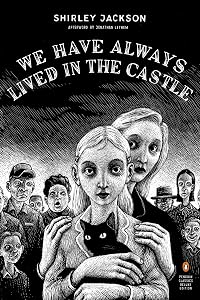
Shirley Jackson was born in San Francisco, California on December, 14, 1919. She received a Bachelor of Arts degree from Syracuse University in 1940. Much of her writing was done during the years she was raising her children. She is best-known for the short story The Lottery, which was first published in 1948 and adapted for television in 1952 and show more into play form in 1953. Her published works include articles, nonfiction prose, plays, poetry, seven novels, and fifty-five short stories. Her other works include Life among the Savages, Raising Demons, The Haunting of Hill House, which was adapted to film, and We Have Always Lived in the Castle. She died on August 8, 1965 at the age of 45. (Bowker Author Biography) show less
Some Editions
Awards and Honors
Series
Belongs to Publisher Series
Work Relationships
Is contained in
Has the adaptation
Has as a student's study guide
Common Knowledge
- Canonical title
- The Lottery [short story]
- Original title
- The Lottery
- Original publication date
- 1948-06-26 (New Yorker magazine) (New Yorker magazine)
- People/Characters
- Mr. Summers; Old Man Warner; Tessie Hutchinson
- Related movies
- The Lottery (1996 | IMDb)
- First words
- The morning of June 27th was clear and sunny, with the fresh warmth of a full-summer day; the flowers were blossoming profusely and the grass was richly green.
- Last words
- (Click to show. Warning: May contain spoilers.)"It isn't fair, it isn't right," Mrs. Hutchinson screamed, and then they were upon her.
- Original language
- English
- Disambiguation notice
- This is a short story. DO NOT combine with the collection with the same title.
Classifications
Statistics
- Members
- 1,429
- Popularity
- 16,445
- Reviews
- 54
- Rating
- (4.00)
- Languages
- Danish, Dutch, English, Italian
- Media
- Paper, Audiobook, Ebook
- ISBNs
- 10
- ASINs
- 11