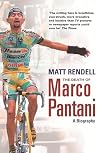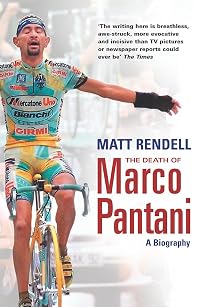
The Death of Marco Pantani: A Biography
by Matt Rendell
On This Page
Description
At 9:30 pm on 14 February 2004, former Tour de France winner Marco Pantani was found dead in Rimini. It emerged that he had been addicted to cocaine since Autumn 1999, weeks after being expelled from the Tour of Italy for blood doping. Conspiracy theories abounded - that he was injected in his sleep by a business rival, that the Olympic Committee had framed him, that Italian Industrialists had engineered his downfall, etc etc. If none of these is entirely true and none of them fully explains show more Pantani's personal tragedy, none of them is foundationless. This book will debunk the myths and make surprising revelations. About Pantani's personal tragedy, but also about the world of cycling. Matt Rendell has access not only to court transcripts but to many of Pantani's friends and the doctors who treated him. But Pantani's life is about much more than drug addiction. Lance Armstrong described him as 'more of an artist than an athlete - an extravagant figure...' Despite being plagued with injuries he won both the Giro and the Tour in 1998, something very few cyclists even attempt. He was an inspirational icon, and the remarkable wins against all odds make gripping reading. show lessTags
Recommendations







Member Reviews
Although I love professional cycling, despite its flaws, I have delayed reading Matt Rendell’s biography of the Italian climber Marco Pantani, who won the Tour de France and the Giro in 1998, and died of a massive cocaine overdose in a hotel room six years later, dogged by (well-founded) drugs scandals. The book got fine reviews, and Rendell knows the sport well.The reason I put off reading it was that I knew it would depress me.
The best way to summarise this is through a couple of lines in the final chapter:
"Looking back, Marco’s successes, like any number of world records, gold medals, and winning sequences in recent sporting history have a phantom quality. … They weren’t events at all, but phantasmagorical experiences with show more no clearly definable reality that existed chiefly in the emotions they caused in millions of indivdual minds. The emotion most associated with Marco is euphoria, yet we know now that it was triggered by the poisons that flowed through his veins and made his flamboyant style possible."
It’s worth exploring this further. One of the most exciting sights in cycling is a climber attacking the field and gaining the minutes he needs to win - and Pantani’s stage win at Les Deux Alpes in 1998, when he attacked on a climb in atrocious conditions, descended recklessly, then climbed again, to make enough time on Ullrich to seal his Tour victory - was one of the most exciting days of racing in my lifetime.
But in a (literally) forensic analysis, Rendell demonstrates that Pantani had been blood doping through the use of EPO almost from the start of his professional career. At the same time, he kicks away one of the cycling fans’ supports. Almost all of the successful cyclists in the 1990s used EPO. So the fan’s defence is that EPO use must have levelled the playing field. Rendell suggests that athletes respond differently to EPO, and that Pantani’s success might just suggest that his body was better attuned to the drug.
More at:
http://aroundtheedges.wordpress.com/2009/02/27/reaching-the-heights-touching-the... show less
The best way to summarise this is through a couple of lines in the final chapter:
"Looking back, Marco’s successes, like any number of world records, gold medals, and winning sequences in recent sporting history have a phantom quality. … They weren’t events at all, but phantasmagorical experiences with show more no clearly definable reality that existed chiefly in the emotions they caused in millions of indivdual minds. The emotion most associated with Marco is euphoria, yet we know now that it was triggered by the poisons that flowed through his veins and made his flamboyant style possible."
It’s worth exploring this further. One of the most exciting sights in cycling is a climber attacking the field and gaining the minutes he needs to win - and Pantani’s stage win at Les Deux Alpes in 1998, when he attacked on a climb in atrocious conditions, descended recklessly, then climbed again, to make enough time on Ullrich to seal his Tour victory - was one of the most exciting days of racing in my lifetime.
But in a (literally) forensic analysis, Rendell demonstrates that Pantani had been blood doping through the use of EPO almost from the start of his professional career. At the same time, he kicks away one of the cycling fans’ supports. Almost all of the successful cyclists in the 1990s used EPO. So the fan’s defence is that EPO use must have levelled the playing field. Rendell suggests that athletes respond differently to EPO, and that Pantani’s success might just suggest that his body was better attuned to the drug.
More at:
http://aroundtheedges.wordpress.com/2009/02/27/reaching-the-heights-touching-the... show less
More a book about self-destruction than a book about cycling, although if you aren't familiar with Pantani, you may not find yourself drawn into the story.
Marco Pantani was the best cyclist in the world in 1998, winning the Tour de France and the Tour of Italy. He was also one of the most exciting cyclists of recent generations, winning with spectacular, risky accelerations during the hardest mountain stages. His fame in Italy transcended cycling and sports.
He was busted for doping the following year while leading the Tour of Italy, and, if Rendell's investigations are valid, all of Pantani's professional achievements are tainted by consistent use of EPO to enhance the oxygen-carrying capacity of his blood.
Pantani did persist in his show more cycling career after the bust, famously winning a stage of the Tour de France on Mt. Ventoux against Lance Armstrong when the two reached the finish stretch alone, and Armstrong chose not to contest the finish. But Pantani was on the way down, professionally and personally, while Armstrong continued to ascend. He became a heavy coke user, binging repeatedly until finally barricading himself in a hotel room and coking himself to death.
It's a well-researched and well-told, unfortunately true, dark story of self-destruction. And you'll learn more than you ever wanted to know about blood testing. show less
Marco Pantani was the best cyclist in the world in 1998, winning the Tour de France and the Tour of Italy. He was also one of the most exciting cyclists of recent generations, winning with spectacular, risky accelerations during the hardest mountain stages. His fame in Italy transcended cycling and sports.
He was busted for doping the following year while leading the Tour of Italy, and, if Rendell's investigations are valid, all of Pantani's professional achievements are tainted by consistent use of EPO to enhance the oxygen-carrying capacity of his blood.
Pantani did persist in his show more cycling career after the bust, famously winning a stage of the Tour de France on Mt. Ventoux against Lance Armstrong when the two reached the finish stretch alone, and Armstrong chose not to contest the finish. But Pantani was on the way down, professionally and personally, while Armstrong continued to ascend. He became a heavy coke user, binging repeatedly until finally barricading himself in a hotel room and coking himself to death.
It's a well-researched and well-told, unfortunately true, dark story of self-destruction. And you'll learn more than you ever wanted to know about blood testing. show less
A genuine tragedy of modern times. Rendell superbly accounts for the rapid rise and fall of one of the most exciting cyclists of the recent era.
Ratings
Members
- Recently Added By
Published Reviews
ThingScore 50
In the above book, Matt Rendell refers to a conversation between Lance Armstrong and Pantani as bizarre. He obviously thinks of this as very important as he put it in his opening page of the book, in the quotation page.
It has some how been "lost in translation" . The conversation is described like this in the book:
"It was a bizarre encounter, as Armstrong later recalled:`I tried to speak to show more him in italian" E allora, com'e` la forma? `So how's your form? - `He just laughed: `Siiii, la forma - la forma di formaggio... - `Yesssss, the form in formaggio (cheese).
This isn't the correct translation!!! Not at all. Pantani was playing with words.., as "la forma" is also the shape of parmisan cheese in its entirety. This answer, expression, is commonly used in the italian language, there is nothing bizarre about this. Thousand of Italians are using this expression everyday when they don't want to answer the question and brush it off. They don't obviously refer to how is the form in cheese as the author is suggesting.
What is surprising is that Matt Rendell didn't research this at all, and he is actually insinuating that it was an early sign of Pantani "madness". Now, I have read the rest of the book, and even though the narrative is good, with my mind set up in the frame of mind that the author didn't bother to research the book properly, I had to take all his "facts" with a 'pinch of salt'.!! show less
It has some how been "lost in translation" . The conversation is described like this in the book:
"It was a bizarre encounter, as Armstrong later recalled:`I tried to speak to show more him in italian" E allora, com'e` la forma? `So how's your form? - `He just laughed: `Siiii, la forma - la forma di formaggio... - `Yesssss, the form in formaggio (cheese).
This isn't the correct translation!!! Not at all. Pantani was playing with words.., as "la forma" is also the shape of parmisan cheese in its entirety. This answer, expression, is commonly used in the italian language, there is nothing bizarre about this. Thousand of Italians are using this expression everyday when they don't want to answer the question and brush it off. They don't obviously refer to how is the form in cheese as the author is suggesting.
What is surprising is that Matt Rendell didn't research this at all, and he is actually insinuating that it was an early sign of Pantani "madness". Now, I have read the rest of the book, and even though the narrative is good, with my mind set up in the frame of mind that the author didn't bother to research the book properly, I had to take all his "facts" with a 'pinch of salt'.!! show less
added by marru61
Lists

Best books on sport
33 works; 6 members
Author Information

8 Works 300 Members
Matt Rendell survived Hodgkin's Disease and lecturing at British and Latvian universities before entering TV and print journalism
Awards and Honors
Common Knowledge
- Original title
- The death of Marco Pantani. A Biography
- Original publication date
- 2006
- People/Characters*
- Marco Pantani
- Important events
- Tour de France
*Some information comes from Common Knowledge in other languages. Click "Edit" for more information.
Classifications
- Genres
- Sports and Leisure, Biography & Memoir, Nonfiction, General Nonfiction
- DDC/MDS
- 796 — Arts & recreation Recreation, sports, and performing arts Athletic and outdoor sports and games
- LCC
- GV1051 .P36 .R46 — Geography, Anthropology and Recreation Recreation. Leisure Recreation. Leisure Sports Cycling. Bicycling. Motorcycling
- BISAC
Statistics
- Members
- 153
- Popularity
- 214,951
- Reviews
- 3
- Rating
- (3.52)
- Languages
- Dutch, English
- Media
- Paper
- ISBNs
- 5
- ASINs
- 1