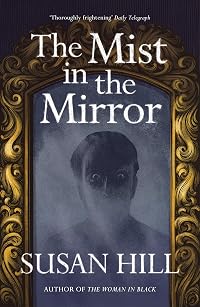
The Mist in the Mirror
by Susan Hill
On This Page
Description
A chilling, classically-inspired ghost story from Susan Hill, our reigning mistress of spine-tingling fiction.For the last twenty years Sir James Monmouth has journeyed all over the globe in the footsteps of his hero, the great pioneering traveler Conrad Vane. In an effort to learn more about Vane's early life--and his own--Sir James sets off for the remote Kittiscar Hall on a cold and rainy winter night. But he soon begins to feel as though something is warning him away at every turn; show more there are the intense feelings of being watched and the strange apparitions of a sad little boy. And as he learns more about his hero's past, he discovers that they are only the beginning, for Kittiscar Hall is hiding terrible secret that will bind their lives together in ways he could never have imagined.
. show less
Tags
Recommendations




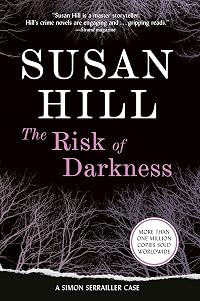



Member Recommendations
sardav64 A short eery novella that is perfect for long cold autumn and winter evenings
Member Reviews
This follows on from Hill's Woman In Black, another ghost story in a similar mode. James Monmouth, inveterate traveler, returns to England after a lifetime abroad, intent on researching the life of one Conrad Vane, whose travels inspired his own. Almost immediately upon his arrival in London the spookiness commences, with a mysterious ragged boy popping up in odd corners. As he begins his investigations, he receives warnings and dark hints and strong suggestions not to bother. Unfortunately all those warnings are a bit short on details, and when Monmouth discovers a connection to his own forgotten childhood, he finds himself almost compelled to seek out the truth.
Well, yes, it's great in many ways. Highly readable, richly textured with show more details of Victorian life, strong on atmosphere and character. Bits of it ooze menace and unease, and the whole thing, with its hints of childhood innocence corrupted, is rather strongly suggestive of The Turn Of The Screw. It operates almost as an anti-detective story, where nobody will tell the poor narrator what the hell is going on, every bit as frustrating to the reader as it is to poor James Monmouth. No less than two possibly senile, or maybe just ancient and befuddled characters notably fail to tell him anything informative, but at least they have that excuse. Those of sound mind who drop dark hints and vague suggestions are just downright irresponsible, not letting the poor chap have any idea what he's in for. By the time he gets to North Yorkshire, it's in danger if slipping into self-parody, as people go pale or get upset or mutter darkly every time he so much as looks at them.
An explanation, satisfying but perfunctory, comes at the end, but one wonders if Hill was reluctant to disturb the shape and tone of her elegantly crafted, highly atmospheric, beautifully structured Victorian ghost story with the potentially vastly more gothic melodrama hinted at in the past. This isn't a horror story. This is a ghost story. Which is almost a pity. show less
Well, yes, it's great in many ways. Highly readable, richly textured with show more details of Victorian life, strong on atmosphere and character. Bits of it ooze menace and unease, and the whole thing, with its hints of childhood innocence corrupted, is rather strongly suggestive of The Turn Of The Screw. It operates almost as an anti-detective story, where nobody will tell the poor narrator what the hell is going on, every bit as frustrating to the reader as it is to poor James Monmouth. No less than two possibly senile, or maybe just ancient and befuddled characters notably fail to tell him anything informative, but at least they have that excuse. Those of sound mind who drop dark hints and vague suggestions are just downright irresponsible, not letting the poor chap have any idea what he's in for. By the time he gets to North Yorkshire, it's in danger if slipping into self-parody, as people go pale or get upset or mutter darkly every time he so much as looks at them.
An explanation, satisfying but perfunctory, comes at the end, but one wonders if Hill was reluctant to disturb the shape and tone of her elegantly crafted, highly atmospheric, beautifully structured Victorian ghost story with the potentially vastly more gothic melodrama hinted at in the past. This isn't a horror story. This is a ghost story. Which is almost a pity. show less
Rating: 3.75
This sits somewhere between a ghost story and a character study, with a narrator so emotionally fragile and unmoored that the story often reads more like a psychological portrait than a Gothic mystery.
Our narrator, Monmouth, is a lonely man adrift in England after years abroad, always cold (because India), and always on the edge of fainting at geese, dreams, fog, or, god forbid, cold bedsheets. He is utterly besotted with the elusive Vane, a man he barely knows, which gives the story a distinct whiff of obsession — or projection. You could argue Hill has intentionally coded Monmouth with traits usually given to female Gothic heroines: passive, sensitive, socially awkward, and clinging to the belief that someone or show more something will offer him a purpose. In that sense, it’s a clever pastiche — or parody — of the Radcliffean Gothic.
The "haunting" elements — a mysterious boy, a sense of being watched, the titular mirror — are eerie but never fully materialize into tangible horror. And that’s the point. As with the best classic Gothic, the danger is internalized. Nothing happens... and everything happens. If you read it expecting The Woman in Black, you'll be disappointed. This is less plot-driven and more “cosy Gothic”: low stakes, lots of fog, and a narrator whose biggest enemy may be his own mind.
The final frame narrative ties the whole thing up with a shrug: Monmouth’s tale was forgotten by the man who found it, and the haunted mirror? Just old and pitted. We’re left with the unsettling idea that Monmouth died alone, remembered by no one, his grand quest meaningless. It’s bleak, but not tragic. Just… cold.
Recommended if:
You enjoy medium-paced, atmospheric ghost stories with unreliable narrators.
You don’t need action — just eerie vibes and sad, emotionally fragile men.
You can read it like a Radcliffe novel: no danger, all mood.
Not recommended if:
You want resolution, high stakes, or active characters.
You have no patience for people who swoon over mirrors and complain about damp sheets. show less
This sits somewhere between a ghost story and a character study, with a narrator so emotionally fragile and unmoored that the story often reads more like a psychological portrait than a Gothic mystery.
Our narrator, Monmouth, is a lonely man adrift in England after years abroad, always cold (because India), and always on the edge of fainting at geese, dreams, fog, or, god forbid, cold bedsheets. He is utterly besotted with the elusive Vane, a man he barely knows, which gives the story a distinct whiff of obsession — or projection. You could argue Hill has intentionally coded Monmouth with traits usually given to female Gothic heroines: passive, sensitive, socially awkward, and clinging to the belief that someone or show more something will offer him a purpose. In that sense, it’s a clever pastiche — or parody — of the Radcliffean Gothic.
The "haunting" elements — a mysterious boy, a sense of being watched, the titular mirror — are eerie but never fully materialize into tangible horror. And that’s the point. As with the best classic Gothic, the danger is internalized. Nothing happens... and everything happens. If you read it expecting The Woman in Black, you'll be disappointed. This is less plot-driven and more “cosy Gothic”: low stakes, lots of fog, and a narrator whose biggest enemy may be his own mind.
The final frame narrative ties the whole thing up with a shrug: Monmouth’s tale was forgotten by the man who found it, and the haunted mirror? Just old and pitted. We’re left with the unsettling idea that Monmouth died alone, remembered by no one, his grand quest meaningless. It’s bleak, but not tragic. Just… cold.
Recommended if:
You enjoy medium-paced, atmospheric ghost stories with unreliable narrators.
You don’t need action — just eerie vibes and sad, emotionally fragile men.
You can read it like a Radcliffe novel: no danger, all mood.
Not recommended if:
You want resolution, high stakes, or active characters.
You have no patience for people who swoon over mirrors and complain about damp sheets. show less
Loved the experience and the journey but in the end it wasn't creepy enough and there wasn't a climax. It felt like edge play without ever getting there.
I really liked the fact that women weren't to blame in this one. Finally. I'd begun to fear that every Hill story I read from now on would have horrible, bitter women.
This time she took it a bit too far with the "everyone hints at things and warns you but never actually tells you why". Meaning she never actually delivered, not even in the vague way she does in her other gothic-type haunted novels. I guess in this way we become a bit like the narrator himself?
Welp. It didn't do it for me. It lacked an ending and a point of interest.
Spoilerific recap so I can remember what I read in a few show more years.
Dude is a part of some gentleman's club. Finds old man who gives him his story to read. Both have a hard-on for england. Man grew as an immigrant with unnamed caretaker, became a worldly traveler, never knew his roots. Returned to england to write bio of his super fav explorer, turns out explorer is an occultist murdering douchebag that haunts his family for generations. But god forbid anyone tells him that. You'll find that in the last chapters. Everyone tells him not to look for the douchebag, randos, people at old college libraries, a random psychic woman on a train, etc. He still does.
At the end he finds a living relative and goes to meet her but PSYCH she died. He inherits house, gets locked by the evil ghost-probably- into the family mausoleum, spends the night there, poops his pants completely, leaves and never comes back. The man reading the story finds out he died a bit after reading this story. Goes with his wife for misery tourism to this haunted house, looks at random mirror, sees the face of writer dude.
THE END show less
I really liked the fact that women weren't to blame in this one. Finally. I'd begun to fear that every Hill story I read from now on would have horrible, bitter women.
This time she took it a bit too far with the "everyone hints at things and warns you but never actually tells you why". Meaning she never actually delivered, not even in the vague way she does in her other gothic-type haunted novels. I guess in this way we become a bit like the narrator himself?
Welp. It didn't do it for me. It lacked an ending and a point of interest.
Spoilerific recap so I can remember what I read in a few show more years.
Dude is a part of some gentleman's club. Finds old man who gives him his story to read. Both have a hard-on for england. Man grew as an immigrant with unnamed caretaker, became a worldly traveler, never knew his roots. Returned to england to write bio of his super fav explorer, turns out explorer is an occultist murdering douchebag that haunts his family for generations. But god forbid anyone tells him that. You'll find that in the last chapters. Everyone tells him not to look for the douchebag, randos, people at old college libraries, a random psychic woman on a train, etc. He still does.
At the end he finds a living relative and goes to meet her but PSYCH she died. He inherits house, gets locked by the evil ghost-probably- into the family mausoleum, spends the night there, poops his pants completely, leaves and never comes back. The man reading the story finds out he died a bit after reading this story. Goes with his wife for misery tourism to this haunted house, looks at random mirror, sees the face of writer dude.
THE END show less
Rain, rain all day, all evening, all night, pouring autumn rain. Out in the country, over field and fen and moorland, sweet-smelling rain, borne on the wind. Rain in London, rolling along gutters, gurgling down drains. Street lamps blurred by rain. A policeman walking by in a cape, rain gleaming silver on its shoulders. Rain bouncing on roofs and pavements, soft rain falling secretly in woodland and on dark heath. Rain on London's river, and slanting among the sheds, wharves and quays. Rain on suburban gardens, dense with laurel and rhododendron. Rain from north to south and from east to west, as though it had never rained until now and now might never stop.
Rain on all the silent streets and squares, alleys and courts, gardens and show more churchyards and stone steps and nooks and crannies of the city.
Rain. London. The back end of the year.
Now, I have to tell you right up front, I am going to like a story that begins like that. That is a damn fine little spot of writing right there. I wish I could say that the rest of the story holds up to it. Unfortunately, the author couldn't quite stick the landing on this lovely tale. The writing remains strong, and she weaves the images of water and rising and falling beautifully through the whole work, but the story is too weak. My copy was 185 pages (regardless of what Goodreads thinks of this ISBN), and I really do think that if about 100 of those had been trimmed and the tropes tightened up, this would have been a perfect read.
Hauntings sometimes work if the threat is left vague, with the horrified reactions of the participants of the story allowing the reader to fill in the unspoken with assumptions worse than anything the writer would be able to successfully convey, but that doesn't work here. The story takes too long to build for too little pay-off; the whole first half of the book provides spooky details, but could easily have been sacrificed for the purposes of the story. Also, Hill seemed to have trouble picking a trope and sticking with it. There are ghosts, the mirror of the title, a curse, possible possession, but none of it gets enough time in the limelight to take full shape and carry the story. So, overall, a miss. But a very, very pretty miss. Also, this:
'I take it you've travelled, Mr. Monmouth?'
'Indeed.'
'I have not. I let others travel for me.' He gestured to the books.
Really, I have to love that.
***Review written 10/4/15. Original comments on finishing 10/2/15:
Beautiful writing with a gorgeous weaving of imagery and some genuinely chilling moments, but about 100 pages too long for what it is. Full review to come. show less
Rain on all the silent streets and squares, alleys and courts, gardens and show more churchyards and stone steps and nooks and crannies of the city.
Rain. London. The back end of the year.
Now, I have to tell you right up front, I am going to like a story that begins like that. That is a damn fine little spot of writing right there. I wish I could say that the rest of the story holds up to it. Unfortunately, the author couldn't quite stick the landing on this lovely tale. The writing remains strong, and she weaves the images of water and rising and falling beautifully through the whole work, but the story is too weak. My copy was 185 pages (regardless of what Goodreads thinks of this ISBN), and I really do think that if about 100 of those had been trimmed and the tropes tightened up, this would have been a perfect read.
Hauntings sometimes work if the threat is left vague, with the horrified reactions of the participants of the story allowing the reader to fill in the unspoken with assumptions worse than anything the writer would be able to successfully convey, but that doesn't work here. The story takes too long to build for too little pay-off; the whole first half of the book provides spooky details, but could easily have been sacrificed for the purposes of the story. Also, Hill seemed to have trouble picking a trope and sticking with it. There are ghosts, the mirror of the title, a curse, possible possession, but none of it gets enough time in the limelight to take full shape and carry the story. So, overall, a miss. But a very, very pretty miss. Also, this:
'I take it you've travelled, Mr. Monmouth?'
'Indeed.'
'I have not. I let others travel for me.' He gestured to the books.
Really, I have to love that.
***Review written 10/4/15. Original comments on finishing 10/2/15:
Beautiful writing with a gorgeous weaving of imagery and some genuinely chilling moments, but about 100 pages too long for what it is. Full review to come. show less
This is my very first Susan Hill read. I am a huge fan of Gothic stories with their crumbling mysterious estates, dark secrets and overall feeling of rising unease. Hill follows the classic formula for a Gothic tale so well that I was rather surprised to discover this story was originally published in 1992. This story has the overall atmosphere and writing style of a more historically published work, written in an earlier time period. Hill does a fantastic job creating the overall Gothic feel. The story has a wonderful slow-building quality to it that probably would not appeal to readers who like their action and want their story to unfold at a quicker pace. The "reveal" has its elements of creepiness and horror, without being show more overwhelming.
Overall, a solid piece of Gothic writing and one that I believe would appeal to readers who enjoy stories like Sarah Waters The Little Stranger. show less
Overall, a solid piece of Gothic writing and one that I believe would appeal to readers who enjoy stories like Sarah Waters The Little Stranger. show less
3.5*
This is an enjoyable slice of Victoriana which evokes the feel of classic ghost stories.
James Monmouth, orphaned at the age of 5, and raised by a guardian in Kenya, returns to England 35 years later after long exotic journeys in the East. His travels have been inspired by the feats of an enigmatic explorer named Conrad Vane. Monmouth hopes that once settled down in his native country, he can research the early life of Vane, which is surprisingly little-known. However, several people seem determined to put him off his quest with ominous warnings. And a wraithlike boy is of their same opinion as he keeps following Monmouth and haunting him with looks of abject misery.
I would not call this an exceptional novel. It does not bring show more anything particularly new to the genre, but on the other hand, it is this very familiarity of context and well-known tropes which give it its appeal. Susan Hill is a consummate writer of supernatural tales and is steeped in the tradition - as a result, the narrative style and the setting (whether dark, frosty London streets; club smoking rooms, country mansions or desolate moors) are authentic and atmospheric. I was less convinced about the ending and the cursory "explanation" given for the hauntings. After the steady build-up, the final few pages of Monmouth 's account felt rather anti-climactic.
All in all, however, this novel is a fun spooky read and I guess would be particularly apt as a ghost story for Christmas given that considerable sections are set during the festive season. show less
This is an enjoyable slice of Victoriana which evokes the feel of classic ghost stories.
James Monmouth, orphaned at the age of 5, and raised by a guardian in Kenya, returns to England 35 years later after long exotic journeys in the East. His travels have been inspired by the feats of an enigmatic explorer named Conrad Vane. Monmouth hopes that once settled down in his native country, he can research the early life of Vane, which is surprisingly little-known. However, several people seem determined to put him off his quest with ominous warnings. And a wraithlike boy is of their same opinion as he keeps following Monmouth and haunting him with looks of abject misery.
I would not call this an exceptional novel. It does not bring show more anything particularly new to the genre, but on the other hand, it is this very familiarity of context and well-known tropes which give it its appeal. Susan Hill is a consummate writer of supernatural tales and is steeped in the tradition - as a result, the narrative style and the setting (whether dark, frosty London streets; club smoking rooms, country mansions or desolate moors) are authentic and atmospheric. I was less convinced about the ending and the cursory "explanation" given for the hauntings. After the steady build-up, the final few pages of Monmouth 's account felt rather anti-climactic.
All in all, however, this novel is a fun spooky read and I guess would be particularly apt as a ghost story for Christmas given that considerable sections are set during the festive season. show less
This is another one of Susan Hill's chilling novels, though this is longer than her others, I thought perhaps a bit too long, with the writing somewhat less taut than in her novellas such as The Small Hand and The Man in the Picture. It's still powerful writing, though; as usual, she creates a very strong atmosphere of creepy horror, and a deep sense of timelessness, otherworldliness and isolation, with even scenes set in central London feeling that there is hardly anyone else living there beyond the handful of people involved in the plot. Very good, if not quite her best.
Members
- Recently Added By
Lists

Recommended Horror and Dark Fiction by Women
81 works; 13 members

Ghosts
278 works; 18 members

Haunted Places and Ghost Stories Reading List
99 works; 4 members
Talk Discussions
Past Discussions
Help from any readers of The Mist in the Mirror by Susan Hill in Thing(amabrarian)s That Go Bump in the Night (May 2014)
Author Information

125+ Works 18,936 Members
Susan Hill was born in Scarborough, United Kingdom on February 5, 1942. She received a degree in English from King's College in London in 1963. Her first book, The Enclosure, was published during her first year at university. She worked as a freelance journalist between 1963 and 1968 and has been a monthly columnist for the Daily Telegraph since show more 1977. She founded her own publishing company, Long Barn Books, in 1996 and publishes a literary magazine called Books and Company. She has written works of fiction and non-fiction as well as children's books. She also edits short story compilations. Her works include Gentleman and Ladies, A Change for the Better, The Woman in Black, The Mist in the Mirror, and the Simon Serrailler Crime Novel series. She has won numerous awards including a Somerset Maugham Award for I'm the King of the Castle, the Whitbread Novel Award for The Bird of Night, the John Llewellyn Rhys Prize for The Albatross, and the Smarties Prize for Can It Be True? (Bowker Author Biography) show less
Common Knowledge
- Original publication date
- 1992
- People/Characters
- Sir James Monmouth; Reverend Archibald Votable; George Edward Pallantire Monmouth; Silos Threadgold; Lady Viola Quincebridge; Sir Lionel Quincebridge (show all 17); Porter Biglow; Dr. Valentine V. Dancer; Hetty Dancer; Isaac Dancer; Japhet Dancer; Hector Dancer; Evelyn Dancer; Geoffrey Ludgate; Crawford Maythorn; Ms. E. Monmouth; Joshua Monmouth
- Important places
- London, England, UK; Kittiscar, England, UK; Athenaeum Club, Pall Mall, London, England, UK; Chelsea, London, England, UK
- First words
- London, and the library of my Club, towards the end of an afternoon in late November, that bleak, dispiriting time of year when the golden Indian summer days that lingered on through October seem long gone, and it is yet too ... (show all)early to feel the approaching cheer of Christmas. (Preface to Sir James Monmouth's manuscript)
- Last words
- (Click to show. Warning: May contain spoilers.)I stared in dawning recollection and fear, for the face that I saw staring back at me through the mist was not my own, but that of another.
- Original language
- English
Classifications
Statistics
- Members
- 549
- Popularity
- 54,327
- Reviews
- 35
- Rating
- (3.43)
- Languages
- Czech, Dutch, English
- Media
- Paper, Audiobook, Ebook
- ISBNs
- 17
- ASINs
- 6