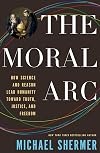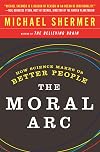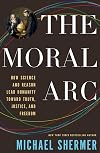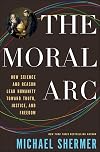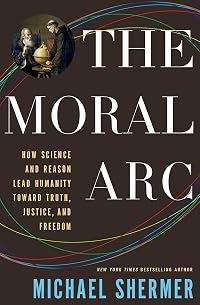
The Moral Arc: How Science and Reason Lead Humanity toward Truth, Justice, and Freedom
by Michael Shermer
On This Page
Description
"From Galileo and Newton to Thomas Hobbes and Martin Luther King, Jr., thinkers throughout history have consciously employed scientific techniques to better understand the non-physical world. The Age of Reason and the Enlightenment led theorists to apply scientific reasoning to the non-scientific disciplines of politics, economics, and moral philosophy. Instead of relying on the woodcuts of dissected bodies in old medical texts, physicians opened bodies themselves to see what was there; show more instead of divining truth through the authority of an ancient holy book or philosophical treatise, people began to explore the book of nature for themselves through travel and exploration; instead of the supernatural belief in the divine right of kings, people employed a natural belief in the right of democracy. In this provocative and compelling book, Shermer will explain how abstract reasoning, rationality, empiricism, skepticism--scientific ways of thinking--have profoundly changed the way we perceive morality and, indeed, move us ever closer to a more just world"-- show lessTags
Recommendations





























Member Recommendations

Taphophile13 Both books discuss the decrease of violence in today's world.
Member Reviews
Shermer wants to argue that "morality" is a thing of which there is only one, that it can be objectively ascertained, and (conveniently) that he possesses the ability to judge what that one true morality is. More than that, this one true morality matches perfectly everything he already believes. That should be the first red flag that what Shermer talks about bears no resemblance to "morality." A true deep dive into the contours of moral thinking should leave the author feeling as challenged and inadequate as the reader. No such introspection here. Shermer, perhaps ironically, has found true religion (or not ironically: he goes so far as to compose his own Ten Commandments), and he speaks with all the zeal of the smug prophet.
Painting show more in such bold strokes is an odd strategy given that he also argues that black/white conceptualizing is inferior to viewing situations with more nuance and gradations. He would have been well advised to follow his own counsel. The real world is not as simplistic as he wants to believe, but his text does provide a good example of the kind of self-serving philosophical justifying that Westerners enjoy when rationalizing their blunderings across the world stage. They can do it because they are more "moral" (as Shermer has defined the term) than anyone who opposes them.
A hallmark of this ethical myopia is that, for Shermer, the unqualified unit of moral agency is the (Western) independent individual. This is not an unusual position, to be sure, but Shermer appears to believe that it is a self-evident claim that warrants no defense or consideration of alternative views, or how this posture complicates (or rather, should complicate) his account. For example, something is right or wrong according to the way in which it impacts the survival and flourishing of the individual. However, flourishing is defined in such a way that it necessarily includes "bonding and social relations," so that the individual, in fact, is *not* the relevant unit, or at least not simply so. Communitarianism has a role in this analysis, but not one that the author wants to directly recognize because to do so would undermine his elevation of the atomistic individual as the sole consideration for moral calculations. That such an unfettered individual does not actually exist hinders Shermer not at all.
Even were one disposed to accept his premises, there is still the problem that Shermer is an unrelenting consequentialist: Something is or is not moral not because of any intrinsic virtues, but because it yields outcomes of which Shermer approves. Many others would tend to think that the ends do not justify the means. He attempts to argue otherwise when he claims that dropping the atom bombs in WWII was the moral thing to do not because it was right in some objective sense, but because, according to some analyses, to have done otherwise would have yielded more casualties in a direct invasion of Japan. So thumbs up on nuclear attack; nuclear war is today "immoral" only because this practical summing of casualties does not similarly favor its use. But should that calculus change, then bombs away.
We have recently seen a related debate (http://www.samharris.org/blog/item/the-limits-of-discourse) highlighting the distinction I'm drawing here. Sam Harris argues with Noam Chomsky that the 9/11 attacks were worse, although killing less, than Clinton's decision to bomb the Al-Shifa pharmaceutical plant in Sudan, although killing more, because the former casualties were "intended" and the latter were not. Most commentators conclude that Chomsky's position came out better than Harris's. The problem for Shermer (who favorably refers to Harris in the book) is that Harris's position favors learned ignorance whereby I can retain my moral superiority by preserving my ignorance about the likely consequences of my actions. This undercuts Shermer's primary thesis that morality is advanced by learning. While not specifically a consequentialist argument, they share a common interest in defending prized outcomes arrived at through other means by giving them the veneer of being objectively rational. They are not.
He seems unable to separate a pragmatic consideration from a moral one, and goes so far as to equate them. This is not what most people mean by "morality," and in fact, given his views, it is unfortunate that he begins with an anecdote about MLK Jr. MLK did not argue that racial equality was the moral choice because it would be good for the economy or some such instrumental reason that Shermer would recognize as the basis of morality, but because racial inequality was an inherent evil. Equality would have been the right thing to do even if it had resulted in dreadful practical outcomes. But that is not Shermer's position, and frankly I found his consequentialism a poor basis on which to make broadly sweeping claims about "morality."
These threads combine to lead Shermer to assert that moral progress is inevitable with the advance of scientific knowledge. Thus, any potential extraterrestrial life we might encounter will necessarily be morally superior than we are: "any advanced civilization that survives long enough for us to make contact with it will also be a morally advanced civilization." The leap to this absurd conclusion, assuming as it does that every life form will have the same moral standards as we do, and that science is not a tool to be used according to our ethical choices but a force that independently forms moral consciousness, is staggering.
The book is not a difficult read, although it is probably much longer than it needed to be. At times his tone is condescending when speaking of other cultures whose traditions he disapproves. The reader is probably best advised to slide quickly over any mentions of supposed morality. The book may nonetheless be serviceable as a general overview of some themes in intellectual history and sociology and political science (all having little to do with ethics). To give Shermer credit, he recognizes this gap and tries to bridge it with an unsuccessful discussion on the naturalistic fallacy, as shown by his not fully understanding the advice given him by a Hume scholar. You can't get to 'ought' from 'is' because one can construct a link between any 'is' with any 'ought' (e.g., the empirical observation that animals engage in homosexual behavior can argue equally well that homosexuality is wrong because it's "animalistic" or that it is good because it is "natural"). Shermer sees only that, because he can construct arguments that lead to his favored outcomes, he has found a way around the logical prohibition. He hasn't. show less
Painting show more in such bold strokes is an odd strategy given that he also argues that black/white conceptualizing is inferior to viewing situations with more nuance and gradations. He would have been well advised to follow his own counsel. The real world is not as simplistic as he wants to believe, but his text does provide a good example of the kind of self-serving philosophical justifying that Westerners enjoy when rationalizing their blunderings across the world stage. They can do it because they are more "moral" (as Shermer has defined the term) than anyone who opposes them.
A hallmark of this ethical myopia is that, for Shermer, the unqualified unit of moral agency is the (Western) independent individual. This is not an unusual position, to be sure, but Shermer appears to believe that it is a self-evident claim that warrants no defense or consideration of alternative views, or how this posture complicates (or rather, should complicate) his account. For example, something is right or wrong according to the way in which it impacts the survival and flourishing of the individual. However, flourishing is defined in such a way that it necessarily includes "bonding and social relations," so that the individual, in fact, is *not* the relevant unit, or at least not simply so. Communitarianism has a role in this analysis, but not one that the author wants to directly recognize because to do so would undermine his elevation of the atomistic individual as the sole consideration for moral calculations. That such an unfettered individual does not actually exist hinders Shermer not at all.
Even were one disposed to accept his premises, there is still the problem that Shermer is an unrelenting consequentialist: Something is or is not moral not because of any intrinsic virtues, but because it yields outcomes of which Shermer approves. Many others would tend to think that the ends do not justify the means. He attempts to argue otherwise when he claims that dropping the atom bombs in WWII was the moral thing to do not because it was right in some objective sense, but because, according to some analyses, to have done otherwise would have yielded more casualties in a direct invasion of Japan. So thumbs up on nuclear attack; nuclear war is today "immoral" only because this practical summing of casualties does not similarly favor its use. But should that calculus change, then bombs away.
We have recently seen a related debate (http://www.samharris.org/blog/item/the-limits-of-discourse) highlighting the distinction I'm drawing here. Sam Harris argues with Noam Chomsky that the 9/11 attacks were worse, although killing less, than Clinton's decision to bomb the Al-Shifa pharmaceutical plant in Sudan, although killing more, because the former casualties were "intended" and the latter were not. Most commentators conclude that Chomsky's position came out better than Harris's. The problem for Shermer (who favorably refers to Harris in the book) is that Harris's position favors learned ignorance whereby I can retain my moral superiority by preserving my ignorance about the likely consequences of my actions. This undercuts Shermer's primary thesis that morality is advanced by learning. While not specifically a consequentialist argument, they share a common interest in defending prized outcomes arrived at through other means by giving them the veneer of being objectively rational. They are not.
He seems unable to separate a pragmatic consideration from a moral one, and goes so far as to equate them. This is not what most people mean by "morality," and in fact, given his views, it is unfortunate that he begins with an anecdote about MLK Jr. MLK did not argue that racial equality was the moral choice because it would be good for the economy or some such instrumental reason that Shermer would recognize as the basis of morality, but because racial inequality was an inherent evil. Equality would have been the right thing to do even if it had resulted in dreadful practical outcomes. But that is not Shermer's position, and frankly I found his consequentialism a poor basis on which to make broadly sweeping claims about "morality."
These threads combine to lead Shermer to assert that moral progress is inevitable with the advance of scientific knowledge. Thus, any potential extraterrestrial life we might encounter will necessarily be morally superior than we are: "any advanced civilization that survives long enough for us to make contact with it will also be a morally advanced civilization." The leap to this absurd conclusion, assuming as it does that every life form will have the same moral standards as we do, and that science is not a tool to be used according to our ethical choices but a force that independently forms moral consciousness, is staggering.
The book is not a difficult read, although it is probably much longer than it needed to be. At times his tone is condescending when speaking of other cultures whose traditions he disapproves. The reader is probably best advised to slide quickly over any mentions of supposed morality. The book may nonetheless be serviceable as a general overview of some themes in intellectual history and sociology and political science (all having little to do with ethics). To give Shermer credit, he recognizes this gap and tries to bridge it with an unsuccessful discussion on the naturalistic fallacy, as shown by his not fully understanding the advice given him by a Hume scholar. You can't get to 'ought' from 'is' because one can construct a link between any 'is' with any 'ought' (e.g., the empirical observation that animals engage in homosexual behavior can argue equally well that homosexuality is wrong because it's "animalistic" or that it is good because it is "natural"). Shermer sees only that, because he can construct arguments that lead to his favored outcomes, he has found a way around the logical prohibition. He hasn't. show less
 This review was written for LibraryThing Early Reviewers.
At first glance The Moral Arc is a daunting doorstop of a book. True, it is 500+ pages of densely packed, wide-ranging ideas about the origin of morality and how the Age of Reason and the Enlightenment contributed to its growth but the writing is very accessible and the subject is thought-provoking.
Shermer’s discussion of the [im]morality of war begins with the Star Trek episode in which Kirk shows the “advanced trait of mercy” when he refuses to slay the reptilian Gorn, then jumps to traditional pirates, Smith’s theory of economics as it applies to present-day Somali pirates (it’s cheaper to pay the ransom than to risk lives by resisting), and then on to Dr. Strangelove before finally diving into nuclear deterrence. He show more weaves these disparate ideas together as he discusses how to achieve a world without nuclear weapons by means of treaties and agreements that make owning such weapons a taboo (which was effective against using poison gas) along with the growing taboo against chemical/biologic weapons. As Shermer notes, “Also, the revulsion people feel toward nuclear weapons may be linked in the brain to the emotion of disgust that psychologists have identified as being associated with invisible disease contagions, toxic poisons, and revolting materials (such as vomit and feces) that carry them—reactions that evolved to direct organisms away from these substances for survival reasons.”
Shermer devotes a chapter each to specific rights—freedom from slavery, women’s rights, gay rights and animal rights. These groups demonstrate how applying the principle of interchangeable perspectives (putting oneself in another’s place) is expanding rights as the dominant majority begins to see members of these groups as fellow beings deserving of equal rights rather than demonizing them as “other” or “not one of us” and thus not deserving rights.
A review can only touch upon a few of the topics Shermer covers. His reasoning is so insightful and so thorough that a re-read is highly recommended. Each chapter is abundantly footnoted and the charts, graphs and pictures add to the text. An extensive bibliography provides plenty of additional resources. show less
Shermer’s discussion of the [im]morality of war begins with the Star Trek episode in which Kirk shows the “advanced trait of mercy” when he refuses to slay the reptilian Gorn, then jumps to traditional pirates, Smith’s theory of economics as it applies to present-day Somali pirates (it’s cheaper to pay the ransom than to risk lives by resisting), and then on to Dr. Strangelove before finally diving into nuclear deterrence. He show more weaves these disparate ideas together as he discusses how to achieve a world without nuclear weapons by means of treaties and agreements that make owning such weapons a taboo (which was effective against using poison gas) along with the growing taboo against chemical/biologic weapons. As Shermer notes, “Also, the revulsion people feel toward nuclear weapons may be linked in the brain to the emotion of disgust that psychologists have identified as being associated with invisible disease contagions, toxic poisons, and revolting materials (such as vomit and feces) that carry them—reactions that evolved to direct organisms away from these substances for survival reasons.”
Shermer devotes a chapter each to specific rights—freedom from slavery, women’s rights, gay rights and animal rights. These groups demonstrate how applying the principle of interchangeable perspectives (putting oneself in another’s place) is expanding rights as the dominant majority begins to see members of these groups as fellow beings deserving of equal rights rather than demonizing them as “other” or “not one of us” and thus not deserving rights.
A review can only touch upon a few of the topics Shermer covers. His reasoning is so insightful and so thorough that a re-read is highly recommended. Each chapter is abundantly footnoted and the charts, graphs and pictures add to the text. An extensive bibliography provides plenty of additional resources. show less
This review was written for LibraryThing Early Reviewers.The Moral Arc by Michael Shermer is one of the best and most thorough defenses of secular morality I’ve read. The research is extensive and the arguments are persuasive, revealing humanity’s true drivers of moral progress.
First, Shermer presents the idea that many, if not most, historical instances of immorality were the result of factual errors. Human sacrifices, the burning of witches, withholding medication in favor of prayer, as a few examples, were all instances of serious misunderstandings regarding the way the world works. As science progressed, and the material world was investigated in naturalistic terms, these practices were slowly eradicated. Today, if we can laugh at the suggestion of throwing virgins into volcanoes for show more better crop yields, we have science to thank.
Second, secularism began to improve morality because the motivations for ethical behavior shifted from following scripture and valuing God and the afterlife above earthly concerns to the prioritizing of individual well-being and rights.
With religion, actions are justified through scriptural interpretation. This is a problem for a number of reasons. First, taking the example of Christianity, the amount of scripture in the Bible is vast and often contradictory, so justification can be found for almost any action or belief. Scripture ranges from the pacifism of the New testament (turning the other cheek) to the brutal violence of the Old Testament (stoning non-virgin brides to death). Depending on your mood and inclinations, you’ll find support somewhere in scripture.
The point is, you can justify anything by claiming it is the will of God. If someone disagrees, they are simply the enemy of God. With God on your side, you can’t be wrong, even if the consequences of your actions are clearly destructive and adverse to the well-being of other people.
With secular morality, you don’t have this convenience. Without recourse to scripture, you now must justify your actions on their own terms. In other words, you have to provide reasons why other people should agree with your behavior.
If you say your behavior is the will of God, secularism will reject it. If you claim moral priority over others simply because you are superior, others will reject it. With secular morality, your only recourse is to provide reasons everyone can accept. This forces you to change perspectives, thinking from the perspective of others and adopting an objective third-person viewpoint where your actions can be agreed as moral by everyone.
This leads quite naturally to very basic moral precepts like the Golden Rule, that life is better than death, well-being is better than suffering, happiness is better than sadness, freedom is better than slavery, etc. This is how secularism promotes the kind of empathy and perspective changing that drives moral progress for the greatest number of people, not only for the members of religious sects or specific groups.
Of course, there is nothing stopping you from acting immoral and violating these basic precepts. However, if you do, you can count on alienating yourself from society either through legal injunction or through damaged relationships. The path to a fulfilling life is through good relationships, helping others, and acting in moral ways easily discovered, and altered, by reason alone. show less
First, Shermer presents the idea that many, if not most, historical instances of immorality were the result of factual errors. Human sacrifices, the burning of witches, withholding medication in favor of prayer, as a few examples, were all instances of serious misunderstandings regarding the way the world works. As science progressed, and the material world was investigated in naturalistic terms, these practices were slowly eradicated. Today, if we can laugh at the suggestion of throwing virgins into volcanoes for show more better crop yields, we have science to thank.
Second, secularism began to improve morality because the motivations for ethical behavior shifted from following scripture and valuing God and the afterlife above earthly concerns to the prioritizing of individual well-being and rights.
With religion, actions are justified through scriptural interpretation. This is a problem for a number of reasons. First, taking the example of Christianity, the amount of scripture in the Bible is vast and often contradictory, so justification can be found for almost any action or belief. Scripture ranges from the pacifism of the New testament (turning the other cheek) to the brutal violence of the Old Testament (stoning non-virgin brides to death). Depending on your mood and inclinations, you’ll find support somewhere in scripture.
The point is, you can justify anything by claiming it is the will of God. If someone disagrees, they are simply the enemy of God. With God on your side, you can’t be wrong, even if the consequences of your actions are clearly destructive and adverse to the well-being of other people.
With secular morality, you don’t have this convenience. Without recourse to scripture, you now must justify your actions on their own terms. In other words, you have to provide reasons why other people should agree with your behavior.
If you say your behavior is the will of God, secularism will reject it. If you claim moral priority over others simply because you are superior, others will reject it. With secular morality, your only recourse is to provide reasons everyone can accept. This forces you to change perspectives, thinking from the perspective of others and adopting an objective third-person viewpoint where your actions can be agreed as moral by everyone.
This leads quite naturally to very basic moral precepts like the Golden Rule, that life is better than death, well-being is better than suffering, happiness is better than sadness, freedom is better than slavery, etc. This is how secularism promotes the kind of empathy and perspective changing that drives moral progress for the greatest number of people, not only for the members of religious sects or specific groups.
Of course, there is nothing stopping you from acting immoral and violating these basic precepts. However, if you do, you can count on alienating yourself from society either through legal injunction or through damaged relationships. The path to a fulfilling life is through good relationships, helping others, and acting in moral ways easily discovered, and altered, by reason alone. show less
I am a Michael Shermer fan. I don't always agree with him, but I generally find him a judicious and enlightening writer on scientific and philosophical issues. The Moral Arc, though, was something of a disappointment for me. In earlier books, Shermer concentrated himself on a fairly specific set of phenomena--people who believe contrafact, people manipulating the authority of science on behalf of contrafact, the origins of human morality. Here he is making a metahistorical argument about the general moral progress of humanity in the post-Enlightenment age. This just isn't the sort of argument Shermer is good at presenting.
The worst thing about the book is its shallowness. The sorts of questions this book is asking and the sorts of show more arguments it wants to make demand a big scope, serious consideration, wide contexts. Instead we get an argument that religion doesn't contribute to the current moral progress by looking at UN statistics dating back to 1973. We get religious texts written thousands of years ago uncritically judged by the standards of today. I half expected to see a section on the bible and computer hacking.
The persistent and patience-trying focus of the book gets continually dragged away from the question of how science (and maybe other factors?) may have contributed to a moral progress (which can be fairly well demonstrated) in recent history to a prescriptive/proscriptive argument vaunting science as a moral guide and trashing religion. But this is supposed to be a historical argument, not a prescriptive one. And even as a prescriptive argument, the absence of, say, Nietzsche in this book (probably there wasn't much room left after all the Star Trek references) seems pretty hard to explain.
And why is Nietzsche absent? First because he saw Christianity as *precisely* the origin of Western morality. And second because he would drag the argument away from contemporary television references and the latest crime statistics to real historical argument, which Shermer seems incapable of conducting.
Another big problem with the book is the extent to which it seems to be a long love letter to Steven Pinker and a number of his political allies. A LOT of what we read in this book is barely argued for and seems to exist merely to register Shermer's stand on something, or to casually extend an argument already made by Pinker or Dawkins. I hope whatever club Shermer is angling to get into with this claptrap has finally let him in, because I can't stand to read any more of it.
For all that it lacks in depth, breadth and seriousness, the book ends up being much longer than the prior efforts I allude to above, and much of it is ponderous.
Finally, and perhaps this is an inevitable side-effect of the shallowness of the book--I don't think Shermer takes seriously enough how fragile the moral progress it documents (and it does this part pretty well) can be. Most of the impulses that encourage great sympathy and understanding for the other are strongly based on contexts where reciprocity is possible and prevalent. I think Shermer pays far too much attention to the intellectual progress we've made in relation to morality and far too little to the institutional stability that enables BOTH forms of progress. Regress to social chaos IS a possibility, and the maintenance of social contexts where cooperation is reciprocated and trespass is punished requires a great deal of social effort. The progress he cites isn't a mere matter of "well, now we know better," it's a battle that has to be fought every day. The complacency of folks like Shermer and Pinker (in The Better Angels and The Blank Slate) doesn't respect the human accomplishments they document.
H. Allen Orr once criticized Pinker for overemphasizing reciprocity in his explanation for the "expanding moral sphere in modern civilization." Shermer, ironically, goes too far in emphasizing the (secular) ideological roots of that change. Pinker's biggest fault was not so much overemphasizing "expanding networks of reciprocity" but in taking them for granted. Shermer's is taking for granted the humanizing and universalizing tendencies of modern secularism--I think Nietzsche poses an important challenge to that assumption that Shermer blithely ignores. The book, big as it is, is shallow yet hollow. An accomplishment of sorts, I suppose. show less
The worst thing about the book is its shallowness. The sorts of questions this book is asking and the sorts of show more arguments it wants to make demand a big scope, serious consideration, wide contexts. Instead we get an argument that religion doesn't contribute to the current moral progress by looking at UN statistics dating back to 1973. We get religious texts written thousands of years ago uncritically judged by the standards of today. I half expected to see a section on the bible and computer hacking.
The persistent and patience-trying focus of the book gets continually dragged away from the question of how science (and maybe other factors?) may have contributed to a moral progress (which can be fairly well demonstrated) in recent history to a prescriptive/proscriptive argument vaunting science as a moral guide and trashing religion. But this is supposed to be a historical argument, not a prescriptive one. And even as a prescriptive argument, the absence of, say, Nietzsche in this book (probably there wasn't much room left after all the Star Trek references) seems pretty hard to explain.
And why is Nietzsche absent? First because he saw Christianity as *precisely* the origin of Western morality. And second because he would drag the argument away from contemporary television references and the latest crime statistics to real historical argument, which Shermer seems incapable of conducting.
Another big problem with the book is the extent to which it seems to be a long love letter to Steven Pinker and a number of his political allies. A LOT of what we read in this book is barely argued for and seems to exist merely to register Shermer's stand on something, or to casually extend an argument already made by Pinker or Dawkins. I hope whatever club Shermer is angling to get into with this claptrap has finally let him in, because I can't stand to read any more of it.
For all that it lacks in depth, breadth and seriousness, the book ends up being much longer than the prior efforts I allude to above, and much of it is ponderous.
Finally, and perhaps this is an inevitable side-effect of the shallowness of the book--I don't think Shermer takes seriously enough how fragile the moral progress it documents (and it does this part pretty well) can be. Most of the impulses that encourage great sympathy and understanding for the other are strongly based on contexts where reciprocity is possible and prevalent. I think Shermer pays far too much attention to the intellectual progress we've made in relation to morality and far too little to the institutional stability that enables BOTH forms of progress. Regress to social chaos IS a possibility, and the maintenance of social contexts where cooperation is reciprocated and trespass is punished requires a great deal of social effort. The progress he cites isn't a mere matter of "well, now we know better," it's a battle that has to be fought every day. The complacency of folks like Shermer and Pinker (in The Better Angels and The Blank Slate) doesn't respect the human accomplishments they document.
H. Allen Orr once criticized Pinker for overemphasizing reciprocity in his explanation for the "expanding moral sphere in modern civilization." Shermer, ironically, goes too far in emphasizing the (secular) ideological roots of that change. Pinker's biggest fault was not so much overemphasizing "expanding networks of reciprocity" but in taking them for granted. Shermer's is taking for granted the humanizing and universalizing tendencies of modern secularism--I think Nietzsche poses an important challenge to that assumption that Shermer blithely ignores. The book, big as it is, is shallow yet hollow. An accomplishment of sorts, I suppose. show less
This review was written for LibraryThing Early Reviewers.I found this book frustrating. I share many of the same prior commitments as Shermer, and I agree with many of the conclusions of the book. The book also extensively canvasses relevant literature (across a variety of disciplines), and acknowledges cases where the data are limited in their support for his claims. It is also an easy read for such a large and far-reaching book.
It is also sloppy in its argumentation. Despite the affinity I have for some of his starting assumptions, and his ultimate conclusions, the steps in between fall short. It is worth starting with the basic structure of the argument. We first have an empirical claim:
(1) The world is becoming more moral over time.
The text is then an inference to the best explanation for show more this. Why is it becoming more moral? Shermer's rough answer is science and reason. More precisely, he oscillates between two claims:
(2) Science/Reason has made the world more moral by establishing moral principles more effectively.
(3) Science/Reason has made the world more moral by helping us to apply moral principles more effectively.
On (3), the principles are given, and the value of science is that we can see how the principles actually apply to the world. For example, I might take on assumption Utilitarianism - that actions are good insofar as they promote happiness (and wrong insofar as they promote unhappiness). It's then an empirical question - what actually produces happiness? Science might be valuable in establishing this latter question.
The book opens with a focus on (3). Shermer takes on a bunch of general ethical principles, such as the claim that moral progress is improvement in the survival and flourishing of individuals. If we read Shermer as taking this on as an assumption, there is an obvious limitation - we might not accept these principles. His argument would fall flat if we only showed that the world better approximates his principles. The focus on individuals, for example, might then be taken as a cultural artifact, and the fact that our beliefs closely approximate our current cultural attitudes would be no surprise.
It is presumably for this reason that Shermer shades more to claim (2), but this gets the argument into even more trouble. The problem is the is/ought distinction. Shermer rightly notes that it is not an unbridgeable gap, and that descriptive facts ("is" claims, or claims about the way the world is) can tell us quite a bit about normative facts ("ought" claims, or claims about the way the world should be). However, Shermer moves far too quickly between them.
In a number of places in the text, Shermer moves directly from evolutionary considerations to normative claims about moral principles. I'll briefly run through two examples here.
First, on pg. 13, Shermer gives us a brief argument that it is individuals (rather than collectives) which should be our primary unit of moral analysis. He first points to the fact that individuals are the primary units of natural selection, not groups. But so what? If cells were the primary units of natural selection, would that show that the cells that compose us have priority over us? There mere fact (the "is") that evolution works in that way does not tell us that it is *right* to do so. What it might tell us is about the origins of our moral beliefs and attitudes (as Greene uses the term "morality" in *Moral Tribes*), but Shermer is explicitly here trying to establish claims about natural laws.
Second, on pg. 227 he writes that "the killing of babies is often portrayed by theists as the single purest act of evil conceivable. They are wrong. Normal people do not kill their children for no reason. Like all human behavior, infanticide has nontrivial causes." He then continues to give an explanation from evolutionary psychology for infanticide. The question is once again - so what? The mere fact that infanticide may have been ecologically rational, or is explainable in evolutionary terms does not mean that it is not evil. If I give an evolutionary explanation of genocide, it would not ameliorate the moral wrongness of the action.
Perhaps Shermer means that infanticide is seen as pure evil in the sense that it is done purely malevolently, with no other reason. I think this is simply false as a description of the position he is critiquing, but it would not salvage the argument. The theist here could point to the difference between an evolutionary explanation, and an individual's reason. For example, an evolutionary explanation for why I love my wife might appeal to facts about how love evolved to secure stable relationships to promote the success of offspring (and so the continuation of my genes). Yet, *my* reasons for loving my wife have nothing to do with these. Similarly, the theist could reply that the person contemplating infanticide has no adequate reasons, even if there are evolutionary explanations available.
This is a persistent problem throughout the book. It is also the central pillar of the argument, since these moral principles are the standard by which we judge moral progress. If science/reason have only taken us towards a mistaken set of moral principles, we cannot claim progress. I suspect the problem lies in part with how Shermer uses the is/ought distinction. On pg. 126, he writes:
"Let's look at how [Hobbes' Leviathan] works to reduce violence, and transition here from *is* (how science and reason developed historically) to *ought* (how this knowledge was used to bend the moral arc)."
But this is not right. Both of these are "is" claims. The latter describes a shift in moral attitudes, but it in no way justifies the moral attitudes. The ought question concerns how we know that our moral principles are the true ones. Again, this is central to the whole argument. Theists might claim that revelation gives them access to moral principles. If Shermer is going to rebut them, he has to show that science/reason can give us insight into the truth of our moral claims - and for this, he needs ought claims.
This is the biggest failing of the book, but it is not the only sloppy argumentation. Chapter 4, for example, rebuts the objection that religion is responsible for moral improvement. To his credit, Shermer does not only take on Biblical literalism, but considers the role religion plays in most believers lives and the empirical evidence suggesting that believers are more moral than non-believers. Shermer also rightly notes that this is contestable evidence, and the right conclusion here is that religion is *not necessary* for moral goodness or moral progress. But this does not establish the claims of the book! It is not enough to say that science/reason *could* have caused the moral progress we see, but that, as a matter of historical fact, it *did*.
I wanted Shermer to make the case successfully, and I think the case he wants to make can be made. The trouble is, this book does not accomplish the goal. Sloppy argumentation around the is/ought distinction undermines crucial premises of the argument. The result is a frustrating and disappointing book. show less
It is also sloppy in its argumentation. Despite the affinity I have for some of his starting assumptions, and his ultimate conclusions, the steps in between fall short. It is worth starting with the basic structure of the argument. We first have an empirical claim:
(1) The world is becoming more moral over time.
The text is then an inference to the best explanation for show more this. Why is it becoming more moral? Shermer's rough answer is science and reason. More precisely, he oscillates between two claims:
(2) Science/Reason has made the world more moral by establishing moral principles more effectively.
(3) Science/Reason has made the world more moral by helping us to apply moral principles more effectively.
On (3), the principles are given, and the value of science is that we can see how the principles actually apply to the world. For example, I might take on assumption Utilitarianism - that actions are good insofar as they promote happiness (and wrong insofar as they promote unhappiness). It's then an empirical question - what actually produces happiness? Science might be valuable in establishing this latter question.
The book opens with a focus on (3). Shermer takes on a bunch of general ethical principles, such as the claim that moral progress is improvement in the survival and flourishing of individuals. If we read Shermer as taking this on as an assumption, there is an obvious limitation - we might not accept these principles. His argument would fall flat if we only showed that the world better approximates his principles. The focus on individuals, for example, might then be taken as a cultural artifact, and the fact that our beliefs closely approximate our current cultural attitudes would be no surprise.
It is presumably for this reason that Shermer shades more to claim (2), but this gets the argument into even more trouble. The problem is the is/ought distinction. Shermer rightly notes that it is not an unbridgeable gap, and that descriptive facts ("is" claims, or claims about the way the world is) can tell us quite a bit about normative facts ("ought" claims, or claims about the way the world should be). However, Shermer moves far too quickly between them.
In a number of places in the text, Shermer moves directly from evolutionary considerations to normative claims about moral principles. I'll briefly run through two examples here.
First, on pg. 13, Shermer gives us a brief argument that it is individuals (rather than collectives) which should be our primary unit of moral analysis. He first points to the fact that individuals are the primary units of natural selection, not groups. But so what? If cells were the primary units of natural selection, would that show that the cells that compose us have priority over us? There mere fact (the "is") that evolution works in that way does not tell us that it is *right* to do so. What it might tell us is about the origins of our moral beliefs and attitudes (as Greene uses the term "morality" in *Moral Tribes*), but Shermer is explicitly here trying to establish claims about natural laws.
Second, on pg. 227 he writes that "the killing of babies is often portrayed by theists as the single purest act of evil conceivable. They are wrong. Normal people do not kill their children for no reason. Like all human behavior, infanticide has nontrivial causes." He then continues to give an explanation from evolutionary psychology for infanticide. The question is once again - so what? The mere fact that infanticide may have been ecologically rational, or is explainable in evolutionary terms does not mean that it is not evil. If I give an evolutionary explanation of genocide, it would not ameliorate the moral wrongness of the action.
Perhaps Shermer means that infanticide is seen as pure evil in the sense that it is done purely malevolently, with no other reason. I think this is simply false as a description of the position he is critiquing, but it would not salvage the argument. The theist here could point to the difference between an evolutionary explanation, and an individual's reason. For example, an evolutionary explanation for why I love my wife might appeal to facts about how love evolved to secure stable relationships to promote the success of offspring (and so the continuation of my genes). Yet, *my* reasons for loving my wife have nothing to do with these. Similarly, the theist could reply that the person contemplating infanticide has no adequate reasons, even if there are evolutionary explanations available.
This is a persistent problem throughout the book. It is also the central pillar of the argument, since these moral principles are the standard by which we judge moral progress. If science/reason have only taken us towards a mistaken set of moral principles, we cannot claim progress. I suspect the problem lies in part with how Shermer uses the is/ought distinction. On pg. 126, he writes:
"Let's look at how [Hobbes' Leviathan] works to reduce violence, and transition here from *is* (how science and reason developed historically) to *ought* (how this knowledge was used to bend the moral arc)."
But this is not right. Both of these are "is" claims. The latter describes a shift in moral attitudes, but it in no way justifies the moral attitudes. The ought question concerns how we know that our moral principles are the true ones. Again, this is central to the whole argument. Theists might claim that revelation gives them access to moral principles. If Shermer is going to rebut them, he has to show that science/reason can give us insight into the truth of our moral claims - and for this, he needs ought claims.
This is the biggest failing of the book, but it is not the only sloppy argumentation. Chapter 4, for example, rebuts the objection that religion is responsible for moral improvement. To his credit, Shermer does not only take on Biblical literalism, but considers the role religion plays in most believers lives and the empirical evidence suggesting that believers are more moral than non-believers. Shermer also rightly notes that this is contestable evidence, and the right conclusion here is that religion is *not necessary* for moral goodness or moral progress. But this does not establish the claims of the book! It is not enough to say that science/reason *could* have caused the moral progress we see, but that, as a matter of historical fact, it *did*.
I wanted Shermer to make the case successfully, and I think the case he wants to make can be made. The trouble is, this book does not accomplish the goal. Sloppy argumentation around the is/ought distinction undermines crucial premises of the argument. The result is a frustrating and disappointing book. show less
This review was written for LibraryThing Early Reviewers.Though I certainly don't object to the premise or "arc" of this overlong book, I found the details poorly argued and the references strangely shallow and weak. Why such heavy reliance on the over-cited Steven Pinker? And the tacky overuse of Michael Shermer - the author of the book under review - as a touchstone for so many of his bibliographical citations? The section on the horrid history of animal abuse was by far the very best and most convincing of his cases and is worth the price of admission. I am going to read this book again because when I find a book that I basically agree with and yet I don't really find compelling or convincing something must be wrong with one of us. It may very well be me.
This review was written for LibraryThing Early Reviewers.The Moral Arc: How Science and Reason Lead Humanity toward Truth, Justice, and Freedom, by Michael Shermer, depressed me. His arguments seemed not only to be poorly framed and considered, but to be culturally limited to the West. The great accomplishments he claims to see are more fragile than he admits, and more local in reality. I may be wrong, and Shermer correct, but nothing in his big book of praises of Enlightenment thought convinced me. The book did not even inspire me to look for more data to prove or counter the base premise. It just felt wrong, without challenging me to push beyond that "comfort zone" of thinking.
The fragility of good things is proved by the recreation of Jim Crow, acceptance of religion as the basis of show more government, and continuing growth of economic imbalance in the US in 2015. The creation of radical religious states in the Middle East and Africa, ongoing wars which have atrocities as a major part of their path, and other world-wide phenomenon. Why bother looking for the over-arcing positive, which Enlightenment brought?
A better book would have sent me forward in checking, or believing the base premise. This was a long, disheartening read. show less
The fragility of good things is proved by the recreation of Jim Crow, acceptance of religion as the basis of show more government, and continuing growth of economic imbalance in the US in 2015. The creation of radical religious states in the Middle East and Africa, ongoing wars which have atrocities as a major part of their path, and other world-wide phenomenon. Why bother looking for the over-arcing positive, which Enlightenment brought?
A better book would have sent me forward in checking, or believing the base premise. This was a long, disheartening read. show less
This review was written for LibraryThing Early Reviewers.Members
- Recently Added By
Lists

Secular Ethics
11 works; 2 members
Author Information

148+ Works 9,593 Members
Michael Shermer is the director of the Skeptics Society and the host of the Skeptics Lecture Series at the California Institute of Technology. He teaches science, technology, and evolutionary thought in the Cultural Studies Program at Occidental College.
Common Knowledge
- Canonical title
- The Moral Arc: How Science and Reason Lead Humanity toward Truth, Justice, and Freedom
- Original publication date
- 2015-01-15
- Epigraph
- There must be no barriers to freedom of inquiry. There is no place for dogma in science. The scientist is free, and must be free to ask any question, to doubt any assertion, to seek for any evidence, to correct any errors. Ou... (show all)r political life is also predicated on openness. We know that the only way to avoid error is to detect it and that the only way to detect it is to be free to inquire. And we know that as long as men are free to ask what they must, free to say what they think, free to think what they will, freedom can never be lost, and science can never regress.
—J. Robert Oppenheimer, 1949 - Dedication
- To Jennifer
Unsterbliche Geliebte
Immortal Beloved
Forever thine
Forever mine
Forever us
∞ - First words
- About eight thousand people gather at Brown Chapel and begin to march from the town of Selma to the city of Montgomery, Alabama.
- Last words
- (Click to show. Warning: May contain spoilers.)Morality is something that carbon atoms can embody given a billion years of evolution—the moral arc.
- Publisher's editor
- Rita Quintas
- Blurbers
- Diamond, Jared; Steven Pinker; Dawkins, Richard; Kaku, Michio; Tavris, Carol; Nye, Bill (show all 7); Krauss, Lawrence M.
- Original language
- English US
Classifications
Statistics
- Members
- 302
- Popularity
- 106,003
- Reviews
- 16
- Rating
- (3.76)
- Languages
- English
- Media
- Paper, Audiobook, Ebook
- ISBNs
- 4
- ASINs
- 4