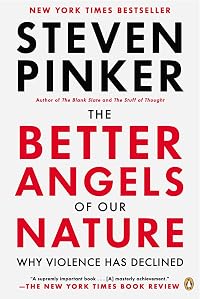
The Better Angels of Our Nature: Why Violence Has Declined
by Steven Pinker
On This Page
Description
“If I could give each of you a graduation present, it would be this—the most inspiring book I've ever read."—Bill Gates (May, 2017)
Selected by The New York Times Book Review as a Notable Book of the Year
The author of Rationality and Enlightenment Now offers a provocative and surprising history of violence.
Faced with the ceaseless stream of news about war, crime, and terrorism, one could easily think we live in the most violent age ever seen. Yet as New York Times bestselling show more author Steven Pinker shows in this startling and engaging new work, just the opposite is true: violence has been diminishing for millenia and we may be living in the most peaceful time in our species's existence. For most of history, war, slavery, infanticide, child abuse, assassinations, programs, gruesom punishments, deadly quarrels, and genocide were ordinary features of life. But today, Pinker shows (with the help of more than a hundred graphs and maps) all these forms of violence have dwindled and are widely condemned. How has this happened?
This groundbreaking book continues Pinker's exploration of the esesnce of human nature, mixing psychology and history to provide a remarkable picture of an increasingly nonviolent world. The key, he explains, is to understand our intrinsic motives—the inner demons that incline us toward violence and the better angels that steer us away—and how changing circumstances have allowed our better angels to prevail. Exploding fatalist myths about humankind's inherent violence and the curse of modernity, this ambitious and provocative book is sure to be hotly debated in living rooms and the Pentagon alike, and will challenge and change the way we think about our society. show less
Tags
Recommendations











Member Recommendations

Percevan Both books are eminently throwing light on the big lines in human history
40
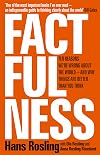
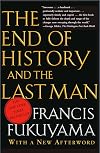
Percevan Both books deal with the big lines in human history

Rigour Study of the banality of evil
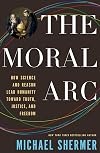
The Moral Arc: How Science and Reason Lead Humanity toward Truth, Justice, and Freedom by Michael Shermer
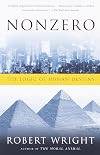
Taphophile13 Both books discuss the decrease of violence in today's world.
Member Reviews
If you can stand evolutionary psychology, this is a very interesting book arguing that violence, while still a huge problem, has declined substantially across many categories of behaviors, from wars to intimate violence to animal cruelty. Pinker argues that literacy and rationality have contributed to the decline: both lead us to put ourselves in other people’s positions, and make it harder for us to explain why I should be able to hurt you just because I am me and you are not. He also suggests that cleanliness/health may have something to do with it too: it’s very easy to make the fundamental attribution error of concluding that people who live in bad conditions are therefore bad. I wish I could write the essay about this book’s show more perspective on human nature versus that of David Graeber’s Debt, because Pinker seems to believe that money/market capitalism is the natural form of mutually beneficial exchange, when Graeber makes a strong case that reciprocal indebtedness without measurement is more firmly rooted in human history. show less
Let me save you a huge amount of condescension and repetition:
Mr Pinker is a sort of neo-Hobbesian whose entire argument hinges on 2 concepts:
1) Per-capita/percentage (he frequently alternates between percentage and percapita) death is markedly less under a 'leviathan' model where a centralized State controls the absolute authority to mete out punishments.
2) Any exceptions to this rule are to be elaborately explained away, but essentially comes down to claiming individuals or groups involved are somehow 'stateless'.
I happen to largely agree with point 1, yet still can't stand the methods and tap-dancing he uses to arrive at it.
Onto the book itself:
Steven Pinker wanders from point to point like a drunken squirrel. He believes that the show more plural of 'anecdote' is 'data', and that using wildly inaccurate statistical samples and methods is perfectly fine as long as they support his underlying world view. He cherry-picks quotes, data, and models, and fails to apply basic scientific methods to the data. Instead, he applies confirmation bias to it.
The writing is condescending, dull, full of wandering and side-tracking and virtually guaranteed to offend as many people as possible - even people like me who actually *agree* with most of his point.
Hiding casual ethnocentrism like his claim that England is the source of all modern civilization behind vague anecdotes and stories (then excusing away the Scottish, Irish, and Welsh, British Imperialism, and anything that might inconveniently disprove his assertion) all the while ignoring entirely the Scandinavians, all of Asia, and even the Middle East is just plain foolish.
I find it amusing at best that he uses the *bible* as his source for 'ancient barbarism', somehow deciding that works of fiction are a reliable source for a society. By that same yardstick, Greeks and Romans would have engaged in massive amounts of incest (since their mythology has so much of it), and modern Westerners would be the most violent vigilante culture in history (since our videogames, books, and films revolve largely around one or two people killing scores in some form of 'against the system' narrative)
Just avoid this pile of pulp. He may claim to be a 'Cognitive Scientist', but he seems to have long since fallen into the trap of soft science - "if you can't dazzle them with data, baffle them with bullshit". show less
Mr Pinker is a sort of neo-Hobbesian whose entire argument hinges on 2 concepts:
1) Per-capita/percentage (he frequently alternates between percentage and percapita) death is markedly less under a 'leviathan' model where a centralized State controls the absolute authority to mete out punishments.
2) Any exceptions to this rule are to be elaborately explained away, but essentially comes down to claiming individuals or groups involved are somehow 'stateless'.
I happen to largely agree with point 1, yet still can't stand the methods and tap-dancing he uses to arrive at it.
Onto the book itself:
Steven Pinker wanders from point to point like a drunken squirrel. He believes that the show more plural of 'anecdote' is 'data', and that using wildly inaccurate statistical samples and methods is perfectly fine as long as they support his underlying world view. He cherry-picks quotes, data, and models, and fails to apply basic scientific methods to the data. Instead, he applies confirmation bias to it.
The writing is condescending, dull, full of wandering and side-tracking and virtually guaranteed to offend as many people as possible - even people like me who actually *agree* with most of his point.
Hiding casual ethnocentrism like his claim that England is the source of all modern civilization behind vague anecdotes and stories (then excusing away the Scottish, Irish, and Welsh, British Imperialism, and anything that might inconveniently disprove his assertion) all the while ignoring entirely the Scandinavians, all of Asia, and even the Middle East is just plain foolish.
I find it amusing at best that he uses the *bible* as his source for 'ancient barbarism', somehow deciding that works of fiction are a reliable source for a society. By that same yardstick, Greeks and Romans would have engaged in massive amounts of incest (since their mythology has so much of it), and modern Westerners would be the most violent vigilante culture in history (since our videogames, books, and films revolve largely around one or two people killing scores in some form of 'against the system' narrative)
Just avoid this pile of pulp. He may claim to be a 'Cognitive Scientist', but he seems to have long since fallen into the trap of soft science - "if you can't dazzle them with data, baffle them with bullshit". show less
Although it took me a long time to read, (this is a very dense book, well written but full of examples of statistics) I would recommend it to anyone and everyone.
Steven Pinker proves that our world is getting less violent. This is flatly contradicted by our senses and experience every day. Any person alive now will be inundated with news of terrible violence around the world and believe that it's getting worse.
All the proof is here. Examined from all sorts of angles, with doubts and attempts to disprove thrown in, as in all good science. But the proof still stands.
It doesn't shy away from reality and includes all the atrocities and massacres but puts them into a greater context of all of humanity's history.
This is one book that truly show more has changed my life, and it continues to protect me from tendencies to total cynicism and pessimism. show less
Steven Pinker proves that our world is getting less violent. This is flatly contradicted by our senses and experience every day. Any person alive now will be inundated with news of terrible violence around the world and believe that it's getting worse.
All the proof is here. Examined from all sorts of angles, with doubts and attempts to disprove thrown in, as in all good science. But the proof still stands.
It doesn't shy away from reality and includes all the atrocities and massacres but puts them into a greater context of all of humanity's history.
This is one book that truly show more has changed my life, and it continues to protect me from tendencies to total cynicism and pessimism. show less
Pinker's “Better Angels of Our Nature” is a terrible book that no historian takes seriously. There are numerous problems with it so I'll just highlight a few of the biggest.
1. The central premise is a straw man. Nobody says that the 20th century was the most violent century ever, apart from people speaking in a purely rhetorical way. It's not an argument that needs to be disproved. Moreover, everyone from professional historians to the person in the street is aware that, at least in the West, violence is less prevalent than it was in the past: there is no dueling or corporal punishment, less capital punishment and torture, fewer cruel sports, etc. So the central argument of the book is neither original nor interesting.
2. The use of show more data is shambolic. Pinker just takes any figure that suits his argument and accepts it uncritically, including figures from the website of an amateur "atrocity expert" (I'm not joking). He never confronts the problem that there are no reliable figures for violent death (or anything else) from more than 200-400 years ago (depending on country). His unoriginal argument may be correct, but it can't be quantified.
3. He treats key concepts such as "war" as if they're stable across millennia and across different civilizations, when they are not. Our definition of war relies on a certain understanding of public and private that was utterly different in earlier periods. An example of a completely stupid argument is his claim that in the modern period the frequency of wars decreased while their size increased until we reached huge events like the First World War. He fails to recognize that something like WW1 is constructed this way by historians. It could equally be described as several different wars. Or it could be made bigger still by including the Balkan Wars, the Turkish War of Independence, the Russian and Chinese civil wars, etc. The way we categorize these things are just conventions and you can't engage in comparison without at least recognizing this and engaging the problem.
4. Pinker's explanation for the decline in violence is pretty much borrowed in its entirety from a 60-year-old sociology text, Norbert Elias's Civilizing Process, without any substantial critique.
Overall, the book is unoriginal in both its argument and explanation, and only pretends to be original by inventing a non-existent "conventional view" to argue against. Pinker's attempt to bolster the argument with figures is laughably bad and of no value whatsoever. There is no serious engagement with the huge historical scholarship on the topic (if Pinker had read any, it would have immediately blown up his straw man). The book is an amateurish attempt at history by a pop psychologist who didn't bother to learn even the most basic elements of historical method. show less
1. The central premise is a straw man. Nobody says that the 20th century was the most violent century ever, apart from people speaking in a purely rhetorical way. It's not an argument that needs to be disproved. Moreover, everyone from professional historians to the person in the street is aware that, at least in the West, violence is less prevalent than it was in the past: there is no dueling or corporal punishment, less capital punishment and torture, fewer cruel sports, etc. So the central argument of the book is neither original nor interesting.
2. The use of show more data is shambolic. Pinker just takes any figure that suits his argument and accepts it uncritically, including figures from the website of an amateur "atrocity expert" (I'm not joking). He never confronts the problem that there are no reliable figures for violent death (or anything else) from more than 200-400 years ago (depending on country). His unoriginal argument may be correct, but it can't be quantified.
3. He treats key concepts such as "war" as if they're stable across millennia and across different civilizations, when they are not. Our definition of war relies on a certain understanding of public and private that was utterly different in earlier periods. An example of a completely stupid argument is his claim that in the modern period the frequency of wars decreased while their size increased until we reached huge events like the First World War. He fails to recognize that something like WW1 is constructed this way by historians. It could equally be described as several different wars. Or it could be made bigger still by including the Balkan Wars, the Turkish War of Independence, the Russian and Chinese civil wars, etc. The way we categorize these things are just conventions and you can't engage in comparison without at least recognizing this and engaging the problem.
4. Pinker's explanation for the decline in violence is pretty much borrowed in its entirety from a 60-year-old sociology text, Norbert Elias's Civilizing Process, without any substantial critique.
Overall, the book is unoriginal in both its argument and explanation, and only pretends to be original by inventing a non-existent "conventional view" to argue against. Pinker's attempt to bolster the argument with figures is laughably bad and of no value whatsoever. There is no serious engagement with the huge historical scholarship on the topic (if Pinker had read any, it would have immediately blown up his straw man). The book is an amateurish attempt at history by a pop psychologist who didn't bother to learn even the most basic elements of historical method. show less
Steven Pinker’s book hides its evil message well. You have to read the second-to-last chapter in this huge book to drill down to Pinker’s key message: There is less violence because humans are more intelligent now. The world should be ruled by the best and the brightest (of Harvard), the philosopher kings, the Elois, the alphas, keeping the Morlocks, the great unwashed people from the levers of power. Karl Popper fought against this totalitarian worldview in his great work The Open Society and Its Enemies. Pinker effectively allies himself with the open society’s enemies, good servant of the plutocracy that he is as are so many of his colleagues at Harvard, always defending the privileges of the few against the demands of the show more poor, the sick and the tired.
As Pinker’s real message is as unpalatable as many other of Harvard’s claims, he has to repackage it, hide his ugly views by presenting the great Norbert Elias’ civilization process and amassing a huge amount of dubious statistics. Pinker is certainly right that the level of violence in the Western world has declined, although this statistic relies on the absence of Black Swan events. The huge killers of the 20th century that are the drivers behind Pinker’s downward trend were one of a kind events (WWI, WWII/Holocaust, Stalin, Mao). A nuclear bomb would obliterate Pinker’s trend.
Pinker is also wrong in attributing the decline in violence to the individual. He neglects the influence of Leviathan: Good government both protects the weak and offers non-violent means of conflict resolution. This also explains what Pinker cannot explain (apart a crude cultural origin honor and hidden in it racial explanation): Violence in the ghettoes is so much larger in the United States because their inhabitants do not have access to governmental conflict resolution mechanisms. Pinker also runs into the trouble of not being able to explain why the best nation of the world (“USA! USA! USA!”) is actually much more violent than the civilized world (Pinker doesn’t state it explicitly but the ideas of The Bell Curve are not very distant in his idea of dumb people creating more violence.).
Naturally, Pinker also ignores the harm caused by non-violent actions: The Johnstown Flood of 1889 was caused because the fat cats of the South Fork Fishing and Hunting Club failed to pay for the maintenance of the dam. Likewise, the poor of New Orleans suffered because the levies were not properly maintained. In Pinker’s view, these actions would not count (as long as they are not performed by Communists). Likewise, people dying in famines isn’t violence but force majeure. They could have chosen to be born to different parents (or, according to the Harvard educated philosopher Matthew Yglesias, they don’t value life as much).
"The better angels of our nature" is a piece of ideology rather than science. The origin of this book, in all likelihood, was Pinker's shock about the (on-going) American descent into the darkness of torture and murder. Pinker's belief in a steady progress of prosperity was shaken. In this book, he has assembled a large number of factoids to reassure his belief that this blip in violence is an aberration in the greater picture of diminishing violence. The montage results in much "truthiness" and will fool many (“mission accomplished”). Those with the stamina to read also the second to final chapter will see Pinker finally drop the masquerade: Violence is committed by stupid people. Education and genetic improvement will create a brave new world led by the best and the brightest. That exactly those people, many of them Harvard educated, have caused incredible misery and harm in the world escapes Pinker's perception. Then again, the book's purpose was re-assurance not truth. show less
As Pinker’s real message is as unpalatable as many other of Harvard’s claims, he has to repackage it, hide his ugly views by presenting the great Norbert Elias’ civilization process and amassing a huge amount of dubious statistics. Pinker is certainly right that the level of violence in the Western world has declined, although this statistic relies on the absence of Black Swan events. The huge killers of the 20th century that are the drivers behind Pinker’s downward trend were one of a kind events (WWI, WWII/Holocaust, Stalin, Mao). A nuclear bomb would obliterate Pinker’s trend.
Pinker is also wrong in attributing the decline in violence to the individual. He neglects the influence of Leviathan: Good government both protects the weak and offers non-violent means of conflict resolution. This also explains what Pinker cannot explain (apart a crude cultural origin honor and hidden in it racial explanation): Violence in the ghettoes is so much larger in the United States because their inhabitants do not have access to governmental conflict resolution mechanisms. Pinker also runs into the trouble of not being able to explain why the best nation of the world (“USA! USA! USA!”) is actually much more violent than the civilized world (Pinker doesn’t state it explicitly but the ideas of The Bell Curve are not very distant in his idea of dumb people creating more violence.).
Naturally, Pinker also ignores the harm caused by non-violent actions: The Johnstown Flood of 1889 was caused because the fat cats of the South Fork Fishing and Hunting Club failed to pay for the maintenance of the dam. Likewise, the poor of New Orleans suffered because the levies were not properly maintained. In Pinker’s view, these actions would not count (as long as they are not performed by Communists). Likewise, people dying in famines isn’t violence but force majeure. They could have chosen to be born to different parents (or, according to the Harvard educated philosopher Matthew Yglesias, they don’t value life as much).
"The better angels of our nature" is a piece of ideology rather than science. The origin of this book, in all likelihood, was Pinker's shock about the (on-going) American descent into the darkness of torture and murder. Pinker's belief in a steady progress of prosperity was shaken. In this book, he has assembled a large number of factoids to reassure his belief that this blip in violence is an aberration in the greater picture of diminishing violence. The montage results in much "truthiness" and will fool many (“mission accomplished”). Those with the stamina to read also the second to final chapter will see Pinker finally drop the masquerade: Violence is committed by stupid people. Education and genetic improvement will create a brave new world led by the best and the brightest. That exactly those people, many of them Harvard educated, have caused incredible misery and harm in the world escapes Pinker's perception. Then again, the book's purpose was re-assurance not truth. show less
Another excellent book from Steven Pinker. I love it when a book makes me say “Cool!” and “Wait, that can’t be right” at frequent intervals and one that angers both liberals and conservatives. Pinker starts by describing the bloodiness of the historical past, with chapters on Homeric Greece, the Bible (specifically the Old Testament – by one estimate there are around 20M violent deaths in the Old Testament; even if you don’t count The Flood there are over a million); the Roman Empire; medieval times; and early modern Europe. Pinker stresses both the body counts and the methods – the Roman Empire was the source of our government and is still used as a model of honor and probity – but nobody blinked an eye at death by show more crucifixion and the sale of 12 year old girls in the slave markets. The 20th century provides one of the “that can’t be right” moments – despite the WWI, the Ukrainian famine, WWII, the Holocaust, the Gulags, the Chinese “Great Leap Forward” famines, and the Cambodian killing fields it’s still the least violent century in history (Pinker has to clarify here; it’s not that there weren’t a lot of violent deaths, but that a randomly selected individual had a smaller chance of dying by violence than any time previously). The Middle Ages were particularly brutal; Pinker cites statistics for the European nobility (the only people you really can get statistics for) that gave a male member of a noble family about a 25% chance of premature death by violence. This is dramatically different from the popular view; people polled generally put the 20th century as the most violent, compared to the “Good Old Days”.
After establishing this rather astonishing fact in the first couple chapters, Pinker spends the rest of the book proposing various major and minor explanations, with plenty of opportunity to offend people on both ends of the political spectrum. Major explanations are:
* Leviathan – (Pinker consistently uses this term) – A government monopoly on violence, with the suppression of private feuds and punishment for private violence. Pinker also notes the concomitant reduction in the number of governments – Europe in the Middle Ages had hundreds of independent political units; it’s now in the 30s. Fewer people to fight against. Pinker also puts the decline of the “culture of honor” here, where every insult has to be bloodily avenged – you can often get the government to do it for you instead, and the government will come after you if you do it yourself. There is pretty strong criticism of the 1960s and 1970s, which Pinker describes as a “retreat of policing” with a corresponding increase in homicide. Pinker also puts the mellowing of religious ideologies. It’s no longer acceptable – well, for most religions anyway – to kill heretics or go to war for their conversion, and governments will no longer support it. (Pinker notes that Marxism is a religion in this sense).
* Capitalism. (Now we get to the part that will annoy liberals). Pinker usually describes this as “trade” rather than “capitalism”, presumably to avoid giving his liberal readers fits, but it’s clear from the text that capitalism is what he means. It makes more sense to make money off somebody than kill them, and again Pinker has some pretty harsh words for Marxism here, notes that Marxism picked up some of the worst ideas of conventional religion – the idea that profit and charging interest are sins, the perfectibility of humankind, and the millennial prospect of a future Golden Age – and ran with them.
* Sympathy. (Pinker prefers this to “empathy”). Here Pinker makes an interesting suggestion – the advent of literacy and the development of realistic fiction contributed to world and individual peace, because you could present someone else’s point of view. The general revolution in human rights fits in here as well; people began to treat those of different gender, race, or sexual preference as if they were human.
Pinker also discusses what he calls “feminization: - a kind of unfortunate term but perhaps the best he can do. His idea here is that women no longer see prowess in violence as a desirable characteristic in a mate – in fact, usually the opposite. There’s some discussion – Pinker notes he covered the idea a little in The Blank Slate – that this once was true; on an evolutionary time scale if women had the chance to be involved in mate selection at all they picked a mate that could protect them and theirs, and if they didn’t have a choice they were just sexual prey to the most violent man. Pinker doesn’t go so far as to deploy an evolutionary argument about maximizing fitness here but it’s easy to read between the lines.
After extensive explication and copious statistics, Pinker uses a variation of the “Prisoner’s Dilemma” he calls the “Pacifist’s Dilemma”; it works like this:
There are two contending parties; either can be a pacifist or an aggressor. If both are pacifists, they both win a small reward – say $5 (Pinker stresses the numbers are arbitrary to illustrate the situation). If one is an aggressor and one a pacifist, the aggressor gets $10 and the pacifist loses $100. If both are aggressors they both lose $50. In this setup, it makes sense to be an aggressor – you minimize your expected loses. Pinker now adds the factors he suggests contribute to peace. If there’s a Leviathan involved than can assess appropriate penalties after the fact – say $15 against aggressors – it now becomes a no-win game for the aggressor; even if one party remains pacifist while the other aggresses, the aggressor still loses (although so does the pacifist). In a second matrix, Pinker adds the effect of trade; in this case there’s a bonus of $100 if both sides are pacifist. Now you can still win $10 by being an aggressor against a pacifist, but if you are both pacifists you win $105. Finally, Pinker shows a matrix with sympathy added; they aggressor gets a smaller reward and the pacifist doesn’t lose as much. (There’s also a matrix with “feminization” considered; that gives the pacifist “defeat without humiliation” – smaller loss – and the aggressor “victory without glory” – a smaller gain).
Pinker, of course, can’t set up a matrix with real world rewards and punishments, so although his arguments are sensible they can’t actually be quantified (one thing he doesn’t mention, for example, is that the evolutionary argument for feminization can be turned backward; Palestinian suicide bombers can reap considerable financial rewards for their families. Since the local ethos often makes it difficult for young men to marry due to the huge financial expenditure involved, it makes evolutionary sense to blow yourself up so at least your sisters can afford dowries and thus pass on some of your genome). However, Pinker does say that a factor contributing to peace is people starting to think like economists. Pinker is very careful throughout to emphasize that when he mentions “liberal” values he means “classical liberal” (he seems to be a little afraid of the term “libertarian”) rather than “left liberal”, and is generally at least mildly derogatory when speaking about “left liberal” economics.
An interesting and worthwhile book, almost guaranteed to get you into screaming arguments, but well researched and backed up with massive data. Extensively referenced; lots of charts and tables. Recommended; four stars I think. show less
After establishing this rather astonishing fact in the first couple chapters, Pinker spends the rest of the book proposing various major and minor explanations, with plenty of opportunity to offend people on both ends of the political spectrum. Major explanations are:
* Leviathan – (Pinker consistently uses this term) – A government monopoly on violence, with the suppression of private feuds and punishment for private violence. Pinker also notes the concomitant reduction in the number of governments – Europe in the Middle Ages had hundreds of independent political units; it’s now in the 30s. Fewer people to fight against. Pinker also puts the decline of the “culture of honor” here, where every insult has to be bloodily avenged – you can often get the government to do it for you instead, and the government will come after you if you do it yourself. There is pretty strong criticism of the 1960s and 1970s, which Pinker describes as a “retreat of policing” with a corresponding increase in homicide. Pinker also puts the mellowing of religious ideologies. It’s no longer acceptable – well, for most religions anyway – to kill heretics or go to war for their conversion, and governments will no longer support it. (Pinker notes that Marxism is a religion in this sense).
* Capitalism. (Now we get to the part that will annoy liberals). Pinker usually describes this as “trade” rather than “capitalism”, presumably to avoid giving his liberal readers fits, but it’s clear from the text that capitalism is what he means. It makes more sense to make money off somebody than kill them, and again Pinker has some pretty harsh words for Marxism here, notes that Marxism picked up some of the worst ideas of conventional religion – the idea that profit and charging interest are sins, the perfectibility of humankind, and the millennial prospect of a future Golden Age – and ran with them.
* Sympathy. (Pinker prefers this to “empathy”). Here Pinker makes an interesting suggestion – the advent of literacy and the development of realistic fiction contributed to world and individual peace, because you could present someone else’s point of view. The general revolution in human rights fits in here as well; people began to treat those of different gender, race, or sexual preference as if they were human.
Pinker also discusses what he calls “feminization: - a kind of unfortunate term but perhaps the best he can do. His idea here is that women no longer see prowess in violence as a desirable characteristic in a mate – in fact, usually the opposite. There’s some discussion – Pinker notes he covered the idea a little in The Blank Slate – that this once was true; on an evolutionary time scale if women had the chance to be involved in mate selection at all they picked a mate that could protect them and theirs, and if they didn’t have a choice they were just sexual prey to the most violent man. Pinker doesn’t go so far as to deploy an evolutionary argument about maximizing fitness here but it’s easy to read between the lines.
After extensive explication and copious statistics, Pinker uses a variation of the “Prisoner’s Dilemma” he calls the “Pacifist’s Dilemma”; it works like this:
There are two contending parties; either can be a pacifist or an aggressor. If both are pacifists, they both win a small reward – say $5 (Pinker stresses the numbers are arbitrary to illustrate the situation). If one is an aggressor and one a pacifist, the aggressor gets $10 and the pacifist loses $100. If both are aggressors they both lose $50. In this setup, it makes sense to be an aggressor – you minimize your expected loses. Pinker now adds the factors he suggests contribute to peace. If there’s a Leviathan involved than can assess appropriate penalties after the fact – say $15 against aggressors – it now becomes a no-win game for the aggressor; even if one party remains pacifist while the other aggresses, the aggressor still loses (although so does the pacifist). In a second matrix, Pinker adds the effect of trade; in this case there’s a bonus of $100 if both sides are pacifist. Now you can still win $10 by being an aggressor against a pacifist, but if you are both pacifists you win $105. Finally, Pinker shows a matrix with sympathy added; they aggressor gets a smaller reward and the pacifist doesn’t lose as much. (There’s also a matrix with “feminization” considered; that gives the pacifist “defeat without humiliation” – smaller loss – and the aggressor “victory without glory” – a smaller gain).
Pinker, of course, can’t set up a matrix with real world rewards and punishments, so although his arguments are sensible they can’t actually be quantified (one thing he doesn’t mention, for example, is that the evolutionary argument for feminization can be turned backward; Palestinian suicide bombers can reap considerable financial rewards for their families. Since the local ethos often makes it difficult for young men to marry due to the huge financial expenditure involved, it makes evolutionary sense to blow yourself up so at least your sisters can afford dowries and thus pass on some of your genome). However, Pinker does say that a factor contributing to peace is people starting to think like economists. Pinker is very careful throughout to emphasize that when he mentions “liberal” values he means “classical liberal” (he seems to be a little afraid of the term “libertarian”) rather than “left liberal”, and is generally at least mildly derogatory when speaking about “left liberal” economics.
An interesting and worthwhile book, almost guaranteed to get you into screaming arguments, but well researched and backed up with massive data. Extensively referenced; lots of charts and tables. Recommended; four stars I think. show less
Втората световна война, геноцидите в Руанда и Дарфур, атомни бомби в Хирошима и Нагасаки, войните във Виетнам, Корея, Афганистан, Ирак, Русия напада Украйна, Пол Пот, Осама бин Ладен, червените кхмери, муджахидините, терористични атаки всеки ден... Без съмнение, 20 век е векът на войната, на военно-промишлената машина, най-насилственото столетие в историята на човечеството. А последните 20 години нещата стават show more още по-зле.
Да... ама не. Всъщност - точно обратното, колкото и да не ви се вярва. Сравнено с предишната човешка история, 20 в. всъщност е най-мирното столетие, с невиждано ниска до тогава смъртност от война и насилствени престъпления. А последните 20 години, статистически, са направо утопия. Разбира се, имаме си множество медии, които като лешояди се хранят от смъртта и войната, поради което повечето хора не вярват на горенаписаното.
Но въпреки, че има още много какво да се желае относно спирането на конфликтите в света и намаляването на престъпленията, в сравнение с предишните периоди на историята сегашния е направо цвете. Втората световна война с нейните 60 млн жертви даже не се доближава до примерно делото на Чингис Хан, чиито завоевания са намалили популацията на Земята тогава с 11% (повече от черната чума). Геноцидите на Хитлер, Сталин (срещу украинците) и Мао (срещу собствените му хора, при това най-вероятно без да иска) не се нареждат и в челната десятка даже на най-големите геноциди в историята...
Нещо повече - през цялата човешка история се наблюдава плавно и постоянно намаляване на смъртта от войни и насилие - от почти 35% вероятност за насилствена смърт при ловците-събирачи от палеолита, през брой на убийствата около 500 на 100 хил. души годишно през средновековието, и 100/100х.д.г. само преди стотина години, до невероятните 1.9 на 100 х.д.г. в момента в България и под 0.5 в Западна Европа (Русия с 10 е в третия свят, но пак в пъти по-добре от преди).
В настоящата страхотна и бая дълга книга (800 стр.), Стивън Пинкър не само обяснява и доказва с множество (даже досадно количество) данни гореописаните факти, но и прави хипотези за причините за тях. Като цяло прави задълбочен анализ на човешкото насилие - причини, трендове, начини и предположения за бъдещето. Прозренията му относно психологическите фактори за насилието са, според мен, направо просветляващи.
Силно препоръчвам. show less
Да... ама не. Всъщност - точно обратното, колкото и да не ви се вярва. Сравнено с предишната човешка история, 20 в. всъщност е най-мирното столетие, с невиждано ниска до тогава смъртност от война и насилствени престъпления. А последните 20 години, статистически, са направо утопия. Разбира се, имаме си множество медии, които като лешояди се хранят от смъртта и войната, поради което повечето хора не вярват на горенаписаното.
Но въпреки, че има още много какво да се желае относно спирането на конфликтите в света и намаляването на престъпленията, в сравнение с предишните периоди на историята сегашния е направо цвете. Втората световна война с нейните 60 млн жертви даже не се доближава до примерно делото на Чингис Хан, чиито завоевания са намалили популацията на Земята тогава с 11% (повече от черната чума). Геноцидите на Хитлер, Сталин (срещу украинците) и Мао (срещу собствените му хора, при това най-вероятно без да иска) не се нареждат и в челната десятка даже на най-големите геноциди в историята...
Нещо повече - през цялата човешка история се наблюдава плавно и постоянно намаляване на смъртта от войни и насилие - от почти 35% вероятност за насилствена смърт при ловците-събирачи от палеолита, през брой на убийствата около 500 на 100 хил. души годишно през средновековието, и 100/100х.д.г. само преди стотина години, до невероятните 1.9 на 100 х.д.г. в момента в България и под 0.5 в Западна Европа (Русия с 10 е в третия свят, но пак в пъти по-добре от преди).
В настоящата страхотна и бая дълга книга (800 стр.), Стивън Пинкър не само обяснява и доказва с множество (даже досадно количество) данни гореописаните факти, но и прави хипотези за причините за тях. Като цяло прави задълбочен анализ на човешкото насилие - причини, трендове, начини и предположения за бъдещето. Прозренията му относно психологическите фактори за насилието са, според мен, направо просветляващи.
Силно препоръчвам. show less
Members
- Recently Added By
Published Reviews
ThingScore 50
But in its confidence and sweep, the vast timescale, its humane standpoint and its confident world-view, it is something more than a science book: it is an epic history by an optimist who can list his reasons to be cheerful and support them with persuasive instances.
I don't know if he's right, but I do think this book is a winner.
I don't know if he's right, but I do think this book is a winner.
added by Widsith
The biggest problem with the book, though, is its overreliance on history, which, like the light on a caboose, shows us only where we are not going.
added by Widsith
“The Better Angels of Our Nature” is a supremely important book. To have command of so much research, spread across so many different fields, is a masterly achievement. Pinker convincingly demonstrates that there has been a dramatic decline in violence, and he is persuasive about the causes of that decline.
added by atbradley
Lists

Best General History Books
50 works; 20 members

Books That Changed Me
158 works; 47 members
Non-Fiction Worth Reading
1,015 works; 261 members

Secular Ethics
11 works; 2 members

Atheism, humanism, freethought, &c. — Best nonfiction books in favour of
167 works; 14 members

The Joe Rogan Experience Library
254 works; 3 members

Books Read in 2018
4,360 works; 110 members

The Hive Recommends
62 works; 2 members

If Books Could Kill Podcast
52 works; 1 member

My wishlist
85 works; 1 member

Books in the Bibliography of The Dawn of Everything by Graeber & Wengrow
478 works; 2 members

Books cited in Progress by Samuel McDonald
160 works; 1 member

Books Cited in Blueprint by Nicholas Christakis
261 works; 1 member

Libertarian Books
102 works; 19 members
Talk Discussions
Past Discussions
Are we living in the most peaceful era of world history? in History: On learning from and writing history (September 2013)
Author Information

41+ Works 31,857 Members
Steven Pinker is an authority on language and the mind. He is Peter de Florez professor of psychology in the department of brain and cognitive sciences at the Massachusetts Institute of Technology. He lives in Cambridge, Massachusetts. Steven Arthur Pinker was born on September 18, 1954 in Canada. He is an experimental psychologist, cognitive show more scientist, linguist, and author. He is a psychology professor at Harvard University. He is the author of several non-fiction books including The Language Instinct, How the Mind Works, Words and Rules, The Blank Slate, The Stuff of Thought, and The Sense of Style: The Thinking Person's Guide to Writing in the 21st Century. His research in cognitive psychology has won the Early Career Award in 1984 and Boyd McCandless Award in 1986 from the American Psychological Association, the Troland Research Award in 1993 from the National Academy of Sciences, the Henry Dale Prize in 2004 from the Royal Institution of Great Britain, and the George Miller Prize in 2010 from the Cognitive Neuroscience Society. He was twice a finalist for the Pulitzer Prize, in 1998 and in 2003. In 2006, he received the American Humanist Association's Humanist of the Year award for his contributions to public understanding of human evolution. (Bowker Author Biography) show less
Awards and Honors
Awards
Distinctions
Series
Belongs to Publisher Series
Work Relationships
Contains
Common Knowledge
- Canonical title*
- Il declino della violenza. Perché quella che stiamo vivendo è probabilmente l'epoca più pacifica della storia
- Original title
- The Better Angels of Our Nature: Why Violence Has Declined
- Alternate titles
- Better Angels of Our Nature
- Original publication date
- 2011-10
- Epigraph
- What a chimera then is man! What a novelty, what a monster, what a chaos,
what a contradiction, what a prodigy! Judge of all things, feeble earthworm,
repository of truth, sewer of uncertainty and error, the gl... (show all)ory and the scum of
the universe.
— Blaise Pascal - Dedication
- TO
Eva, Carl, and Erik
Jack and David
Yael and Danielle
and the world they will inherit - First words
- If the past is a foreign country, it is a shockingly violent one.
- Last words
- (Click to show. Warning: May contain spoilers.)For all the tribulations in our lives, for all the troubles that remain in the world, the decline of violence is an accomplishment we can savor, and an impetus to cherish the forces of civilization and enlightenment that made it possible.
*Some information comes from Common Knowledge in other languages. Click "Edit" for more information.
Classifications
- Genres
- Sociology, General Nonfiction, Anthropology, History, Nonfiction, Science & Nature
- DDC/MDS
- 303.609 — Society, government, & culture Social sciences, sociology & anthropology Social processes Conflict and conflict resolution ; Violence
- LCC
- HM1116 .P57 — Social sciences Sociology (General) Sociology Social psychology Interpersonal relations. Social behavior
- BISAC
Statistics
- Members
- 3,393
- Popularity
- 4,952
- Reviews
- 78
- Rating
- (4.07)
- Languages
- 11 — Bulgarian, Dutch, English, French, German, Hungarian, Italian, Polish, Portuguese, Spanish, Turkish
- Media
- Paper, Audiobook, Ebook
- ISBNs
- 43
- ASINs
- 26