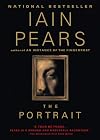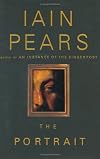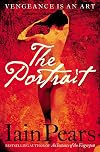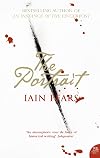
The Portrait
by Iain Pears
On This Page
Description
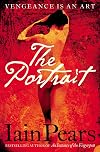
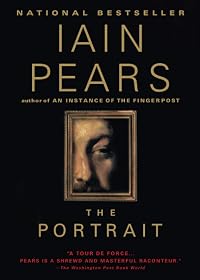
A national bestseller from acclaimed?author Iain Pears, The Portrait is a novel of suspense and a tour de force.An art critic journeys to a remote island off Brittany to sit for a portrait painted by an old friend, a gifted but tormented artist living in self-imposed exile. The painter recalls their years of friendship, the gift of the critic's patronage, and his callous betrayals. As he struggles to capture the character of the man, as well as his image, on canvas, it becomes clear that show more there is much more than a portrait at stake...
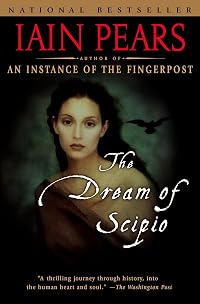
Iain Pears's An Instance of the Fingerpost and The Dream of Scipio are also available from Riverhead Books.
. show less
Tags
Recommendations

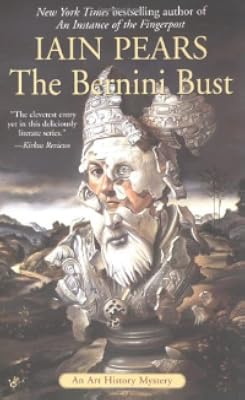




Member Reviews
The sense of being inside the artist's head was very effective. Reliving his whole life through his memories and musings was fascinating. Slowly understanding the evolving relationship with his sitter was handled in a very gripping and ultimately menacing way. The relationships with the female characters in the story were all quite troubling. They are portrayed as suspicious and untrustworthy even through the unwilling attraction to them - they really seem to be perceived as largely objects. When they turn out to have strengths, talents, desires, fears and passions beyond the artist's comprehension, they become almost evil - quite disturbing.
Henry MacAlpine is a Scottish painter living in self-imposed exile on a small island off the Brittany coast. An old friend, Willian Nasmyth, a famous art critic, arrives one day to sit for a portrait. As the two men reminisce, it becomes clear that this isn’t going to be an ordinary sitting …
Written as a monologue from start to finish, this is a bold literary experiment that doesn’t always ring true, and several large passages read as if put there for the benefit of the reader (which they are, of course), and not the sitter, as they are far too polished and a little too stilted, though MacAlpine has had a lot of time to prepare his speech. Where the experiment does succeed, however, is that the reader is able to build up an image show more of Nasmyth’s character as it is reflected in MacAlpine’s monologue, and which holds the key to the events depicted in the book; whether it is all completely accurate is another matter (the device of the unreliable narrator), though I did get the impression that MacAlpine is honest – almost unflinchingly so, in places – and Nasmyth’s few reactions the reader is able to discern through the painter’s words seem to confirm that impression. The relationship between the two, although superficially friendly, is strained from the outset, and the tension mounts as the reason behind Nasmyth’s appearance on the island becomes clearer. I was reminded of Marc Anthony’s famous speech in Shakespeare’s play Julius Caesar, when he repeats to great effect that Brutus is an honourable man, yet in effect maintains the opposite; here MacAlpine calls Nasmyth ‘old friend’, when it is obvious that there is barely suppressed hostility between the two, certainly on MacAlpine’s part. The painter has devised a perfect instrument of torture for his sitter, as he is forced to sit still and listen to the painter’s reminiscences (and he does ramble on for quite some time), and it soon becomes clear that a psychological game of cat and mouse is being played out which is really quite chilling, though a revelation towards the end strikes a false note (why is it that a woman cannot simply reject a man?), in my opinion calling some of MacAlpine’s motivations into question. The entire book is painted (forgive the pun!) in almost lyrical prose that is able to pronounce the profoundest truths in the simplest words, and I have marked many such passages in the book for future reference and reflection, something I’ve never done before.
I can see why opinions are divided over this book, but I thought it a very rewarding and thought-provoking reading experience. show less
Written as a monologue from start to finish, this is a bold literary experiment that doesn’t always ring true, and several large passages read as if put there for the benefit of the reader (which they are, of course), and not the sitter, as they are far too polished and a little too stilted, though MacAlpine has had a lot of time to prepare his speech. Where the experiment does succeed, however, is that the reader is able to build up an image show more of Nasmyth’s character as it is reflected in MacAlpine’s monologue, and which holds the key to the events depicted in the book; whether it is all completely accurate is another matter (the device of the unreliable narrator), though I did get the impression that MacAlpine is honest – almost unflinchingly so, in places – and Nasmyth’s few reactions the reader is able to discern through the painter’s words seem to confirm that impression. The relationship between the two, although superficially friendly, is strained from the outset, and the tension mounts as the reason behind Nasmyth’s appearance on the island becomes clearer. I was reminded of Marc Anthony’s famous speech in Shakespeare’s play Julius Caesar, when he repeats to great effect that Brutus is an honourable man, yet in effect maintains the opposite; here MacAlpine calls Nasmyth ‘old friend’, when it is obvious that there is barely suppressed hostility between the two, certainly on MacAlpine’s part. The painter has devised a perfect instrument of torture for his sitter, as he is forced to sit still and listen to the painter’s reminiscences (and he does ramble on for quite some time), and it soon becomes clear that a psychological game of cat and mouse is being played out which is really quite chilling, though a revelation towards the end strikes a false note (why is it that a woman cannot simply reject a man?), in my opinion calling some of MacAlpine’s motivations into question. The entire book is painted (forgive the pun!) in almost lyrical prose that is able to pronounce the profoundest truths in the simplest words, and I have marked many such passages in the book for future reference and reflection, something I’ve never done before.
I can see why opinions are divided over this book, but I thought it a very rewarding and thought-provoking reading experience. show less
I guess I'm on a bit of an Iain Pears kick lately; it's just a week and a half since I reviewed Giotto's Hand, and now I've finished his most recent work, The Portrait. A vastly different animal, this book; hardly seems possible that the same hand could write such starkly contrasting narratives. Told entirely in monologue form (a portraitist speaking to his muted subject as he works) The Portrait is a deliciously creepy and nicely crafted tale of long-planned retribution for past transgressions. It is also a neat exposition of the artists' relationship with those who make their living being critical of others' creations.
While the monologue style is disconcerting at first (largely I suspect because we're unused to reading it) it didn't show more take long for it to become more gripping than annoying; it certainly pulled me in. While I wanted to read quickly to find out what would happen (though I confess I had the ending predicted well before the halfway mark), I also wanted to take it slowly and read Pears' elegant prose. He's captured human attitudes and frailties expertly here. I recommend this one.
http://philobiblos.blogspot.com/2007/02/book-review-portrait.html show less
While the monologue style is disconcerting at first (largely I suspect because we're unused to reading it) it didn't show more take long for it to become more gripping than annoying; it certainly pulled me in. While I wanted to read quickly to find out what would happen (though I confess I had the ending predicted well before the halfway mark), I also wanted to take it slowly and read Pears' elegant prose. He's captured human attitudes and frailties expertly here. I recommend this one.
http://philobiblos.blogspot.com/2007/02/book-review-portrait.html show less
There is a moment in Iain Pears "The Portrait" when you realize what is going to happen. In the hands of a lesser writer, this would have ruined the rest of the novel. But in Pears hands, it doesn't matter. You know what is going to happen, and the two characters know what is going to happen. Yet none of us can look away. "The Portrait" is a monologue. An artist is painting the portrait of a critic who is an old friend. The entire novel is the one sided conversation as the painting progresses, told from the mind of the artist. He lays bare, over the course of those conversations, their entire friendship. He also exposes both the critic's and the artist's own failings and demons. As I said, all of us know what is eventually going to show more happen. Yet Pears' prose is such that we hurtle towards the conclusion, engrossed, waiting anxiously to see what finally occurs, like a voyeuristic ghost. Unable to change the outcome, yet silently inside not wanting to. This was my first exposure to Iain Pears, but it won't be my last. show less
Even in Pears’s talented hands, this author indulgence just didn’t work for me. I persisted in reading the whole book (which is all of 211 pages) because I was waiting for a payoff that was too late and too lenient to be effective. Oh sure, it’s there, but you have to wade through a lot of Artistic Opinion to get to it. And it’s oblique when delivered. Horrible, but unrealized and in future tense. You’re left to wonder if Henry managed to follow through. I hope he did.
William is a thoroughly despicable character as painted by our narrator who delivers the whole of the text in a 2nd person monologue aimed squarely at William. Like other books written with a narrow point-of-view, its limitations come up hard against the show more narrative. It isn’t as difficult to bear with this book because I think Pears was very deliberate in his decision to address the whole book to “you”. You being the reader, but also William. The thing is, he has to balance what William would know and what you do as reader. Of course readers know less and have to infer a lot from the text. Once I got past the difficulty in reading this delivery (I recently DNFed another book for exactly this type of narrative) I started to wonder why Pears chose it. How does this serve the story in a way other more common styles don’t? All I can think of is the anticipatory frisson of coming bad news. Putting yourself into William’s position does add a bit of that, but it’s hard won and requires a lot of mental discipline on the part of the reader, something I failed at over and over. I just couldn’t put myself in William’s place. Why was he putting up with this monologue? Why was he there? Why couldn’t he leave? It drove me nuts and I had to continually re-focus on the text and story.
That said, there are some great lines in this book about art, popularity, integrity and the role of the critic. Pears can write and he definitely is passionate about art, its closeted sphere and its larger role in culture. How it is rarely viewed objectively. There are gems in there. On page 72-75 or so he gives us a fantastic scene of palpable cruelty which kept me reading. William needed to suffer for what he did. There are similar scenes later in the book, but they didn’t ratchet up the way I thought and so the ultimate tragedies they cause were blunted for me. I expected one of the two, but the other wasn’t sufficiently horrifying because the victim was too remote. It was too abstract.
Maybe that was the point. I think there were a lot of things (points) that I didn’t catch in this book and will probably have to give it ago in another ten years or so. show less
William is a thoroughly despicable character as painted by our narrator who delivers the whole of the text in a 2nd person monologue aimed squarely at William. Like other books written with a narrow point-of-view, its limitations come up hard against the show more narrative. It isn’t as difficult to bear with this book because I think Pears was very deliberate in his decision to address the whole book to “you”. You being the reader, but also William. The thing is, he has to balance what William would know and what you do as reader. Of course readers know less and have to infer a lot from the text. Once I got past the difficulty in reading this delivery (I recently DNFed another book for exactly this type of narrative) I started to wonder why Pears chose it. How does this serve the story in a way other more common styles don’t? All I can think of is the anticipatory frisson of coming bad news. Putting yourself into William’s position does add a bit of that, but it’s hard won and requires a lot of mental discipline on the part of the reader, something I failed at over and over. I just couldn’t put myself in William’s place. Why was he putting up with this monologue? Why was he there? Why couldn’t he leave? It drove me nuts and I had to continually re-focus on the text and story.
That said, there are some great lines in this book about art, popularity, integrity and the role of the critic. Pears can write and he definitely is passionate about art, its closeted sphere and its larger role in culture. How it is rarely viewed objectively. There are gems in there. On page 72-75 or so he gives us a fantastic scene of palpable cruelty which kept me reading. William needed to suffer for what he did. There are similar scenes later in the book, but they didn’t ratchet up the way I thought and so the ultimate tragedies they cause were blunted for me. I expected one of the two, but the other wasn’t sufficiently horrifying because the victim was too remote. It was too abstract.
Maybe that was the point. I think there were a lot of things (points) that I didn’t catch in this book and will probably have to give it ago in another ten years or so. show less
The Portrait is a historical mystery, a gripping tale of suspense and revenge, set in the early 1900s. Celebrated painter Henry MacAlpine has turned his back on London and moved to a small island off the coast of Brittany. Here, his old friend, art critic William Nasmyth, comes to visit him, ostensibly to have his portrait painted.
The story is told entirely as a monologue, with MacAlpine as the narrator, rather like a one-man play. Nasmyth never speaks and his reponses and reactions are conveyed to the reader only through MacAlpine. Slowly, in between talk about the weather and art, a picture of their shared past emerges and the reader soon gets a sense of things taking a sinister turn.
Very clever, very enjoyable, in an unexpected and show more unusual way. show less
The story is told entirely as a monologue, with MacAlpine as the narrator, rather like a one-man play. Nasmyth never speaks and his reponses and reactions are conveyed to the reader only through MacAlpine. Slowly, in between talk about the weather and art, a picture of their shared past emerges and the reader soon gets a sense of things taking a sinister turn.
Very clever, very enjoyable, in an unexpected and show more unusual way. show less
This is really a fantastic book.
It's short, and entirely in the form of a first-person monologue. An artist, retired from London's busy art scene to a remote and rural island, has invited a former friend, a well-respected critic, to come sit for a portrait. As the work progresses, the artist recounts the tale of how the critic became his mentor in the art world... at first, on the surface, it may seem a rather banal tale, if one that offers interesting insights into the scene in England at the beginning of the 20th century... but as the narrative progresses, progressively more undertones of darkness and menace appear, and the reader begins to suspect there is more to this story than the reunion of two old friends... and the denouement show more makes it all more than worthwhile.
Most impressive in this, is Pears' ability to create characterizations and insights that far exceed the limited vision and self-centered attitude of his narrator, all through that narrator's words. show less
It's short, and entirely in the form of a first-person monologue. An artist, retired from London's busy art scene to a remote and rural island, has invited a former friend, a well-respected critic, to come sit for a portrait. As the work progresses, the artist recounts the tale of how the critic became his mentor in the art world... at first, on the surface, it may seem a rather banal tale, if one that offers interesting insights into the scene in England at the beginning of the 20th century... but as the narrative progresses, progressively more undertones of darkness and menace appear, and the reader begins to suspect there is more to this story than the reunion of two old friends... and the denouement show more makes it all more than worthwhile.
Most impressive in this, is Pears' ability to create characterizations and insights that far exceed the limited vision and self-centered attitude of his narrator, all through that narrator's words. show less
Members
- Recently Added By
Published Reviews
ThingScore 75
Features of the paperback presentation of this wonderful, grimly entertaining novel are fold-out endpapers like a miniature gallery, showing paintings by artists as diverse as Velázquez, Géricault and Whistler. They give promise of the high aesthetic tone which the novel duly fulfils.
added by passion4reading
Lists

Best Revenge Stories
69 works; 9 members

Books Read in 2016
4,666 works; 199 members
Author Information

18+ Works 16,872 Members
Iain Pears was born in England in 1955. He has worked as an art historian, a TV consultant and a journalist. After several years working for Reuters, he went to Yale University to complete his book on eighteenth-century British art entitled The Discovery of Painting. He has written several novels include An Instance of the Fingerpost, The Dream of show more Scipio, Stone's Fall, Arcadia, and the Jonathan Argyll series. (Bowker Author Biography) show less
Some Editions
Awards and Honors
Common Knowledge
- Original publication date
- 2004
- People/Characters
- Henry MacAlpine; William Nasmyth; Evelyn; Jacky
- Important places
- Houat, Brittany, France
- Dedication
- To Alex
- First words
- Well, well, well.
- Quotations
- No mere journalist, then, but something more. You will have the pose of a pope, as painted by Velázquez, to remind everyone of the power that people like yourself wield in our modern world. You command, and it comes to pass.... (show all) You lift your finger and a reputation is made, shake your head and the hopes nurtured for years in the ateliers, worked for and so desperately desired, are dashed forever. So, you do not move armies, do not wreak destruction on faraway lands like our politicians and generals. You are far more powerful than that, are you not? You change the way people think, shape the way they see the world. A great power, wielded without check or hindrance. A despotism of the arts, in which you are high priest of the true and the beautiful. (pp. 32–3)
Of course I am a charlatan, that little inclination of your head says. That is my profession. We live in an age when appearance is all, and I am the master of it. I am a purveyor of the new upon the public, the intermediary. ... (show all)I persuade people to love what they hate, buy what they do not want, despise what they love, and that can only be done with the techniques of the circus ringmaster. But I am honest, nonetheless, and tell the truth. In that lies my integrity: I am a fraud with a purpose. (p. 54) - Last words
- (Click to show. Warning: May contain spoilers.)I will not take no for an answer.
- Original language
- English UK
Classifications
Statistics
- Members
- 849
- Popularity
- 32,401
- Reviews
- 38
- Rating
- (3.45)
- Languages
- 9 — Dutch, English, French, German, Greek, Italian, Serbian, Spanish, Swedish
- Media
- Paper, Audiobook, Ebook
- ISBNs
- 32
- UPCs
- 1
- ASINs
- 8